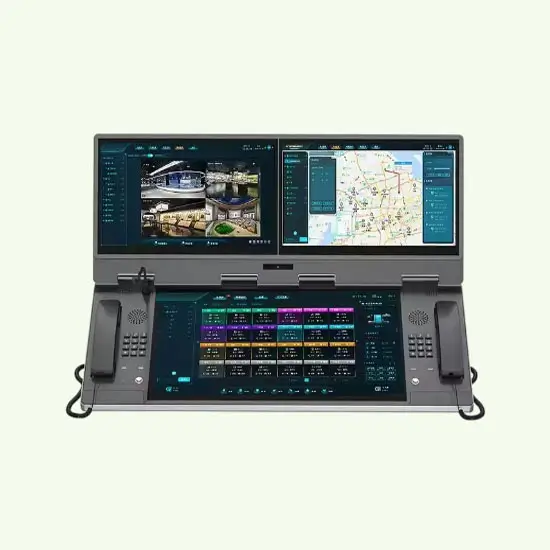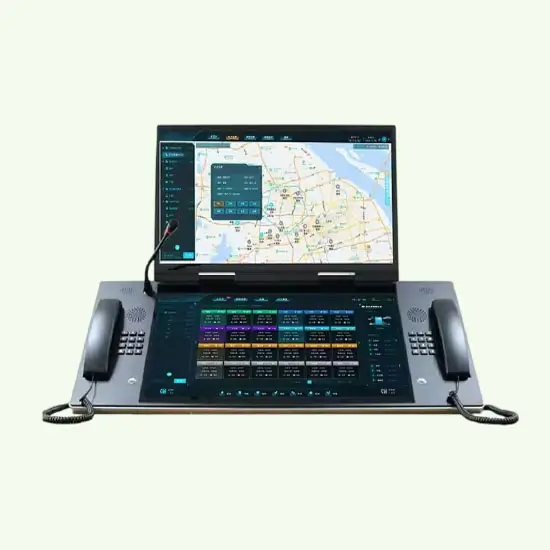

When calls spike, a normal phone system starts to feel blind. Customers wait, agents guess, and small mistakes turn into repeat calls and lost trust.
A VoIP call center is an IP-based setup that uses SIP/RTP plus an ACD layer to queue, route, record, and report customer calls so the right agent answers with the right context.
What “call center” means in a VoIP world
A call center in a VoIP system is not only “many phones.” It is a set of call-control rules and tools that turn raw SIP calling into managed customer handling. The core difference is ACD behavior. An automatic call distribution (ACD) layer 1 decides where a call goes, when it waits, which agent is eligible, and what happens when nobody answers.
In a SIP environment, calls still use SIP signaling 2 and media over the Real-time Transport Protocol (RTP) 3 (or SRTP). The “call center” part sits above that and adds business logic: queues, skills, priorities, callbacks, supervisor monitoring, and analytics. That logic can live inside an IP PBX, an add-on contact center module, or a hosted platform that peers to the PBX through SIP trunks.
The building blocks that make it a real call center
A practical VoIP call center usually includes these elements:
- PBX/ACD to route calls and manage agent states
- IVR to gather intent and deflect simple requests
- Queues to hold calls with rules, music, and overflow
- Agent endpoints (softphones, IP phones, web clients)
- Supervisor tools (wallboards, barging, whisper, coaching)
- Recording and reporting for compliance and improvement
- Integrations (CRM/helpdesk, SSO, identity, analytics)
| Component | What it does | Why it matters in daily operations |
|---|---|---|
| ACD/Queue engine | Chooses eligible agents and distributes calls | Direct impact on ASA, SLA, and abandonment |
| IVR | Collects intent, IDs, and choices | Reduces transfers and shortens handle time |
| Agent desktop | Call control + context | Cuts hold time and repeat questions |
| Recording | Stores evidence and coaching material | Supports compliance and quality programs |
| Reporting | Turns call flow into metrics | Shows what to fix and where to staff |
| SBC/SIP trunks | Connects sites and carriers securely | Controls NAT, SRTP, and interop |
What changes when everything runs on IP
A VoIP call center becomes easier to scale because adding agents is often licensing and endpoints, not wiring. It also becomes easier to integrate because SIP and APIs can connect the telephony flow to business systems. Still, the tradeoff is that quality depends on network design. If QoS is weak, jitter and loss show up as repeats, longer calls, and higher abandonment.
A good call center design treats voice like a real-time service, not like normal data traffic. It also treats identity and security as first-class settings, not add-ons.
A call center is basically a promise: calls will be answered with speed, accuracy, and traceability. The rest of this guide breaks down how to build that promise step by step.
Now the real work starts with the mechanics: queues, IVR, and skills routing.
How do I set up queues, IVR, and skills routing?
When callers wait without a plan, the queue becomes a complaint factory. Agents get random calls, transfers spike, and every metric starts drifting.
Set up queues and IVR by defining call intents, mapping them to skills and priorities, then building overflow rules so calls never get stuck when the “perfect agent” is not available.
Build the call flow from customer intent, not org chart
A strong setup starts with “why customers call,” not “who sits where.” The usual first pass is 5–10 call intents, like billing, returns, tech support, sales quotes, delivery status, and operator. Each intent becomes an interactive voice response (IVR) 4 branch and a queue target.
Then each intent gets routing rules:
- which agent group can answer
- which skills are required
- which language is needed
- what priority level applies
- what happens at max wait time
Queue rules that keep service predictable
Queues should not be “wait forever.” A practical queue needs:
- max wait time and overflow destination
- music/messages cadence (short and clear)
- estimated wait time or position (optional)
- callback offer rules (often after X seconds)
- agent ring timeout and re-offer logic
- no-answer policy (re-queue vs next agent)
Skills routing should be strict enough to improve resolution, but not so strict that calls starve. The safest pattern is skills-first with a fallback: try the best match for a short window, then widen eligibility.
A simple skills model that avoids chaos
A skills model that works well uses:
- a small set of skills (product line, language, tier)
- proficiency levels (1–5)
- routing weights or priorities
- a clear escalation path (Tier 2 or supervisor)
| Routing method | What it optimizes | Where it can fail | Safe guardrail |
|---|---|---|---|
| Longest idle | Fair distribution | Weak on complex intent mix | Add skills filters for key intents |
| Round robin | Simple fairness | Ignores proficiency | Use only for similar agents |
| Skills-based | Resolution and quality | Can shrink eligible pool too much | Add fallback after X seconds |
| Priority routing | VIP or urgent calls | Starves lower tiers | Cap priority share or add overflow |
A common technique is skills-based routing 5, where eligibility expands over time if the perfect match is not available.
Tie IVR data to the agent desktop
The IVR should collect only what helps routing and greeting. Examples:
- language choice
- reason code
- account ID or order number (if reliable)
That data should follow the call to the agent as screen pop context and as a short whisper if needed. This reduces the “repeat yourself” problem and lowers early-call friction.
Queue + IVR + skills routing is the spine of the center. Once it is stable, the next step is measurement, because KPIs are what turn a routing plan into an operational plan.
Which KPIs should I track—ASA, AHT, abandonment, SLAs?
Without the right KPIs, a call center runs on feelings. The team argues about what is “busy,” and improvements turn into guesswork.
Track ASA, AHT, abandonment, and service level as core KPIs, then add FCR, CSAT, occupancy, and adherence to protect quality and prevent “fast but bad” behavior.
Make definitions consistent before chasing targets
The biggest KPI failure is mismatched definitions. ASA must define when timing starts (queue entry vs IVR exit) and ends (agent answers vs caller hears agent). AHT must define what counts (talk + hold + ACW) and whether transfers split time per agent or per contact.
A simple metrics dictionary prevents weekly debates and makes trends real.
The core KPI set and what each one tells
- ASA (Average Speed of Answer): how long answered calls wait
- Abandonment rate: how many callers give up before answer
- Service level (SLA): percent answered within a time goal (example 80/20)
- AHT: how much agent time one call consumes
- FCR: whether issues are solved without repeat contact
- CSAT: customer perception of the experience
- Occupancy: how loaded agents are during staffed time
- Adherence: whether agents follow scheduled states
These metrics should be tracked by interval (often 15 minutes), not only daily, because peaks are what break service.
Use paired metrics so nobody “games” the numbers
If ASA improves but abandonment rises, the queue may be hiding pain. If AHT falls but repeat contacts rise, calls may be rushed. A safe KPI dashboard pairs speed with quality.
| KPI | What it measures | What improves it | What can break it |
|---|---|---|---|
| ASA | Wait time before answer | More availability, smarter routing | Long ring time, strict skills gating |
| Abandonment | Callers who hang up | Shorter waits, better messaging | Poor IVR, long holds, no callbacks |
| Service level | Speed target achievement | Staffing + routing | Spikes, schedule mismatch |
| AHT | Work time per call | Better tools, less ACW | Slow CRM, unclear ownership |
| FCR | Issue solved first try | Good routing + knowledge | Transfers, weak training |
| CSAT | Customer satisfaction | Clear greetings + faster resolution | Rushed calls, poor audio |
Add a “distribution view” to catch the long tail
Averages hide outliers. A few long calls can distort AHT. A burst of heavy demand can distort ASA. Tracking medians and 90th percentiles gives a truer picture, especially during incidents.
When you translate KPIs into staffing, a common reference point is the Erlang C staffing model 6.
KPIs only matter if the center can act on them. That action often requires integrations: CRM context, SSO control, and secure recording.
How do I integrate CRM, SSO, and call recording securely?
Agents waste minutes when they hunt for customer records. Security teams worry when portals use local passwords. Compliance teams worry when recordings leak.
Secure integration links calls to CRM records with screen pops, uses SSO for portal access, and applies role-based recording with encryption and retention so data stays useful and controlled.
CRM integration that lowers AHT without pushing agents
The fastest wins come from reducing hold time and ACW. A CRM integration should:
- pop the right record at answer (ANI match, case ID, or IVR-collected account)
- create or update a case automatically
- attach call metadata (queue, agent, disposition)
- store call outcome and next steps
- enable click-to-call for callbacks
When the CRM is slow or messy, the call center feels slow. Clean screen pops and guided fields reduce searching and repeating questions.
SSO and identity: control access the same way across tools
A call center usually includes several UIs: agent desktop, supervisor portal, recording portal, analytics dashboards, and sometimes intercom or access control dashboards. SSO keeps identity consistent across them.
A practical SSO setup:
- use SAML or OIDC with the company identity provider
- enforce MFA for admin and recording access
- map identity groups to roles (agent vs supervisor vs admin)
- keep audit logs for login and exports
Recording: treat it like customer data, not like a feature
Recording can be essential for disputes, coaching, and compliance. It can also become a risk if access and retention are weak. A secure recording design includes:
- consent handling where required
- role-based playback and download
- encryption in transit (TLS/SRTP) and at rest
- retention rules with legal hold capability
- pause/resume for payment or sensitive segments
- audit logs for every playback and export
| Area | Best practice | Why it matters |
|---|---|---|
| CRM screen pop | Pop on answer with verified match | Cuts hold time and repeats |
| SSO | SAML/OIDC + MFA for sensitive roles | Stops password sprawl |
| Role mapping | Groups → roles → permissions | Makes audits simple |
| Recording access | Least privilege + logs | Reduces internal misuse |
| Retention | Keep only what is needed | Lowers risk and storage cost |
A good integration plan saves time and reduces risk at the same time. Once one site works well, the next pressure appears: growth across sites, carriers, and networks.
How do I scale across sites with SIP trunks and QoS?
A single-site call center can run well on “good internet.” Multi-site operations cannot rely on luck. Voice quality and routing must stay consistent across regions.
Scale across sites by standardizing SIP trunk strategy, using SBCs for secure peering, designing QoS end-to-end, and adding redundancy so any site can fail over without breaking SLAs.
Choose a trunk strategy that matches your growth model
Multi-site designs often pick one of these patterns:
- Centralized trunks: one carrier ingress, calls routed to sites over WAN
- Distributed trunks: each site has local trunks, with central reporting
- Hybrid: central for core numbers, local for regional coverage and survivability
Centralized trunks simplify numbers and policy. Distributed trunks can reduce latency and improve local survivability. Hybrid often wins in real deployments when regulatory and uptime needs differ by region.
Use SBCs to keep interop and security stable
As sites grow, more “SIP dialects” appear: different carriers, different PBXs, different endpoints. An SBC normalizes signaling, anchors media when needed, and enforces TLS/SRTP policy. It also helps with NAT traversal and prevents one misconfigured site from breaking global calling.
QoS is not optional for real-time traffic
QoS must be end-to-end. A solid baseline is to follow a proven Quality of Service (QoS) for VoIP 7 approach:
- mark voice and signaling with consistent DSCP values
- prioritize voice on LAN switches and Wi-Fi
- shape WAN traffic to protect RTP during bursts
- monitor jitter, packet loss, and latency, not only bandwidth
A center can have plenty of bandwidth and still sound bad if jitter is high or if Wi-Fi is unstable. For remote agents, the best control is still the agent environment: wired internet, stable router, and a tested headset path.
Design redundancy like a call center, not like an office
Call centers need predictable failover:
- redundant PBX/ACD nodes or cloud regions
- redundant SBCs
- multiple SIP trunks or carriers
- overflow routing to other sites or backup teams
- local survivability for critical queues if WAN fails
| Scaling lever | What it fixes | What to plan |
|---|---|---|
| Multi-site queue design | Peaks and local coverage | Shared vs site-specific queues |
| SBC policy | Security and interop | TLS/SRTP, codec lists, NAT rules |
| SIP trunk redundancy | Carrier outages | Dual carriers, failover order |
| QoS end-to-end | Voice clarity | DSCP, WAN shaping, Wi-Fi rules |
| Geo failover | Regional outages | DR runbooks and test drills |
Scaling is less about buying more licenses and more about making the same call quality and the same metrics possible everywhere. When routing, identity, and QoS are standardized, growth becomes predictable.
Conclusion
A VoIP call center combines SIP calling with queues, IVR, routing, KPIs, and secure integrations. With solid trunks, SBC policy, and QoS, it scales across sites without breaking service.
Footnotes
-
Learn what ACD does (queueing, distributing, and agent eligibility) and why it defines “call center” behavior. ↩ ↩
-
Review SIP signaling basics to understand how calls are set up, routed, and controlled in VoIP systems. ↩ ↩
-
Understand RTP media transport so you can diagnose one-way audio, jitter effects, and call quality issues. ↩ ↩
-
See how IVR works to collect intent and reduce transfers before calls reach agents. ↩ ↩
-
Learn how skills-based routing improves first-contact resolution while avoiding “perfect agent” bottlenecks with fallbacks. ↩ ↩
-
Use Erlang C concepts to connect volume and handle time to staffing needs and expected queue delays. ↩ ↩
-
Practical QoS guidance for prioritizing voice traffic end-to-end across LAN/WAN so call quality stays stable at scale. ↩ ↩