
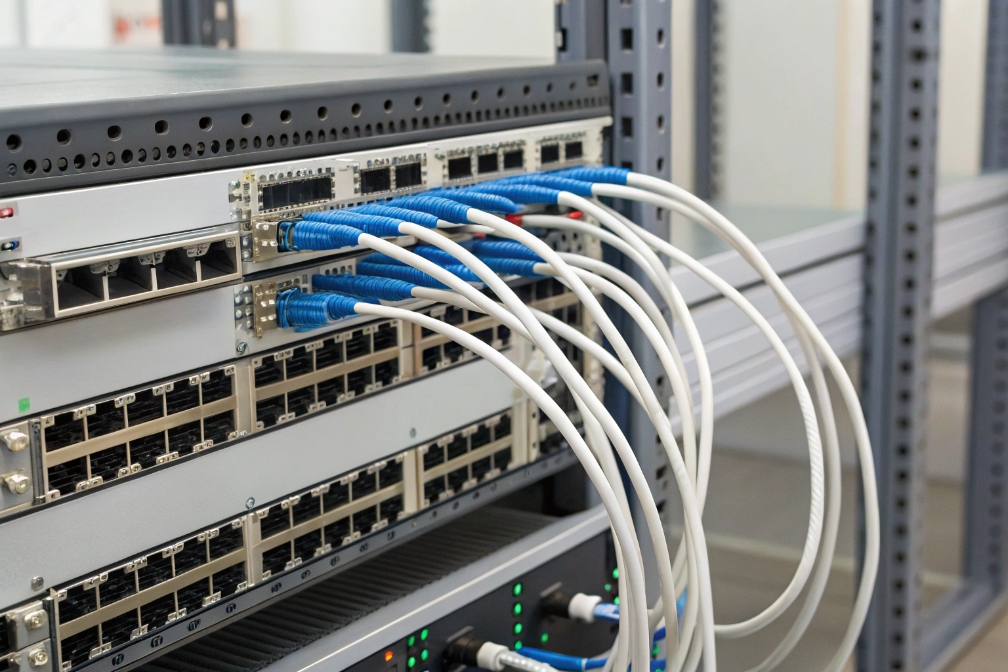
Dropped calls and “one-way audio” often look like a PBX problem, but the real cause can live inside the carrier network you never see.
Carrier network infrastructure is the carrier’s SIP backbone—PoPs, SBCs, softswitch/IMS routing, media relays, and peering—that connects your trunks to the PSTN and other VoIP networks with policy, security, and resilience.
What sits inside a carrier SIP backbone
In most SIP trunk deployments, the carrier is not just “a pipe.” It is a full voice network with edge protection and routing logic. The main pieces usually look like this:
- PoPs (Points of Presence): carrier edge sites near major internet exchanges and metro areas.
- Session Border Controllers (SBCs) 1: the “front door” for SIP signaling and RTP media, plus security and normalization.
- Softswitch / IP Multimedia Subsystem (IMS) core 2: the call control brain that decides where calls go.
- Media gateways: interwork between IP voice and legacy PSTN where needed.
- Routing databases: number routing, LNP, and policy tables that pick the right exit path.
- Peering/interconnect: links to other carriers, IPX hubs, and wholesale routes.
| Carrier element | What it does for your SIP trunk | What you notice when it fails |
|---|---|---|
| PoP | Shorter path, lower latency | Higher delay, random reroutes |
| SBC | NAT help, security, SIP cleanup | Registration drops, blocked calls |
| Core routing | Chooses destinations and failover | Wrong routes, failed call setup |
| Media relay | Anchors RTP and fixes NAT | One-way audio, no ringback |
| Transcoding farm | Converts codecs | CPU spikes, audio delay |
| Peering | Connects to other networks | Low ASR, strange call quality |
Why carrier infrastructure matters in PBX, intercom, and contact center work
In SIP intercom and IP PBX projects, most effort goes into endpoints, dial plans, and call routing. That is correct, but carrier infrastructure decides the “outside world” behavior:
- How fast calls set up during peak hours
- Whether early media 3 works (ringback, announcements)
- Whether DTMF survives across networks
- Whether SRTP/TLS can be used end-to-end (or per leg)
- Whether caller ID stays trusted and consistent
- Whether calls can fail over to another PoP when links fail
In one multi-site deployment, the PBX configuration was stable, but calls still dropped for a few minutes each week. The fix was not inside the PBX. The carrier moved our trunk to a second PoP and enabled active reroute. After that, call drops stopped. That experience made one point clear: carrier design is part of the system design.
A simple mental model to troubleshoot faster
When there is a problem, the fastest way to isolate it is to split the call into legs:
1) Enterprise side: phones/intercoms, LAN, QoS, PBX/SBC
2) Access side: internet/MPLS/SD-WAN link to the carrier
3) Carrier side: PoP, SBC, core routing, peering
4) Termination side: the far-end carrier and the called network
If the issue appears only for certain destinations, it is often peering or route choice. If it appears only during peak time, it is often capacity, congestion, or overload control. If it appears as one-way audio, it is often media anchoring, NAT, or blocked RTP.
Carrier infrastructure is not “someone else’s problem.” It is part of the end-to-end SIP design, so it needs to be specified the same way you specify PBX features.
The next step is understanding how carriers actually route SIP traffic across PoPs, SBCs, and peering.
How do carriers route SIP traffic across POPs, SBCs, and peering?
When a trunk “registers,” many teams assume calls travel one straight line. In real networks, routing is dynamic, and that is where surprises come from.
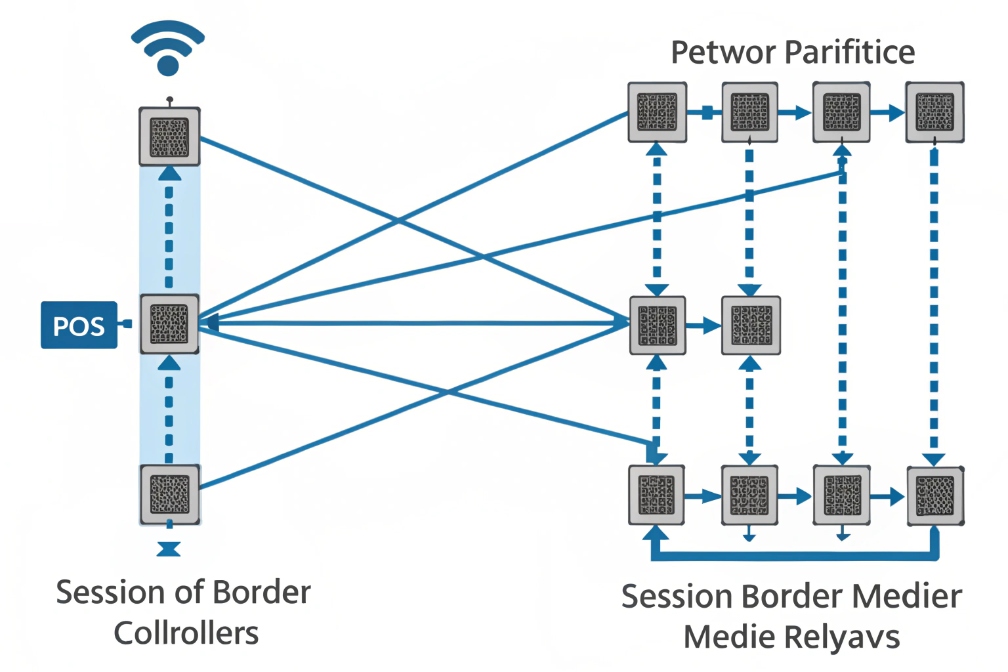
Carriers route SIP by terminating your trunk at an edge PoP/SBC, then using core routing and peering policies to select an exit path based on number databases, health, and quality signals.
PoPs and edge SBCs are the first decision point
Your PBX or enterprise SBC connects to a carrier PoP. That PoP hosts carrier SBCs that do more than accept SIP:
- protect the carrier from malformed SIP and floods
- enforce rate limits and session admission control
- normalize SIP headers and DTMF behavior
- anchor or relay RTP when NAT is involved
- terminate TLS and SRTP when offered
Some carriers use DNS SRV, geo-DNS, or anycast ideas so your trunk lands on a “best” PoP. That can lower latency, but it can also shift your path during outages.
Core routing uses numbering and policy databases
Once the call is inside the carrier core, routing is driven by data:
- number ownership and portability (LNP where applicable)
- destination type (local, long distance, mobile, toll-free)
- route cost and route quality
- congestion signals and failover rules
This is why two calls to two different cities can behave very differently, even if they leave your PBX in the same way.
Peering is where “outside network” quality is decided
Peering is the set of interconnects the carrier uses to reach other networks. A high-quality carrier typically has:
- direct peering with major networks
- multiple upstreams and IPX hubs
- quality-based route selection (not only least cost)
- clear escalation paths for bad routes
| Routing stage | What is selected | What you should ask your carrier |
|---|---|---|
| Ingress | Which PoP/SBC receives your SIP | Can I choose primary/secondary PoPs? |
| Core | Which internal route handles the call | Do you use quality-based routing? |
| Egress | Which peer or gateway terminates | Do you monitor ASR/ACD by route? |
| Failover | What happens when links fail | How fast do you reroute calls? |
What to log on your side to match carrier routing
For fast troubleshooting, keep these artifacts:
- SIP ladders (INVITE/183/200/ACK/BYE timing)
- response codes on failures (408/503/487 patterns)
- RTP stats (loss, jitter, MOS proxies if available)
- which PoP IP you hit (for geo issues)
- time-of-day correlation (peak vs off-peak)
With that, discussions with the carrier become technical and short. You can say “calls to this destination fail only when we land on PoP B” instead of “calls sometimes drop.”
Next, uptime depends on redundancy choices. The carrier can be strong, but your trunk design still needs protection.
Which redundancy options protect my uptime: multi-POP, diverse paths, geo-redundant SBCs?
Uptime problems rarely come from one big failure. They come from small failures: one fiber cut, one PoP maintenance window, one upstream peering issue.
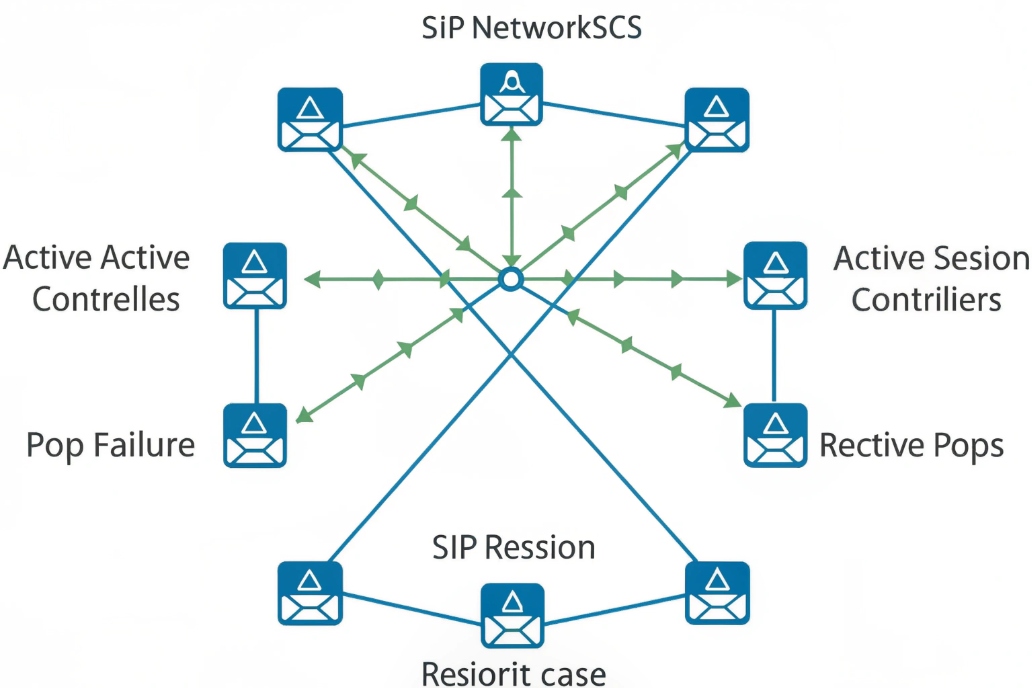
The strongest uptime comes from layered redundancy: multi-PoP trunk endpoints, diverse access paths, and geo-redundant SBC/PBX design so either a site or a carrier edge can fail without blocking calls.
Multi-PoP is the baseline for carrier-grade SIP trunks
A single PoP can be stable, but it is still a single failure domain. Multi-PoP design gives:
- shorter path for more users
- failover when a PoP is overloaded or down
- smoother maintenance windows
Active-active PoP designs allow calls to land on either PoP at any time. Active-standby designs push traffic to one PoP unless there is failure.
Diverse paths protect the “last mile” problem
Many outages are not inside the carrier core. They are between your site and the carrier:
- ISP issues
- local fiber cuts
- BGP routing problems
- upstream congestion
Diverse paths can be:
- two ISPs with separate entrances
- internet plus private link (MPLS or direct connect)
- SD-WAN with voice-aware policies
The point is not only redundancy. It is also performance. A second path can keep jitter low during congestion.
Geo-redundant SBCs and PBX design protect your side
Carrier redundancy is only half. On your side, survivability needs:
- redundant enterprise SBCs (or redundant PBX nodes if they act as the edge)
- split registration and trunk endpoints across nodes
- tested failover for inbound DIDs and outbound routes
- clear emergency routing during outages
| Redundancy layer | Protects against | What to verify in testing |
|---|---|---|
| Multi-PoP trunk | PoP outages, maintenance | Calls reroute without manual changes |
| Diverse access | ISP/local link failure | RTP stays stable under failover |
| Geo SBC/PBX | Site or node failure | Registrations re-home and calls complete |
| Dual carriers | Carrier-wide outage | DID failover and caller ID consistency |
A realistic failover playbook
A good design includes a simple plan:
- Primary trunk to PoP A
- Secondary trunk to PoP B (same carrier) or carrier 2
- Automatic outbound failover by route
- Inbound DID failover rules (redirect, reroute, or alternate DID mapping)
- Alerting that triggers before callers notice
When redundancy is done right, failover becomes routine instead of panic.
Next, even with perfect redundancy, call quality can still be poor if QoS and codec behavior are ignored.
How do QoS, jitter buffers, and codecs affect call quality on my trunks?
Calls can be “connected” and still sound bad. Most of the time the problem is not SIP signaling 4. It is real-time media behavior.
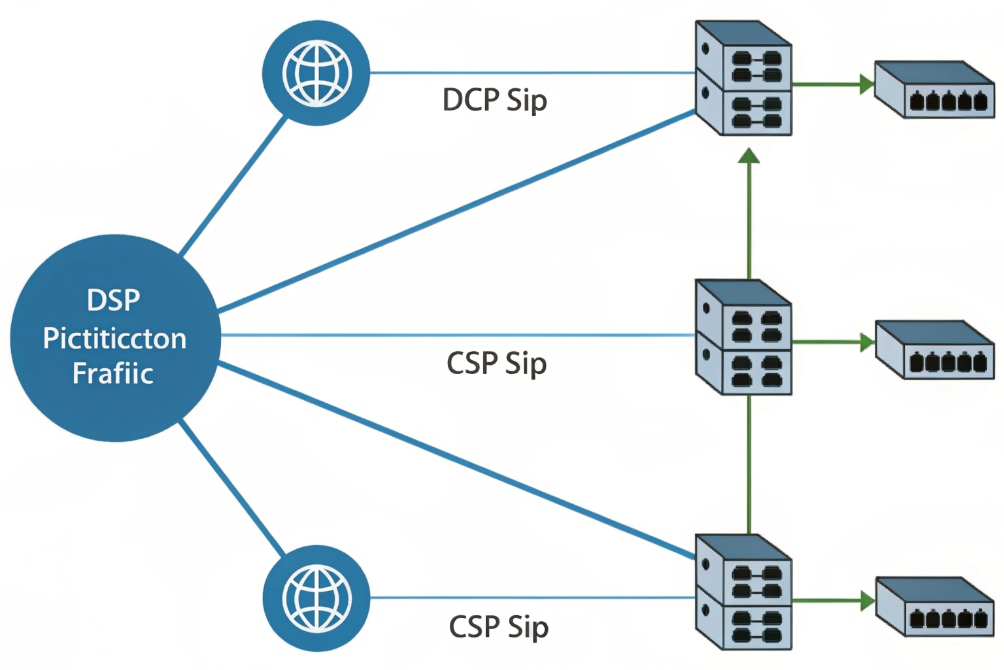
Call quality on SIP trunks depends on latency, jitter, and packet loss, plus codec choice and jitter buffer behavior; QoS and traffic shaping keep RTP stable during busy-hour bursts.
Latency, jitter, and loss are the real call-quality limits
Voice is sensitive to delay and variation. In plain terms:
- Latency: how long packets take to arrive
- Jitter: how much that delay changes
- Loss: how many packets never arrive
Even if bandwidth is large, jitter can ruin audio. This is why QoS matters. Voice needs priority and stable scheduling, especially on shared links.
Jitter buffers hide problems but also create delay
Jitter buffers exist in endpoints, PBXs, media relays, and carriers. They smooth jitter by holding packets briefly. That helps audio stability, but it adds delay.
If jitter is small, a small buffer gives crisp audio. If jitter is high, buffers grow, and the call can feel slow, with people talking over each other. So the real fix is not “bigger jitter buffer.” The fix is reducing jitter at the network level with QoS and clean routing.
Codec choice changes bandwidth, resilience, and interop
Codecs define how voice is encoded. Common options include:
- G.711: simple and widely compatible, higher bandwidth
- G.722: HD audio on many IP phones, still moderate bandwidth
- Opus: very flexible, good under loss, but needs end-to-end support
- G.729: low bandwidth, but not always desired due to licensing and quality limits
In trunking, the best codec is often the one both sides support without transcoding. Transcoding can add delay and load, especially during peaks.
| Codec | Typical use | Bandwidth feel | Notes |
|---|---|---|---|
| G.711 | PSTN interop baseline | Higher | Simple, reliable |
| G.722 | HD voice inside enterprise | Medium | Great for internal and supported trunks |
| Opus | Modern UC and WebRTC bridges | Flexible | Strong under jitter, not universal on trunks |
| G.729 | Bandwidth-limited links | Low | Use only when needed and supported |
What to enforce for QoS on trunk links
A stable SIP trunk design usually includes:
- Differentiated Services (DiffServ) 5 marking for RTP and SIP signaling
- WAN shaping that protects RTP during bursts
- avoidance of noisy Wi-Fi for agent endpoints
- monitoring for jitter/loss, not only throughput
- clear codec lists to prevent “random negotiation”
In many multi-site designs, a simple rule helps: keep RTP on the most stable path, and use failover for outages, not for normal load balancing that changes delay too often.
Quality is what customers feel. So it must be specified and measured like a product requirement.
Next, carrier selection should be driven by SLAs, security, and DDoS protection that match your business risk.
What SLAs, security, and DDoS protections should I require from my carrier?
A carrier can offer “99.99% uptime” and still leave you exposed if the SLA ignores the things that break real calls, like congestion, fraud, or SIP floods.
Require SLAs that cover availability and voice performance, plus carrier-grade security like SBC rate limits, TLS/SRTP support, fraud controls, and DDoS mitigation with clear escalation and reporting.

SLA terms that matter for SIP, not only for internet
Uptime alone is not enough. For SIP, the most useful carrier commitments include:
- PoP availability and maintenance windows
- call setup performance (post-dial delay targets)
- jitter and loss targets on private connectivity
- time to detect and time to restore for incidents
- support response times for severity levels
Some carriers publish only broad SLA numbers. In that case, ask for operational KPIs in monthly reports, even if they are “best effort” on the public internet.
Security controls that should be standard
A strong carrier trunk offering should provide:
- SBC protections: topology hiding, SIP normalization, rate limiting
- TLS for SIP signaling and Secure RTP (SRTP) 6 support for media (when required)
- IP allowlisting and authentication controls
- fraud analytics: destination limits, unusual spend alerts, blacklists
- DDoS mitigation: SIP flood filtering and scrubbing capacity
- STIR/SHAKEN handling where relevant
Also, ask how the carrier isolates your trunk from other customers. Multi-tenant mistakes can cause noisy-neighbor issues during attacks.
Proof matters more than promises
Security and SLA claims should be backed by:
- a clear NOC escalation process
- ticket SLAs and severity definitions
- portal visibility into trunk status and call failure codes
- access to logs or summaries (CDRs, SIP failure trends)
- regular security updates for their edge SBC stack
| Requirement | What to ask for | What to verify during trial |
|---|---|---|
| Multi-PoP service | Two PoPs, clear failover | Calls complete when PoP is forced down |
| DDoS protection | SIP flood mitigation + rate limits | Carrier blocks abnormal spikes without taking you down |
| Fraud controls | Spend caps, destination controls | Alerts fire on test patterns |
| Encryption | TLS/SRTP options | Interop with your PBX/SBC and phones |
| Reporting | CDR access, failure reasons | You can explain call failures quickly |
A carrier checklist that fits SIP intercom and PBX projects
For SIP intercom and emergency-style deployments, the requirements are even stricter:
- inbound reliability matters more than fancy features
- failover must be tested, not only described
- E911/E112 handling must be documented
- callback behavior must be predictable
- support must respond fast, because downtime can be safety risk
For contact centers, add:
- guaranteed concurrency policies
- overflow routing support
- stable caller ID and signing behavior
- performance reporting by destination quality
Carrier infrastructure is an engineering dependency. When the SLA and security terms match your deployment risk, the trunk becomes a foundation instead of a weak link.
Conclusion
Carrier SIP infrastructure decides routing, resilience, quality, and security on your trunks. With multi-PoP design, strong QoS, and clear SLAs, SIP deployments stay stable under real load.
Footnotes
-
Defines SBC requirements and behavior for SIP interconnects and normalization. ↩ ↩
-
Explains IMS core concepts used by carriers for routing and service control. ↩ ↩
-
Clarifies how early media works and why ringback/announcements can fail. ↩ ↩
-
Baseline SIP specification for call setup, responses, and troubleshooting signaling issues. ↩ ↩
-
Shows how DiffServ prioritization supports real-time RTP stability on shared networks. ↩ ↩
-
SRTP standard for encrypting RTP media while maintaining interoperability. ↩ ↩








