

A team line can feel “unfair” fast. The first extension rings all day, the last one stays quiet, and people start ignoring calls because the load is not balanced.
Circular call routing is a hunt/ring strategy that rotates incoming calls through a member list, starting each new call at the next member in sequence so call delivery is distributed more evenly than fixed-order routing.
Circular routing is a “rotating starting point”
The easiest way to picture circular routing is a pointer. The group has members in an ordered list:
A → B → C → D
The PBX keeps a “next start” pointer. For the next incoming call, it starts at the pointer and then hunts forward. After the attempt (or after an answer, depending on platform rules), the pointer moves to the next member. Over time, the “first ring” rotates so the same person is not always first.
Circular routing is common on:
- call groups (including a hunt group 1 style design)
- small support teams that do not need full ACD
- reception coverage where fairness matters
It is also easy to confuse circular routing with a routing loop problem. A routing loop is a misconfiguration where calls bounce between rules endlessly. Circular routing is a planned rotation strategy. The key difference is that circular routing always has a defined overflow end state (voicemail, backup group, queue, operator), so the call does not chase itself forever. For deeper protocol context, see SIP loop detection 2.
| Concept | What it means | Good outcome | Bad outcome |
|---|---|---|---|
| Circular routing | Rotating hunt start point | Fairer distribution | Slightly longer answer time for late members |
| Routing loop | Misconfigured forwards/rules | None | Endless attempts until timeout/failure |
Circular routing is a simple way to spread call load without ringing everyone at once. The next step is separating it from similar terms like round-robin and sequential, because vendors use these words differently.
How does circular routing differ from round-robin and sequential?
These terms are often used as if they are the same. In practice, each one implies different behavior around retries, pointer movement, and fairness.
Sequential routing uses a fixed order every time, circular routing rotates the starting point, and round-robin is often used as a synonym for circular but may include stricter “one attempt per member” logic depending on the PBX.
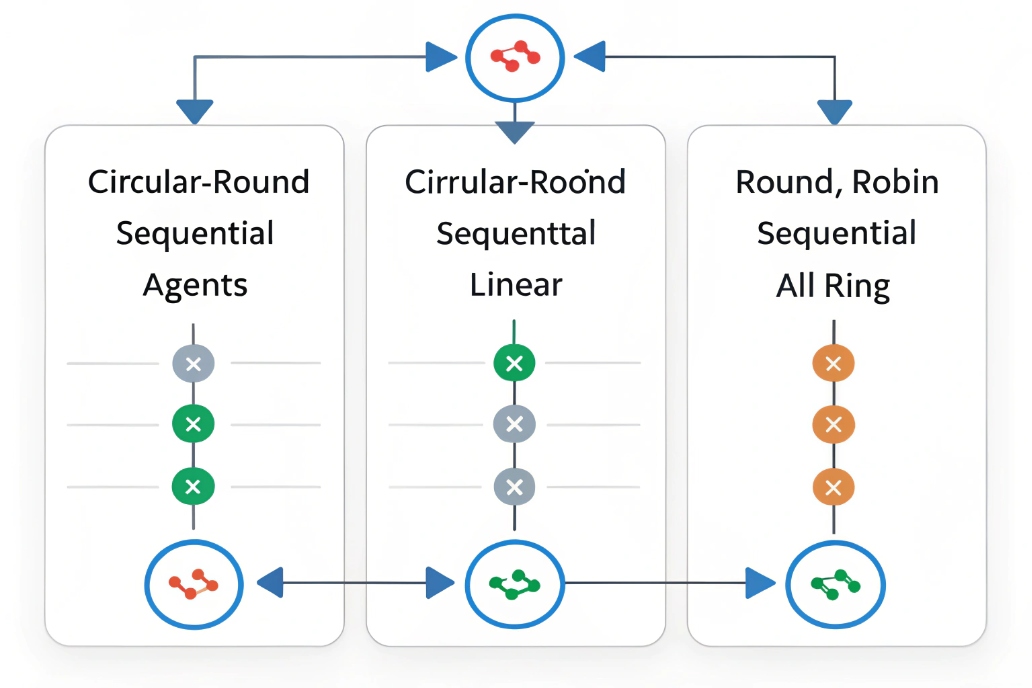
Sequential (linear) routing
Sequential routing means every call always starts at the top of the list. If the list is A → B → C, then every inbound call tries A first, then B, then C. This is great for:
- primary/backup coverage
- escalation paths
But it is not fair by default.
Circular routing
Circular routing keeps the list but rotates the starting point per call. So one call starts at A, the next starts at B, then C, then back to A. It is more fair than sequential because “first ring” rotates.
Round-robin (how it is used in the field)
Many PBXs label circular routing as round-robin. Some systems also offer a stricter mode aligned with round-robin scheduling 3:
- Each new call is offered to the next member only once.
- If they do not answer, the call moves on.
- The pointer advances even on a no-answer attempt.
Other systems advance the pointer only when a member answers. That difference matters for fairness and for time-to-answer.
| Strategy | Where calls start | Pointer moves when | Fairness | Time-to-answer risk |
|---|---|---|---|---|
| Sequential | Always at member #1 | Never | Low | Medium (depends on member #1 behavior) |
| Circular | Rotates each call | After attempt or answer (platform dependent) | High | Medium (late members wait longer) |
| Round-robin | Often same as circular | Often after each call offer | High | Medium |
A practical rule: when comparing PBXs, do not trust the label. Confirm:
- Does it rotate the first ring?
- Does it skip busy/DND/unregistered members?
- Does the pointer move on no answer or only on answer?
- How many ring cycles are allowed?
Once the behavior is clear, the next decision is whether circular routing is the right tool for your use case.
When should I use circular routing for call groups or queues?
Not every team should use circular routing. Some teams need the fastest possible answer. Others need fairness and reduced ring fatigue.
Use circular routing when you want fair distribution and less disruption than ring-all, and when the team can tolerate slightly longer time-to-answer on some calls compared to always trying the same first extension.

Good fits for circular routing
Circular routing works best when:
- members have similar skills and can handle similar calls
- fairness matters (no “always first” problem)
- the group is small to medium
- you want less noise than ring-all
- you want simple behavior without full ACD complexity
Typical examples:
- inside sales team
- small support desk
- reception backup line
- dispatch coverage in industrial sites
When circular is not the best choice
Circular routing can be a weak fit when:
- calls are high urgency and must be answered instantly (ring-all or queue)
- skills vary widely (a queue with skills-based routing 4 is usually better)
- some members are frequently unavailable (pointer can “waste” time)
- you need advanced queue KPIs and SLAs (ACD queue is better)
For contact centers with strict SLAs, circular routing is often used only for overflow groups, not as the main routing method. An Automatic call distributor (ACD) 5 provides more control over wait messaging, callbacks, and skill weighting.
Circular routing with overflow is the most stable pattern
A safe pattern is:
- circular routing for the first 20–40 seconds
- then overflow to a queue or voicemail with a clear message
- optional callback offer in the overflow path
| Use case | Circular routing fit | Better alternative if not |
|---|---|---|
| Small team hotline | Strong | Queue if SLAs are strict |
| Reception backup | Strong | Ring-all for emergency lines |
| Tiered support | Medium | Skills-based queue |
| Call center main line | Low to medium | ACD queue with longest-idle/skills |
Once the decision is made, the next step is configuration. Most PBXs implement circular routing through a ring group or hunt group setting.
How do I configure circular routing on my IP PBX?
Configuration usually looks simple: pick “circular” in the ring strategy dropdown. Still, the real results come from the supporting timers and eligibility rules.
Configure circular routing by creating a ring/hunt group, selecting the circular/round-robin strategy, ordering members, setting ring timeouts and max cycles, and defining overflow destinations for no-answer conditions.
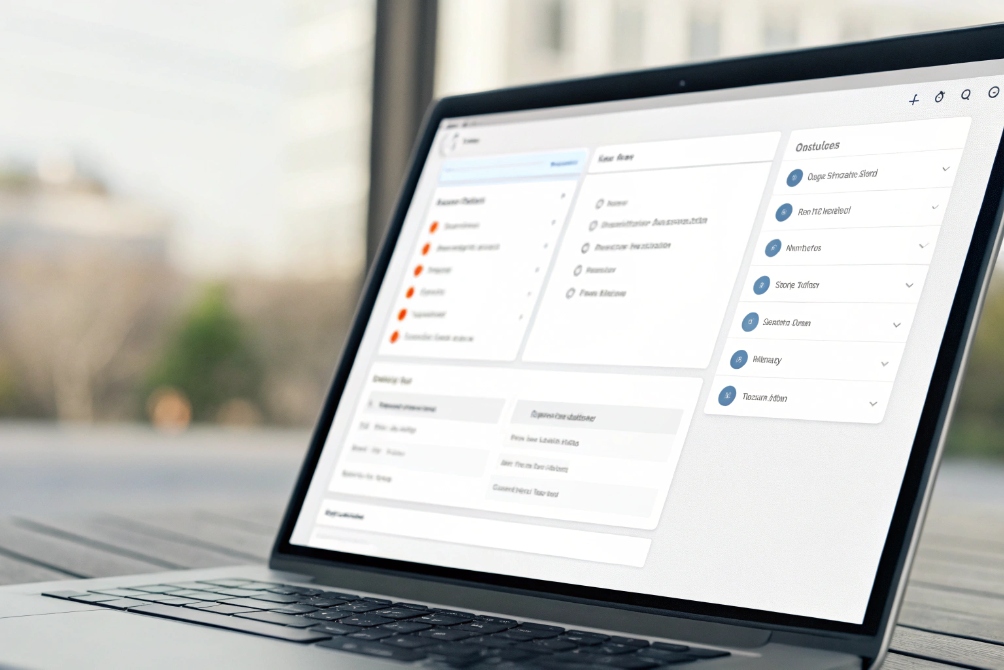
The minimum configuration items that matter
1) Member list and order
Even in circular routing, order matters because it defines rotation. Keep it intentional.
2) Ring timeout per member
Typical starting point is 15–20 seconds. Shorter reduces wait but increases missed answers. Longer increases ASA-like waiting.
3) Max cycles
How many times the PBX loops the list before overflow. Most teams are happiest with 1–2 cycles.
4) Eligibility rules
Decide if the PBX skips members who are:
- busy on a call
- DND
- not registered
- out of schedule
- at concurrency cap (for agents)
5) Overflow target
Do not leave calls to die inside the group. Overflow to:
- backup group
- queue
- voicemail
- operator
- external number (with press-to-accept if mobile)
Add schedules and caller ID early
Circular routing feels better when members know what line is ringing. Use:
- group caller ID (department DID)
- whisper/label announcement (“Sales line”)
- business-hour schedules using Time Conditions 6 and (where supported) time-of-day routing 7
| Setting | What it changes | Why it matters |
|---|---|---|
| Ring timeout | Answer speed | Too long increases wait |
| Skip busy/DND | Routing efficiency | Stops ringing dead phones |
| Pointer movement rule | Fairness | Defines who gets “first ring” next |
| Overflow destination | Customer experience | Prevents endless ringing |
| Schedules | After-hours behavior | Keeps calls handled predictably |
A quick test plan
After setup, test:
- 10–20 calls in a row and confirm first-ring rotates
- behavior when a member is busy or DND
- behavior when a member is unregistered
- overflow timing and voicemail behavior
- caller ID/label consistency
Once configured, leadership will ask about metrics and fairness. Circular routing changes who rings first, so it can influence answer times and workload perception.
Will circular routing affect ASA, AHT, or agent fairness?
Teams want fairness, but they also want fast answers. Circular routing sits right between those goals.
Circular routing improves fairness by rotating first-ring attempts, but it can increase average time-to-answer if calls frequently start with members who are slow to answer; AHT usually stays unchanged, while ASA-like wait time depends on ring timeouts and skip rules.
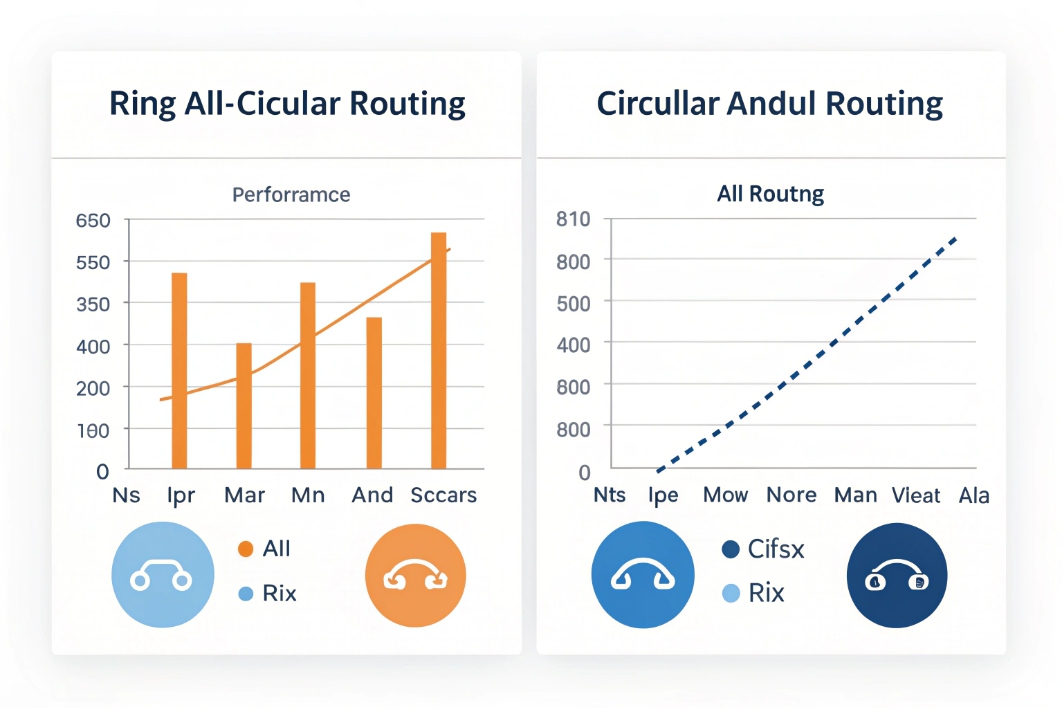
ASA impact: mainly a ring-time and skip-rule story
If your reporting treats “answer” as when an agent answers, circular routing can change the distribution of who answers, and that can slightly change ASA. The biggest driver is still:
- ring timeout per member
- how fast the average member answers
- whether busy/DND members are skipped immediately
If the PBX wastes 20 seconds ringing a member who is away, ASA-like waiting increases. So eligibility rules matter more than the circular algorithm itself.
AHT impact: usually neutral
AHT is talk time + hold time + after-call work. Circular routing does not change the conversation after answer. It can indirectly affect AHT only if:
- agents receive calls outside their comfort zone (skill mismatch)
- customers are more frustrated due to longer wait (more venting)
That is why circular routing fits best when members have similar skills.
Fairness impact: usually strong and visible
Circular routing prevents one person from always being first in line. This improves perceived fairness and often improves answer behavior because members feel the system is balanced.
Still, fairness depends on the pointer movement rule:
- if the pointer moves only on answered calls, a fast-answer agent can still take more calls
- if the pointer moves on each attempt, load spreads more evenly but some calls may take longer to reach the best responder
Practical tuning recommendations
- Keep ring timeouts short enough to avoid long waits (15–20s is a common start)
- Skip busy/DND/unregistered members quickly
- Use 1–2 cycles, then overflow
- If SLAs matter, use circular routing as an overflow group behind an ACD queue
| Goal | Best setting choice | Why |
|---|---|---|
| Faster answers | Short ring time + skip ineligible | Removes wasted ringing |
| More fairness | Pointer moves on attempts | Rotates “first ring” more aggressively |
| Better customer experience | Early overflow | Prevents long ring chains |
| Cleaner operations | Label/whisper | Members answer with context |
Circular routing is a practical tool when used with good timers and overflow rules. It makes small teams feel balanced without the complexity of a full contact center engine.
Conclusion
Circular call routing rotates who is tried first for each inbound call. With correct timers, skip rules, and overflow, it improves fairness while keeping answer times under control.
Footnotes
-
Learn what “hunt group” means in telephony and how calls are distributed across members. ↩ ↩
-
Technical background on SIP loop detection to avoid call-routing loops and repeated forwarding. ↩ ↩
-
See the classic round-robin method and why it’s used to distribute work fairly. ↩ ↩
-
Overview of skills-based routing concepts for directing calls to the best-qualified agent group. ↩ ↩
-
Understand ACD basics and why queues offer more control than simple hunt/ring groups. ↩ ↩
-
Quick guide to PBX “Time Conditions” for business-hours and after-hours call handling. ↩ ↩
-
Cisco example of time-based routing to change call behavior by schedule and business hours. ↩ ↩








