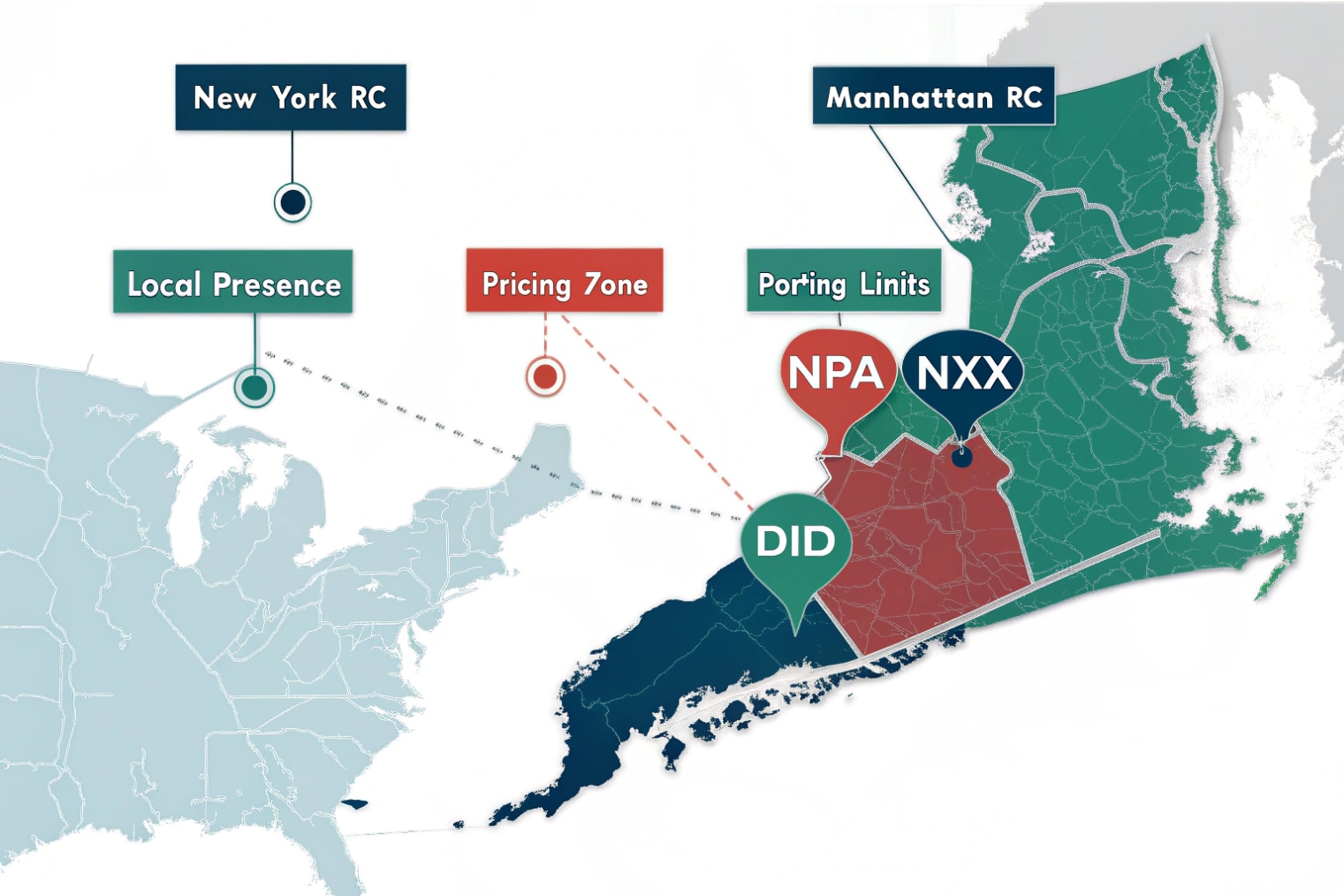
Customers judge trust by the number they see. Rate centers shape that view. They also shape cost and porting rules. Ignore them and projects slip.
A rate center is a geographic area that defines local calling and number assignment. Your DID ties to one rate center, which fixes “local presence,” pricing zones, and most porting limits.
Now I will map rate centers 1 to the real choices you make. I will show how they change DID availability, costs, portability, and E911. I will keep it practical with steps, tables, and examples you can use in a build sheet.
How do rate centers affect my DID availability and local presence strategy?
Sales wants local numbers in every city. Ops wants simple routing. Rate centers sit between these goals. Pick right and both sides win.
Rate centers decide which NPA-NXX blocks 2 exist in a market. Carriers hold inventory per rate center, not per city name. Your local presence depends on that exact match.
Why availability depends on rate centers, not just area codes
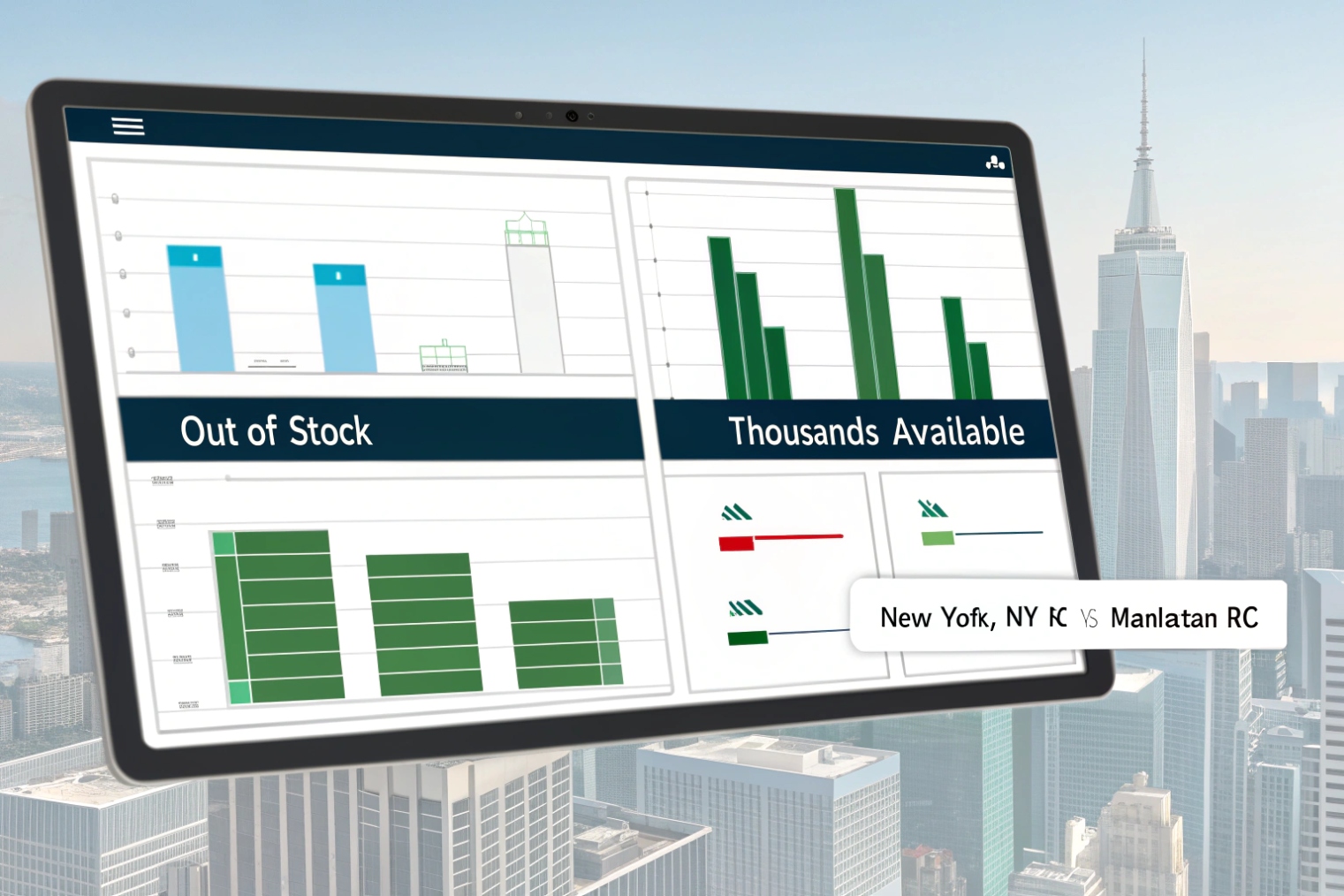
An area code is wide. A rate center is narrow. Carriers receive number blocks for specific rate centers. So, “I need a New York number” is not enough. You must ask for numbers in New York, NY rate center, or Manhattan, or another overlapping one in the metro. In many metros there are several rate centers that share the same area code. Inventory in one does not help another. This is why one provider can say “out of stock” while another has thousands.
Local presence that actually feels local
Local presence is more than an area code. People look at the prefix. They also expect calls from nearby to be “free” from their plan’s view. Two numbers in the same rate center are usually local to each other. Two numbers in neighboring rate centers may or may not be local. If your customers sit in a suburb rate center, picking a downtown rate center may break the “local” expectation. Answer rates drop when callers see a prefix that does not match their neighborhood norms.
Strategy I use with sales teams
I start with a target account list and map postal codes to rate centers. Then I request DID inventory reports from carriers for those exact rate centers. I avoid vanity picks that land in the wrong center. I also keep at least two suppliers per critical rate center to prevent stockouts. When the market is tight, I order spare DIDs and hold them in a warm pool for faster onboarding.
Document it like a product
I keep a table that ties each campaign or site to a rate center. I track the supplier, inventory count, failover routing, and notes on local calling areas. When marketing asks for a new city, I check the table first. If the primary rate center is dry, I propose an adjacent center and explain the change in local scope. This makes timelines real.
| Region | Target City | Required Rate Center | Backup Rate Center | Primary Carrier | Backup Carrier | Pool Size |
|---|---|---|---|---|---|---|
| NY Metro | Midtown | New York | Manhattan | Carrier A | Carrier B | 50 |
| Bay Area | San Jose | San Jose | Santa Clara | Carrier C | Carrier D | 30 |
| Chicago | Schaumburg | Schaumburg | Chicago | Carrier A | Carrier C | 25 |
What costs change when I pick numbers from different rate centers?
Costs hide in small choices. Rate centers set those choices. The wrong pick raises your bill for years. The right pick keeps it flat.
Rate centers affect inbound DID MRCs, local vs. toll rating for callers, CNAM/LSR fees by market, port-in fees, and sometimes 911 cost tiers tied to PSAP coverage.
DID pricing and market tiers
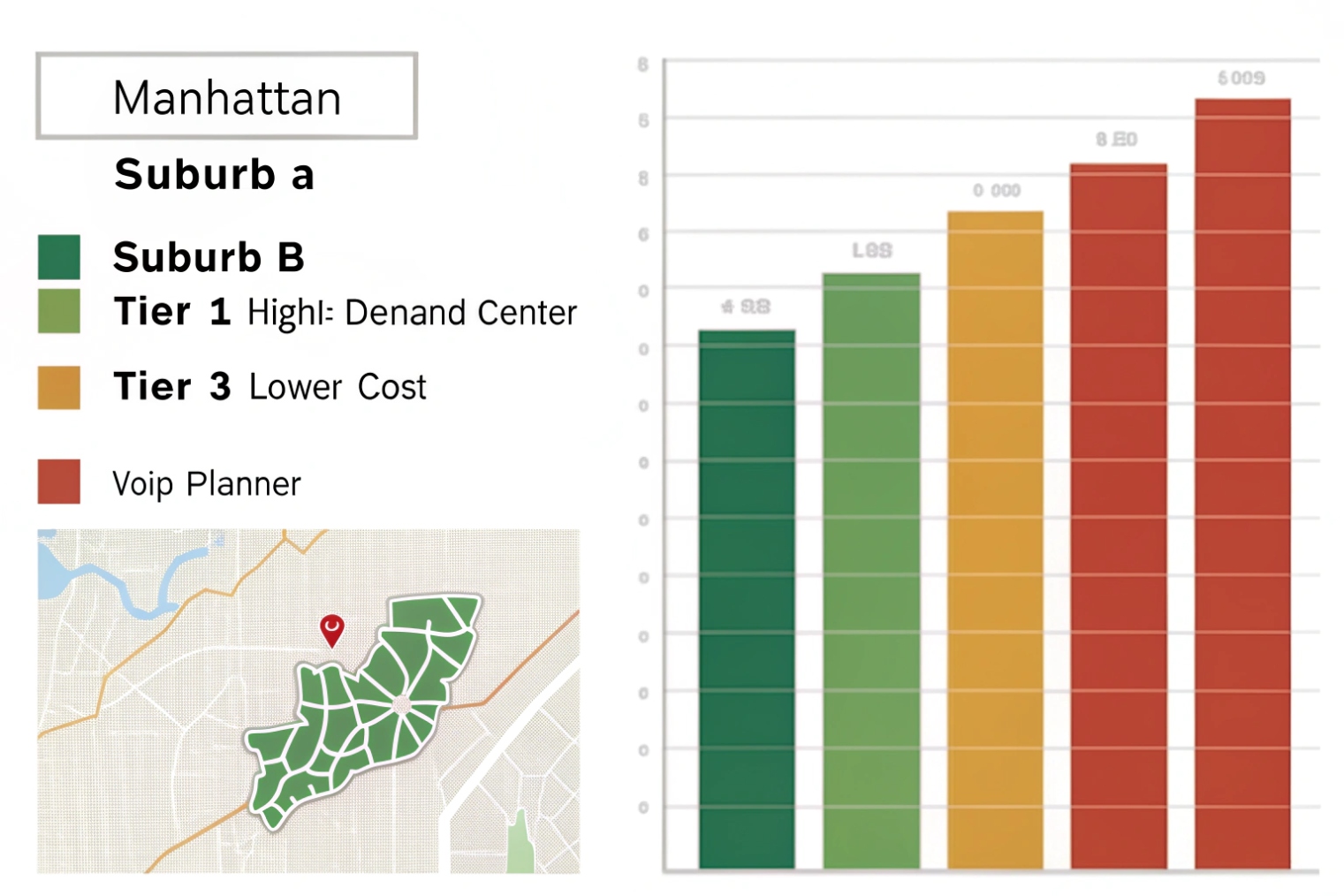
Carriers price DIDs by market tier. Tier often maps to demand and scarcity in a rate center. A Manhattan or downtown core may cost more than a small suburb. If you do high-volume campaigns, those extra cents per DID per month add up. When a metro has multiple viable rate centers that your buyers accept, choose the cheaper center with solid inventory and the same local reach.
Local vs. toll for your callers
Your own inbound per-minute charges may be flat. But your callers still see local vs. toll based on THEIR rate center and yours. If you pick a rate center outside their local calling area, some callers may pay toll charges or avoid the call. Even if most plans are flat today, the perception of “not local” still hurts answer rate. For service lines, that small hit in answer rate translates to longer resolution times and more tickets.
CNAM, LNP, and one-time fees
CNAM storage and dips can vary by market and by carrier. Some carriers bundle it; others add a fee per number and per query. LNP (port-in) fees are often flat per number, but expedite fees and reseller-of-record complexities hit large metros more. If the losing carrier’s footprint in a given rate center is messy, expect extra back-and-forth and cost. You can avoid churn by choosing numbers from a rate center where your chosen carrier is the original block holder or has deep interconnects.
Transport, SBC, and toll-free offsets
If you service many distant rate centers but anchor to a few SBCs, your transport cost is mostly IP transit, not TDM. Still, you may add toll-free backup for spikes or outages. Good local presence can reduce toll-free minutes. If each seat gets a local DID in the right rate center, fewer callers need toll-free. That reduces TFN minutes even when local inbound is cheap.
Cost planning worksheet
I use a simple model: MRC per DID × count + expected CNAM dips + LNP events + E911 MRC per registered address. I then add a 10% buffer for “hard” rate centers. I revisit the model quarterly to see if traffic shifted to new suburbs and if a cheaper overlapping rate center can take new allocations.
| Cost Element | How Rate Center Impacts It | Planning Tip |
|---|---|---|
| DID MRC | Market tier scarcity | Pick adjacent centers when acceptable |
| Inbound Minutes | Caller’s local/toll view | Match customers’ rate centers |
| CNAM | Market policies | Bundle where possible |
| LNP Fees | Losing carrier behavior | Prefer rate centers with clean Local Exchange Routing Guide (LERG) 3 history |
| E911 MRC | PSAP mapping | Consolidate addresses per site where allowed |
How will rate centers impact number portability to my SIP trunks?
Porting fails for simple reasons. Rate centers sit at the center of those reasons. Know the rules and you avoid missed go-live dates.
Most ports must stay in the same rate center. Moving a number across rate centers usually requires a new number. Align your SIP carrier footprint with the source rate center.
Same rate center rule of thumb
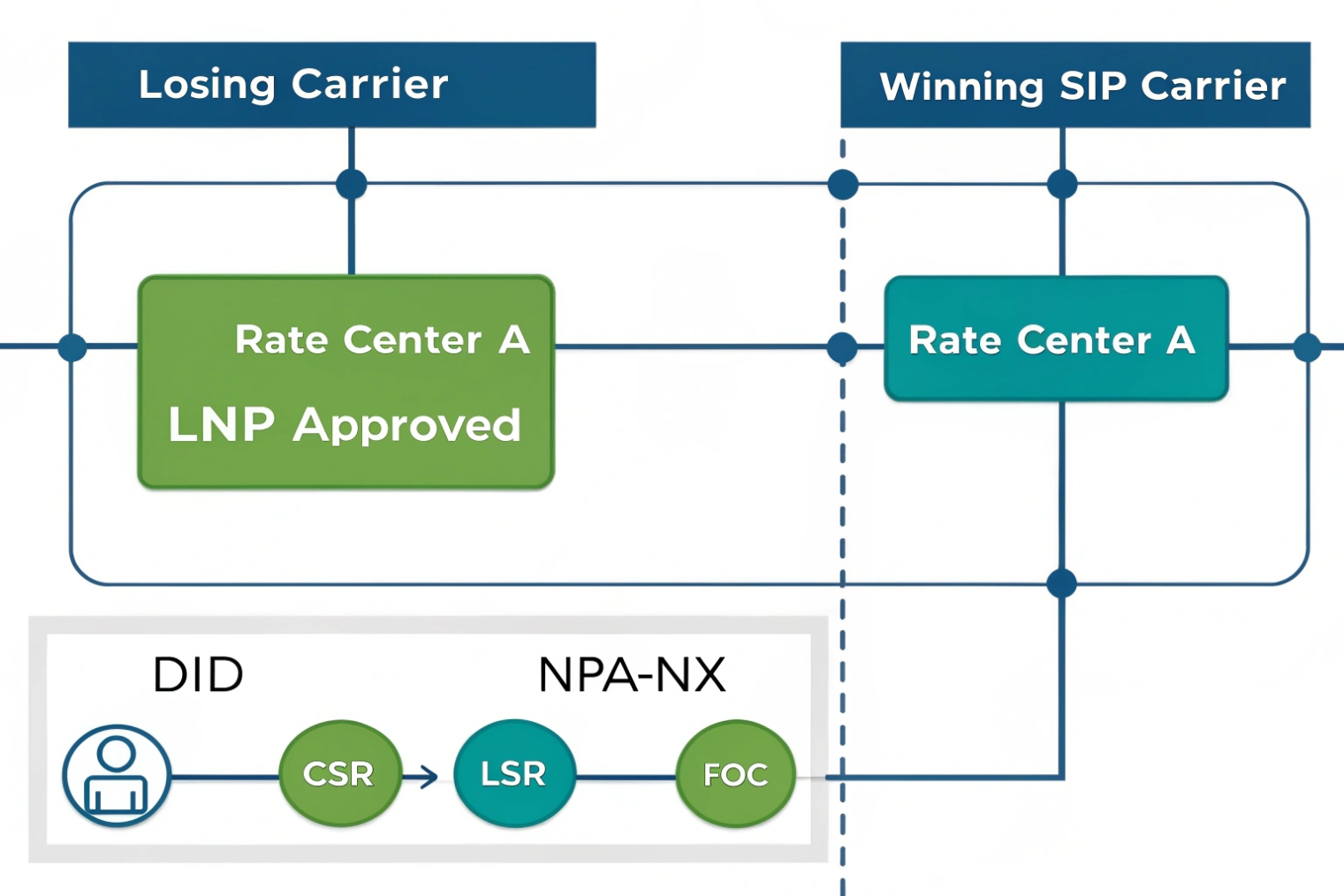
Local Number Portability (LNP) 4 is strong, but it is not “move anywhere.” The general rule: port within the same rate center. If you try to port a number from Rate Center A to a carrier who only serves Rate Center B, the request gets rejected. You can sometimes keep the number by keeping it in A through a partner who has coverage in A, then routing to your SIP trunk. That adds a hop and sometimes cost, but it saves the number.
CSR, BTN, and service address
Clean paperwork avoids stalls. The Customer Service Record (CSR) 5 must match name, service address, and Billing Telephone Number (BTN). Those fields tie back to the rate center and the original carrier’s records. If the address sits outside the rate center footprint, some carriers flag a mismatch even for VoIP numbers. I always pull the CSR first, fix any 911 or CNAM data, and then submit the LSR. This reduces jeopardy codes and FOC delays.
Split-rate center metro traps
Large metros hold many overlapping rate centers. The losing carrier may have assigned your block to a different rate center than you expect from the city name. When you plan a mass port, export the full inventory with NPA-NXX and rate center names. Group by rate center. Then pick an acquiring carrier with coverage for every group. If one small group lacks coverage, port those numbers to a different partner or keep them with the original and forward.
Cross-center moves and “port and park”
Sometimes you must change the rate center because the business moved. True cross-rate-center ports are often impossible. The practical path is “port and park” in the original rate center with a carrier that supports remote routing, then issue new DIDs in the new rate center for outward identity. You keep legacy inbound alive while you retrain customers and update listings.
Testing and rollback
For big ports, build a rollback that keeps inbound live. Use temporary TNs in the same rate center to test your SIP trunks and E911, then swap the Caller ID when the port completes. I keep a failover that forwards from the losing carrier to a toll-free or to a test DID, so we can confirm media paths and features before cutover.
| Porting Scenario | Same Rate Center? | Likely Outcome | Mitigation |
|---|---|---|---|
| Carrier A → Carrier B within same RC | Yes | Clean port | Standard LSR with CSR match |
| Carrier A RC1 → Carrier B RC2 | No | Rejection | New DID in RC2; port-and-park in RC1 |
| Multi-city mass port | Mixed | Partial FOC | Split by RC; multi-carrier plan |
| Address mismatch on CSR | N/A | Jeopardy | Correct CSR before LSR |
| Losing carrier not OCN-of-record | N/A | Delay | Extra validation; expect longer FOC |
Which rate centers should I choose to meet E911 and regulatory needs across sites?
Emergency calls must reach the right PSAP every time. Rate centers guide that path. Choose with safety first, then branding.
Pick rate centers that align with each site’s PSAP coverage and support nomadic 911. Register dispatchable location per number. Avoid mismatched centers that confuse address validation.
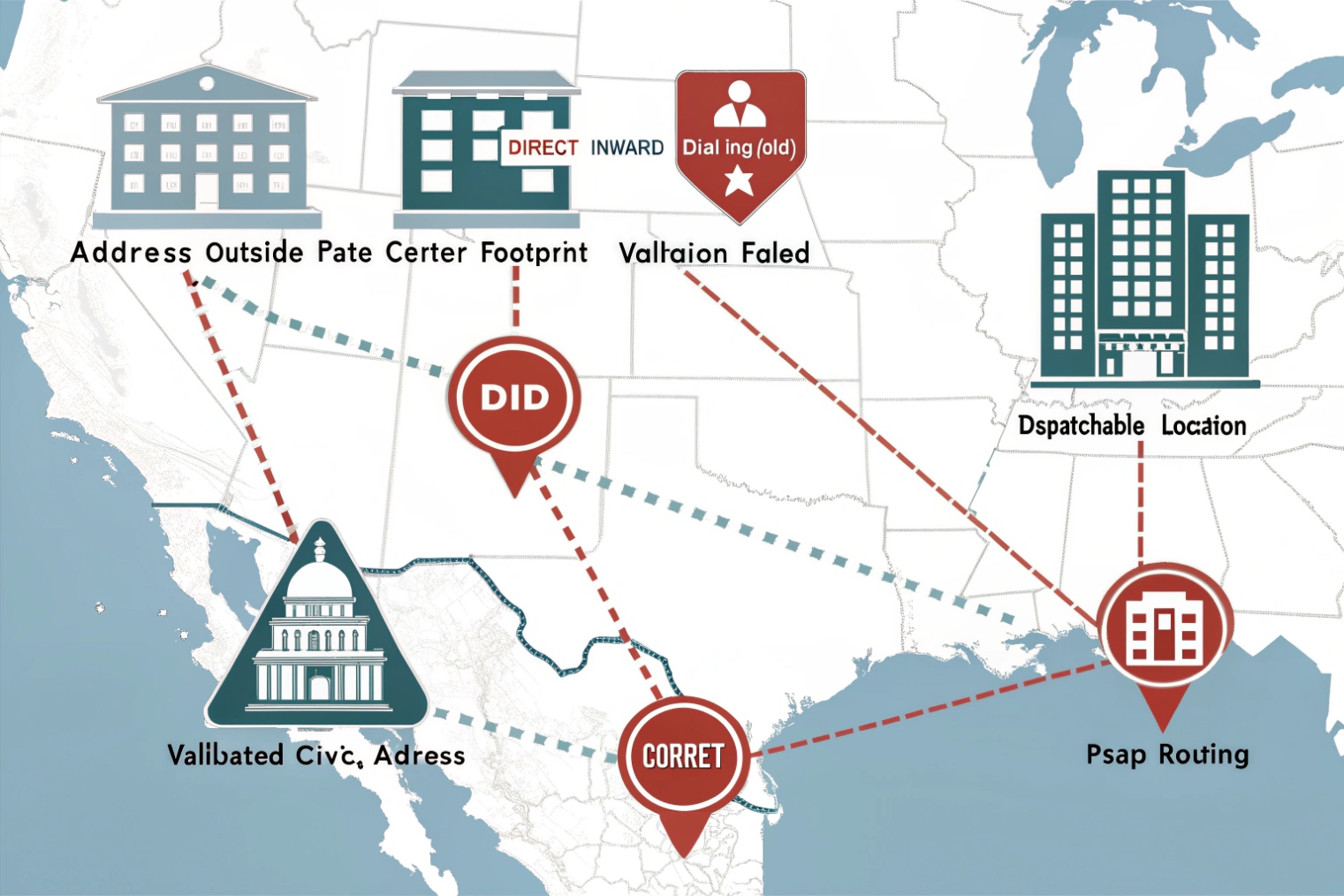
PSAP alignment and dispatchable locations
E911 routes calls to a Public Safety Answering Point (PSAP) based on the number and the registered address. Many providers validate the address against the rate center’s footprint. If you pick a number from a distant rate center and then register an address far outside that area, validation may fail or fall back to a national relay. That slows response. The safe pattern is simple: for each physical site, choose a rate center that the provider supports for E911 with verified address coverage. Then register a dispatchable location per floor, suite, or zone as required by local rules.
Nomadic users and softphones
Modern teams move. For softphones and laptops, use a nomadic 911 feature that prompts for location and updates a dynamic address store. Some platforms let you bind a user’s DID to multiple validated addresses and switch by network hints or user input. This works best when the DID’s rate center does not block address validation in those places. When you build a remote-first plan, prefer numbers from rate centers that your E911 provider flags as “broadly valid” across the state or province.
Multi-site enterprises
Create a mapping of sites → validated addresses → chosen rate centers. Keep a column for the PSAP ID and test call procedure. Many PSAPs allow non-emergency test windows. Schedule tests when you first assign numbers to a site, after any major carrier change, and once a year. Train reception to recognize a live 911 callback and route it fast.
Regulatory notes you should not miss
- In the U.S., Kari’s Law and RAY BAUM’S Act 6 require direct 911 dialing, on-site notification, and a dispatchable location. Rate center mismatches do not excuse non-compliance.
- In Canada, NG9-1-1 7 rollouts add new routing that can depend on location information quality. Keep your ALI/MSAG records clean and current.
- In many countries outside North America, the idea is similar though names differ. The number must point to the right emergency center. Pick local geographic numbers that providers support for that city and register the exact civic address.
A simple selection workflow
- For each site, list the civic address and building zones.
- Ask your carrier which rate centers support E911 validation for that address.
- Choose the rate center with the best inventory and the correct PSAP mapping.
- Assign DIDs and register dispatchable locations per floor/room as needed.
- Place a test call during allowed windows and save the case number.
- Re-test after moves, adds, or carrier migrations.
| Site | Address Validated? | PSAP Reached | Rate Center | E911 Status | Test Date |
|---|---|---|---|---|---|
| HQ | Yes | City PSAP | Downtown RC | Passed | 2025-06-10 |
| Plant | Yes | County PSAP | County RC | Passed | 2025-07-02 |
| Remote Hub | Yes (nomadic) | National relay fallback | Metro RC | Needs update | 2025-08-14 |
Conclusion
Pick numbers by rate center, not city name. Match your customers, protect porting, control cost, and meet E911. Document the mapping. Test. Then scale with confidence.
Footnotes
-
Definition and context for rate centers and local calling boundaries. ↩︎ ↩
-
Explains NANP number structure (NPA/NXX) used for inventory, routing, and market planning. ↩︎ ↩
-
Shows how LERG data supports routing and rate center references across carriers. ↩︎ ↩
-
Overview of portability concepts and why geography and carrier coverage still matter. ↩︎ ↩
-
Practical guidance on requesting CSR data and avoiding common porting rejections. ↩︎ ↩
-
Compliance basics for direct 911 dialing, notifications, and dispatchable location requirements. ↩︎ ↩
-
Canadian regulatory context and transition information related to Next Generation 9-1-1. ↩︎ ↩