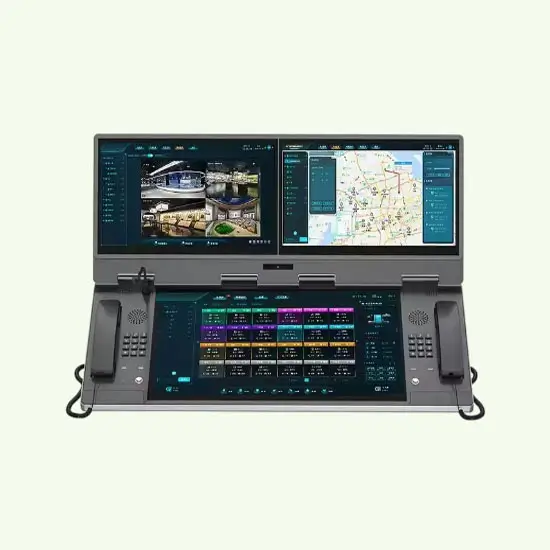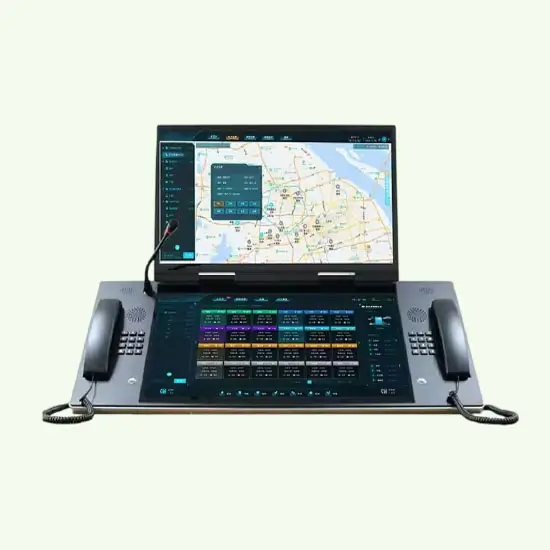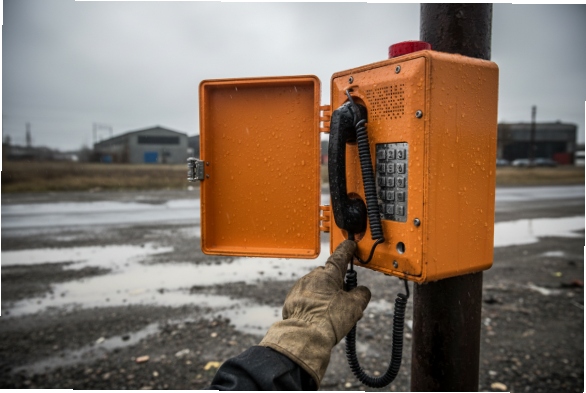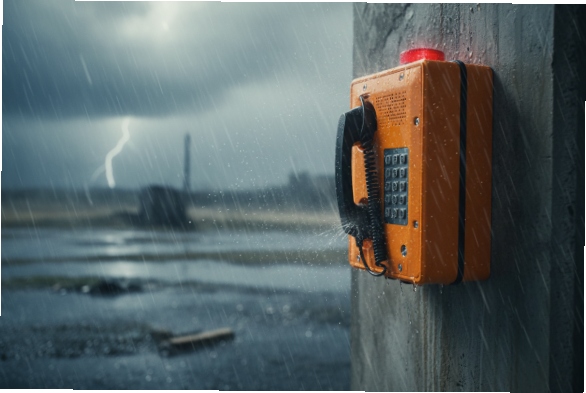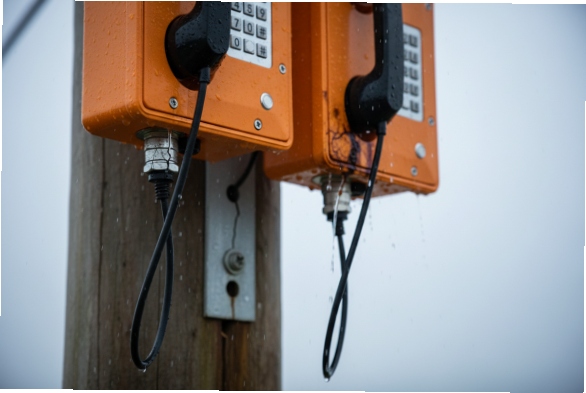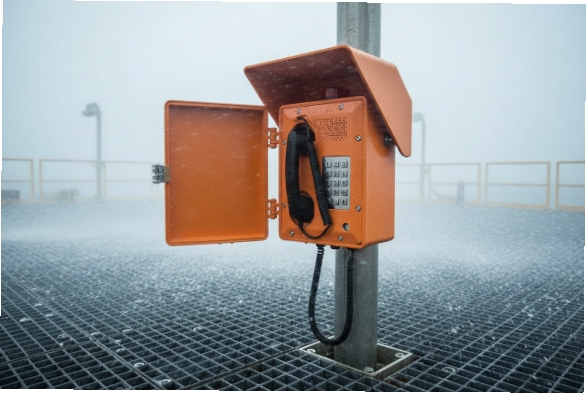

A keypad is the first part users touch and the first part vandals attack. If it fails, the whole Ex phone becomes a dead endpoint and a maintenance headache.
Yes, the keypad can be customized on most explosion-proof telephones, but changes must stay inside the certified mechanical and sealing design. Layout, legends, materials, and firmware mapping are all possible with the right OEM approach.

The safe way to customize a keypad without losing reliability
Think in “zones” of customization
Keypad customization is not one decision. It is a set of decisions across four zones:
1) User interface 1: key layout, legends, tactile feel, and backlight behavior
2) Mechanical layer 2: key caps, carriers, fasteners, and anti-pry features
3) Sealing layer 3: the gasket line, keypad perimeter seal, drain paths, and IP performance
4) Electrical + firmware layer 4: scan matrix, debounce logic, SIP feature mapping, and API triggers
When these zones stay aligned, customization is safe and repeatable. When one zone changes alone, problems appear. For example, a “better looking” keycap can reduce travel and create missed presses with gloves. A new legend ink can fade under solvent wipes. A new keypad membrane thickness can change gasket compression and cause leaks after thermal cycling.
Decide your site profile before choosing a keypad type
In refineries and offshore sites, the main threats are oil, solvents, UV, salt, and vibration. In tunnels and prisons, the main threats are repeated impact, prying, and intentional damage. The best keypad type changes with the site.
| Site type | Main keypad threat | Best starting keypad direction | What to lock in the spec |
|---|---|---|---|
| Refinery process area | Chemicals + gloves + washdown | Sealed mechanical or sealed membrane | IP66/67 + solvent resistance + glove use |
| Offshore | Salt + UV + vibration | 316L keys or sealed piezo | Corrosion plan + anti-loosen + sealing margin |
| Tunnel / public | Vandal impact | Anti-vandal metal keys or piezo | IK target + recessed face + tamper screws |
| Prison | Repeated abuse + prying | Heavy faceplate + minimal gaps | Anti-pry + no pull points + reinforced mount |
Treat certification as a boundary, not a blocker
In real OEM work, customization is common. The key is to keep changes within the approved construction. Many projects succeed by using a “modular keypad family” where the housing, sealing interface, and entry system stay the same, while the key legends, mapping, and some materials change as controlled variants.
A good customization plan reduces risk and also speeds approval. It keeps the phone reliable and keeps the project schedule predictable.
If the goal is long service life, the best keypad is the one that stays readable, pressable, and sealed after years of cleaning and vibration.
Some customers want a keypad that looks unique. The smarter goal is a keypad that survives unique conditions.
The next sections break down layout, materials, firmware mapping, and OEM options in a way that a plant engineer and an EPC reviewer can both accept.
What keypad layouts can be tailored—numeric, SOS, speed-dial, or PTT—with laser-etched or raised legends?
A standard keypad often slows response in emergencies. Users waste time searching for the right key, especially with gloves, noise, and stress.
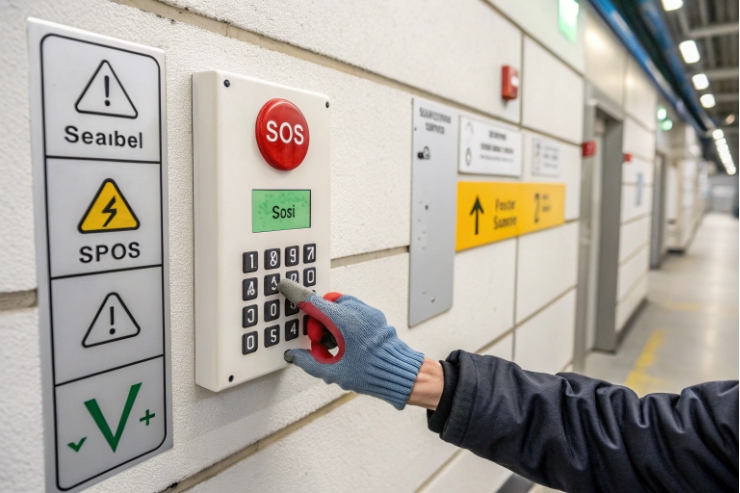
Layouts are highly customizable: numeric pads, SOS-only, speed-dial keys, and PTT-focused designs are all feasible. Legends can be laser-etched, engraved, raised, or icon-based, as long as readability and chemical resistance are proven.
Common layout options that work in the field
Most Ex phone keypad requests fall into a few proven patterns:
- Full numeric (0–9, *, #) for general calling and PBX compatibility
- SOS-only (1–3 keys) for emergency endpoints where misuse must be limited
- Speed-dial block (4–8 keys) for operations teams calling fixed numbers
- PTT-first layout for dispatch-style talk groups, with large PTT and channel keys
Layout is not only about key count. It is also about spacing, key size, and “glove geometry.” A key that is fine bare-handed can be too small with winter gloves.
Legends: choose a method that survives cleaning and UV
Legend choice is a durability choice:
- Laser marking 5 works well on many plastics and coated metals, but it depends on coating depth and contrast.
- Engraved + paint fill can stay readable under abrasion if the fill is chemical-resistant.
- Raised legends help tactile use and help in low light, but they can trap dirt if the geometry is sharp.
- Icons and color blocks reduce language issues, but color must be UV stable.
A real field lesson: one site used alcohol wipes and a strong degreaser during a shutdown. Printed legends faded in weeks. A later batch used engraved legends and the problem stopped. The price difference was small, but the maintenance savings were big.
Layout spec items that prevent rework
A layout drawing is not enough. The purchase spec should lock:
- key travel and actuation force range
- minimum character height and contrast
- legend method and durability expectation
- emergency key color and protective recess design
| Layout goal | Recommended design detail | Why it helps |
|---|---|---|
| Fast emergency call | Large SOS key with guard or recess | Prevents wrong presses under stress |
| Minimal misuse | Limited keys + locked programming | Reduces random dialing and tampering |
| Dispatch and paging | PTT + channel keys + clear tactile cues | Works in noise and with gloves |
| Multi-language sites | Icon legends + high contrast | Cuts training time |
A custom layout is usually the easiest customization to deliver, because it can be done with tooling inserts, faceplate changes, or keycap sets, while keeping the internal safety design stable.
Are materials customizable—316L vandal-proof keys, sealed membrane, or glove-friendly mechanical switches meeting IK10 and IP66/67?
Many projects ask for “IK10 + IP66/67” and assume any keypad can do both. The truth is that keypad style is often the limiting factor for impact and sealing.
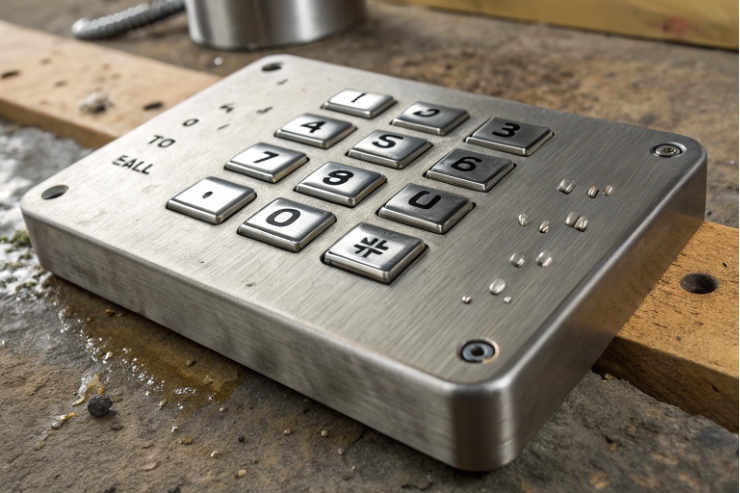
Yes, materials can be customized, but the keypad choice must match the environment: 316L metal keys for vandal and corrosion, sealed membranes for simple sealing, and glove-friendly mechanical or piezo options for harsh use. Meeting IK10 and IP66/67 depends on the full assembly, not only the key material.
316L vandal-proof metal keys
316L stainless steel 6 metal keys are a strong option for tunnels, offshore walkways, and public access zones because they:
- resist impact and prying better than soft elastomers
- survive repeated cleaning and UV better than many plastics
- keep appearance stable in corrosive air
The risk is not the metal. The risk is the sealing system behind it. Metal keys need a reliable internal seal and a strong carrier plate. If the carrier flexes, sealing can suffer after impact.
Sealed membrane keypads
Membrane keypads offer simple sealing. They are often the easiest route to high IP performance. They also reduce moving parts. But they have trade-offs:
- less “positive” tactile feedback with thick gloves
- surface can be cut or peeled in vandal zones
- legends must be chosen for abrasion and solvent resistance
Membrane works best in controlled-access plant zones where vandal risk is low.
Glove-friendly mechanical switches and piezo
Mechanical switches can be tuned for travel and force. That helps operators with gloves. Piezo keys have no moving travel, so they can be very durable and easy to seal. Some operators love piezo in washdown areas. Some prefer mechanical feel in noisy operations.
How to write a material spec that matches IK and IP goals
Do not only state “IK10 keypad.” State how the weakest part is protected.
| Keypad type | Best for | Common weak point | Mitigation that works |
|---|---|---|---|
| 316L mechanical keys | Vandal + corrosion | Carrier plate flex | Thicker faceplate + reinforced carrier |
| Membrane | Sealing + simple use | Cutting/peeling | Recessed window + edge protection |
| Glove mechanical | Operations with gloves | Wear of domes/contacts | High-cycle switch + stable force spec |
| Piezo | Washdown + long life | User learning curve | Clear feedback + training label |
If the site is prison-grade, the keypad should also be paired with anti-pry face geometry and tamper fasteners. A strong keypad can still fail if someone can get a tool under an edge.
Can firmware map keys to SIP features—auto-dial, multicast paging, emergency macros, and HTTP/MQTT API triggers?
A custom keypad is only half the value. The real value is how the phone behaves when a key is pressed during an emergency or an operations event.
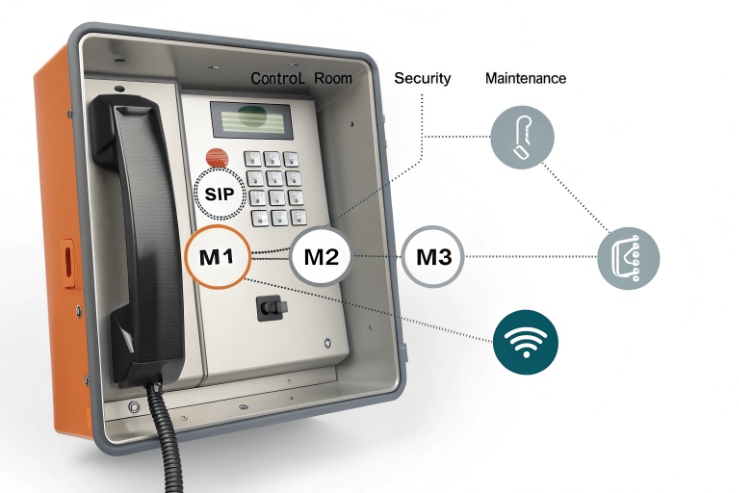
Yes. Firmware can map keys to SIP functions like auto-dial, hotline behavior, speed-dial lists, and multicast paging. Many projects also use key presses to trigger HTTP API actions, and in some systems MQTT events, but this must be designed carefully for security and certification boundaries.
SIP behaviors that are commonly tied to keypad keys
In industrial deployments, these mappings are common and stable:
- Hotline / auto-dial on off-hook or on SOS key press
- Speed-dial keys that call a fixed extension or PSTN route
- Call queue or hunt group call keys for operations teams
- Multicast paging activation for PTT-style paging zones
- DTMF macros for legacy dispatch systems
The key is to define behavior across states: idle, in-call, ringing, and fault mode. A well-built phone should also keep emergency calling available even when some network features are restricted.
Emergency macros that reduce operator steps
A good macro is not complex. It is simple and predictable:
- press SOS → call group A
- if no answer in X seconds → call group B
- if still no answer → play local tone + retry
- optionally send an event log to the platform
This reduces human error. It also reduces training needs.
HTTP and MQTT triggers: useful, but design with guardrails
Many customers want a keypad to trigger doors, lights, or alarms. HTTP triggers are common because they are simple to integrate. MQTT is popular in IoT-style platforms. Both can work, but the spec should require:
- authentication method
- rate limiting and retry logic
- event logging
- clear separation between “call control” and “automation control”
A small factory story fits here: one customer wanted a single key to open a gate and start a call. The first integration caused double triggers during vibration because debounce was too short. The fix was firmware debounce tuning plus a confirmation tone. The outcome was stable and the operator trust improved.
| Feature | Best use case | Risk if done poorly | Spec item to lock |
|---|---|---|---|
| Auto-dial | Emergency endpoints | Wrong number on mis-press | Key guard + confirmation tone |
| Multicast paging | Dispatch and plant paging | Network flooding | VLAN + rate controls |
| HTTP trigger | Door / alarm integration | Security exposure | Auth + HTTPS where possible |
| MQTT trigger | Platform analytics | Message storms | QoS plan + throttling |
Firmware mapping is also where branding becomes real. The keypad can look the same, but behavior can match the customer’s workflow.
What OEM options are available—logo, backlight color, Braille, anti-tamper screws, and certification implications for ATEX/IECEx?
Many OEM requests look simple: logo and backlight color. The hidden part is how those changes touch certified parts, sealing, and traceability.
OEM options are broad: logo, custom legends, backlight color, Braille, tamper-resistant screws, and special faceplates are all possible. Certification impact depends on whether the change alters the certified construction, materials, or interfaces, so changes should be managed as controlled variants with documented evidence.
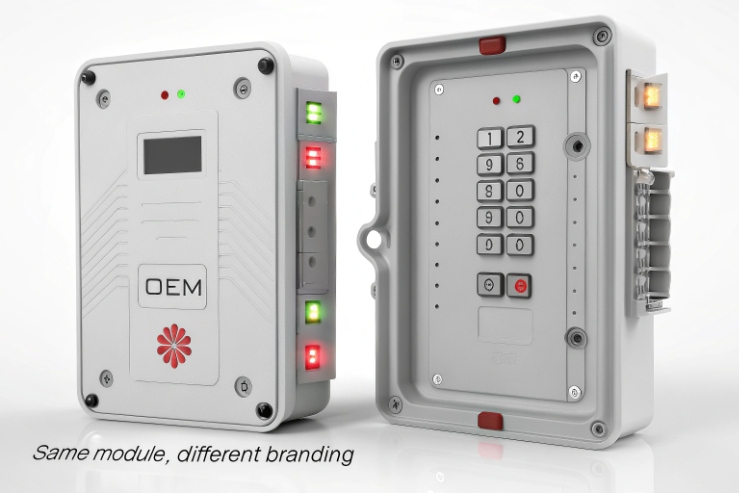
Common OEM options that are low risk
These options are often straightforward when done with controlled materials:
- laser-etched logo on faceplate
- custom legend set and icon pack
- backlight color options (within electrical limits)
- language packs in the UI or voice prompts
- custom packaging, manuals, and label sets
Braille and accessibility options
Braille can be done as:
- raised dots on metal keys
- raised dot overlays on membranes
- dedicated Braille plates near SOS keys
The practical requirement is durability. Raised features must survive cleaning and abrasion. The layout must also stay readable in low light.
Anti-tamper hardware and anti-pry design
For prisons and public sites, tamper-resistant screws and anti-pry geometry help more than many people expect. An Anti-vandal keypad 7 can be IK10, but if the faceplate can be removed with common tools, the phone will not survive.
Recommended OEM hardware options include:
- pin-in Torx or security hex fasteners
- captive screws to reduce lost parts
- reinforced backplate or hidden anchors
- anti-rotation washers or thread-lock strategy aligned with site rules
Certification implications: manage changes as controlled variants
ATEX and IECEx programs rely on the approved design and controlled manufacturing. So the safe OEM path is to:
- keep the certified enclosure interface unchanged
- change only allowed external variants (legends, color, minor hardware) when possible
- document every change with drawings, BOM updates, and material specs
- run confirmatory tests when changes touch sealing, impact, or thermal behavior
| OEM request | Usually safe if | Often needs extra review if | Suggested evidence |
|---|---|---|---|
| Logo + legends | No material change at interfaces | New coatings or inks | Material declaration + abrasion/solvent check |
| Backlight color | Same LED class and power | Higher power or new driver | Electrical test + temperature rise check |
| Braille | Geometry stays within clearance | Adds pry points or sharp edges | Mechanical drawing + cleaning durability |
| Tamper screws | Same strength and corrosion class | New fastener size or joint design | Fastener spec + torque plan |
| New keypad technology | Interface unchanged | Changes sealing or carrier plate | IP/impact retest + documentation update |
The best OEM result is a keypad that looks custom, feels right with gloves, and still fits the certified construction rules. That is the balance a good Ex product team should deliver.
Conclusion
Yes, Ex phone keypads can be customized in layout, materials, and firmware, if changes stay controlled and documented. For OEM support: info@sipintercommanufacturer.com, www.sipintercommanufacturer.com.
⸻
Footnotes
-
Learn about the fundamentals of user interface design and its role in human-machine interaction. ↩ ↩
-
A comprehensive guide to mechanical engineering principles used in the design of rugged hardware components. ↩ ↩
-
Understanding the IP Code for defining levels of sealing effectiveness against solids and liquids. ↩ ↩
-
Exploring the role of embedded firmware in controlling the hardware functions of telecommunication devices. ↩ ↩
-
How laser marking provides permanent, high-contrast legends on industrial materials like metal and plastic. ↩ ↩
-
The properties of 316L stainless steel and its exceptional resistance to corrosion in marine environments. ↩ ↩
-
Design considerations for vandal-resistant keypads to withstand mechanical abuse and intentional damage. ↩ ↩