

DTMF seems simple until a gate does not open or an Interactive Voice Response (IVR) 1 misses digits during an emergency. In hazardous sites, that small failure becomes a real delay.
Most explosion-proof SIP telephones support at least one reliable DTMF method: RFC 2833/4733 RTP events (the default in many PBXs), SIP INFO (common in some enterprise setups), and in-band tones (mainly for G.711). The best choice depends on codecs, SBCs, and gateways.
How to choose a DTMF method that stays reliable across PBX, SBC, and gateways
DTMF is a signaling problem, not a keypad problem
The keypad can be perfect and the DTMF can still fail. The weak points are usually in the media path:
-
codec compression that distorts tones
-
transcoding in SBCs or gateways
-
early media announcements that change the audio path
-
SRTP/TLS settings that change what the PBX expects
So the goal is to pick one method that fits your call path and keep it consistent.
A simple selection rule that works in industrial deployments
In most industrial networks, the most stable approach is:
-
Use RFC 4733 2 (RFC 2833 legacy name) RTP events for normal SIP calls and IVRs.
-
Use SIP INFO only when the PBX requires it and you can keep the signaling path consistent.
-
Use in-band only when the G.711 codec 3 is used end-to-end and no transcoding happens.
Why “it works in the lab” often fails on site
Industrial calls often pass through:
-
carrier SBCs
-
inter-site SBCs
-
paging gateways
-
analog FXO/FS gateways for legacy systems
Each hop can change how DTMF is treated. The safest plan is to define DTMF method per trunk or per line, then prove it with a call matrix that includes the worst-case path.
A quick comparison table
| Method | Where digits travel | Best with | Main risk | Most common use |
|---|---|---|---|---|
| RFC 4733 RTP events | RTP (out-of-band events) | any voice codec | wrong payload type or SBC handling | PBX/IVR, carrier trunks |
| SIP INFO | SIP signaling messages | stable SIP signaling path | not passed by all SBCs, timing issues | some enterprise PBXs |
| In-band audio | audible tones in RTP audio | G.711 end-to-end | fails with compression/transcoding | legacy gateways, simple paths |
A short personal note from projects: the fastest fix is often not “change the phone.” It is aligning PBX trunk settings so the SBC does not translate DTMF twice.
Now the next sections answer the four tender-level questions: supported methods, interoperability, tuning parameters, and secure workflows.
This is also where door release and paging features become predictable.
Are RFC 2833/4733 RTP events, SIP INFO, and in-band audio tones all available and selectable per line?
DTMF that cannot be switched per line causes problems in mixed networks. One site may require SIP INFO. Another site may require RFC 4733. A single global mode becomes a trap.
Yes in most modern SIP designs. Many explosion-proof SIP telephones let you select DTMF mode per SIP account or per line profile: RTP events (RFC 4733/2833), SIP INFO, or in-band. Some models also support “auto” behavior, but fixed per-line settings are safer for industrial fleets.
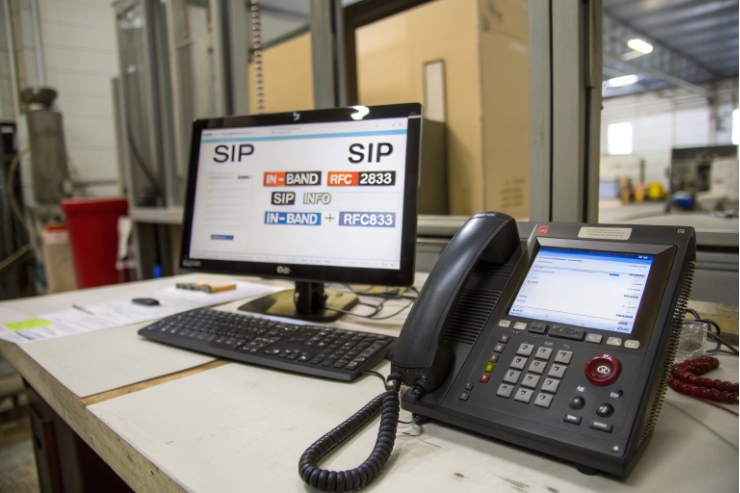
What “selectable” should look like on the phone
A procurement-ready phone should provide:
-
DTMF mode per SIP account (Line 1, Line 2)
-
payload type setting or “dynamic negotiated” support for RTP events
-
INFO content type selection if needed
-
in-band enable only when using G.711 and compatible call paths
-
logging that shows which DTMF method was used during a call
When a phone hides these controls, troubleshooting becomes slow.
RFC 2833 vs RFC 4733 wording
In practice, many UIs still say “RFC 2833,” even though RFC 4733 is the updated specification name used today. The behavior is the same in most deployments: DTMF digits are sent as RTP events, not as audio.
When “Auto” mode is risky
Auto can sound convenient. It can also cause inconsistent behavior if:
-
one trunk prefers INFO and another prefers RTP events
-
the call crosses SBCs that strip INFO
-
a paging gateway only accepts one method
In industrial operations, consistency is worth more than convenience. A stable per-line mode avoids surprise behavior during maintenance windows.
A per-line configuration pattern that scales
| Line type | Recommended DTMF mode | Why it stays stable |
|---|---|---|
| PBX internal line | RFC 4733 RTP events | works across most codecs |
| Carrier/SBC trunk line | RFC 4733 RTP events | common expectation on trunks |
| Enterprise PBX that mandates INFO | SIP INFO | matches PBX policy |
| Legacy analog gateway path | in-band (G.711 only) | tones survive only with G.711 |
A good vendor answer should confirm “per line” selection, not only “supported.” That single detail is what makes multi-site deployments smooth.
Will DTMF work with PBXs and IVRs—Asterisk/FreePBX, 3CX, CUCM, Avaya, and carrier SBCs?
DTMF compatibility is not only brand-to-brand. It is the full call path. Asterisk can accept RTP events, but the carrier trunk may convert them. CUCM can accept DTMF, but a gateway may translate it again.
Yes, DTMF works well with major PBXs and IVRs when you align one method end-to-end. RFC 4733 RTP events is the most widely interoperable choice across Asterisk/FreePBX, 3CX, CUCM, Avaya, and many carrier SBCs. SIP INFO works when explicitly required and when SBCs pass INFO reliably.
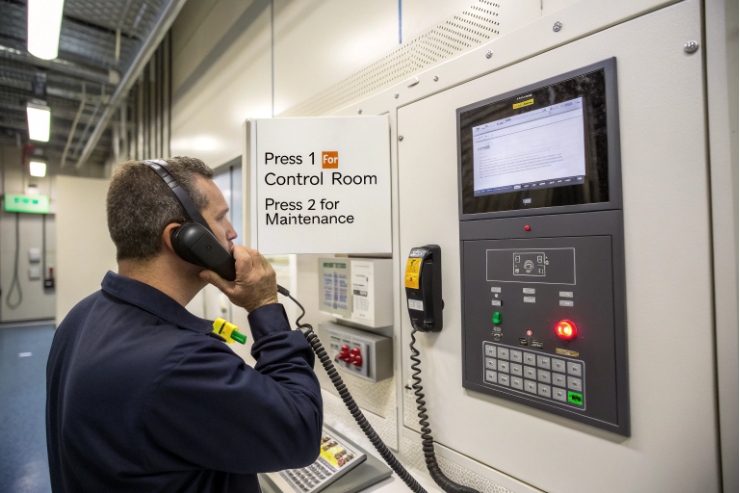
What typically works best by platform
In mixed industrial deployments, the following patterns are common:
-
Asterisk/FreePBX: RFC 4733 is the usual stable choice. INFO can work but needs clear policy.
-
3CX: RTP events are common and reliable when trunks are aligned.
-
CUCM: RTP events are widely used. INFO is used in some enterprise interop cases.
-
Avaya: RTP events are common, and INFO can appear in some integrations.
-
Carrier SBCs: RTP events are the default expectation in many SIP trunk deployments.
The main point is not the brand. The main point is avoiding mixed methods across a single call path.
The top three interop failure patterns
1) Transcoding plus in-band
A compressed codec or transcoding step can distort in-band DTMF. This is why in-band is usually reserved for G.711 end-to-end.
2) SBC stripping SIP INFO
Some Session Border Controllers (SBCs) 4 normalize or block INFO messages. If a phone uses INFO and the SBC drops it, digits vanish.
3) Double conversion
A PBX converts the SIP INFO method 5 to RTP events, then an SBC converts again, causing timing issues.
A simple test matrix that prevents surprises
Before rollout, run these call tests:
-
Phone → PBX IVR menu (digits 0–9, *, #)
-
Phone → trunk → carrier IVR (if used)
-
Phone → gateway → analog IVR (if any legacy exists)
-
DTMF during SRTP calls and during early media announcements
A practical interoperability table
| Environment | Recommended DTMF | Why |
|---|---|---|
| Pure SIP inside plant | RFC 4733 | simplest and most consistent |
| SIP trunk with carrier | RFC 4733 | matches trunk expectations |
| Enterprise policy mandates INFO | SIP INFO | avoids PBX mismatch |
| Legacy analog path | in-band on G.711 | gateway-friendly |
| Paging gateways | usually G.711 + RFC 4733 | many paging devices stay basic |
A small on-site habit helps: capture one RTP stream during a failing case and verify if DTMF events are present. That tells you whether the issue is the phone, the PBX, or the SBC.
How to configure payload type, event duration, and level to avoid clipping across codecs, transcoders, and gateways?
DTMF failures often look random. In reality, they come from a few predictable tuning mismatches. A short event duration, a wrong payload type, or aggressive audio processing can break digit detection.
Use negotiated dynamic payload types for RFC 4733 when possible, keep event duration long enough for IVR detection, avoid extreme DTMF levels, and disable audio processing that clips tones. In-band DTMF should be limited to G.711 and should avoid noise suppression that distorts tones.
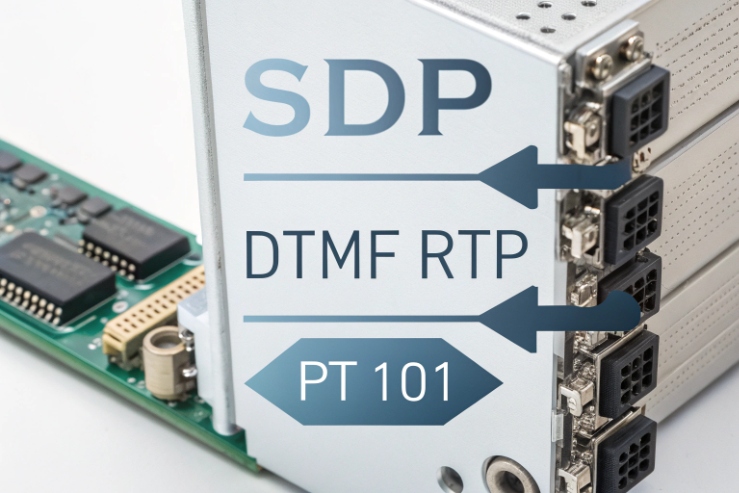
Payload type (PT) for RFC 4733
RTP events use a dynamic payload type negotiated in SDP. Many systems use 101 by habit, but it is not a universal fixed value. The safest approach is:
-
allow the PBX to negotiate the payload type
-
avoid hard-coding PT unless a gateway requires a specific number
If hard-coding is needed, keep it consistent on both ends of the trunk.
Event duration and digit reliability
IVRs need enough time to detect a digit. If the phone sends very short events, some systems miss them. Practical rules that usually work:
-
do not use ultra-short digit durations
-
allow a short inter-digit gap
-
for door release or safety codes, favor reliability over speed
DTMF level and audio processing
DTMF “level” is tricky because:
-
too low can be missed by detectors
-
too high can clip and create harmonics that confuse detectors
-
AGC, noise suppression, and echo cancellation can change the tone shape
For industrial phones, the clean approach is:
-
keep DTMF level near the phone’s default
-
avoid “boosting” unless a specific gateway proves it is needed
-
if in-band is required, reduce aggressive noise suppression and avoid heavy audio enhancement modes
Codec and transcoder interaction
-
RFC 4733 is codec-independent because digits are events, not audio.
-
In-band is codec-sensitive, and compressed codecs can break it.
So if your environment uses Opus or G.729 or any transcoding, RTP events are usually safer.
A tuning checklist table
| Setting | Safe baseline | When to change it | Risk if wrong |
|---|---|---|---|
| RFC 4733 payload type | negotiated | only for special gateways | digits not recognized |
| Digit duration | moderate, not short | only if IVR demands it | missed digits |
| Inter-digit gap | small gap | only for high-speed dialing | merged digits |
| DTMF level | default | only after measured failures | clipping or low detect |
| In-band mode | G.711 only | legacy analog needs | digits fail on compression |
A field story placeholder fits here: a tunnel project had “random” door release failures. The real cause was a transcoding hop plus in-band DTMF. Switching that trunk to RFC 4733 made it stable on day one.
DTMF is often tied to physical actions. That means it becomes a security control. If the DTMF path is weak, door release becomes a risk, and audit trails become incomplete.
Yes. DTMF can control IVR menus, trigger door release via PBX logic or phone relay mapping, and activate paging workflows. You can keep TLS/SRTP security by using SIP over TLS and SRTP for media, and you can keep audit trails by logging DTMF-triggered actions at the PBX or controller rather than relying only on the endpoint.
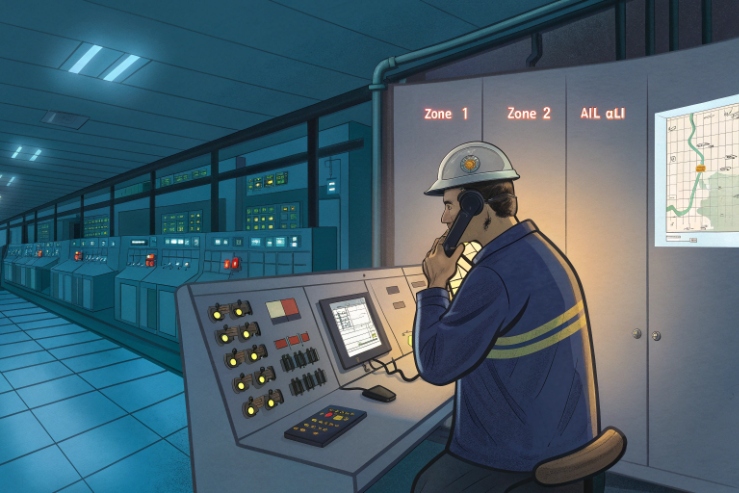
Door release: three safe patterns
1) PBX/Access controller driven
DTMF is detected by the PBX or an access control application. The controller then triggers the door relay. This is the most auditable method, because the system can log who pressed what and when.
2) Phone local relay mapping
Some industrial phones have relay outputs. They can map a DTMF code to a relay pulse. This is fast and simple for local control. It must be protected by permissions so random callers cannot open a door.
3) SIP/HTTP API workflow
DTMF triggers an IVR or application that calls an API to activate a relay module. This is flexible and works well in integrated sites with SCADA or VMS.
Paging and PAGA triggers
DTMF can be used to:
-
join a paging group
-
select a paging zone through an IVR
-
trigger a PAGA workflow through a controller
For paging, it is important to keep codec policy simple. Many paging chains are happiest on G.711. So the safest approach is DTMF by RFC 4733 and paging audio by G.711 when gateways are involved.
Keeping TLS/SRTP and compliance strong
Security and compliance usually require:
-
SIP over TLS for signaling
-
SRTP (Secure Real-time Transport Protocol) 6 for media
-
strict ACLs so phones can only reach PBX, provisioning, and time servers
-
role-based permissions on who can trigger door release or priority pages
-
Transport Layer Security (TLS) 7 for encrypting communications
DTMF events sent as RTP events can still be protected by SRTP when SRTP is enabled. SIP INFO digits can be protected by TLS. The key is that the policy must be consistent across the call path, including SBCs.
Audit logging: log actions, not just digits
A good audit record should show:
-
caller identity (extension or certificate identity)
-
target system (door A, zone B, IVR menu)
-
action timestamp
-
success or failure result
Logging only “DTMF digit received” is not enough for many industrial compliance programs. Logging the outcome is what matters.
| Use case | Best DTMF method | Best security posture | Best audit point |
|---|---|---|---|
| IVR navigation | RFC 4733 | TLS + SRTP + QoS | PBX/IVR logs |
| Door release | RFC 4733 or INFO | strict permission + whitelist | access controller logs |
| Paging zone select | RFC 4733 | role-based paging rights | PBX paging logs |
| Emergency workflows | RFC 4733 | priority queues + whitelists | centralized incident log |
A simple policy improves safety: never allow a door release action from an unknown caller ID. Use whitelists and require authenticated lines. That aligns well with industrial change control and reduces risk.
Conclusion
Most Ex SIP phones support RFC 4733, often SIP INFO, and sometimes in-band. Use RTP events as the default, keep paging on G.711, and log actions centrally for audit.
Footnotes
-
Interactive Voice Response (IVR) technology allows humans to interact with a computer-operated phone system through voice or DTMF. ↩ ↩
-
RFC 4733 defines the RTP payload format for DTMF digits, telephony tones, and telephony signals. ↩ ↩
-
The G.711 codec is an industry-standard narrowband audio codec used for digital telephony. ↩ ↩
-
Session Border Controllers (SBCs) are network devices used to protect and regulate IP communications flows. ↩ ↩
-
The SIP INFO method allows for the transport of application-level information along the SIP signaling path. ↩ ↩
-
SRTP (Secure Real-time Transport Protocol) provides encryption, message authentication, and integrity for media traffic. ↩ ↩
-
Transport Layer Security (TLS) is a cryptographic protocol designed to provide communications security over a computer network. ↩ ↩








