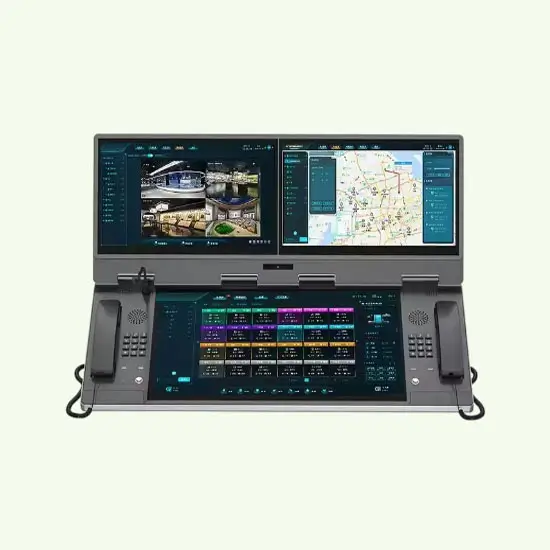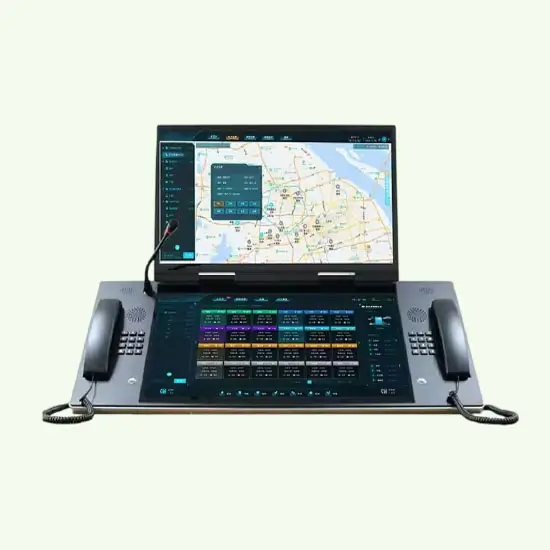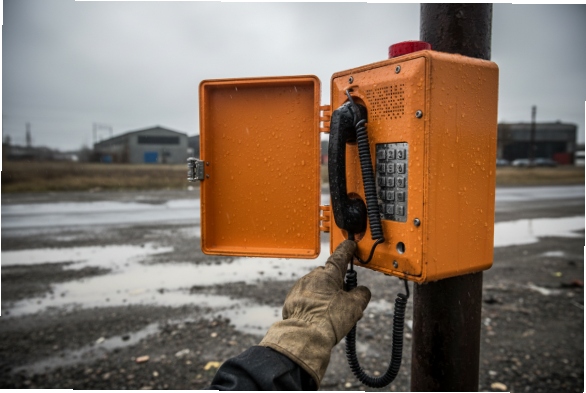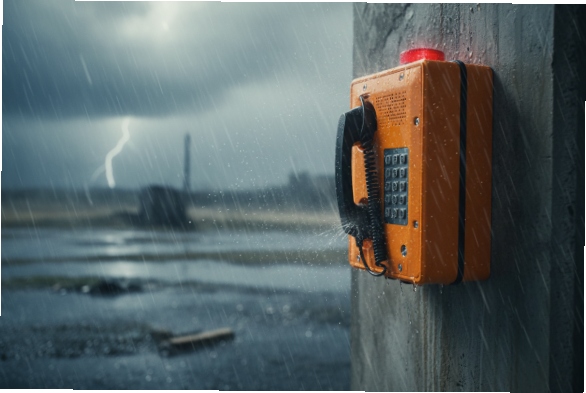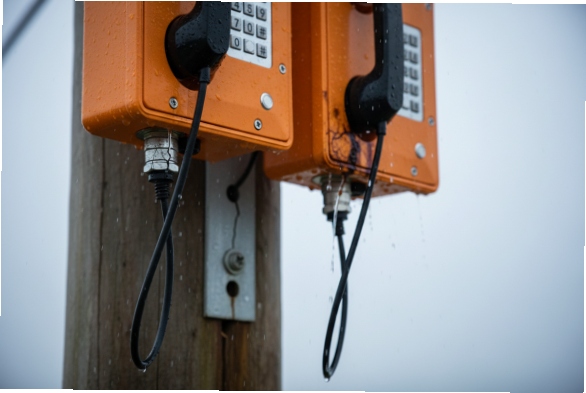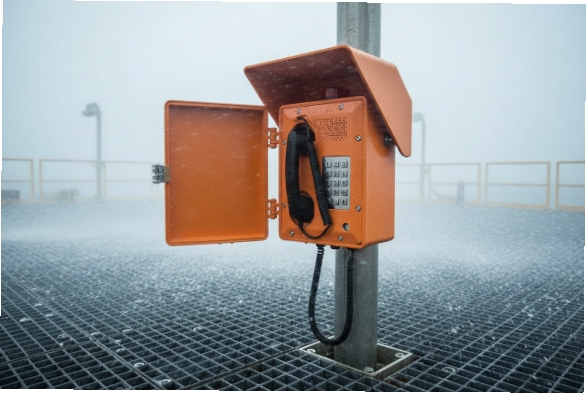
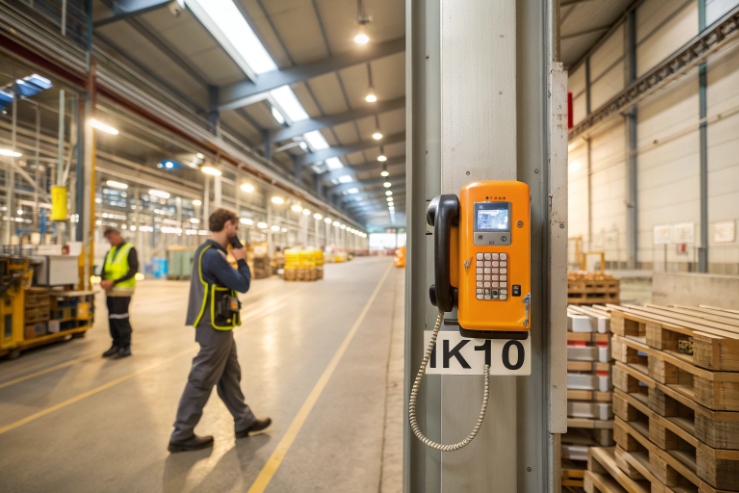
A phone can be certified for Zone 1 and still fail in the first month because a tool hit the enclosure or a handset got slammed. That downtime turns a safety device into a maintenance ticket.
Most explosion-proof telephones are specified around IK10 for harsh industrial use, while some models are IK08 or IK09 depending on enclosure material, window size, and keypad design. The real IK performance also depends on how the phone is mounted and sealed on site.
IK rating is a mechanical safety margin for harsh industrial life?
Why IK matters for Ex telephones
IK is not an explosion certificate. It is an impact resistance rating 1. Still, impact damage can become a safety and uptime problem in hazardous zones because cracks can break sealing 2, distort flamepath interfaces, or damage terminals and keypads. In real environments like offshore decks, refineries, mines, and tunnels, impact is normal. People carry tools. Doors swing. Vehicles vibrate platforms. Maintenance teams move fast. A higher IK rating reduces failures and reduces the number of times a device needs to be opened or replaced in a hazardous location 3.
Typical IK levels used in industrial projects
Most industrial tenders ask for IK10 because it sets a clear “hard-use” baseline. Some indoor applications accept IK08 or IK09. Still, the most common demand in harsh sites is “IK10 or better,” especially when vandal resistant 4 expectations or rough handling is possible.
A useful way to think about IK is: it is a controlled energy impact test, not a promise that the device will survive every real-world abuse. It is still one of the best standardized references we have for comparing ruggedness.
What determines real-world survivability beyond the IK label
Even if the phone body meets IK10, weak points can reduce durability:
-
handset cradle and hook switch
-
keypad membrane and bezel
-
glazing on any display window
-
cable gland strain points
-
mounting bracket flex or weak wall anchors
A strong design treats these as part of the mechanical system.
| Area of the phone | Common impact cause | What design choice helps |
|---|---|---|
| Front plate | tool strike, door swing | thick metal plate, recessed screws |
| Keypad | glove punches, repeated hits | stainless or metal keypad, sealed dome |
| Hook switch | handset slam | protected switch geometry, robust cradle |
| Enclosure edges | knocks during maintenance | rounded edges, high-wall thickness |
| Mounting bracket | vibration and pull | thick bracket, high-grade bolts |
Which IK rating is typical—IK08, IK09, or IK10—and what Joule impact does each represent under IEC 62262?
Engineers want a simple number. The real value is the energy level behind the number.
IK08, IK09, and IK10 are the most common IK classes for industrial telephones, and they correspond to increasing impact energy under IEC 62262: IK08 is 5 J, IK09 is 10 J, and IK10 is 20 J.
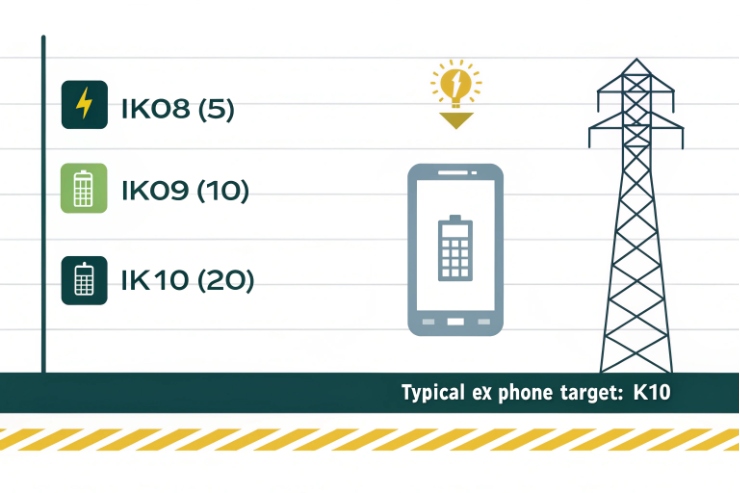
Typical IK rating for explosion-proof telephones
In hazardous industrial tenders, IK10 is the most typical requirement because it aligns with vandal resistance expectations and rough industrial handling. IK08 and IK09 appear in less exposed indoor settings, or where enclosure windows and interface parts reduce achievable impact performance.
A practical guideline by area:
-
Offshore decks, refineries, mines, tunnels: IK10 preferred
-
Process indoor rooms with controlled access: IK09 can be acceptable
-
Light-duty indoor areas: IK08 can be acceptable
Quick reference table
| IK class | Impact energy | Typical usage level | What it implies for phones |
|---|---|---|---|
| IK08 | 5 J | moderate industrial | better than consumer-grade enclosures |
| IK09 | 10 J | heavy indoor/industrial | suitable for many industrial corridors |
| IK10 | 20 J | harsh/vandal risk | best baseline for Ex phones in the field |
How is IK tested—impact points, hammer type, drop height, and pass/fail criteria for Ex enclosures?
Many buyers assume IK is “drop it once and see.” In reality, it is a controlled test with defined impact energy and impactor type.
IK testing under IEC 62262 uses standardized impacts at defined points using pendulum or spring hammers (or equivalent methods) to deliver the required Joules, and pass/fail focuses on whether the enclosure maintains protection and function without dangerous damage.
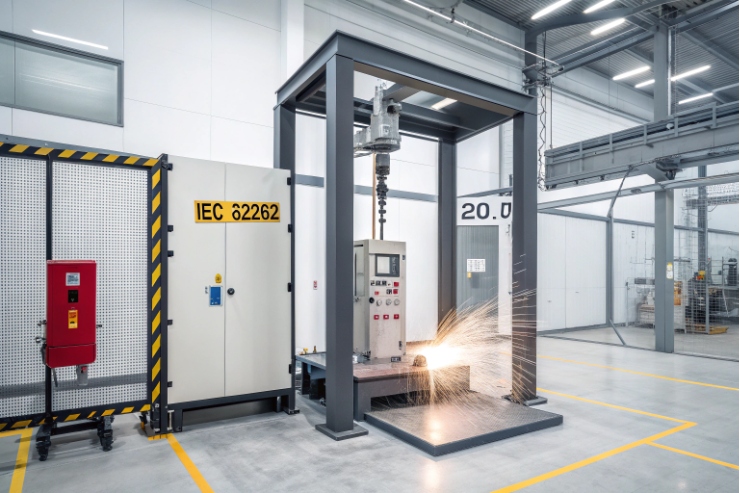
What gets hit and why impact points matter
The test is applied to representative weak points. For telephones, typical impact points include:
-
front face and bezel
-
enclosure corners and edges
-
keypad area
-
handset cradle zone
-
display window area (if present)
Hammer type and energy delivery
IEC 62262 5 allows different methods to deliver a defined energy level. Common lab setups use:
-
a pendulum impact hammer for repeatable energy
-
a spring hammer for lower energies
-
other standardized impact apparatus that can be calibrated to Joule values
Pass/fail for Ex enclosures: what matters in practice
IK is about mechanical protection. For explosion-proof telephones, a practical acceptance view includes:
-
no cracks that compromise enclosure integrity
-
no deformation that prevents correct sealing or cover fit
-
no exposure of live parts
-
the device remains functional for its intended purpose, depending on test plan
Do materials and design—316L, GRP, cast aluminum, keypad type—affect IK rating and long-term durability?
Two phones can claim the same IK class and still behave differently after years of vibration and corrosion. Material choice drives long-term reality.
Yes. Materials and design heavily influence IK rating and long-term durability: 316L offers high strength and corrosion resistance, GRP can absorb impacts without denting but may crack if poorly designed, cast aluminum can be strong but needs corrosion protection, and keypad type often sets the real “weak point” performance.
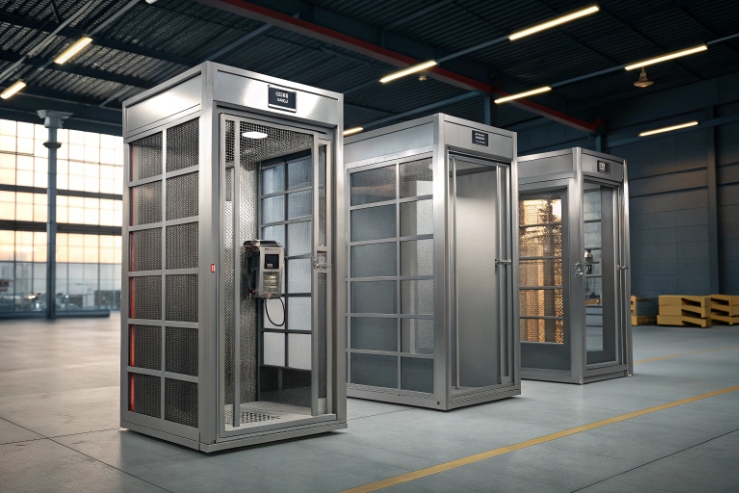
316L stainless steel
316L stainless steel 6 is a popular choice in offshore and chemical environments because it resists corrosion and keeps mechanical strength. For IK performance, 316L enclosures:
-
resist dents and deformation
-
keep fastener threads stable
-
survive repeated knocks better
GRP (glass-reinforced plastic)
glass-reinforced plastic 7 (GRP) can be excellent for corrosion environments because it does not rust. It can also absorb energy. The weakness is design-dependent:
-
thick GRP can be very tough
-
thin GRP or poor rib structure can crack
Cast aluminum
Cast aluminum is common in industrial enclosures and can achieve high impact resistance with correct thickness and geometry. In marine environments, aluminum needs good coatings and hardware selection to avoid corrosion issues and galvanic attack.
| Design choice | Effect on IK result | Effect on long-term durability |
|---|---|---|
| Thick metal faceplate | improves impact tolerance | reduces flex fatigue |
| Recessed fasteners | reduces direct strike damage | lowers tamper risk |
| Metal keypad | higher mechanical robustness | better in heavy glove use |
| Large window/display | can reduce achievable IK | adds a fragile component |
| Protected hook switch | reduces slam damage | fewer failures in busy areas |
What installation factors—mounting plate, bolt grade, torque, and anti-tamper hardware—preserve certified IK performance on site?
The lab IK rating assumes the device is mounted as intended. In the field, a weak mount turns an IK10 phone into an IK05 system.
To preserve IK performance, mount the phone on a rigid backing plate, use the specified bolt grade and correct torque, apply anti-loosening measures for vibration, and use anti-tamper hardware where vandal risk exists, while keeping sealing and earthing intact.
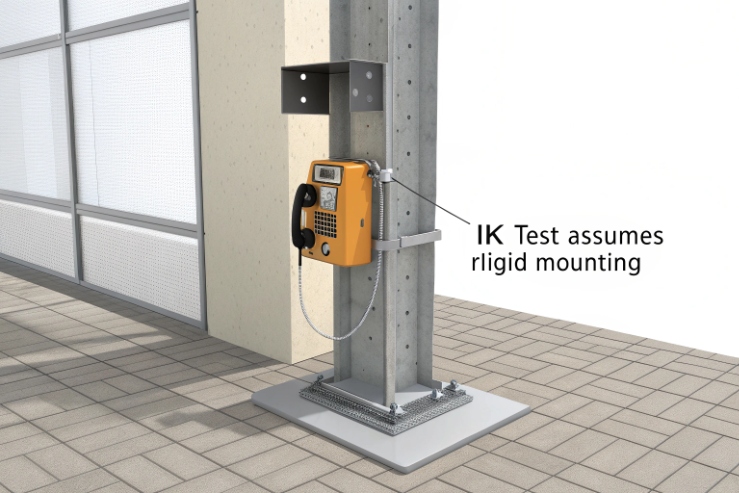
Mounting surface and backing plate
A phone mounted on thin sheet metal will flex and amplify impact damage. A rigid mounting plate spreads the load. In offshore and refinery use, a stainless backing plate or strong structural member is preferred.
Bolt grade, washers, and torque
Impact performance depends on clamping force and structural integrity. Good practices include:
-
use the bolt grade specified in the manual or project spec
-
use washers to spread load and prevent creep
-
torque bolts to the specified value
-
mark torque with paint witness marks where the site practice allows
Anti-loosening and vibration readiness
In vibrating environments:
-
use locking washers or thread-locking method approved by site standard
-
use anti-vibration mounts only if they do not reduce stability
-
route cables with strain relief so cable pull does not pry the enclosure
| Installation factor | Best practice | What it prevents |
|---|---|---|
| Mount rigidity | backing plate + solid anchors | flex and secondary damage |
| Bolt grade | match spec | fastener shear and loosening |
| Torque control | torque tool + witness marks | drift over time |
| Strain relief | clamp near entry | cable pull cracks and leaks |
| Anti-tamper screws | security heads | vandal and unauthorized access |
| Corrosion control | compatible metals | seized screws and weakened mounts |
Conclusion
Explosion-proof telephones are often specified at IK10 (20 J), with IK08 (5 J) and IK09 (10 J) seen in lighter-duty sites. Materials, keypad design, and rigid mounting decide long-term impact survival.
Footnotes
-
Explains the international standard for mechanical impact protection levels of electrical equipment. ↩ ↩
-
Definition of Ingress Protection ratings for electrical enclosures against water and dust. ↩ ↩
-
Safety guidelines for using electrical equipment in classified hazardous industrial environments. ↩ ↩
-
Information on how mechanical design prevents damage from intentional abuse or rough handling. ↩ ↩
-
Official IEC standard defining mechanical impact energy testing for electronic device housings. ↩ ↩
-
Technical properties of marine-grade stainless steel used for corrosion-resistant industrial enclosures. ↩ ↩
-
Characteristics of GRP materials used for durable and impact-resistant equipment housings. ↩ ↩