
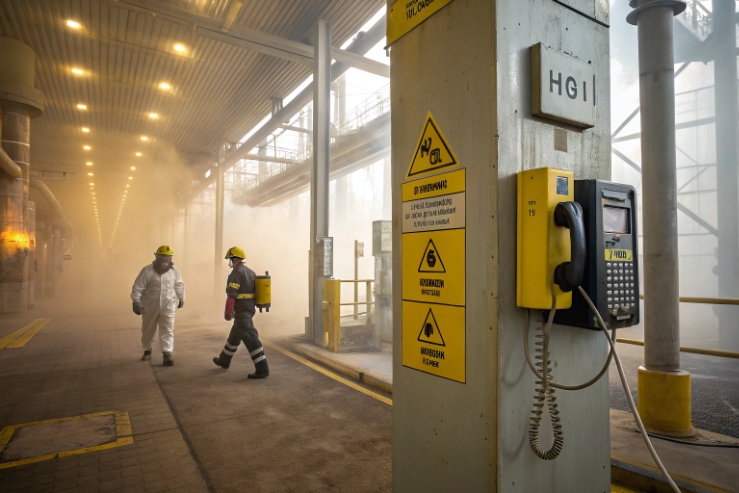
Hydrogen sulfide (H2S) 1 eats metal, tarnishes contacts, and turns small leaks into big failures. In a hazardous area, that can stop an emergency call. The wrong phone choice costs more than money.
Yes, explosion-proof telephones can be used in H2S environments when the housing materials resist sour gas corrosion, the Ex marking covers the gas group and temperature limits, and sealing plus maintenance prevent long-term ingress and damage.
What H2S does to an Ex telephone over time
H2S is both a corrosion problem and a reliability problem
H2S sites fail equipment in two ways at the same time. The first is plain corrosion. When moisture is present, H2S form acidic conditions and speeds up metal attack. Carbon steel makes iron sulfide scale. Aluminum coatings can blister if edges are damaged. Some plated parts lose protection after scratches. The second problem is electrical reliability. H2S is famous for tarnishing silver and copper. That matters because many small parts inside a phone rely on clean metal surfaces. Keypad contacts, hook switch parts, relay contacts, terminal blocks, and grounding points can all drift over time.
This is why an Ex certificate alone is not enough for sour gas. Ex certification focuses on ignition safety. H2S performance needs corrosion thinking, moisture control, and a realistic maintenance plan. A phone can be “safe” and still become unreliable if the wrong fasteners rust, a gasket hardens, or a cable gland loosens and lets sour, wet air cycle in.
Where sour gas damage usually starts
In field retrofits, early problems often start at the edges. Cable entries and cover seams see pressure cycling and vibration. Small crevices hold moisture and sour residues. Mixed metals create galvanic spots, so one screw can stain a whole enclosure. Inside, the first symptoms are small: noisy audio, intermittent keypad, or weak ring indication. Later, the failure becomes obvious.
| Risk area | What H2S does | What it looks like in service | What prevents it |
|---|---|---|---|
| Cable entry | Sour moisture creeps in and attacks terminals | Green/black tarnish, loose terminations | Correct certified gland + drip loop + torque |
| Fasteners and joints | Corrosion reduces clamp force | Rust streaks, cover loosens | 316/316L fasteners, anti-seize, inspections |
| Contacts and switches | Sulfide tarnish increases resistance | Intermittent keys, hook issues | Protected contacts, coating, sealed modules |
| Coatings and edges | Damage exposes base metal | Blistering, pitting, flaking | Thick coating, careful handling, touch-up |
| Flamepath surfaces (Ex d) | Corrosion or scratches affect fit | Hard-to-close cover, uneven mating | Proper material finish + cleaning routine |
Which material choices resist H2S corrosion—316L, GRP, or coated aluminum—and how do they perform in sour gas sites?
Sour gas sites punish the wrong metal fast. A “rugged” label does not stop pitting, tarnish, or galvanic stains. Then the phone becomes a maintenance headache.
316L stainless, GRP housings, and well-coated aluminum can all work in H2S sites, but performance depends on moisture, chlorides, cleaning chemicals, and how well edges, fasteners, and mixed-metal joints are controlled.
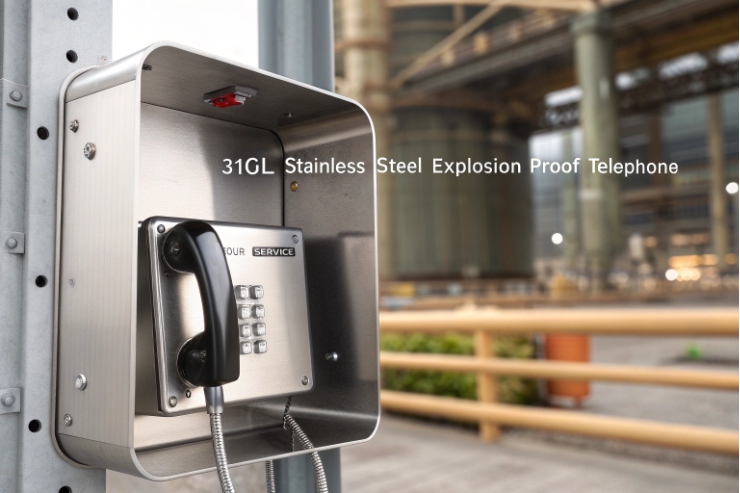
316L stainless: strong baseline, but not magic
316L stainless steel 2 is a common choice because it resists many forms of corrosion and stays stable in humid air. In sour gas zones, it usually performs well for housings, brackets, and exposed fasteners. The “L” grade helps with weld-related corrosion risk. Still, 316L can suffer when chloride levels are high, especially with stagnant moisture and deposits. Coastal sour sites are the toughest mix because salt plus H2S plus heat can push pitting and crevice corrosion. In those sites, the design must avoid crevices, avoid water traps, and keep surfaces easy to rinse.
GRP: corrosion-proof feel, but needs the right formulation
Using glass reinforced plastic (GRP) 3 means the housing does not rust, so it can be excellent where corrosion is the main enemy. For hazardous areas, GRP must also address static risk. That means the housing often needs conductive fillers or surface treatments, and the design must meet the electrostatic requirements for the area. GRP also needs UV stability for outdoor use. Mechanical details matter too. Threads, inserts, and hinges must be designed so they do not loosen under vibration.
Coated aluminum: light and cost-effective, but edges decide success
Coated aluminum can work well when weight matters and when coating quality is high. The weak point is damage. Any scratch at an edge, a bolt hole, or a cable entry can start corrosion under the coating. If stainless fasteners touch bare aluminum, galvanic corrosion can accelerate.
What certifications and gas groups are required for H2S—ATEX/IECEx IIC, EPL Gb, and suitable T-code?
In hazardous areas, a phone that “works” but has the wrong marking is not usable. It can fail inspection, delay commissioning, and create real safety exposure.
For H2S, select ATEX or IECEx certified equipment with a gas group that covers H2S (IIC is the safest umbrella choice), the right EPL for the zone (Gb for Zone 1, Gc for Zone 2), and a temperature class that stays below the site’s gas ignition limits and ambient conditions.
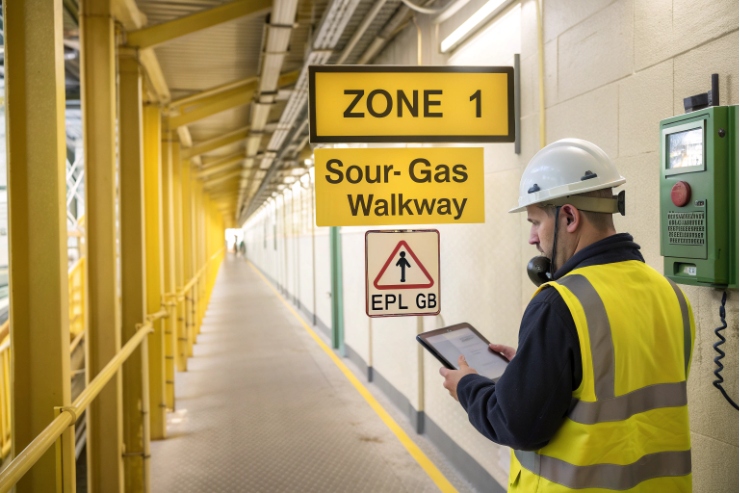
Gas group: why IIC is a practical “covers-all” target
H2S is commonly treated as a Group II gas. In many plants, it falls into IIB by ignition properties, but real sites often contain mixtures or future changes. Choosing IIC-certified equipment gives a strong safety margin because IIC covers the tighter design requirements. It also reduces rework when the plant later adds hydrogen, acetylene, or other higher-risk gas group 4 gases. In procurement, asking for IIC is a simple way to avoid corner-case debates.
Temperature class: pick for the worst case, including ambient heat
A proper temperature class 5 selection should consider two things: the gas ignition risk and the device’s surface temperature under site conditions. Many buyers default to T4 because it gives a comfortable margin for many industrial gases. Still, some Ex devices derate at high ambient. A phone might be certified to T4 up to a certain ambient, and then shift limits or require a lower T-class at higher ambient. So the marking must be checked with the real site temperature range.
How do sealing, gaskets, and cable glands prevent H2S ingress and sulfide stress cracking over years?
H2S damage rarely comes from one big event. It comes from small cycles: day and night, wet and dry, open and close. Tiny ingress becomes years of corrosion inside.
Long-term protection comes from tight sealing design (IP66/67), gasket materials that resist sour exposure and heat aging, certified cable glands matched to the cable and zone, and material choices that avoid high-strength steel parts that are vulnerable to sulfide stress cracking.
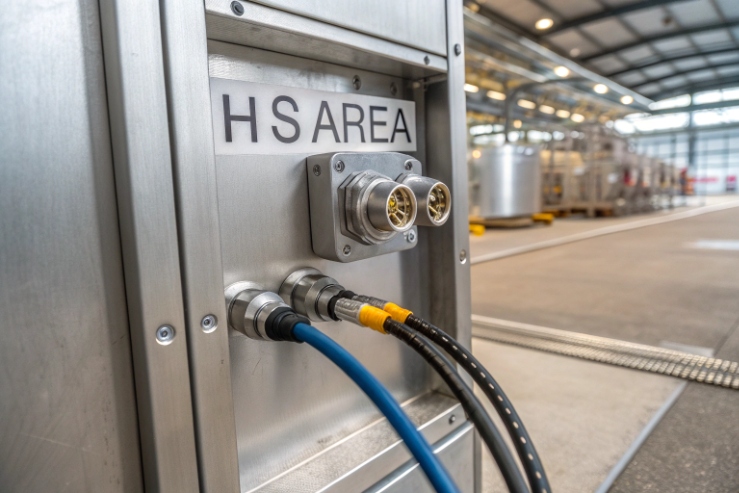
Keep sour air out, and also stop “breathing” cycles
Even a sealed housing can “breathe” through micro paths when pressure changes. Sun heats the enclosure. Night cools it. That pumping can draw sour moisture in if the cable glands 6 entry is weak or if the gasket compression is uneven. In sour gas sites, the goal is two-layer protection: a strong external seal to block direct ingress and internal protection so small traces do not kill electronics.
Gaskets: select for sour exposure, temperature, and cleaning chemistry
In wet sour environments, the gasket material must resist heat aging and compression set. Many sites use FKM where oil or solvent exposure exists, and EPDM where hot water and weathering dominate. For sour service, the “right” answer depends on what else is in the air and on the surface. The key is to avoid generic rubber with unknown formulation.
What maintenance and testing practices ensure reliability—salt fog, H2S exposure tests, periodic inspection, and replacement intervals?
In H2S zones, “install and forget” is not realistic. Failures usually start small and become expensive because they are found too late.
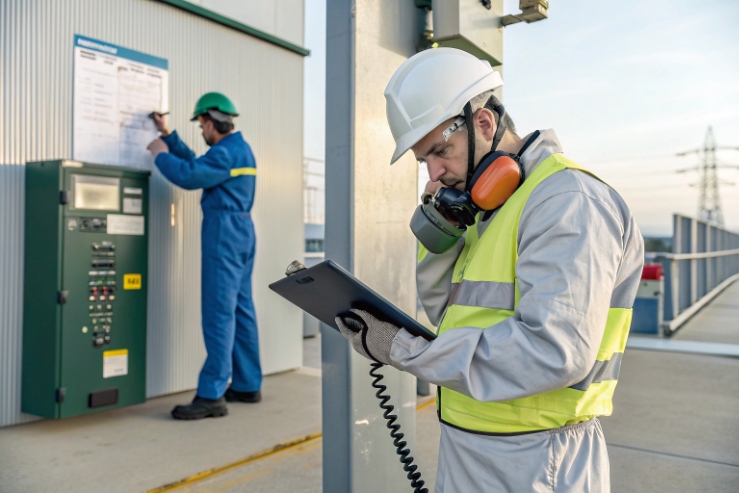
Reliability comes from two things: qualification tests that match the site (salt fog and corrosion exposure methods) and a field routine that checks sealing, corrosion, and function on a fixed schedule with clear replacement intervals for seals and vulnerable parts.
Qualification testing: ask for evidence that targets corrosion, not only IP
For sour gas sites, useful test evidence often includes salt fog / salt spray 7 testing to show coating and fastener durability in saline moisture. A test is only valuable when the configuration matches the real product. A phone tested with a different cable gland or different fasteners is not the same phone. The best supplier packages show the full build list: housing, screws, glands, seals, and coatings.
Periodic inspection: simple checks catch most long-term drift
A strong field routine does not need to be complex. It needs to be consistent. Typical checks include visual corrosion inspection on screws, hinges, and gland surfaces, and gasket condition checks for cracks or flattening. Audio checks for noise can signal internal tarnish or moisture before total failure occurs.
Conclusion
Explosion-proof telephones can work in H2S sites when the material, Ex marking, sealing stack, and maintenance plan are built for sour corrosion, not just for initial compliance.
Footnotes
-
Learn about the properties and hazards of Hydrogen Sulfide in industrial and environmental settings. ↩ ↩
-
A technical guide to the corrosion resistance and properties of 316L stainless steel in harsh conditions. ↩ ↩
-
Understanding the benefits and applications of Glass Reinforced Plastic for durable industrial equipment housings. ↩ ↩
-
Official IECEx guide to gas group classifications and equipment protection levels in hazardous areas. ↩ ↩
-
Comprehensive overview of temperature class ratings for electrical equipment used in explosive atmospheres. ↩ ↩
-
Technical details on cable glands and their role in maintaining environmental sealing and Ex integrity. ↩ ↩
-
Standard practice for operating salt spray apparatus to test the corrosion resistance of materials and coatings. ↩ ↩








