
A noisy plant network can turn a clear emergency call into broken words 1. If the codec plan is wrong, the phone looks fine but the audio fails when it matters.
Most Ex SIP telephones support G.711 μ-law/A-law and often G.722. Many also offer Opus, G.729, or iLBC, but support depends on firmware and PBX rules, so codec order and fallback must be set on both sides.
Codec support is a system topic, not a handset checkbox
Why Ex phones usually follow the same codec landscape as normal SIP phones
Explosion-proof SIP telephones are still SIP endpoints. The Ex part changes the enclosure, seals, and certification. It does not change RTP and SDP. So codec support is shaped by the same forces as any business VoIP signaling protocol 2: interoperability, CPU limits, licensing, and what PBXs actually allow.
In many projects, the “codec list” on the phone is less important than the “codec list allowed” on the PBX trunk, the gateway, and the paging path. A phone can support Opus, but if the PBX only allows G.711 and G.729, Opus will never get used. The same is true for wideband. A phone can support G.722, but if the carrier trunk is narrowband, the call will land on G.711 anyway.
What I look for before picking a codec order
The goal is simple: keep emergency audio clear and consistent, even on a busy industrial LAN. That means checking four things early:
-
What the PBX and endpoints 3 share
-
Where transcoding will happen, if needed
-
What the network can handle during congestion
-
What paging and multicast paths can decode
| Question | Why it matters | Fast way to validate | What often surprises teams |
|---|---|---|---|
| Which codecs are enabled on the PBX extension? | PBX policy can override the phone | Check extension and trunk codec list | Wideband disabled by default |
| Is there any SIP trunk that forces one codec? | Trunks often restrict to G.711/G.729 | Read trunk profile and carrier rules | “HD audio” stops at the trunk |
| Do paging servers accept Opus or only G.711? | Paging often has limited decode options | Test a live page end-to-end | Multicast path fails silently |
| Is transcoding allowed, and where? | Transcoding adds delay and CPU load | Identify DSP or software transcoder | One busy box becomes a bottleneck |
A good codec plan is not about chasing the newest codec. It is about choosing a stable order with predictable fallbacks.
Which codecs are typical for Ex SIP phones—G.711 μ/A-law, G.722, Opus, G.729, iLBC, AMR-NB/WB?
Typical Ex SIP phones include G.711 μ-law/A-law as the universal baseline, plus G.722 for HD voice. Many models also offer Opus and one low-bitrate option like G.729 or iLBC. AMR-NB/WB is uncommon on desk-style SIP endpoints and is more tied to mobile and VoLTE ecosystems.
The baseline codecs that almost always show up
G.711 is the safe default 4 because it is simple and widely supported. It comes in two companding laws: μ-law is common in North America, while A-law is common in Europe. Most PBXs can accept either, and most phones can offer both.
G.722 is the classic wideband codec used in many business systems. It is easy for PBXs to support and usually provides a clear jump in speech clarity. For control rooms and dispatch desks, that clarity can reduce misunderstandings.
The newer and optional codecs that depend on platform choices
Many modern SIP stacks 5 support the Opus codec, which adapts well across bandwidth and loss conditions. G.729 is still used when bandwidth is tight, but it has licensing history and may be disabled in some systems.
Do codecs interoperate with PBXs and carriers—Asterisk/3CX/CUCM, SDP negotiation, and transcoding policies?
A phone can “support” a codec and still never use it. PBX policies, SIP trunks, and gateways decide what is allowed. In industrial sites, one hidden transcoder can also add delay and jitter.
Yes, Ex SIP phone codecs can interoperate with major PBXs when SDP offer/answer negotiation is aligned and the PBX allows the codec. When endpoints do not share a codec, transcoding can bridge the call, but it adds latency, CPU load, and sometimes quality loss, so it should be planned and limited.
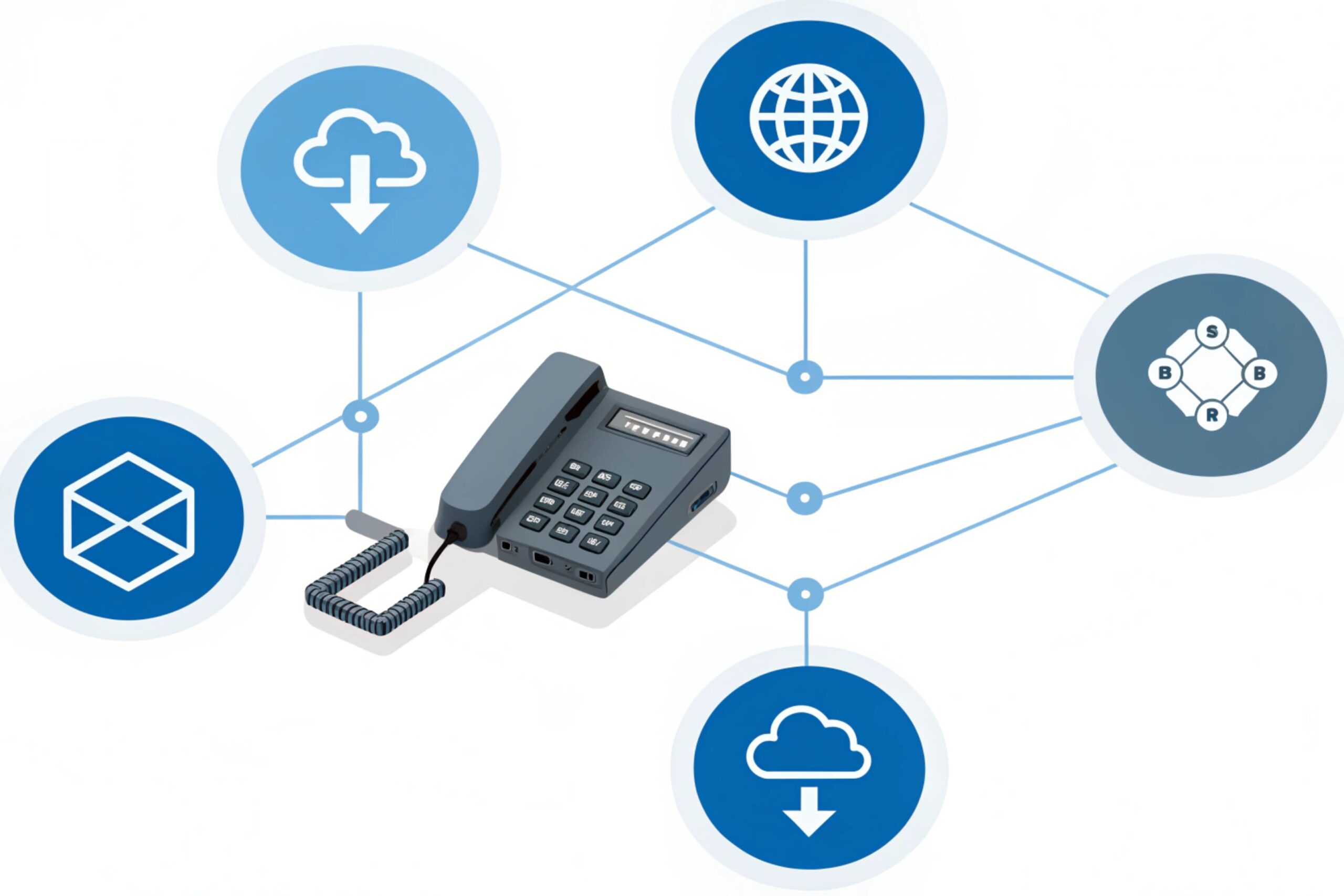
Transcoding policies that keep emergency audio stable
Transcoding is not always bad. It is a tool. The problem is unplanned transcoding that becomes a single point of failure. In safety projects, I prefer these rules:
-
Try to keep no transcoding for internal emergency groups.
-
Allow transcoding only at known gateways with capacity 6.
-
Avoid chaining transcoders across multiple hops.
| Scenario | Best practice | Why | Common mistake |
|---|---|---|---|
| Ex phone to control room (same PBX) | Same codec end-to-end | Lowest delay, highest predictability | Different codec lists on extensions |
| Ex phone to carrier | Use trunk-approved codec | Avoids transcode at the edge | Leaving Opus first for trunk calls |
| Ex phone to paging server | Match paging codec exactly | Paging needs fast setup and decode | Assuming paging supports all codecs |
How do codec choices affect bandwidth, MOS, latency, PLC/FEC, and packetization for noisy industrial networks?
Industrial networks are not quiet office LANs. Broadcast traffic, CCTV bursts, and switch storms can cause jitter and loss. A codec can hide some of that, but it cannot break physics.
Codec choice affects bandwidth and quality through bitrate, packetization time, and loss concealment. Opus and G.722 can improve intelligibility, but latency and jitter buffer behavior often matter more than raw codec quality. Packet loss tools like PLC and FEC help, but they add overhead and must be tuned.

Loss handling: PLC and FEC are tools, not magic
Forward Error Correction 7 sends extra information to recover from loss. Opus can use in-band FEC in some modes. FEC can help when loss is small and random. It is less helpful during bursts or outages. Also, FEC adds overhead, so it must be used where bandwidth allows it.
| Setting | Impact on bandwidth | Impact on quality | Best use |
|---|---|---|---|
| G.711, 20 ms ptime | Higher bandwidth, steady | Stable, very compatible | Emergency calls, universal fallback |
| G.722, 20 ms ptime | Similar to G.711 | Clearer speech | Control rooms, internal calls |
| Opus, 20 ms ptime | Flexible, moderate | Strong quality under variable loss | Busy LANs with managed QoS |
Which codec priorities are recommended for paging and emergency calls—Opus, then G.722, then G.711 with fallback rules?
Codec priority is not about “best on paper.” It is about “best under the full path.” Paging paths often have limits. Emergency calls need the widest compatibility and the least surprise.
A strong default is Opus first when the PBX, endpoints, and paging path support it. Then use G.722 for simple HD voice. Keep G.711 as the universal fallback for all calls, and set separate codec policies for paging zones that cannot decode Opus.

Fallback rules that prevent “codec roulette”
A codec plan should include simple guardrails:
-
Keep G.711 enabled everywhere as the safety net.
-
Use one wideband codec as the main HD option, usually G.722.
-
Only add Opus if the PBX and endpoints are known to support it well.
-
Avoid enabling many similar codecs, because it makes troubleshooting harder.
Conclusion
Explosion-proof SIP phones usually support G.711 and G.722, and often Opus or a low-bitrate option. Set priorities by end-to-end support, and keep G.711 as the no-surprise fallback.
Footnotes
-
Understanding factors that affect speech intelligibility and clarity in challenging communication environments. ↩ ↩
-
An overview of Voice over IP technology for delivering voice communications over internet protocol networks. ↩ ↩
-
Detailed explanation of Private Branch Exchange systems used for internal business telephony management. ↩ ↩
-
Technical specifications of the G.711 audio codec standard for high-quality narrowband telephony. ↩ ↩
-
Learn about the software components used to implement the Session Initiation Protocol in network devices. ↩ ↩
-
A guide to VoIP gateways used to connect different telecommunication network infrastructures. ↩ ↩
-
Insights into error detection and correction methods used to maintain data integrity in digital signals. ↩ ↩