
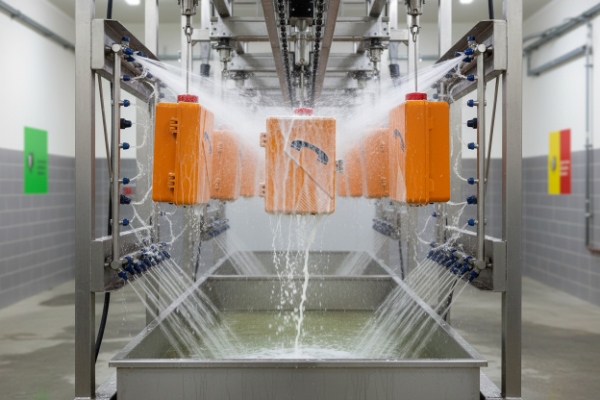
Before coating a weatherproof telephone enclosure, proper pretreatment is crucial to ensure the final coating adheres well, resists corrosion, and lasts long. But what steps are essential for effective pretreatment?
Pretreatment includes cleaning, surface profiling, and applying conversion coatings to improve adhesion and corrosion resistance, ensuring that the final powder coating will adhere effectively.
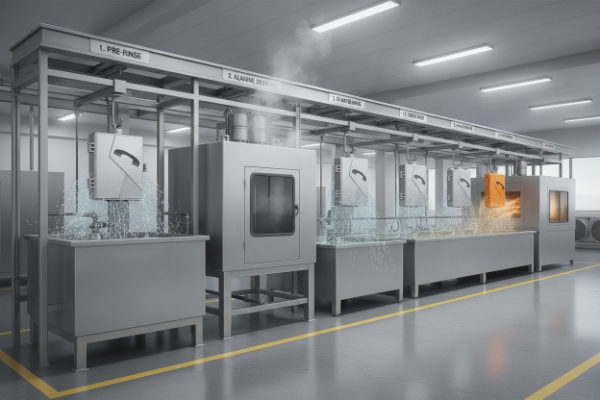
Proper pretreatment is an essential first step to ensure the durability of the weatherproof telephone. By following specific guidelines, you can ensure that the surface is perfectly prepared for a long-lasting, high-performance coating.
Which cleaning and degreasing steps remove salts, oils, and fingerprints effectively?
The first step in pretreatment is to clean the surface thoroughly to remove any contaminants that could hinder the adhesion of the coating.
Using a combination of solvents, alkaline cleaners, or detergents ensures that salts, oils, fingerprints, and other contaminants are removed effectively from the surface of the enclosure.
Key cleaning steps:
-
Solvents and Degreasers: These are used to remove oils, grease, and other residues that might have accumulated during manufacturing or handling.
-
Alkaline Cleaners: Suitable for removing tougher contaminants like salts and dirt, especially in coastal environments.
-
Detergents: Mild detergents 1 can be used for final cleaning, ensuring that all residues are removed before further treatment.
Thorough cleaning ensures the surface is free from contaminants, which helps in achieving a better bond with the coating and improves corrosion resistance.
Should aluminum, stainless, and GRP use different conversion or adhesion promoters?
Different materials, such as aluminum, stainless steel, and GRP (glass-reinforced plastic), may require different surface treatments and adhesion promoters.
Yes, each material requires a different approach to ensure optimal bonding with the coating.
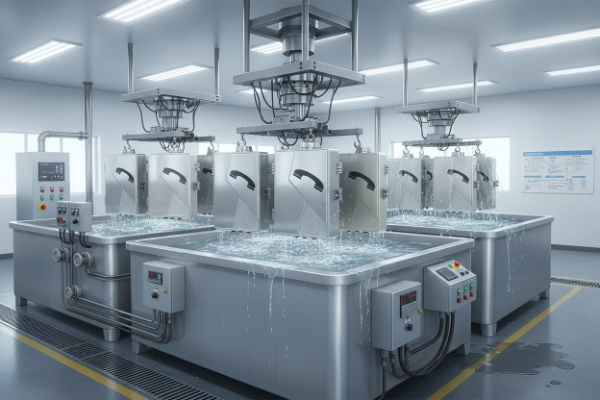
Material-specific considerations:
-
Aluminum:
- Aluminum surfaces often require a chromate-free conversion coating or phosphating 2 to improve adhesion and corrosion resistance.
- Chemical etching or abrasive blasting may also be applied to ensure a rough surface that can bond well with coatings.
-
Stainless Steel:
- Stainless steel may benefit from phosphating or passivation 3 to remove oxides and improve coating adhesion.
- Stainless steel is more resistant to corrosion, but it still requires a roughened surface for better adhesion.
-
GRP:
- Glass-reinforced plastic (GRP) 4 surfaces typically require chemical etching or adhesion promoters 5 designed for plastic bonding to ensure the coating adheres effectively.
By selecting the right adhesion promoters, you can ensure strong adhesion between the material and the coating, extending the life and durability of the weatherproof telephone.
What surface profile and phosphating/zirconium coat best support powder coating?
To improve adhesion and durability, it’s essential to create a suitable surface profile and apply a conversion coating.
A roughened surface profile and a phosphating or zirconium coating are the best preparations to support powder coating.
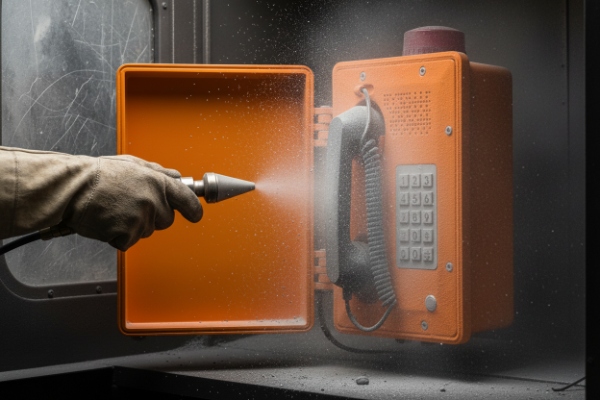
Surface preparation steps:
-
Surface Profiling:
- Techniques like abrasive blasting 6 or mechanical etching create a uniform roughness that allows the coating to bond better with the substrate.
- This step is crucial for materials like aluminum and steel.
-
Phosphating or Zirconium Coating:
- Phosphating creates a corrosion-resistant layer on metals like steel and aluminum and improves adhesion for the final coating.
- Zirconium coatings 7 are increasingly used as an eco-friendly alternative to traditional phosphates, providing excellent corrosion resistance while being less harmful to the environment.
These treatments significantly improve the durability of the weatherproof telephone enclosure by providing a strong foundation for the coating to bond to.
How should threads, gasket grooves, and labels be masked to ensure fit and sealing?
Proper masking is essential to maintain the integrity of threads, gasket grooves, and labels, ensuring that these critical areas are not obstructed or damaged during the coating process.
Masking threads, grooves, and labels prevents them from being coated, maintaining their function and ensuring the enclosure remains weatherproof.
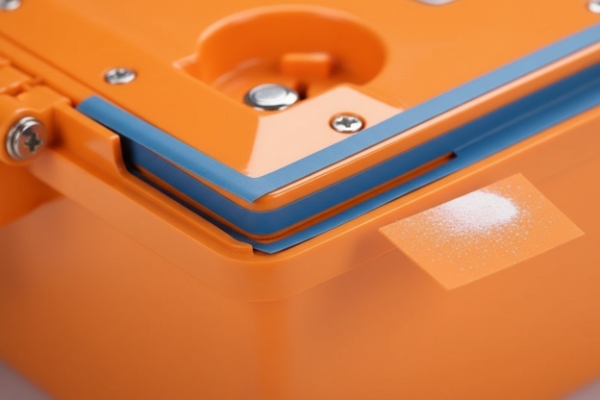
Key masking practices:
-
Threads:
- Use thread plugs 8 or tape to mask threads, ensuring they remain clear for proper screw fittings.
-
Gasket Grooves:
- Mask gasket grooves with specialized masking tapes or silicone plugs 9 to prevent coatings from obstructing the sealing area.
-
Labels:
- Use adhesive labels or die-cut masking 10 to protect branding and product information from being covered by the coating.
By carefully masking these components, you ensure that the coating process does not interfere with the functionality of the telephone, maintaining its ability to seal and operate efficiently.
Conclusion
Pretreatment before coating a weatherproof telephone enclosure involves cleaning, surface profiling, applying appropriate conversion coatings, and careful masking. These steps ensure strong coating adhesion, enhanced corrosion resistance, and a long-lasting, weatherproof seal for the telephone.
Footnotes
-
Explains the chemical action of detergents in removing contaminants from surfaces. ↩
-
Describes the phosphating process used to prepare metal surfaces for coating adhesion and corrosion resistance. ↩
-
Details the passivation process for stainless steel to remove free iron and enhance rust resistance. ↩
-
Overview of Glass Reinforced Plastic (GRP), its properties, and typical industrial applications. ↩
-
Discusses chemical agents used to improve the bonding of coatings to difficult substrates like plastics. ↩
-
Introduction to abrasive blasting methods for cleaning and profiling surfaces. ↩
-
Explains the benefits of zirconium-based pretreatments as a modern, eco-friendly alternative to phosphates. ↩
-
Examples of protective plugs used to keep threads clean during coating processes. ↩
-
Describes high-temperature silicone plugs used for masking holes and cavities during powder coating. ↩
-
Information on custom die-cut masking solutions for protecting specific areas during finishing. ↩








