

Echo and feedback can turn an emergency call into noise. In hazardous areas, people raise volume, and the system starts to howl at the worst time.
Echo suppression can be very effective in an explosion-proof telephone when ERL is high, AEC has enough tail length, NLP is tuned for double-talk, and the speaker–mic path is controlled by acoustic design and gain policy.
Echo control in Ex telephones is a set of targets, not a single feature
Why Ex hardware changes the echo problem
An explosion-proof housing is heavy, sealed, and stiff. That is good for safety, but it changes acoustics. The front plate can reflect sound back into the microphone path. The gasketed cavity can create resonances. The speaker grill often uses a protective labyrinth. That can add phase shifts and narrow peaks in the frequency response. If the phone is hands-free, the mic hears the speaker through short paths and also through reflections from steel walls, pipes, and tanks.
So echo control becomes a system job:
-
Acoustic layout and damping decide how strong the echo path is.
-
The DSP stack 1 (AEC, noise reduction, AGC, NLP) decides how much the echo is reduced.
-
Installation decides whether reflections and wind become the dominant problem.
The three echo paths that matter in real sites
Echo is not one thing. In plant deployments, these paths show up again and again:
1) Acoustic echo: speaker sound re-enters the mic.
2) Electrical echo: hybrid and impedance mismatch in analog or gateway paths.
3) Network echo effects: delay, jitter buffering, and transcoding that make small echoes more annoying.
Explosion-proof SIP protocol 2 phones mostly fight acoustic echo. Analog or hybrid systems can also see electrical echo in the gateway or PBX.
A baseline spec sheet that is easy to check
A good buyer spec should name measurable targets. It should also define the test mode (handset, headset, hands-free) because hands-free is the hardest case.
| Item | What it tells you | Practical target range for hands-free industrial use |
|---|---|---|
| ERL (Echo Return Loss) | How strong the raw echo path is | ≥ 6–12 dB is workable, higher is better |
| ERLE (Echo Return Loss Enhancement) | How much the AEC cancels | ≥ 20–30 dB steady state is a strong sign |
| Residual echo level | What the far end still hears | Low enough that it is masked by speech/noise |
| Double-talk robustness | How it behaves when both talk | No pumping, fast recovery, stable audio |
| NLP behavior | How leftover echo is suppressed | No “chopped” words, no musical artifacts |
In my field work, the best results come from balancing volume and suppression. If the speaker gain is pushed too high, every algorithm becomes more aggressive, and the call can feel unnatural. If gain is too low, people lean in and shout, and the mic picks up more noise. A stable middle point is what keeps emergency calls clear.
Which metrics define performance—ERL, residual echo in dB, double-talk robustness, and non-linear processing?
Echo specs often sound technical, but the goal is simple: the far end must not hear a delayed copy of their own voice, even when the near end is noisy.
Echo performance is defined by how strong the echo starts (ERL), how much the canceller removes (ERLE), how low the remaining echo is in dB, how stable it stays during double-talk, and how clean NLP sounds while suppressing leftovers.
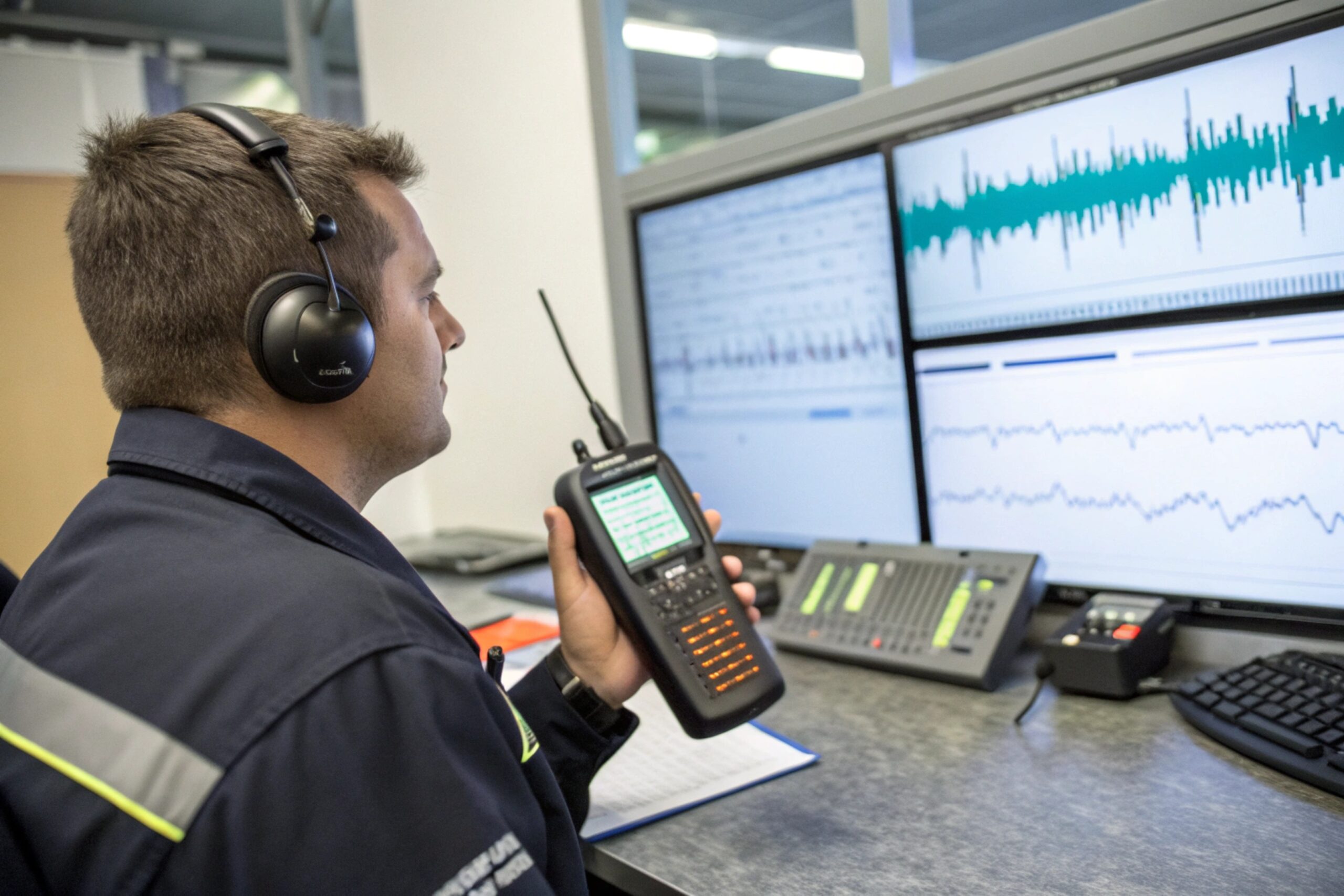
ERL and why it is the “physics” number
ERL (Echo Return Loss) 3 describes the loss in the echo path before cancellation. Higher ERL means the microphone naturally hears less of the speaker. In hands-free Ex phones, ERL depends on speaker distance, grill design, and mounting surface reflections. If ERL is low, AEC must work harder. That usually means longer convergence time and higher risk of artifacts.
Residual echo in dB: what the user actually experiences
Residual echo is what remains after AEC and NLP. It can be expressed in different ways, so it is important to define the measurement:
-
residual echo level during far-end single-talk
-
residual echo under double-talk
-
residual echo after an echo path change (like a door opening or wind gust)
For acceptance, it is often enough to specify: “Residual echo must be below a defined level so it is not noticeable.”
How do AEC and NLP cooperate to prevent howling in full-duplex hands-free mode?
Hands-free is where echo control earns its value. It is also where feedback and howling can start if gain is wrong or reflections are strong.
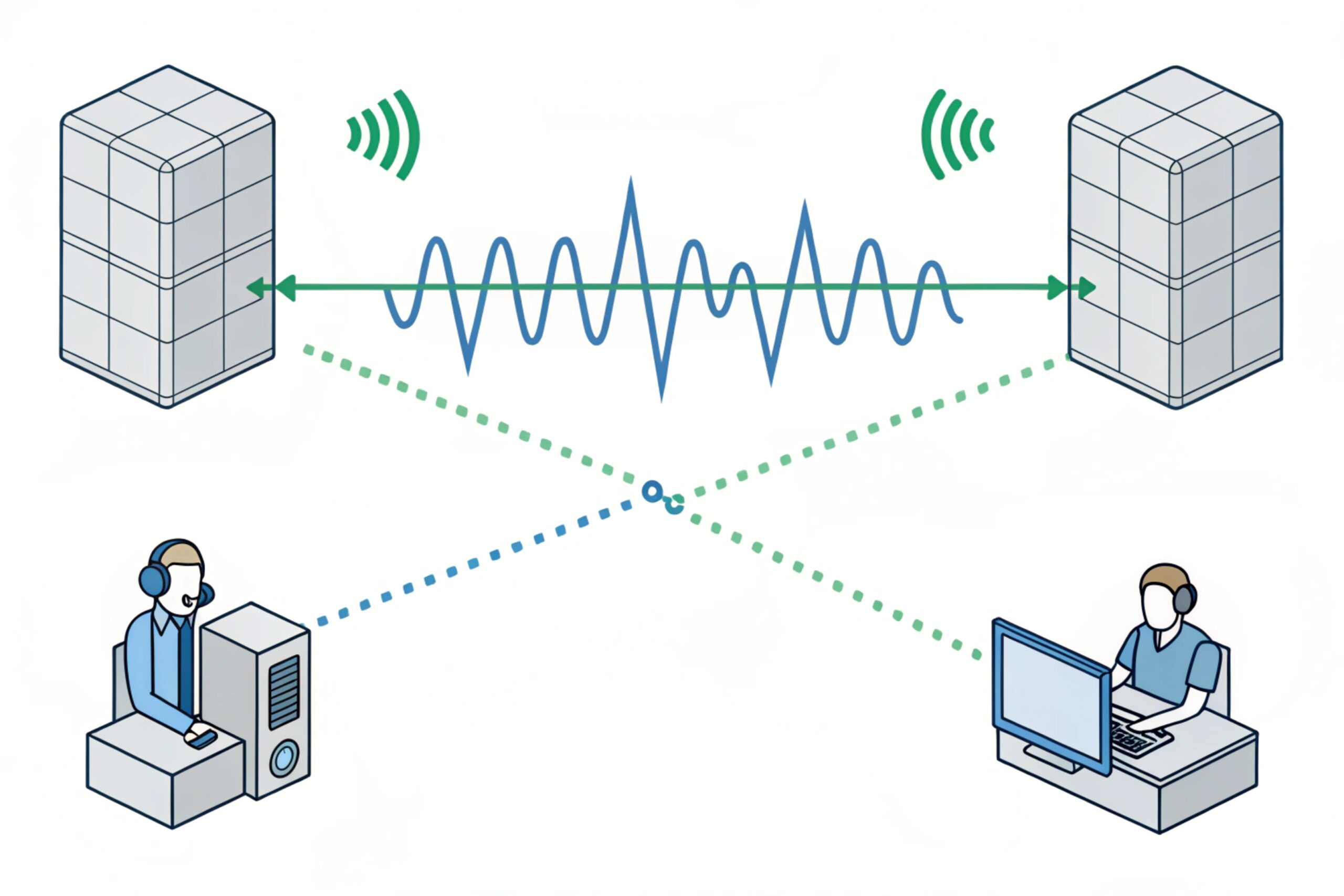
AEC removes the predictable, linear part of acoustic echo, while NLP suppresses the remaining echo when near-end speech is low; together they reduce loop gain and stop howling without forcing half-duplex audio.
AEC: the adaptive filter that tracks the room
Acoustic Echo Cancellation (AEC) 4 models the echo path from speaker to microphone. It uses an adaptive filter to estimate the impulse response of that path. In an Ex phone, that path can change when a door opens in a tunnel or wind direction shifts on an offshore deck. A strong AEC handles path changes fast. It also avoids divergence when noise is high.
NLP: the safety net for the parts AEC cannot cancel
AEC is best at linear echo. Real systems include non-linear effects such as speaker distortion at high volume. NLP (Non-linear Processing) 5 reduces remaining echo by attenuating the residual signal when the near end is not speaking. It is often guided by a near-end speech detector. When near-end speech is detected, NLP should back off to avoid cutting words.
Can tail length, ERL targets, and comfort noise be tuned for refineries, tunnels, and offshore decks?
A site can have perfect lab results and still struggle in the field. Refineries add steady machinery noise. Tunnels add long reflections. Offshore decks add wind bursts and open-air leakage.
Yes, many Ex SIP telephones and PBX profiles allow practical tuning of tail length, ERL assumptions, and comfort noise behavior, but the best results come from pairing DSP tuning with physical placement and speaker gain limits.

Tail length: match it to reflection time, not to marketing
Tail length is how long the AEC filter can model the echo path. A longer tail can handle longer reflections, but it can also increase CPU load and slow convergence if the system is weak.
Comfort noise: the small feature that prevents user confusion
When NLP suppresses residual signals, the background can sound like it “drops to zero.” That can feel unnatural and make users think the call ended. Comfort noise 6 adds a controlled noise floor so the call feels alive. In refineries, comfort noise should be gentle because the real background is already loud.
How is performance verified—STI/PESQ/MOS tests, swept-tone measurements, and on-site acceptance criteria?
Echo control that only sounds good in a demo room is not enough. A refinery acceptance test must survive real noise, real mounting, and real network delay.
Performance is verified by combining objective tests (ERL/ERLE, residual echo, swept-tone or impulse response checks) with speech quality metrics (PESQ/MOS or similar) and a clear on-site acceptance script that includes double-talk and max-volume checks.

Speech quality and intelligibility: do not rely on one score
Mean Opinion Score (MOS) 7 style values can help compare profiles, but they can miss some industrial realities. A strong verification plan uses both numbers and listening:
-
PESQ/MOS-like tests for repeatable scoring
-
STI-style thinking for intelligibility under noise
-
Listening tests with scripted phrases that include digits and valve tags
The most important on-site test is still simple: can two people understand each other quickly, with no echo, at the required distance and noise level?
Conclusion
Echo suppression can be strong in Ex phones, but it depends on measurable targets, smart tuning, and strict on-site acceptance tests that match the real noise and mounting conditions.
Footnotes
-
Exploring the role of digital signal processing in enhancing audio signals within hazardous area devices. ↩ ↩
-
Comprehensive documentation on the standard signaling protocol used for initiating and terminating VoIP calls. ↩ ↩
-
Understand how echo return loss values impact the clarity of industrial communication systems. ↩ ↩
-
A technical guide to the algorithms used to eliminate feedback loops in high-volume speaker systems. ↩ ↩
-
Learning how non-linear processing helps remove residual echo components that linear filters might miss. ↩ ↩
-
Detailed explanation of synthetic background noise used to reassure users the connection remains active. ↩ ↩
-
A complete overview of the industry standard for measuring speech quality and network performance. ↩ ↩








