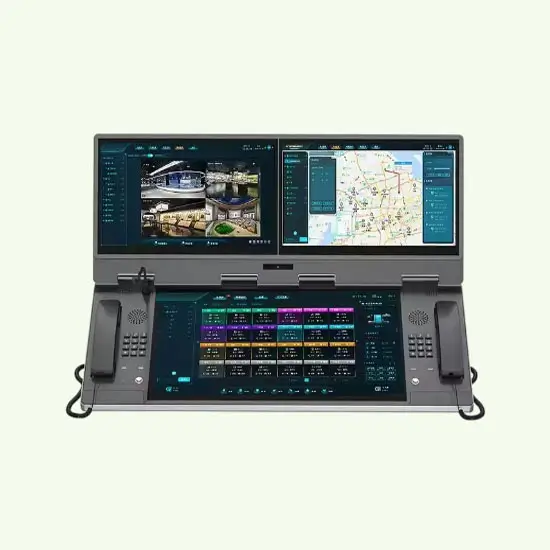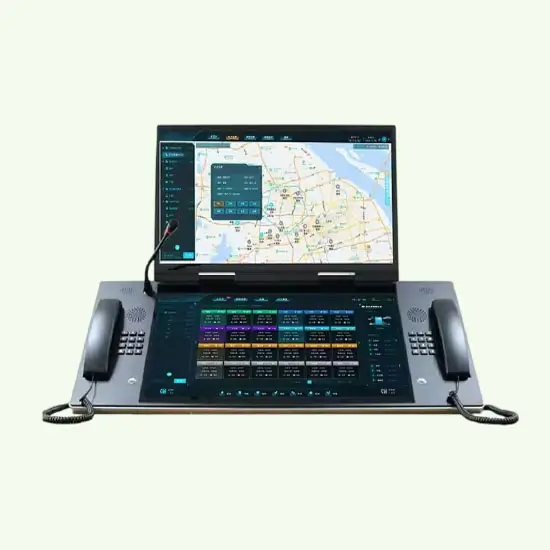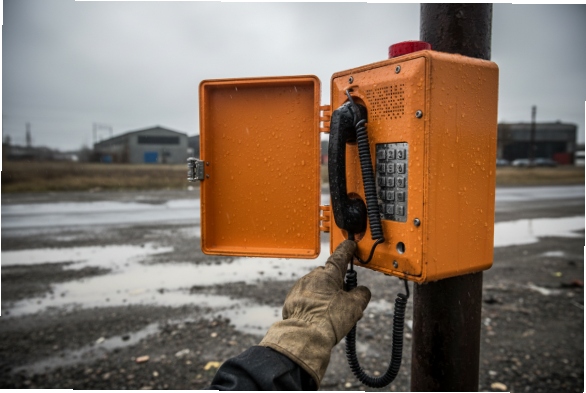
Voice breaks first when CCTV bursts and broadcast storms hit. Then emergency calls sound like broken radio, and paging becomes noise.
QoS for explosion-proof SIP phones works when RTP gets real-time priority end-to-end, SIP signaling stays high but controlled, switches trust the right ports, and paging/multicast has clear queues, limits, and validation tests.
Build a QoS plan that matches safety workflows, not just “voice vs data”
Define the traffic classes first
A good QoS plan starts with a small set of traffic classes. In hazardous sites, the useful classes are usually:
-
Emergency voice RTP (two-way talk)
-
Paging RTP (unicast or multicast, often heavier bursts)
-
SIP signaling (REGISTER, INVITE, keepalive)
-
Management (NTP, syslog, provisioning)
-
Best-effort (IT traffic)
-
High-rate video (CCTV, if it shares links)
The key is to avoid too many classes. Too many classes make switch policy hard to keep consistent across access switches, distribution, firewalls, and radios. A simple model is easier to audit and easier to test during drills.
Choose where marking is trusted
QoS works best when the endpoint marks its own packets, and the switch trusts that marking only on phone ports or in a voice VLAN. If every PC can send EF, the priority queue becomes a weapon. So the plant should set a trust boundary:
-
Trust DSCP and 802.1p on phone access ports
-
Do not trust on general user ports
-
Optionally remark to a plant standard at the edge
Plan for paging bursts
Paging is special. Multicast paging can send one stream to many endpoints, which is efficient in the core. Still, it can create bursts on access switches because many ports must play it. A strong plan reserves bandwidth for paging and prevents paging from starving emergency two-way voice.
A baseline class model that fits most plants
| Class | Examples | DSCP idea | 802.1p idea | Queue intent |
|---|---|---|---|---|
| Real-time voice | RTP for calls | EF (46) | 5 | Strict priority with policing |
| Signaling | SIP INVITE/REGISTER | CS5 (40) or AF31 (26) | 3 | High priority, not strict |
| Paging | RTP paging (uni/multi) | EF (46) or CS4/CS5 | 5 or 4 | High priority, rate-aware |
| Management | NTP/syslog/HTTPS provision | CS2/AF21 | 2 | Medium priority |
| Best-effort | Normal data | 0 | 0 | Default |
| Video | CCTV | AF41/CS4 | 4 | Shaped, not strict |
This model is a starting point. The next sections show how to apply it on real switches and how to keep emergency paging ahead of best-effort without breaking normal operations.
A simple QoS plan is only valuable when the markings are correct and the switch maps them into the correct queues.
Which DSCP values should be used—EF for RTP, CS5/AF31 for SIP, and how to map them on switches?
Congestion does not care about marketing labels. If RTP is not marked and queued correctly, emergency calls will stutter the moment the network gets busy.
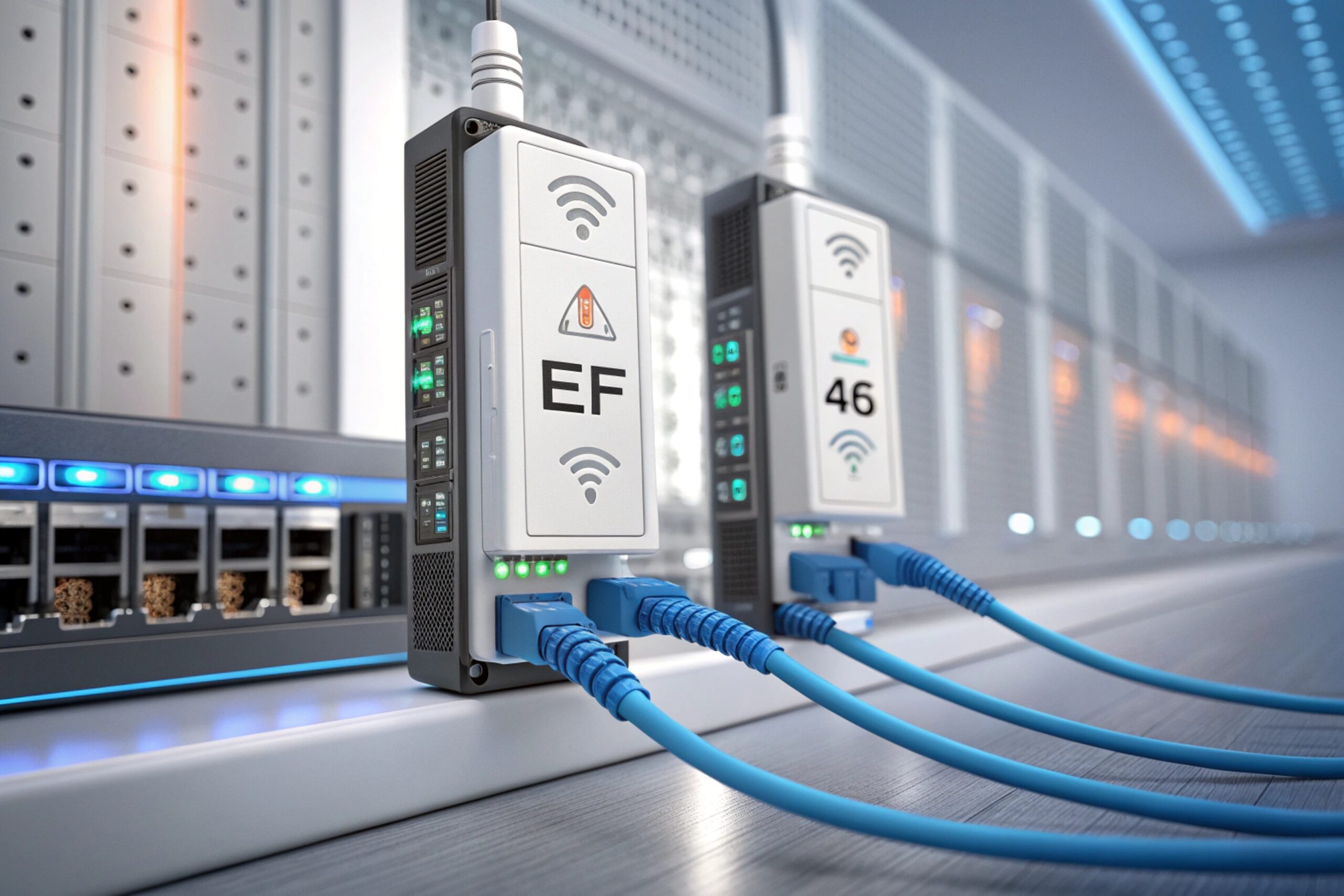
A practical DSCP plan is EF (46) for RTP media, CS5 (40) or AF31 (26) for SIP signaling, and a consistent switch map that sends EF to the priority queue and SIP to a high queue with controlled bandwidth.
Pick DSCP values that your whole system will keep
Many PBXs, SBCs, and paging servers can preserve or rewrite DSCP. Firewalls and routers can also remark packets. So the real rule is: choose DSCP values 1 that the entire path will keep consistent.
A stable approach used in many industrial SIP networks:
-
RTP media: EF (46)
-
SIP signaling: CS5 (40) or AF31 (26)
-
Provisioning/NTP/syslog: medium class (often CS2/AF21)
-
Best-effort: DSCP 0
CS5 vs AF31 for SIP is mostly a policy choice. CS5 is simple and clearly above best-effort. AF31 is also common in enterprise QoS models. The most important thing is to pick one and apply it everywhere.
Map DSCP to queues in a repeatable way
On switches, the required behavior is:
-
EF goes to a priority queue (strict priority)
-
SIP signaling goes to a high queue (WRR or high-weight queue)
-
Paging goes to a high queue or the same EF queue, based on how you want paging to behave under stress
-
Video is shaped so it cannot starve voice
A common failure is “EF is trusted, but uplinks do not use the same queue map.” That makes the access layer fine and the core layer noisy. So the mapping must be consistent on:
-
access ports
-
uplinks/trunks
-
router/firewall interfaces
-
any wireless bridges or radios
Example DSCP-to-queue intent table
| DSCP | Name | Traffic | Queue | Guardrail |
|---|---|---|---|---|
| 46 | EF | RTP voice (calls) | Strict priority | Police EF per port |
| 40 | CS5 | SIP signaling | High queue | Reserve bandwidth |
| 26 | AF31 | SIP signaling (alt) | High queue | Reserve bandwidth |
| 34 | AF41 | Video (example) | High but shaped | Shape per link |
| 0 | BE | Data | Default | Police if needed |
The simplest success recipe is: mark RTP as EF at the phone, trust it at the access switch, and guarantee that every hop keeps EF in the real-time queue with a cap that prevents abuse.
How is 802.1p priority tagging set per VLAN, and does LLDP-MED auto-assign a voice VLAN?
Without correct Layer 2 tagging, DSCP may not survive some trunk segments, and voice VLAN separation can collapse when ports are misconfigured.
802.1p sets Layer 2 priority (PCP) inside the VLAN tag, and LLDP-MED can auto-assign a voice VLAN and QoS values when the switch advertises them and the phone accepts them.
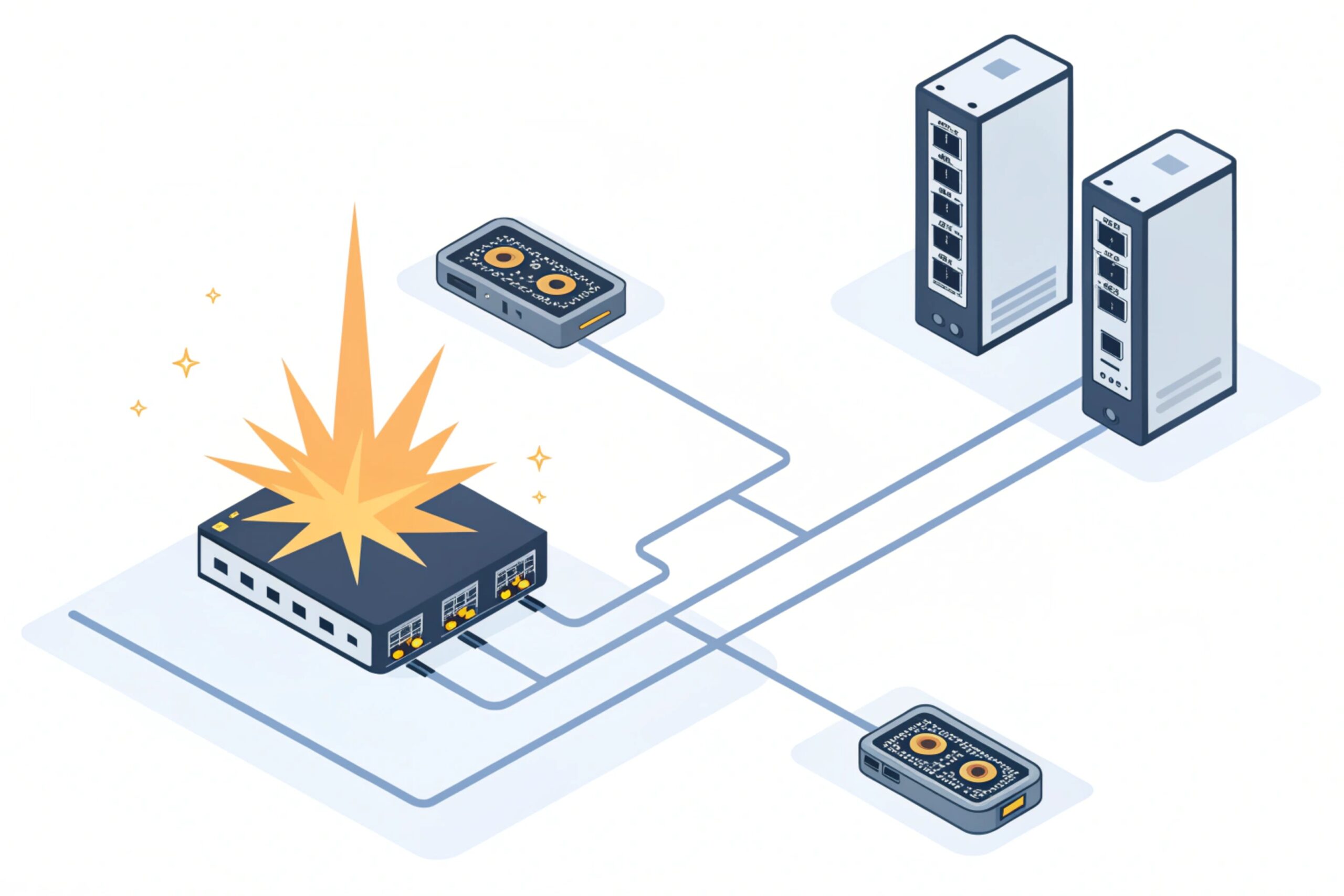
Use 802.1p to protect voice on Layer 2 segments
802.1p 2 is the 3-bit priority field (0–7) in the 802.1Q VLAN tag. It matters when:
-
traffic stays inside switched L2 domains
-
trunks carry multiple VLANs
-
some devices trust PCP more than DSCP on certain segments
Typical values used in voice designs:
-
PCP 5 for RTP voice
-
PCP 3 for SIP signaling
-
PCP 0 for best-effort
Some plants also use PCP 4 for video. The exact numbers can vary by policy, but consistency matters more than the specific label.
Voice VLAN: keep phones and PCs separated cleanly
Most industrial desks and field boxes want a clean separation:
-
Voice VLAN for phones
-
Data VLAN for any attached PC (if the phone has a pass-through port)
This reduces broadcast noise and makes QoS and security simpler. For explosion-proof phones 3, pass-through ports are not always used, but voice VLAN still helps because it isolates voice from CCTV and IT traffic.
LLDP-MED: useful, but verify behavior
LLDP-MED 4 can let the switch advertise:
-
voice VLAN ID
-
QoS parameters
-
power (PoE) information
Many endpoints accept LLDP-MED and auto-join the voice VLAN. This reduces field errors. Still, not every rugged phone supports LLDP-MED the same way. So the safest approach is:
-
enable LLDP-MED on the access switch
-
set a static voice VLAN fallback
-
confirm the phone actually tags voice frames and sets PCP as expected
A clean L2 design checklist
| Item | Target behavior | Why it helps |
|---|---|---|
| Voice VLAN | Phone traffic stays isolated | Less congestion and simpler rules |
| PCP for RTP | 5 (or plant standard) | Keeps L2 priority consistent |
| PCP for SIP | 3 (or plant standard) | Stops signaling from being delayed |
| LLDP-MED | Auto-assign VLAN and QoS | Reduces install mistakes |
| Trust boundary | Trust only phone ports | Prevents abuse of priority |
When VLAN and LLDP-MED are correct, deployment becomes repeatable. That sets the base for the next hard part: queueing policies that ensure emergency paging wins over best-effort traffic without collapsing everything else.
What queueing and shaping policies—strict priority, WRR, or policing—ensure emergency paging preempts best-effort traffic?
If every “important” packet goes into strict priority, the network can starve everything else. If strict priority is disabled, emergency audio can drown in video bursts.
The safest model is strict priority for EF voice with policing, WRR (or weighted queues) for signaling and paging, and shaping/policing for video and best-effort so emergency paging and calls stay intelligible during congestion.
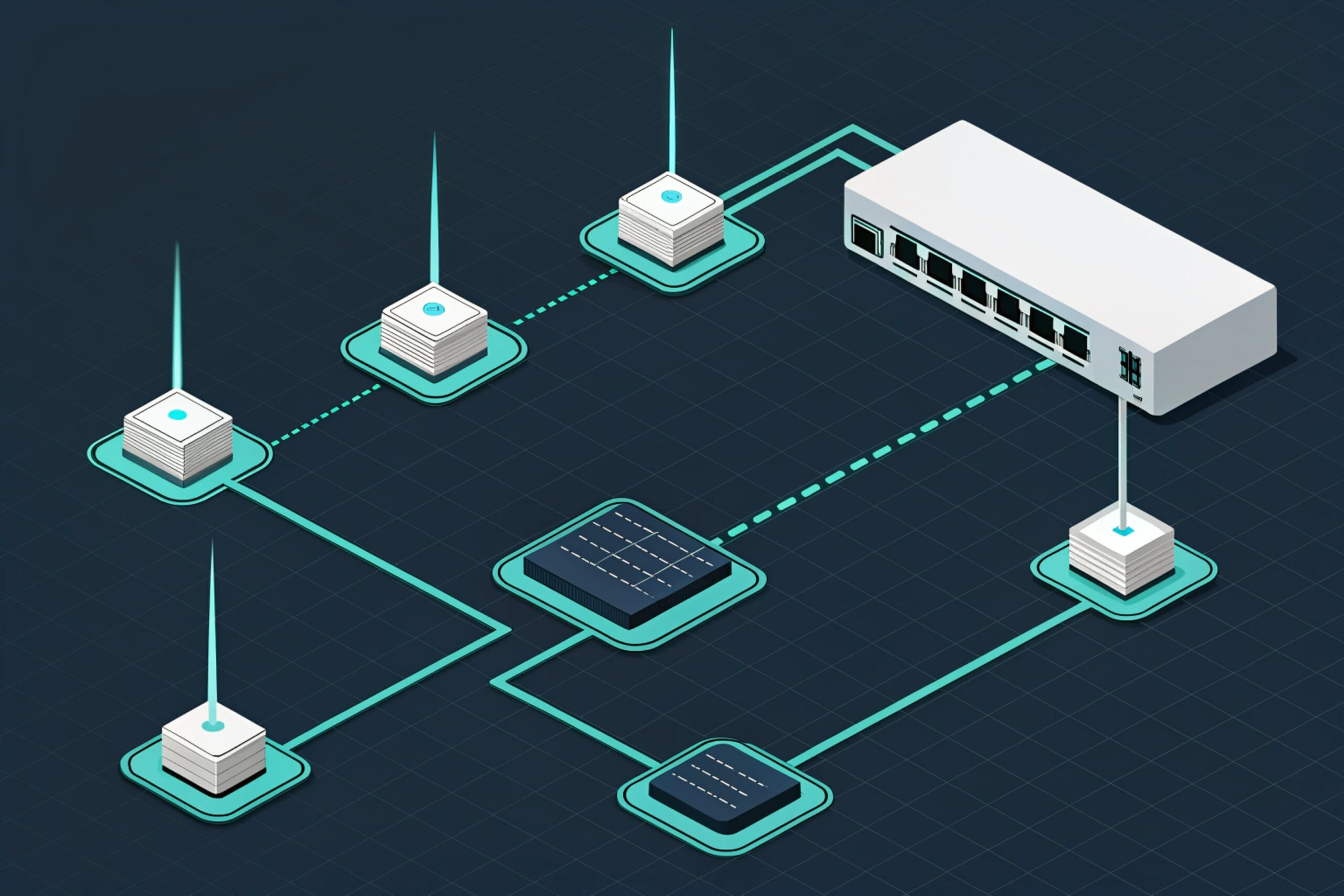
Use strict priority for EF, but always add a cap
Strict priority means “serve this queue first.” It is perfect for RTP voice. It is also dangerous without limits. A cap (policer or shaper) prevents:
-
a misconfigured endpoint marking large downloads as EF
-
multicast floods being treated as real-time
-
a loop causing a priority storm
A practical guardrail is per-port policing of EF and per-uplink policing of the priority queue at a safe percentage of link capacity.
Use WRR for SIP and paging so they stay fast but not starving
SIP signaling does not need strict priority, but it must be prompt. If SIP gets delayed, calls fail to set up. So SIP fits well in a high-weight queue under WRR 5.
Paging depends on your safety policy:
-
If paging must always cut through, place paging RTP in the same EF class but keep a strict cap so it does not starve two-way calls.
-
If paging is large and frequent, place it in a high queue (below EF) and reserve bandwidth.
In plants, paging is often more bursty than calls. That is why a reserved-bandwidth high queue can be more stable than putting paging into strict priority with no limits.
Shape video and police best-effort to protect voice
Many industrial networks fail voice because CCTV is allowed to burst without limit. Voice does not need much bandwidth, but it needs low delay and low jitter. So the best policy is to:
-
shape CCTV at distribution links
-
limit unknown multicast and broadcast
-
police best-effort at edge ports that connect to uncontrolled devices
A policy table that is easy to enforce
| Queue | Traffic | Scheduling | Bandwidth intent | Protection |
|---|---|---|---|---|
| Q1 (Priority) | EF RTP calls | Strict priority | Small but guaranteed | Police EF to cap |
| Q2 (High) | SIP + paging | WRR high weight | Reserved chunk | Drop thresholds tuned |
| Q3 (Medium) | Mgmt | WRR medium | Small reserved | Keep stable for NTP/syslog |
| Q4 (Default) | Best-effort | WRR low | Uses leftover | Police heavy ports |
| Q5 (Video) | CCTV | Shaped | Fixed ceiling | Prevent bursts |
This structure keeps emergency calls clear while still letting the plant run normal data. The final step is proof. QoS is not “done” until it is validated in captures and drills, including multicast paging and failover.
How can QoS be validated—packet captures, jitter/loss thresholds, and MOS/STI tests during multicast paging and failover?
QoS settings can look perfect in a config file and still fail because one trunk rewrites DSCP, one firewall strips tags, or one switch has the wrong queue map.
QoS is validated by confirming markings in packet captures, checking switch queue counters, measuring jitter/loss/delay against clear thresholds, and running MOS/STI-style tests during real paging and failover scenarios.
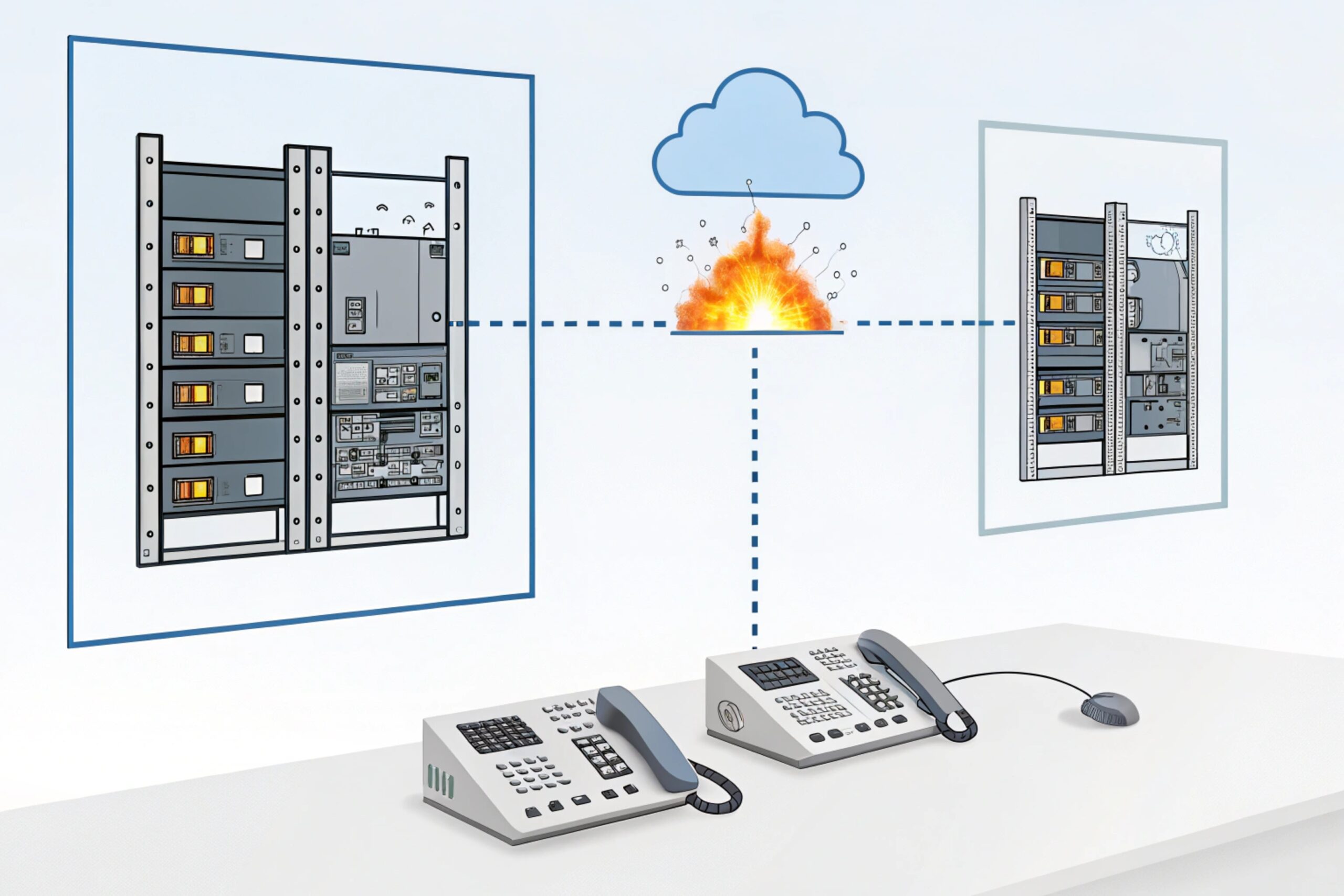
Step 1: Verify markings at the source and at the core
Use packet captures at two points:
-
At the phone access port (SPAN/monitor) to confirm DSCP and 802.1p are set as expected
-
At an uplink or core point to confirm markings are preserved end-to-end
For multicast paging, confirm the multicast RTP stream carries the same DSCP/PCP policy you designed. Also confirm IGMP behavior so multicast does not flood every port.
Step 2: Validate queue behavior with switch counters
Most managed switches expose:
-
per-queue packet counts
-
drops per queue
-
queue depth or tail drops
-
policing counters
In a real test, generate:
-
normal best-effort load (file transfer)
-
CCTV load (if it shares the links)
-
paging + a live emergency call
Then confirm:
-
EF packets are not dropped
-
SIP packets remain low latency
-
paging remains intelligible
-
best-effort shows the drops first, not voice
Step 3: Use clear thresholds that match safety goals
A practical target set for two-way voice:
-
packet loss: below ~1% during load tests
-
jitter: kept low and stable (many teams aim under ~20–30 ms)
-
one-way delay: kept within conversational limits (many designs aim under ~150 ms end-to-end)
Paging is one-way, so it can tolerate more delay, but it cannot tolerate heavy loss because intelligibility collapses fast, especially for short phrases and digits.
Step 4: Measure intelligibility and experience, not only numbers
For calls, MOS 6 style measurements help compare profiles, but listening tests with scripted phrases matter more:
-
valve tags
-
equipment IDs
-
digits and short commands
For paging, STI 7 style thinking is valuable because paging is about understanding in noise and reverberation. The best field method is:
-
play a standard test message
-
measure understanding at typical listening points
-
repeat during network load and during failover
A simple acceptance checklist
| Test | Pass condition | Notes |
|---|---|---|
| DSCP/PCP capture | Markings match policy at phone and core | Check both RTP and SIP |
| Queue drops | Drops occur in best-effort first | EF should not drop in normal load |
| Multicast paging under load | Message stays intelligible | Verify IGMP and codec profile |
| Failover drill | QoS stays correct after switchover | Test primary-to-secondary server |
| Time sync and logs | Syslog timestamps are correct | NTP must be stable |
In my acceptance work, the most revealing test is a combined drill: start a multicast page, place a two-way emergency call, then force a PBX or link failover. If the page and the call stay clear, the QoS design is real.
Conclusion
QoS for explosion-proof telephones succeeds when RTP is EF end-to-end, VLAN/802.1p tagging is consistent, queues use strict priority with caps, and validation proves paging and failover work under real load 8.
Footnotes
-
Differentiated Services Code Point values used to classify network traffic for QoS prioritization. [↩] ↩
-
IEEE standard for traffic prioritization at Layer 2 using the 3-bit Priority Code Point (PCP) field. [↩] ↩
-
Hazardous area device engineered to prevent ignition of flammable atmospheres. [↩] ↩
-
Link Layer Discovery Protocol – Media Endpoint Discovery extension for auto-configuring network endpoints. [↩] ↩
-
Weighted Round Robin scheduling algorithm to allocate bandwidth across queues based on priority. [↩] ↩
-
Mean Opinion Score, a subjective measurement of voice call quality. [↩] ↩
-
Speech Transmission Index, an objective measure of speech intelligibility in public address systems. [↩] ↩
-
Quality of Service implementation ensuring reliable voice and critical data delivery in industrial networks. [↩] ↩