
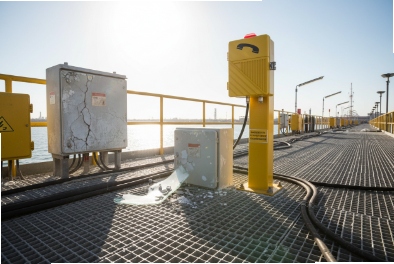
Sunlight looks harmless, but it quietly cracks seals, fades coatings, and ruins labels. Then a “working” Ex phone becomes a maintenance loop and a safety gap.
UV resistance for explosion-proof telephones is proven by weathering tests (ASTM G154/G155 or ISO 4892-2), clear pass/fail limits (ΔE, gloss, yellowness), and the right materials (316L, UV-stable powder coat, ASA/PC-ASA, and stable gaskets). Ex certification may require UV checks for exposed non-metallic parts, but buyers still need their own durability targets.
A practical UV spec framework for Ex telephones
UV damage shows up in boring places, not in the Ex marking
The Ex certificate controls ignition risk. UV control protects the parts that keep the phone usable. The weak points are usually the keypad, label window, handset cord jacket, membrane over the speaker, and the cover gasket. A phone can stay explosion-safe and still become useless when the keypad turns brittle or the label becomes unreadable.
Start by defining the exposure, not the test hours
A good spec begins with three simple facts:
-
The mounting is outdoor in direct sun or shaded.
-
The site is coastal or industrial inland.
-
The site uses washdown chemicals or only rain.
This matters because UV rarely acts alone. Sun heats the enclosure. Heat speeds up ageing. Salt and cleaning chemicals attack the same surfaces that UV weakens.
Use two layers of proof: material-level and assembly-level
Material coupons can pass a UV test and the assembled product can still fail. Cable boots can shrink. Adhesives can release. A coating can crack at edges. For that reason, a practical procurement spec asks for:
1) UV ageing proof for key materials (plastic and elastomer parts), and
2) a product-level check after ageing (ingress, legibility, and function).
A “buyer-friendly” UV requirement table
| What must survive | Typical UV failure | What to specify | What to verify at FAT or before shipment |
|---|---|---|---|
| Keypad / buttons | Cracks, stiffness, loss of rebound | UV-stable resin + UV ageing test | Button feel, no cracks, no sticky surface |
| Labels / nameplate | Fade, peeling, unreadable safety text | UV-stable inks + adhesion | Readability at 1 meter, peel check |
| Coating | Chalking, color fade, edge corrosion | Outdoor powder system + UV test | Visual chalking, ΔE and gloss retention report |
| Gaskets | Hardening, shrink, leaks | UV/ozone-resistant elastomer | Compression set trend, no surface cracks |
| Windows / lenses | Yellowing, haze | UV-stable PC/ASA or coated lens | Yellowness index and haze limit |
A UV spec becomes easy when it is written like a contract. It says what parts matter, how they are tested, and what “pass” means. The next sections show how to write that in clear language.
The best part is that these rules also reduce warranty claims, because a supplier can build to the same measurable targets every time.
Which test standards prove UV durability—ASTM G154/G155, ISO 4892-2, or IEC 60068-2-5?
Outdoor buyers often ask for “UV resistant” with no test reference. That language is too soft. The project needs a test method.
ASTM G154 (fluorescent UV) is a strong screening test for weathering of coatings and polymers. ASTM G155 and ISO 4892-2 (xenon arc) are better when color stability and sunlight spectrum realism matter. IEC 60068-2-5 is useful when the goal is the assembled product’s solar heat-load and weathering behavior, not only material coupons.

Pick the test based on what you fear most
A QUV-style test (ASTM G154) focuses on UV plus moisture cycling. It is often used for fast screening of plastics, elastomers, and coatings. Xenon arc tests (ASTM G155 or ISO 4892-2) simulate a broader light spectrum and are widely used when the main risk is fading, yellowing, and cosmetic drift on plastics and coatings.
For explosion-proof telephones, both are useful, but they answer different questions:
-
“Will this keypad crack and lose strength?” often fits a fluorescent UV screen.
-
“Will the window yellow and ruin visibility?” often fits xenon arc.
-
“Will the whole phone overheat, breathe, and leak after sun exposure?” fits IEC 60068-2-5 1.
Do not buy “hours” without a cycle definition
“1000 hours UV test” means nothing if the cycle is unknown. A buyer should request:
-
lamp type and irradiance,
-
temperature and moisture cycle,
-
exposure and condensation ratio,
-
and the acceptance criteria.
A standard selection table for tender writers
| Standard | Light source | Best use on Ex telephones | Typical output you should ask for |
|---|---|---|---|
| ASTM G154 | Fluorescent UV + moisture | Screening for plastics, elastomers, coatings | No cracking, basic color drift, mechanical feel checks |
| ASTM G155 | Xenon arc + moisture option | Color stability, yellowing, cosmetic drift | ΔE, gloss retention, visual rating |
| ISO 4892-2 | Xenon arc + moisture | Global ISO language for plastic weathering | ΔE, YI, haze trend, photos before/after |
| IEC 60068-2-5 | Simulated solar radiation | Product-level sun heat-load and weathering | Functional test, ingress check, temperature rise behavior |
A simple process that avoids arguments
A practical approach is to write two lines:
1) “Key non-metallic parts shall meet xenon-arc weathering per ISO 4892-2 (or ASTM G155).”
2) “The assembled phone shall pass a solar radiation test per IEC 60068-2-5 with no loss of IP sealing and no legibility loss.”
This keeps the spec clear. It also keeps quotes comparable across suppliers.
What materials and coatings resist UV—316L, marine powder coat, UV-stable PC/ASA, and Viton gaskets?
A UV plan is only as strong as the weakest material. Many failures come from one cheap part that was not specified.
316L stainless is naturally UV-stable, but it still needs UV-stable seals and labels. For coated housings, outdoor polyester powder systems are preferred over epoxy-heavy systems for sunlight. For plastics, ASA or PC/ASA blends are strong outdoor choices, while standard PC can yellow without stabilizers. For gaskets, EPDM often leads in UV/ozone weathering, while FKM (Viton) is strong for chemicals and also performs well outdoors when properly specified.

Metals: the enclosure survives, but the phone still needs soft parts
316L does not degrade from UV the way plastics do. That is why 316L 2 is a safe baseline for offshore and coastal terminals. Still, the phone is not only a box. The keypad and gasket decide if water enters. Labels decide if operators can call the right number in an emergency.
Coatings: UV resistance is about powder chemistry and edge discipline
Many buyers say “marine powder coat” without defining the resin system. A practical rule works:
-
Outdoor polyester-based powder coats usually hold UV better than epoxy-rich systems.
-
Edges, holes, and cable entries are the first corrosion points after UV ageing.
If coated aluminum is used, the spec should also cover:
-
coating thickness range,
-
edge coverage expectations,
-
and a repair rule for scratches during installation.
Plastics: choose for outdoor first, then check impact and temperature
ASA 3 and PC/ASA are popular outdoor choices because they keep color and toughness under sunlight better than basic ABS. Clear windows are harder. Clear plastics can yellow. If a clear window is needed, the spec should demand a UV-stable grade and a yellowing limit.
Gaskets: choose weathering stability and chemical compatibility together
Outdoor UV and ozone attack elastomers. EPDM is often a strong choice for weathering and water. FKM is often chosen for oil and chemical resistance and it also has good outdoor ageing performance when the grade is correct. The key is to match the gasket to cleaning chemicals, salt exposure, and temperature swing.
A “material choice” table buyers can use fast
| Component | Safer outdoor choice | Why it works | Extra note for Ex phones |
|---|---|---|---|
| Housing | 316L stainless | UV stable and corrosion resistant | Use 316 fasteners too |
| Coated housing | Outdoor polyester powder | Better UV stability for exterior use | Protect edges and threads |
| Keypad | ASA or PC/ASA | Strong weathering profile | Confirm feel after ageing |
| Window | UV-stable lens material | Limits yellowing and haze | Add YI limit in spec |
| Gasket | EPDM or qualified FKM | Weathering + sealing stability | Must hold IP after service |
In many field cases, UV damage is not dramatic. The keypad just gets harder. The gasket just shrinks a little. Then water enters after the first year. That is why material choices must be written into the purchase order, not left to “standard configuration.”
How are performance limits defined—ΔE color shift, gloss retention, yellowness index, and exposure hours?
A supplier can always claim “UV tested.” The buyer needs numbers that are easy to measure and hard to argue with.
Good UV limits use measurable metrics: ΔE for color change, gloss retention for chalking, and yellowness index for clear or light plastics. Exposure hours matter only when the cycle is defined. The best specs also include functional limits like label legibility, gasket condition, and IP sealing after ageing.

Color and appearance limits that work in procurement
ΔE is a direct way to control color shift. It keeps brand color and safety markings consistent. Gloss retention controls chalking and surface breakdown. Yellowness index 4 is critical for windows, lenses, and light-colored plastics.
A strong spec uses all three, because each captures a different failure:
-
ΔE catches pigment drift.
-
Gloss catches surface erosion.
-
YI catches “clear turning yellow.”
Exposure hours should match your business risk
Higher hours do not always mean better value. If a phone is installed in a shaded shipyard corridor, 2000 hours may be overkill. If a phone is installed on a desert tank farm wall, higher exposure and solar heat-load testing becomes more important.
A simple rule helps: tie hours to the site class:
-
moderate outdoor: mid-level exposure,
-
high UV index or coastal: higher exposure plus salt-fog and washdown checks.
Add functional limits, not only cosmetic limits
UV failures that hurt safety are often functional:
-
labels become unreadable,
-
keypad loses rebound,
-
gasket cracks and IP sealing drops,
-
microphone membrane stiffens and audio level drops.
A buyer should add pass/fail checks after exposure:
-
no cracks,
-
no delamination,
-
keypad remains operable,
-
labels remain readable,
-
and ingress protection remains at the rated level.
A metrics table you can paste into a tender
| Metric | What it controls | Where to apply it | Typical acceptance style |
|---|---|---|---|
| ΔE (color change) | Fade and color drift | Coating, keypads, labels | Limit the max ΔE after exposure |
| Gloss retention (%) | Chalking and surface breakdown | Coating surfaces | Require minimum gloss retention |
| Yellowness Index (YI) | Yellowing of clear/light plastics | Windows and lenses | Limit YI increase and haze |
| Visual defects | Cracks, peeling, chalk | All exposed parts | “No cracking, no peeling” |
| Functional checks | Real usability | Whole phone | Call test, keypad feel, label legibility |
| IP sealing | Water and dust entry | Whole phone | IP66/IP67 re-check after ageing |
In my own field discussions, the most important line is not the ΔE line. It is the line that says “After UV ageing, the phone shall still meet its IP rating and all markings shall remain readable.” That one line protects safety and reduces site complaints.
Do certifications require UV performance—NEMA 4X, IECEx ambient, and warranty for coastal high UV index?
Many buyers assume certification includes UV durability. That assumption causes surprise failures.
Ex standards can require UV resistance evaluation for exposed non-metallic enclosure parts if they are not shielded from sunlight, but the acceptance is usually about material integrity, not your preferred cosmetic targets. NEMA 4X focuses on outdoor ingress and corrosion intent, not a universal UV guarantee. IECEx “Ta” confirms ambient temperature limits, so it matters for sun heat-load, but it is not a UV durability rating. For coastal high-UV sites, the most reliable control is a written UV performance spec plus a warranty that covers outdoor ageing of coatings, labels, seals, and plastics.

Ex certification: it may touch UV, but it does not solve buyer expectations
Explosion protection standards 5 address non-metallic material suitability, including ageing and UV resistance where relevant. That is important, because brittle plastics can create new risks. Still, certification is not written to protect brand color or prevent small chalking. A site that cares about appearance and long life must add its own limits.
NEMA 4X: strong for water and corrosion, weak as a UV promise
NEMA 4X is useful language for outdoor hose-directed water and corrosion intent 6. Many marine projects use it as shorthand for “this enclosure belongs outside.” Still, sunlight performance can vary with material choice. Some plastics are marketed as UV resistant, but the buyer should still demand a weathering test report for the actual resin grade and color.
If the project is North America focused, it helps to add “sunlight resistant” language and request proof for polymeric parts.
IECEx Ta: protect against sun heat-load issues
IECEx “Ta” tells the ambient range that the product is certified for. Outdoor sun raises surface temperature. That can affect sealing, keypad feel, and also Ex temperature class compliance in extreme climates. A buyer should match Ta to the real site, not to a mild lab assumption.
Warranty: the only commercial tool that forces consistency
For coastal, high UV index, and washdown sites, a strong warranty request is simple:
-
define the outdoor environment class,
-
define what counts as failure (leak, unreadable labels, cracked keypad, severe fading),
-
and ask for coverage for those parts, not only the electronics.
A clean “coastal UV” procurement checklist
| Item | What to request | Why it protects the project |
|---|---|---|
| UV test report | G154 7 / G155 8 or ISO 4892-2 9 result | Stops vague marketing claims |
| Solar radiation test | IEC 60068-2-5 10 for assembled unit | Captures heat-load and sealing risk |
| Post-ageing IP check | IP66/IP67 verified after exposure | Connects UV to real field failure |
| Material declaration | Resin type, gasket type, coating system | Prevents silent substitutions |
| Warranty terms | Outdoor ageing coverage scope | Aligns supplier incentives |
When these items are in place, “UV resistance” stops being an opinion. It becomes a measurable product promise.
Conclusion
UV durability needs the right test method, measurable limits, and stable materials. Certification helps, but a clear buyer spec and warranty make outdoor performance predictable.
Footnotes
-
[Standard test method for determining the effects of simulated solar radiation on equipment.] ↩
-
[Low-carbon austenitic stainless steel offering excellent corrosion resistance, suitable for marine use.] ↩
-
[Weather-resistant thermoplastic used in outdoor applications for its UV stability and impact strength.] ↩
-
[Metric used to measure the degree of yellowness in plastics and coatings caused by UV exposure.] ↩
-
[International standards ensuring equipment safety in explosive atmospheres, covering material suitability.] ↩
-
[Standard defining performance requirements for enclosures, including protection against corrosion and hose-directed water.] ↩
-
[Standard practice for operating fluorescent ultraviolet (UV) lamp apparatus for exposure of nonmetallic materials.] ↩
-
[Standard practice for operating xenon arc light apparatus for exposure of non-metallic materials.] ↩
-
[International standard specifying methods for exposing plastics to laboratory light sources (xenon-arc lamps).] ↩
-
[Standard detailing environmental testing procedures for simulated solar radiation at ground level.] ↩








