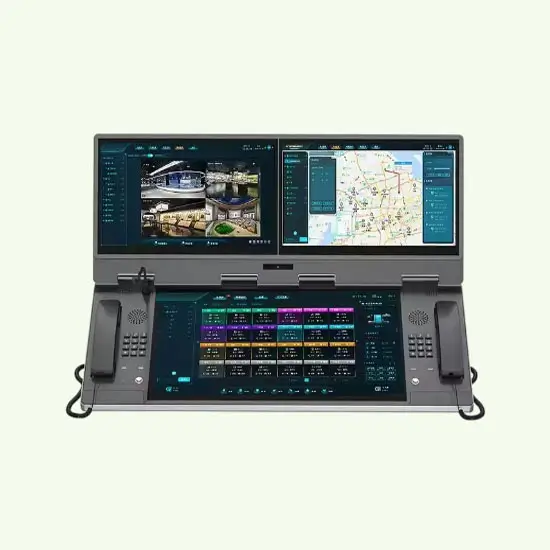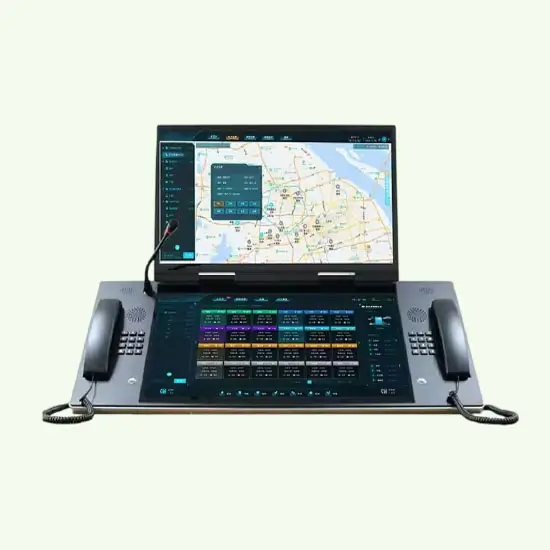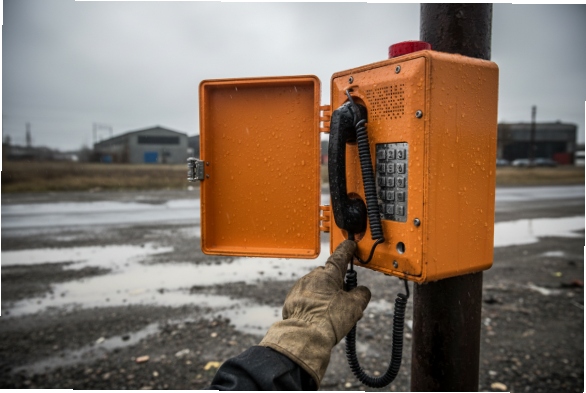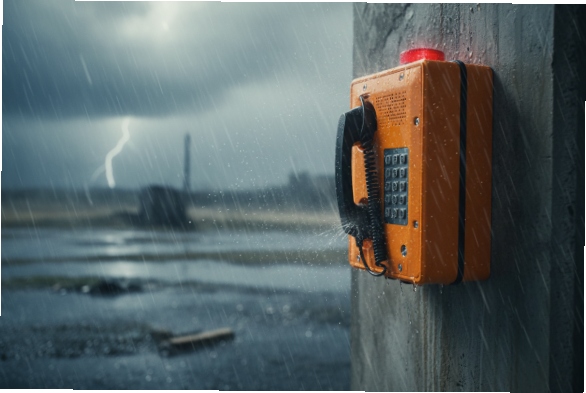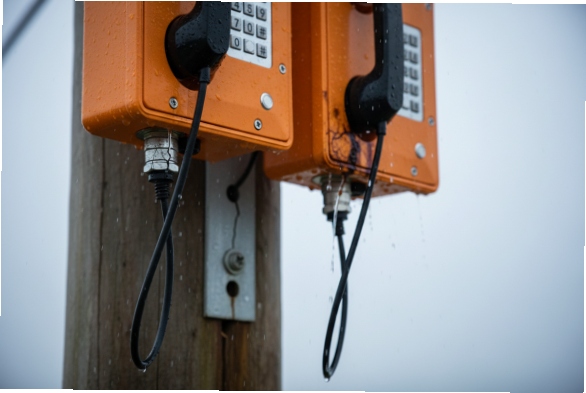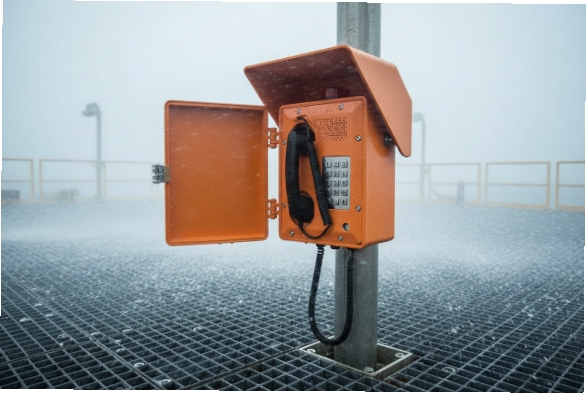

A phone can be fully Ex certified and still fail during an earthquake. Then the site loses emergency calling at the worst time.
Explosion-proof telephones can meet seismic requirements only when the vendor provides a defined test standard, a vibration or shake-table report, and a mounting method that matches the tested setup.

How to define seismic compliance for an Ex telephone
Seismic rating is not a single universal label
Many buyers ask for “seismic rated” like it is one number. In real projects, seismic compliance is a mix of three items: vibration, shock, and earthquake motion. Vibration and shock can be done on lab shakers. Earthquake motion is proven with a shake table or a recognized seismic qualification standard. A vendor can pass a vibration test and still fail an earthquake requirement if the mounting, mass, and bracket stiffness are not controlled.
Separate three test types before you compare quotes
Sinusoidal vibration
Sinusoidal vibration checks how the product behaves across a frequency sweep. It can find weak screws, loose terminals, and resonance problems. Many industrial telephone vendors can provide this test as part of product validation.
Random vibration
Random vibration is closer to real equipment vibration. It stresses many frequencies at once. It is common for transport vibration, offshore vibration, and machinery rooms. It is also a good screen for cable gland loosening and connector fretting.
Mechanical shock
Shock tests use a high acceleration over a short time. It is useful for impact-like events, handling, and some site events. It is not the same as an earthquake, but it helps prove the assembly can survive sudden loads.
Where IEC, IEEE, and NEBS fit
-
IEC 60068 1 test methods are often used for vibration and shock screening. They are good building blocks for a vendor test report.
-
IEEE 693 2 is widely used for seismic qualification in power substations and high-reliability electrical equipment. It is stronger when a project needs a clear seismic class approach.
-
GR-63-CORE is a telecom environment standard used in NEBS practice. Many buyers reference “Zone 4” when they want the highest seismic demand category in that framework.
A simple buyer table that prevents confusion
| Requirement type | What it proves | What document should exist | Common mistake |
|---|---|---|---|
| Vibration | Resonance and loosening risk | IEC-style vibration report | Treating vibration as “seismic” |
| Shock | Sudden load survival | Shock pulse report | Using shock as earthquake proof |
| Seismic | Earthquake motion survival | Shake-table or seismic qualification report | Accepting a declaration with no test setup details |
In my own project reviews, the cleanest rule is simple. If the project is truly seismic, ask for shake-table evidence or a recognized seismic qualification statement that includes the mounting method and the tested configuration.
The next sections show how to ask for the right standard, the right test numbers, and the right installation method, so the phone stays in service after the event.
Which seismic and vibration standards apply—IEC 60068-2-6/-27/-64, IEEE 693, GR-63-CORE Zone 4, or GB/T equivalents?
Seismic specs often become a mess because buyers mix standards without stating the goal. A refinery team may only need vibration screening. A substation owner may need formal seismic qualification.
IEC 60068-2-6, IEC 60068-2-64, and IEC 60068-2-27 are common for vibration and shock testing methods. IEEE 693 is used when a project needs seismic qualification for high-reliability electrical equipment. GR-63-CORE Zone 4 is used in NEBS-style telecom projects that demand high seismic robustness. GB/T equivalents are often used when the project standard is China-based, and vendors should map the method and severity levels clearly.

Use IEC 60068 when you need repeatable vibration and shock methods
IEC 60068 is a family of environmental test methods. For explosion-proof telephones, the common references in buyer language are:
-
IEC 60068-2-6 for sinusoidal vibration method
-
IEC 60068-2-64 for random vibration method
-
IEC 60068-2-27 for mechanical shock method
These methods help prove the device does not loosen, crack, or lose function under defined vibration and shock. They are often enough for locations near pumps, compressors, loading racks, and shipyard machinery rooms where continuous vibration is a daily issue.
Use IEEE 693 when the owner wants seismic qualification language
IEEE 693 is often used in utility and substation projects. It gives a structured framework for seismic qualification and performance levels. When a tender says “IEEE 693,” the buyer usually wants confidence that:
-
the equipment survives earthquake motion at a defined severity class, and
-
the mounting and anchoring are part of the qualification story, not an afterthought.
Use GR-63-CORE when the project is telecom and NEBS-driven
NEBS-style projects often reference GR-63-CORE 3, including “Zone 4” language. This is common when telecom reliability and network uptime are the main driver. For SIP-based explosion-proof telephones connected to a critical voice network, some owners want NEBS-type thinking, even when the product is industrial.
GB/T equivalents should be treated as method mapping, not as a label
Many China projects request GB/T environmental test methods. The important part is not the number on the document. The important part is whether the vendor can map:
-
test method type (sine, random, shock, seismic),
-
severity level (g-levels, PSD, frequency band, pulse duration),
-
sample configuration and mounting.
A practical standard selection matrix
| Industry context | Best-fit standard language | Why it works | What to request with it |
|---|---|---|---|
| Refinery and tank farm | IEC 60068 vibration and shock | Proves robustness against equipment vibration | Full vibration and shock report with setpoints |
| Loading rack and terminals | IEC 60068 + site vibration profile | Matches common mechanical stress on racks | Test profile aligned to site conditions |
| Utility substations | IEEE 693 | Seismic qualification language is familiar | Qualification level and mounting plan |
| Telecom critical sites | GR-63-CORE Zone 4 | Aligns with NEBS 4 reliability thinking | Seismic declaration plus test setup details |
| China EPC | GB/T method equivalents | Fits local standards and lab practice | Mapping table to IEC/IEEE severity levels |
This is the key point: a vendor should not claim “seismic rated” without stating which framework applies. The standard sets the test method. The report sets the severity. The mounting sets whether the result is real in the field.
What g-levels, frequency ranges, and shock durations are certified in the vibration test report?
A vibration “pass” means nothing without numbers. Many documents say “vibration test passed” and hide the profile. That makes vendor comparison impossible.
A valid vibration report should state the vibration type, frequency range, acceleration or PSD level, sweep rate or duration, axes tested, and pass criteria. Shock reports should state pulse shape, peak g, and pulse duration, plus the number of shocks per direction. Seismic reports should state the response spectrum level or shake-table input and the mounting configuration.

The three profiles you will see in real reports
Sinusoidal vibration key fields
A sine report should include:
-
frequency band, often something like 5–150 Hz or wider
-
acceleration level in g, or displacement at low frequency
-
sweep rate, dwell time, and total time per axis
-
axes tested, usually X, Y, Z
-
functional monitoring and post-test inspection items
Random vibration key fields
A random report should include:
-
frequency band, often something like 5–500 Hz or 10–1000 Hz
-
duration per axis
-
test fixture and mounting bolts used
-
cable gland and cable arrangement during test
Mechanical shock key fields
A shock report should include:
-
pulse shape, such as half-sine or sawtooth
-
peak g, such as 10 g, 15 g, 30 g, or project-defined
-
pulse duration, such as 6 ms, 11 ms, or project-defined
-
number of shocks per direction and per axis
-
functional checks after each axis
A buyer template table for requesting test values
| Report item | Minimum data the vendor should provide | Why it matters |
|---|---|---|
| Vibration type | Sine or random | Different stress, different meaning |
| Frequency range | Start and end frequency | Captures resonance risk |
| Severity | g level or PSD and RMS | Defines the real stress level |
| Duration | Time per axis | Short tests can miss failures |
| Axes | X/Y/Z | One-axis testing is not enough |
| Mounting | Bracket type, bolt size, torque | Mounting changes resonance |
| Pass criteria | No damage, no loosening, call test | Prevents “cosmetic only” passes |
What numbers are “normal” and why you should not assume them
Some industrial phone reports show moderate vibration levels because the goal is shipping and installation robustness. Other reports show higher levels because the phone is aimed at offshore machinery rooms. Shock levels can also vary widely. The safest procurement habit is to request the profile and compare it to your site risk:
-
High vibration areas need a stronger random vibration profile.
-
Areas with heavy handling need stronger shock evidence.
-
Seismic sites need shake-table evidence, not only vibration and shock.
A short internal rule helps: if the report does not list frequency band, severity, duration, and mounting, it is not a report you can trust for specification compliance.
How should units be mounted for seismic stability—316L brackets, M8/M10 bolts, locking washers, and anti-vibration pads?
A good phone can fail because of a weak bracket. In earthquakes, the bracket and bolts see the highest stress, not the keypad.
Seismic stability comes from rigid mounting into a structural element, corrosion-resistant brackets and fasteners, correct bolt sizing and torque, and locking methods that resist loosening. Anti-vibration pads can help in machinery vibration, but they must be used carefully in seismic areas because soft mounts can increase movement and impact loads.

Start with the mounting surface, not the phone
A phone mounted to thin sheet metal can tear off even if the enclosure is strong. The mounting surface should be:
-
a structural wall, column, or reinforced frame
-
a stiff panel with backing plates
-
a rack designed for seismic loads
If the site uses handrails or lightweight posts, treat them as vibration mounts, not seismic mounts.
Bracket material and fastener choices for harsh sites
Ports and offshore sites often prefer 316L brackets 6 and 316 fasteners. Refineries may accept coated steel brackets if corrosion is controlled. The bracket should be designed with:
-
enough section thickness to avoid bending
-
short lever arms to reduce moment loads
-
slotted holes only where needed, because slots reduce stiffness
For bolt size, M8 or M10 is common in industrial mounting. The correct size depends on bracket design and the structure. The key is to match bolt size to the real load and to use locking features.
Locking methods that survive vibration and time
Locking washers, prevailing torque nuts, and thread-lock compounds can help. The best method depends on temperature, maintenance plan, and site standards. The goal is simple: the bolts should not back out under vibration and thermal cycling.
Anti-vibration pads and why they can be risky in seismic
Anti-vibration pads reduce high-frequency vibration from machinery. They can protect electronics and reduce noise. Still, seismic motion is low-frequency and high-displacement. Soft pads can allow more travel, which can create secondary impacts and higher bolt bending. A safer approach is:
-
use rigid mounting for seismic qualification setups
-
use pads only when the vendor test setup includes them, or when a structural engineer accepts the added displacement
A mounting checklist table for installers
| Mounting element | Recommendation for seismic sites | Field check |
|---|---|---|
| Bracket | 316L or corrosion-controlled steel, stiff design | No visible flex under hand load |
| Bolts | M8 or M10 as designed, correct grade | Torque verified and marked |
| Washers | Locking method per site standard | Locking feature present on all bolts |
| Backing | Back plate for thin walls | No deformation around holes |
| Cable strain relief | Clamp or gland support | No hanging load on gland |
| Corrosion | Same material family where possible | No mixed metal stack without isolation |
A simple practice works well on projects: the mounting kit should be part of the supply scope, not “site provided.” This keeps the bracket and bolt story consistent with the test report and reduces surprises during commissioning.
What evidence do vendors provide—third-party lab reports, shake-table results, NEBS/IEEE declarations, and QC traceability for each batch?
Seismic claims often die in paperwork review. The buyer needs evidence that is clear and repeatable. A one-page declaration is not enough when lives depend on the call.
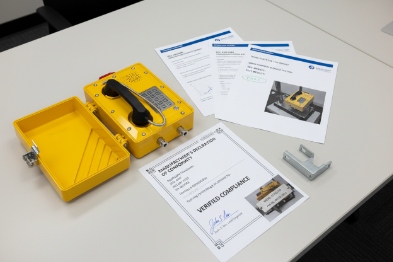
Strong vendors provide third-party lab reports with full test profiles, photos of the test setup, and clear pass criteria. For seismic claims, they provide shake-table results or a formal qualification statement aligned to IEEE 693 or GR-63-CORE. For supply risk control, they provide QC traceability tied to serial numbers, critical part records, and batch inspection logs.
What a real third-party report should include
A credible lab report should show:
-
the standard used and the exact edition or method reference
-
the test profile, with frequency, severity, and duration
-
the axes tested
-
the mounting method and fixture drawings or photos
-
the sample configuration, including bracket, glands, and cable routing
-
pre-test and post-test functional checks, including call tests for SIP phones
If the report lacks mounting details, it is hard to apply to your installation.
Shake-table evidence and what to look for
For seismic qualification, the buyer should request:
-
shake-table 7 input definition or response spectrum target
-
the mass of the unit and bracket used
-
pass criteria, such as no detachment, no cracks, and successful functional call test after the run
-
any changes made after the test, because redesigns can invalidate older reports
Declarations are useful only when they are anchored to documents
NEBS or IEEE declarations can help procurement teams move fast. Still, a declaration should reference:
-
the actual report number
-
the lab name
-
the tested model code and mounting kit
-
the revision control
A declaration without traceable report numbers is only a claim.
QC traceability that matters for batch reliability
In B2B supply, seismic robustness is not only a lab issue. It is also a production consistency issue. Useful traceability 8 includes:
-
serial number mapping to production batch
-
torque control records for critical fasteners
-
gasket material lot tracking
-
bracket and fastener grade certificates where required
-
final inspection checklist with functional call test results
A procurement evidence checklist table
| Evidence type | What to request | What it protects you from |
|---|---|---|
| Third-party lab report | Full profile + setup photos | Marketing-only “pass” claims |
| Shake-table result | Spectrum or input + mounting details | False “seismic rated” language |
| NEBS or IEEE declaration | Report numbers and revision control | Unverifiable compliance statements |
| QC traceability | Serial-to-batch mapping and key parts | Batch drift and silent substitutions |
| Change control | ECO records 9 for mechanical parts | Old reports applied to new builds |
A buyer does not need perfect paperwork. A buyer needs the right documents that let an engineer reproduce the logic. When that evidence is in place, the seismic story becomes simple. The phone was tested. The mounting is defined. The build is traceable.
Conclusion
Seismic compliance needs a stated standard, a complete test profile, and a tested mounting method. Demand third-party reports, shake-table evidence, and batch traceability 10 before approving the Ex telephone.
Footnotes
-
[Standard describing environmental testing methods, including vibration and shock, for electronic equipment.] ↩
-
[IEEE Recommended Practice for Seismic Design of Substations, setting standards for equipment durability.] ↩
-
[Telcordia requirements for physical protection of network equipment, including rigorous seismic testing.] ↩
-
[Network Equipment-Building System guidelines ensuring telecom equipment reliability in various environments.] ↩
-
[Power Spectral Density, a measure of vibration intensity across different frequencies.] ↩
-
[Brackets made from 316L stainless steel, offering superior corrosion resistance and strength.] ↩
-
[Test apparatus simulating earthquake ground motion to verify structural integrity and performance.] ↩
-
[ISO guidance on traceability in the feed and food chain, adaptable to manufacturing quality control.] ↩
-
[Engineering Change Order, a formal process for implementing changes to product design or manufacturing.] ↩
-
[Method of tracking groups of products manufactured together to ensure consistent quality.] ↩