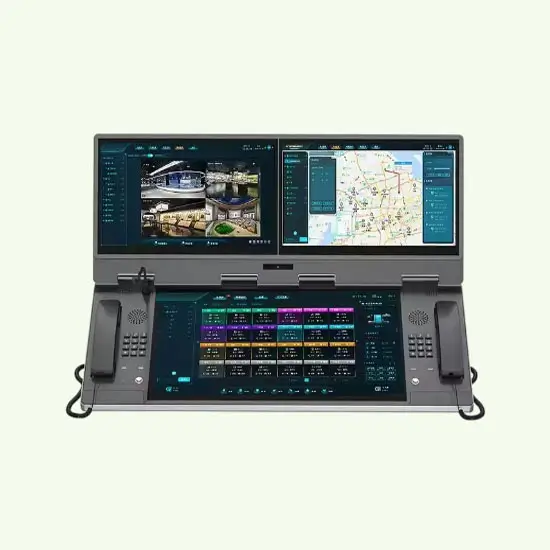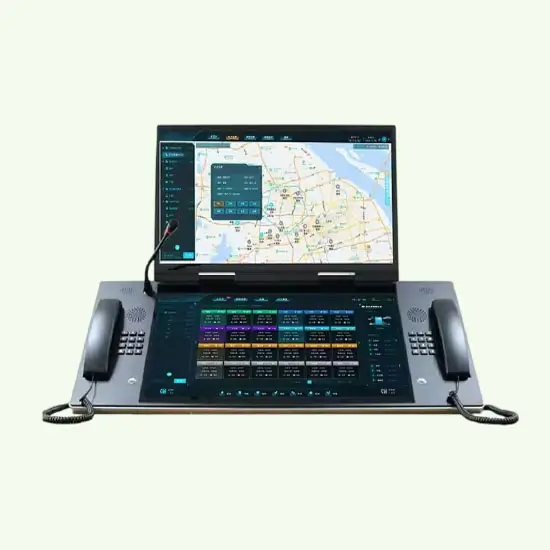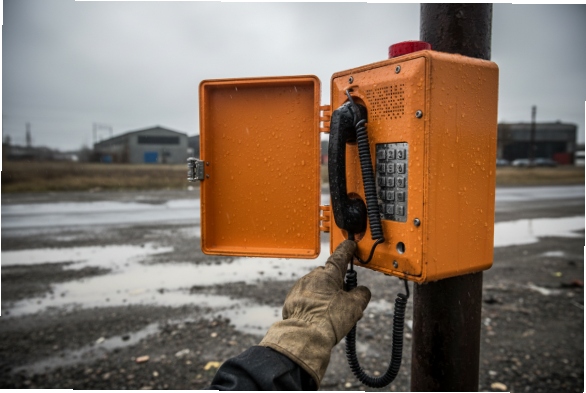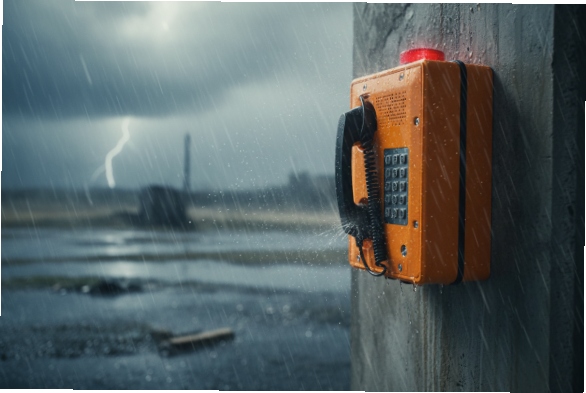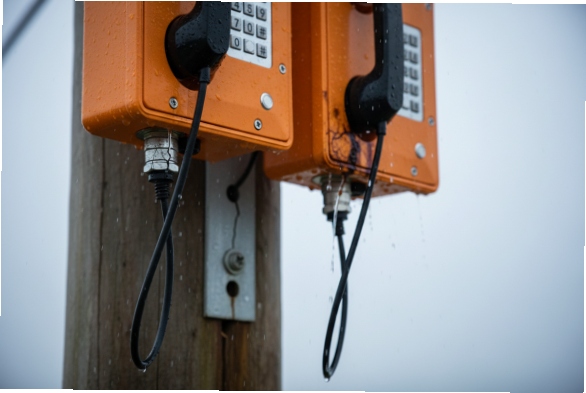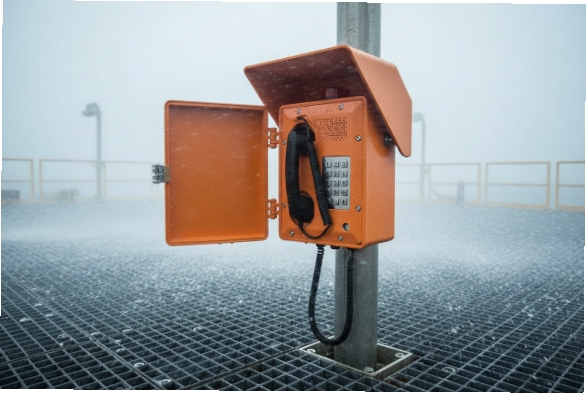

A single noisy SIP phone can jam radios, trip control signals, and fail FAT. EMC limits stop that before the device reaches a hazardous site.
Explosion-proof telephones should meet EMC emissions limits (often CISPR 32 / EN 55032 Class A for industrial) and immunity levels (often IEC 61000-6-2 or EN 55035). ATEX/IECEx covers explosion safety, but it does not replace EMC compliance like EU Directive 2014/30/EU or FCC Part 15.
EMC limits for Ex telephones: what actually matters on site
EMC has two battles: do not disturb others, and do not get disturbed
EMC always has two sides. Emissions limits control the noise a device sends into the air and into cables. Immunity limits control how the device behaves when the site hits it with ESD, RF fields, surges, and fast transients. A phone that only “passes emissions” can still reboot during a nearby lightning surge. A phone that only “passes immunity” can still fail a refinery radio room because it radiates too much energy.
Industrial sites still need strict rules, because networks spread noise fast
Explosion-proof telephones are often PoE endpoints on long Ethernet runs. That creates two common EMC paths:
-
Radiated noise from the enclosure, the keypad cable, and internal clocks.
-
Conducted noise on Ethernet pairs and on the PoE power feed.
In a tank farm or loading rack, the network cabinet is usually full of switching power supplies, VFDs 1, and radios. The phone must live inside that noise. The phone must also avoid adding noise back into the same cabinet.
“Class A vs Class B” is not only paperwork
Many SIP endpoints used in refineries and terminals are treated as industrial equipment. That normally points to Class A limits under CISPR 32 2 / EN 55032. Class B is tighter and is more common for residential or office spaces. If a phone may be installed in a control room that is close to office spaces, some buyers choose Class B to stay safe and reduce site complaints.
The fastest way to avoid tender confusion
A clean specification line usually includes:
-
An emissions standard and class (Class A or Class B).
-
An immunity framework (industrial generic immunity or multimedia immunity).
-
The exact ports that matter (Ethernet/PoE, audio, alarm I/O, DC input).
-
Evidence required (accredited lab report, test setup photos, and revision control).
| Spec item | What to write in a PO | What it prevents |
|---|---|---|
| Emissions | “EN 55032 / CISPR 32, Class A (industrial)” | A vendor ships only “best effort EMC” |
| Immunity | “IEC 61000-6-2 industrial immunity” or “EN 55035” | Reboots and audio drop during site noise |
| Ports | “Ethernet/PoE, alarm I/O, DC input tested” | A report that ignores the real cables |
| Evidence | “Third-party EMC report + DoC” | Self-claims with no traceable data |
Keep reading because the details change depending on which market the phone is sold into and where the phone is installed.
A good EMC requirement feels boring. That is a good sign. It means the phone will not become a surprise problem after commissioning.
Which EMC standards should devices meet—CISPR 32/EN 55032 Class A/B and FCC Part 15 for industrial sites?
A phone that passes Ex can still fail EMC and block handover. Then the site keeps the old system and the project loses time.
For many industrial SIP telephones, EN 55032 / CISPR 32 Class A is the common emissions target in the EU and global tenders. In the US, FCC Part 15 Subpart B (Class A for industrial, Class B for residential) is the common legal baseline for unintentional radiators.

Use CISPR 32 / EN 55032 when the phone is treated as multimedia or IT-class equipment
Modern SIP endpoints look like IT equipment to EMC rules. EN 55032 3 is widely used in CE files because it is a harmonized emissions standard for multimedia equipment. Many industrial projects pick Class A because the phone is intended for industrial environments. Class B is tighter and fits residential and light commercial settings.
A practical way to decide in B2B sales is simple:
-
If the phone is sold for refineries, terminals, and offshore modules, Class A is usually acceptable.
-
If the phone may be used near offices, public areas, or mixed-use buildings, Class B reduces complaints and RF risk.
FCC Part 15 in the US: know the class and the distance
FCC Part 15 Subpart B limits apply to “unintentional radiators” like digital devices. The class depends on where the device is marketed for use. Class A is for business and industrial. Class B is for residential. The limits are often expressed as field strength at a measurement distance, and they are tied to a test method like ANSI C63.4.
A vendor should not say “FCC compliant” 4 without naming the subpart and device class. A phone sold for industrial sites should clearly state Class A or Class B in its paperwork and label statements.
Typical limit language buyers include in tenders
It helps to write the requirement in the same sentence as the environment:
-
“Industrial hazardous area SIP telephone: EN 55032 Class A emissions and FCC Part 15 Class A for US shipments.”
-
“Control room and light commercial areas: EN 55032 Class B emissions.”
| Market | Common emissions framework | What to ask the vendor for |
|---|---|---|
| EU | EN 55032 Class A or B | CE technical file references and test report |
| Global | CISPR 32 Class A or B | Full emissions plots and worst-case mode list |
| USA | FCC Part 15 Subpart B Class A/B | FCC test report and required user statement |
A note about “industrial site” reality
Industrial does not mean “EMC does not matter.” Many industrial sites run private LTE, DMR radios, SCADA, and safety systems. A noisy endpoint can create small but costly failures. In my own project reviews, the cleanest success pattern is a vendor that provides one clear EMC pack for each region, with the same model code and the same firmware revision noted in the report.
Now the next problem is immunity. Emissions limits protect neighbors. Immunity protects the phone itself. That is where most field complaints live.
What immunity levels are required—IEC 61000-4-2/3/4/5/6/8/11 per IEC 61000-6-2 or EN 55035?
Many phones “work fine” in the lab, but they reboot beside VFD panels and lightning surge events. Then operators stop trusting the emergency line.
Industrial SIP telephones often follow IEC 61000-6-2 for immunity in harsh industrial environments, while multimedia equipment often uses EN 55035. Both rely on IEC 61000-4 test methods like ESD, radiated RF, EFT, surge, conducted RF, magnetic field, and voltage dips.

Choose the immunity framework based on where the phone will live
Two patterns show up in tenders:
-
IEC 61000-6-2 is common when the buyer treats the phone as industrial equipment with no special product standard. This fits refineries, tank farms, shipyards, and offshore platforms.
-
EN 55035 is common when the phone is treated as multimedia equipment and the CE file is built around the EN 55032 + EN 55035 pair.
Both routes can be valid. The key is that the immunity levels must match the risk. A phone in a control room has lower surge exposure than a phone on a loading rack with long outdoor cable runs.
Typical industrial immunity levels buyers expect
Many industrial specs use common levels like:
-
ESD: contact and air discharge levels that stop keypad resets.
-
Radiated RF: a field strength level that keeps audio stable near radios.
-
EFT/burst: fast transient levels that cover relay switching and motor contactors.
-
Surge: line-to-line and line-to-earth levels that cover lightning and switching events.
-
Conducted RF: RF injection on cables that covers long Ethernet runs.
-
Power frequency magnetic field: protection near heavy current busbars.
-
Voltage dips and interruptions: for AC-powered variants and PoE supplies upstream.
The numbers vary by standard edition and port type. The vendor report should state the exact levels and performance criteria used.
Define performance criteria so “pass” means “usable”
Immunity tests often use criteria like:
-
Criterion A: no degradation during the test.
-
Criterion B: temporary degradation allowed, but the device recovers by itself.
-
Criterion C: recovery requires user intervention.
For an emergency telephone, the project should avoid criteria that allow a hard reset after a surge. The phone should recover on its own and keep SIP registration stable.
| Immunity disturbance | What it looks like on site | What “pass” should mean for an emergency phone |
|---|---|---|
| ESD (touch) | Static hits on keypad and handset | No reboot and no stuck keys |
| Radiated RF | Radio close to the phone | Clear audio and stable call setup |
| EFT/burst | Motors and relays switching | No SIP drop and no loud clicks on audio |
| Surge | Lightning and switching surges | No damage and auto-recover 5 |
| Conducted RF | RF on long cables | No ghost key presses and no packet loss spikes |
| Dips/interruptions | Weak power and PoE drops | Fast recovery and auto-reconnect |
Next, it helps to know how labs measure emissions. A buyer that understands the measurement setup can quickly spot weak reports and avoid fake compliance.
How are radiated and conducted emissions measured—dBµV/m at 3–10 m and dBµV on mains and Ethernet?
If the test setup is wrong, the numbers look good and the product still fails in the field. That is the worst kind of report.
Radiated emissions are measured as field strength (often in dBµV/m) at a defined distance like 3 m or 10 m in a controlled chamber. Conducted emissions are measured as voltage (dBµV) on mains or I/O cables like Ethernet using defined networks and fixtures, usually over 150 kHz to 30 MHz for conducted and 30 MHz and up for radiated.

Radiated emissions: the antenna sees what the site will hear
A radiated test places the equipment under test on a table, then measures field strength with an antenna in a semi-anechoic or similar environment. The distance is often 10 m or 3 m depending on chamber size and standard options. The lab rotates the unit and changes antenna polarization to find the worst-case orientation.
For SIP telephones, worst-case modes often include:
-
active Ethernet link at high traffic load,
-
PoE active with max backlight or audio load,
-
ringing or paging audio,
-
and any internal switching regulators operating under load.
A useful vendor report includes plots and the worst-case configuration used, not only a “pass” statement.
Conducted emissions: cables are antennas too
Conducted emissions testing is about what leaves the device through cables. For AC mains, a LISN is used to measure noise. For Ethernet and telecom ports, labs use coupling/decoupling methods and fixtures such as ISNs, CDNs, and AMNs depending on the port type and standard.
For PoE endpoints, Ethernet is the main conducted path. That is why buyers should ask for port coverage that includes:
-
Ethernet/PoE port conducted emissions,
-
any auxiliary DC input,
-
and alarm I/O if long cables are connected.
Units and distances: keep them consistent in your spec
A single report can show results in different units and distances. That is normal, but it must be clear:
-
Radiated: dBµV/m at 3 m or 10 m.
-
Conducted: dBµV on a defined impedance network.
| Measurement | Typical unit | Typical distance or band | What to check in the report |
|---|---|---|---|
| Radiated emissions | dBµV/m | 3 m or 10 m, often 30 MHz–1 GHz and higher for fast clocks | Distance, detector type, worst-case orientation |
| Conducted on mains | dBµV | 150 kHz–30 MHz | LISN type 6, EUT power mode, cable lengths |
| Conducted on Ethernet | dBµV | 150 kHz–30 MHz | Fixture type, PoE load, cable type and length |
| Harmonics/flicker (AC) | A / % / V changes | 50/60 Hz phenomena | Only matters if AC adaptor is part of scope |
If a vendor cannot explain how the Ethernet port was tested, the report often does not match the real installation. That is where failures come from.
Now the final topic is the compliance boundary. Ex certification keeps ignition risk under control. EMC compliance keeps interference risk under control. They are both needed, and they are not the same document.
Do hazardous-area certifications address EMC—ATEX/IECEx with EMC Directive 2014/30/EU test reports for SIP endpoints?
Many buyers assume the Ex certificate “covers everything.” Then the device ships and the customer asks for EMC documents that do not exist.
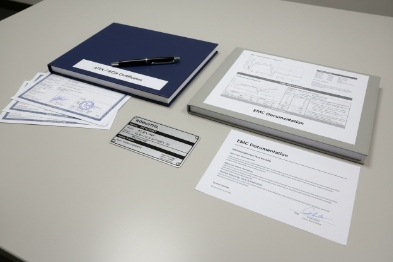
ATEX and IECEx confirm explosion protection, not full EMC compliance. For EU sales, SIP endpoints still need EMC compliance under Directive 2014/30/EU unless a different directive applies. A proper supplier provides EMC test reports and a Declaration of Conformity that references the EMC standards used, separate from the ATEX/IECEx certificate pack.
Think in “parallel compliance tracks”
For an explosion-proof SIP telephone sold into the EU, two common tracks exist:
-
ATEX Directive 2014/34/EU for explosive atmospheres equipment. This is where ATEX certificates, Ex marking, and notified body scope live.
-
EMC Directive 2014/30/EU for electromagnetic compatibility. This is where EN 55032, EN 55035, and industrial immunity standards live.
A phone can meet ATEX and still fail EMC. A phone can meet EMC and still be illegal in Zone 1. Both tracks must be satisfied.
What hazardous-area standards may touch, and what they do not
Ex standards can include requirements that relate to safe operation, like avoiding ignition from abnormal behavior and maintaining safety under expected conditions. Still, those are not the same as legal EMC emissions limits and immunity performance for interference control. EMC compliance is its own test plan, and it creates its own report.
What the vendor should provide for a SIP endpoint
A complete document pack is usually:
-
ATEX/IECEx certificate and marking details for the exact model.
-
EMC emissions and immunity reports for the exact hardware and firmware build.
-
EU Declaration of Conformity 7 that lists both directive compliance tracks when needed.
-
A change-control statement that explains what changes force a re-test.
A practical compliance map for procurement
| Topic | What it controls | Typical evidence | What to watch for |
|---|---|---|---|
| Hazardous-area safety | Ignition risk in explosive atmospheres | ATEX/IECEx certificate and Ex marking | Correct gas group, T-class, EPL, Ta range |
| EMC emissions | Noise sent to air and cables | EN 55032 / CISPR 32 or FCC Part 15 report | Correct class and correct worst-case mode |
| EMC immunity | Robust operation under disturbance | IEC 61000-6-2 8 or EN 55035 report | Criteria and recovery behavior for emergency use |
| EU market access | Legal placing on EU market | DoC + technical file references | DoC must match the shipped model code |
When a buyer asks for “one certificate,” it helps to respond with “one folder.” The folder should include both Ex and EMC documents. That makes the handover clean and protects the project schedule.
Conclusion
EMC limits for Ex telephones come from CISPR/EN 9 and FCC rules, plus immunity standards. Ex certificates do not replace EMC reports, so buyers should request both sets of evidence.
Footnotes
-
[Variable Frequency Drives that control electric motor speed, often generating electromagnetic noise.] ↩
-
[International standard for electromagnetic compatibility of multimedia equipment.] ↩
-
[European standard specifying emission requirements for multimedia equipment, harmonized with CISPR 32.] ↩
-
[US Federal Communications Commission regulations governing radio frequency device emissions.] ↩
-
[Capability of a system to automatically restore operation after a failure or interruption.] ↩
-
[Line Impedance Stabilization Network used in conducted emissions testing to provide standardized impedance.] ↩
-
[Official document stating that a product meets all relevant EU safety and performance requirements.] ↩
-
[Generic EMC immunity standard for equipment used in industrial environments.] ↩
-
[European standards organizations coordinating technical specifications for electromagnetic compatibility.] ↩