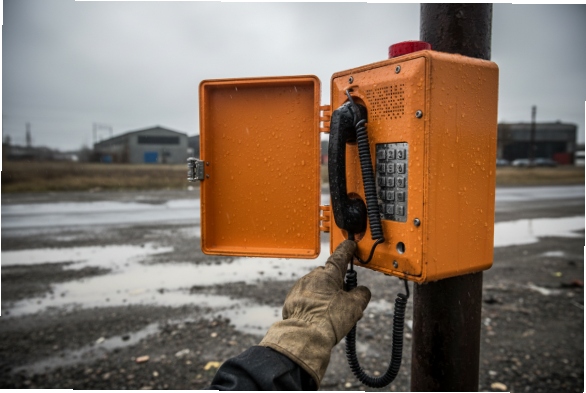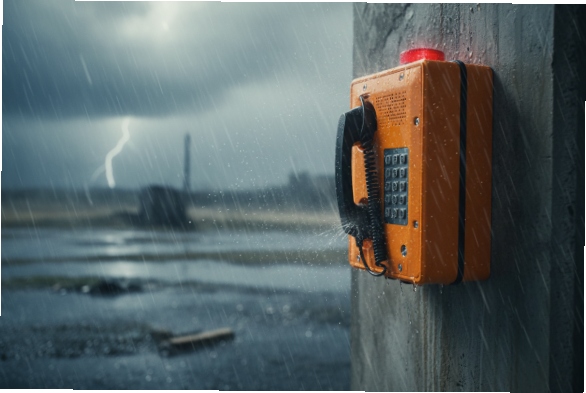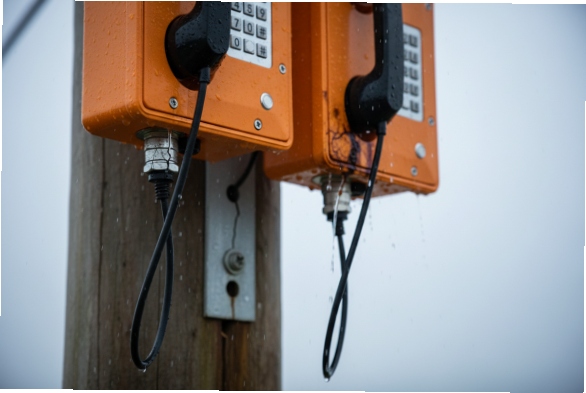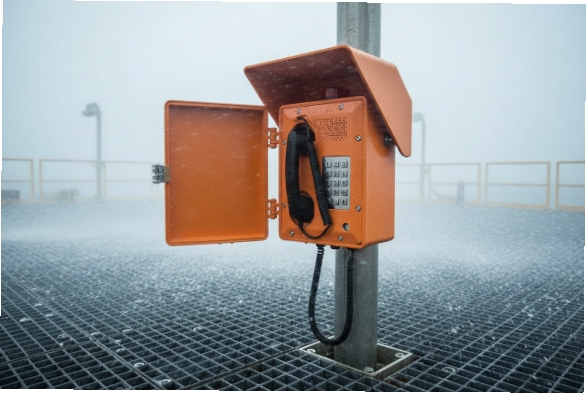
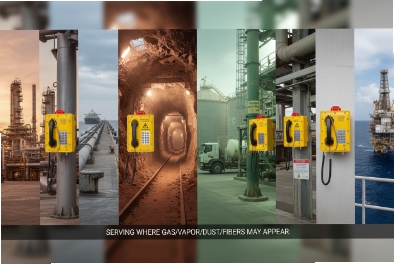
One wrong device choice can stop a project. Inspectors will not accept “industrial grade” where explosive gas or dust is possible. Operators also will not trust a phone that fails in rain, salt fog, or washdown.
Explosion-proof telephones are suitable for any industry with classified gas or dust hazards or with harsh outdoor conditions. Oil and gas, petrochemical, and terminals are the main users, but mining, power, chemical plants, marine ports, tunnels, wastewater sites, and grain handling also benefit when the risk study and environment demand Ex-rated, IP66/67 equipment.
How to match industries to Ex telephones without overbuying
Start with hazard type and operating environment
Industry labels are useful, but the real selection drivers are:
-
Gas or vapor hazards (Zone 1/2 or Class/Div)
-
Dust hazards (combustible dust, conductive dust)
-
Corrosion and washdown (coastal salt fog, chemical cleaning)
-
Noise and response needs (PAGA, beacons, loud zones)
-
Network architecture (SIP, PoE, ring redundancy)
This is why two “chemical plants” can need very different phones. One may be mostly safe area with a small Zone 2 loading bay. Another may have large Zone 1 areas with IIC gases and strong washdown.
Ex telephones support both safety and operations workflows
In many industries, the phone is not only for “emergency.” It is also used for:
-
dispatch calls to control rooms
-
maintenance coordination
-
alarm acknowledgement workflows
-
paging and evacuation coordination
That is why SIP features, dry-contact relays, and integration with SCADA and PAGA 1 can matter as much as the Ex certificate.
A quick industry-to-feature map
| Industry driver | What to prioritize | Why it matters |
|---|---|---|
| Flammable vapor | Zone 1/2 Ex rating + gas group | prevents ignition risk |
| Combustible dust | Ex tb + dust group IIIC | dust ignition risk is different |
| Coastal/marine | 316L + salt fog proof + NEMA 4X | corrosion kills small parts first |
| Washdown | IP66/67 + gland discipline | seals and entries decide uptime |
| High noise | loud ringer + beacon + PAGA | workers wear hearing protection |
| Remote sites | cloud management + ZTP 2 + health | reduces travel and MTTR |
This article answers the industry questions one by one. The goal is to help buyers write a clear tender: where the phones go, what certifications are needed, and what integration matters in daily use.
Next, let’s start with the biggest user group: oil and gas, petrochemical, and tank terminals.
Do oil and gas, petrochemical, and tank terminals require Ex telephones for hazardous zones?
In oil and gas and petrochemical sites, the risk is not theoretical. Vapors can appear at valves, vents, loading points, and maintenance openings. A normal phone can become an ignition source if it arcs or heats.
Yes. Oil and gas, petrochemical plants, and tank terminals often require Ex telephones in classified areas such as Zone 1/2 or Class I Div 1/2 locations. Typical high-need areas include tank farms, pump skids, loading racks, jetties, and blending stations, where vapors can be present during normal operation or foreseeable faults.
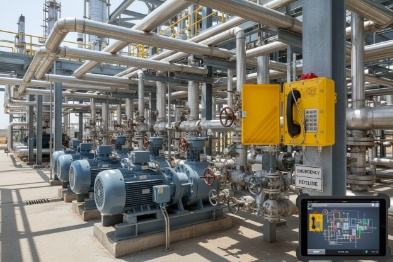
Typical use points in refineries and terminals
Ex telephones are commonly placed at:
-
loading racks and truck/rail terminals
-
tank farm access points and bund areas 3
-
jetty and dock loading arms
-
compressor stations and pump platforms
-
muster points and emergency shutdown stations
These are points where quick communication matters and where the hazard study often shows Zone 1 or Zone 2 classifications.
Why Ex SIP telephones fit modern terminals
Many terminals want SIP because it supports:
-
centralized call routing to control rooms
-
priority paging and emergency groups
-
integration with PAGA and alarms
-
remote health monitoring (SNMP/syslog)
-
PoE power that simplifies UPS design
In practical projects, PoE plus ring redundancy keeps phones online even during power events in local cabinets.
What to specify for these industries
A tender spec for oil and gas zones typically includes:
-
protection concept (often Ex d or Ex db eb)
-
gas group (IIB or IIC based on site gas hazards)
-
temperature class and ambient range (Ta)
-
IP rating and corrosion resistance for outdoor exposure
-
loud alerting and beacon options
-
dry-contact I/O for strobes, horns, or PLC inputs
| Terminal area | Typical hazard | Practical telephone requirement |
|---|---|---|
| Loading rack | vapor release during loading | Zone 1/2 Ex + loud alert + relay for beacon |
| Tank farm | vents and breathing | Ex + IP66/67 + corrosion resistance |
| Jetty/port arm | marine salt + vapor | 316L, salt fog proof, Ex + PAGA integration |
| Pump station | high noise | high SPL + strobe + paging priority 4 |
In short, these industries not only “need Ex.” They also need reliable operation in heat, rain, and noise. That is why the combination of Ex + IP + PAGA features is common.
Next, mining, power, and chemical processing often have different drivers. Some sites are not fully classified, but they still demand Ex and high ingress protection.
Are mining, power generation, and chemical processing better served by IP66/67 Ex telephones?
These industries often have harsh environments: dust, water, vibration, and long distances. Even when a site is not fully classified as a vapor hazard, dusty or wet areas can cause rapid failure for standard phones.
Often yes. Mining, power generation, and chemical processing benefit from Ex telephones when hazardous gases, solvents, hydrogen, or combustible dust can be present, and they benefit from IP66/67 protection because washdown, rain, slurry, and dust ingress are common.

Mining: dust and physical abuse are real
Mining sites can face:
-
coal dust and fine particulates
-
vibration and impacts
-
extreme temperatures
-
remote locations with limited maintenance staff
For these sites, key requirements are:
-
dust-rated protection where needed (Ex tb for dust hazards)
-
IP66/67 sealing and correct glands
-
IK impact resistance and strong handset/cord design
-
simple service plan with on-site spares
Power generation: hydrogen and critical communications
Some power plants have hydrogen systems (for generator cooling), fuel handling, or chemical dosing. Where classification applies, Ex-rated equipment becomes necessary. Even in safe areas, power plants often demand:
-
strong EMC immunity
-
surge protection
-
stable PoE power on UPS
-
integration with dispatch and alarm systems
Chemical processing: varied hazards, often mixed environments
Chemical plants can include:
-
solvent vapors (gas zones)
-
corrosive atmospheres
-
washdown requirements
-
dust hazards in handling powders
That drives the need for a selection that matches the exact unit operation, not just “chemical plant.”
| Industry | Main stressor | Selection focus |
|---|---|---|
| Mining | dust + impacts + remote MTTR 5 | Ex tb + IP66/67 + IK10 + spare kits |
| Power | EMC + critical uptime + hydrogen risks | EMC immunity + Ex where required + UPS PoE |
| Chemical | mixed hazards + washdown + corrosion | correct gas/dust group + 316L/coatings + IP |
In these industries, IP66/67 is often the “daily reliability” requirement. Ex is the “site approval” requirement. Both must be correct, or the phone becomes a maintenance burden.
Next, marine and offshore sites add a strong corrosion story and often require direct PAGA integration.
Can marine, offshore platforms, and seaports deploy Ex SIP telephones integrated with PAGA systems?
Marine climates destroy weak designs. Offshore sites also depend on paging and alarms because radio may be unreliable in some areas and noise levels are high.
Yes. Marine sites and offshore platforms can deploy Ex SIP telephones and integrate them with PAGA using SIP paging, multicast, relays, and controller interfaces. The selection should prioritize 316L or marine-grade coatings, salt fog testing, IP66/67 sealing, and surge protection, plus clear VLAN/QoS rules for paging and emergency calls.

Why SIP helps in ports and offshore
SIP fits marine and offshore because it supports:
-
centralized dispatch and call routing
-
priority paging to horns and speakers
-
integration with beacons and strobes via relays
-
remote monitoring from a shore base or central NOC
Many large operators want a unified voice network across:
-
terminals
-
jetties
-
control rooms
-
remote depots
PAGA integration methods that work
Common integration patterns include:
-
SIP multicast paging to PAGA endpoints
-
SIP paging groups controlled by PBX or paging server
-
relay outputs from the phone to trigger a paging controller input
-
event triggers (DTMF or API) to start predefined tones
Noise planning matters. A phone sounder is local. PAGA horns are for wide areas. The system should use both.
What to prioritize for marine durability
Marine selection should include:
-
316L or corrosion-resistant build
-
marine-grade glands and stainless hardware
-
salt fog test 6 evidence and clear pass criteria
-
UV-stable seals and coatings
-
post-test IP66/67 revalidation
-
lightning/earthing practices and surge protection
| Marine location | Main problem | Practical requirement |
|---|---|---|
| Jetty | salt + wind + washdown | 316L, IP66/67, salt fog proof, loud alert |
| Offshore deck | corrosion + vibration | marine hardware, strong mounting, surge protection |
| Port gates | mixed traffic + security | video pairing option, access control relay, PAGA trigger |
These deployments are common because the benefit is clear: safer operations and faster response. Still, the phone must be part of a full network plan with QoS and multicast control so emergency paging stays stable.
Now, the last industry group includes tunnels, wastewater, and grain silos. These often involve emergency call boxes and dust hazards.
Do transportation tunnels, wastewater treatment, and grain silos benefit from Ex emergency call boxes?
These sites are often overlooked in Ex discussions, but the hazards are real. Tunnels need high availability. Wastewater can produce flammable gases. Grain handling can create explosive dust.
Yes. Transportation tunnels, wastewater facilities, and grain silos can benefit from Ex emergency call boxes when gas or dust hazards exist or when the site requires high-reliability outdoor communications. Grain silos and conveying systems often need dust-rated Ex protection, while wastewater sites may require Ex protection due to methane or other gases. Tunnels benefit from rugged, vandal-resistant emergency call stations with strong ingress and impact ratings.

Transportation tunnels: availability and vandal resistance
Tunnel systems often need:
-
emergency call boxes every defined distance
-
high uptime and easy diagnostics
-
IK impact resistance 7 and anti-vandal features
-
integration with control centers and recording
Even if a tunnel is not classified as a hazardous area, harsh conditions and safety requirements make rugged phones valuable. If the tunnel includes fuel transport risks or special ventilation zones, the classification must be reviewed.
Wastewater treatment: gas risks and corrosive atmosphere
Wastewater sites can have:
-
high humidity and corrosive atmospheres
-
washdown and chemical cleaning
This drives selection toward:
-
Ex-rated equipment where the hazard study requires it
-
sealed IP66/67 enclosures
-
corrosion-resistant materials and glands
-
strong lightning and surge protection for outdoor runs
Grain silos: dust explosion risk is the main reason
Grain handling creates fine dust clouds. Dust hazards can be explosive. For these sites:
-
dust group and surface temperature limits matter
-
sealed entries and correct glands matter
-
maintenance plans should include cleaning and inspection
An Ex emergency call box in a grain facility is not only a phone. It is part of the safety infrastructure.
| Sector | Main hazard driver | What to prioritize in the device |
|---|---|---|
| Tunnels | emergency response and abuse | IK10, IP66, monitoring, recording |
| Wastewater | gas risk + humidity | Ex where required, IP66/67, corrosion resistance 10 |
| Grain silos | combustible dust | Ex tb, IIIC if needed, temperature limits, sealed entries |
These industries benefit because the phone becomes a reliable call point under stress. It also improves compliance and reduces incident response time.
Conclusion
Explosion-proof telephones suit oil and gas, terminals, mining, power, chemical, marine, tunnels, wastewater, and grain sites when classified hazards or harsh environments demand Ex ratings, IP sealing, and PAGA-ready SIP integration.
Footnotes
-
[Public Address and General Alarm systems integrating voice and alarm functions for industrial safety.] ↩
-
[Zero Touch Provisioning, automating device configuration for rapid deployment.] ↩
-
[Containment walls around storage tanks designed to prevent spills from spreading.] ↩
-
[Configuration ensuring critical paging announcements override routine calls.] ↩
-
[Mean Time To Repair/Restore, a metric measuring the average time to fix failed equipment.] ↩
-
[Standard test method for evaluating corrosion resistance of materials and coatings.] ↩
-
[Rating scale defining the impact resistance of enclosures against mechanical shocks.] ↩
-
[Flammable greenhouse gas often present in wastewater treatment and landfills.] ↩
-
[Protection method preventing dust ingress and limiting surface temperature to avoid ignition.] ↩
-
[Ability of materials to withstand degradation in corrosive environments like chemical plants.] ↩