

Natural gas 1 stations fail in silence. A small leak, a noisy compressor, and a dead phone can turn a controllable event into a delayed response.
Yes. Explosion-proof SIP telephones are suitable for natural gas stations when the Ex rating matches the compressor/PRS classification, the enclosure survives UV and corrosive exposure, and the phone integrates with PBX, PAGA, and site alarms using compliant sealing and bonding.

A practical framework for gas stations: classify, protect, integrate, then install
Natural gas sites have clear “hazard pockets”
Most natural gas infrastructure has predictable risk points:
-
compressor buildings and compressor pads
-
PRS (pressure reducing station) skids and valve manifolds
-
odorization skids and vent stacks
-
pigging/launching stations and blowdown points
-
meter runs and filter separators
These points can be Zone 1 2/2 or Class I Div 1/2 depending on the country and code. The telephone selection should follow the hazardous area classification drawing, not the general site label.
Design for the real environment, not only for Ex approval
Gas stations can be remote. They face:
-
high UV exposure and temperature cycles
-
wind-driven dust and rain
-
vibration near compressors
-
surges from long outdoor cable routes
-
corrosion issues in sour gas (H2S) environments
So the phone must be both “Ex-safe” and “site-tough.” That usually means:
-
UV-stable seals and keypad materials
-
robust mounting and strain relief
A useful “station spec” table for procurement
| Topic | What to define | Why it prevents problems |
|---|---|---|
| Classification | Zone/Class-Div, gas group, T-class | stops inspection failures |
| Environment | UV, washdown, corrosion, vibration | stops early hardware decay |
| Integration | PBX, PAGA, ESD, telemetry | makes phone part of response workflow |
| Installation | glands, seals, bonding | keeps Ex and IP rating real |
| Operations | monitoring, spares, templates | reduces MTTR at remote sites |
With this framework, the selection becomes clear: first choose the right hazardous-area rating for compressor and PRS locations.
Which ATEX/IECEx Zone 1/2 or Class I Div 1/2 ratings fit compressors and PRS skids?
Compressor stations and PRS skids can release gas during venting, maintenance, and upset conditions. Classification depends on ventilation and the likelihood of release. Buyers should avoid guessing.
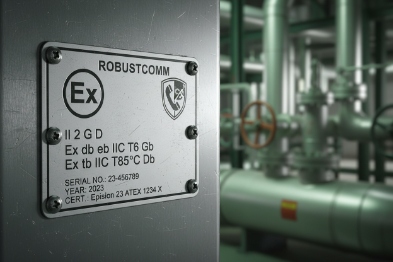
In many projects, compressor buildings and PRS skids use Zone 2 for well-ventilated areas and Zone 1 near potential release points like vents, seals, and blowdown connections. In Class/Div schemes, Div 2 is common around general equipment areas and Div 1 can apply close to likely release points or inside enclosed spaces with limited ventilation.
Practical guidance by location
| Station area | Why the hazard exists | Safer starting requirement |
|---|---|---|
| Compressor pad/building near seals | leaks during operation, maintenance | Zone 1 Gb preferred near seals; Zone 2 Gc further away |
| PRS skid and valve manifold | venting and connections | Zone 2 typical, Zone 1 near vents and blowdowns |
| Odorizer skid | chemical handling and venting | Zone per study, often stricter controls |
| Blowdown stack base | intentional gas release | usually stricter zone near base |
Gas group notes for natural gas and sour gas
Methane itself is often not the “most severe” gas group, but sour gas 5 (H2S) and mixed gas streams push owners toward conservative selection. Many operators standardize on a higher gas group capability to reduce placement mistakes and simplify spares.
A common safe approach is:
-
choose Zone equipment that is at least suitable for the site’s required gas group
-
choose a T-class with margin for local heat sources and solar load
-
confirm Ta ambient range for the region
Certification scheme choice
-
ATEX/IECEx fits Zone-based specifications common in many regions.
-
NEC/CEC Class I Div fits North America style specifications.
The tender should state which scheme is required at the site to avoid “certificate mismatch” at inspection.
Once the rating is matched, the next question is whether the phone survives methane, H2S environments, and outdoor UV.
Do IP66/67, 316L housings handle methane, H2S, and UV exposure?
A phone can be perfectly Ex-rated and still become unreliable because seals swell, hardware corrodes, or UV cracks the keypad. Remote gas stations make these failures expensive.
Yes, IP66/67 sealing and 316L housings can handle outdoor natural gas station conditions when elastomers and finishes are selected for hydrocarbons, H2S-corrosive atmospheres, and UV exposure. The installed glands and hardware quality decide whether the rating holds over time.

IP66 vs IP67 at gas stations
-
IP66 is strong for rain, dust, and hose-down.
-
IP67 adds protection for temporary immersion, useful at low mounting points and flood-prone pads.
Remote stations often see pooling after storms. So IP67 is a practical target for phones near grade level or near drainage paths.
316L: why it matters in sour gas and coastal regions
316L helps resist corrosion where:
-
salt mist is present (coastal gas terminals or stations)
-
sour gas environments create aggressive corrosion conditions
-
washdown or chemical cleaning is used
Still, the biggest offshore-style lesson applies onshore too: hardware and glands often corrode before the main housing. A spec should call out:
-
stainless fasteners and brackets
-
marine-grade glands if the site is coastal
-
controlled coating thickness if the housing is coated metal
UV and seal compatibility
The critical parts for UV and chemicals are:
-
gasket material
-
keypad elastomer
-
label films and windows
-
handset cord jacket and strain relief
A gas station tender should request UV-stable materials and test evidence or material declarations.
| Exposure | What fails first | Better requirement |
|---|---|---|
| UV on open pads | keypad, labels, gaskets | UV-stable materials and coatings |
| H2S / sour gas | fasteners, brackets | 316L hardware + corrosion plan |
| Storm water and dust | glands and seals | IP66/67 with correct entry system |
| Vibration near compressors | mounting and cord | rigid bracket + locking hardware |
Once durability is handled, the phone must tie into the site workflow: dispatch, paging, emergency shutdown, and telemetry alarms.
Can phones connect with IP PBX, PAGA, ESD, and telemetry alarms sitewide?
A gas station phone is often a “first response device.” It must call the right group fast and support alarms without complicated wiring.
Yes. Ex SIP telephones can connect to an IP PBX for normal and emergency calling, integrate with PAGA through multicast paging or controller triggers, support ESD workflows via relay I/O into PLCs, and send telemetry alarms through SNMP/syslog or gateway mapping into SCADA.

IP PBX integration: keep it simple for remote sites
Useful PBX 6 features for LPG stations:
-
hotline keys to a central control room
-
auto-dial groups for alarms and emergencies
-
redundant SIP servers or SBC failover
-
call recording when required by policy
-
NTP sync for audit timelines
PAGA integration: multicast with discipline
PAGA 7 and paging can be integrated through:
For stations with limited networks, a relay trigger can be the most reliable. For larger networks, multicast paging scales well when IGMP snooping is enabled and VLANs are clean.
ESD and telemetry: keep safety logic in the safety system
The phone should not sit inside the safety shutdown chain. It should support it. A safe pattern is:
-
ESD/PLC drives shutdown actions
-
phone input triggers auto-call or local indication
-
phone relay outputs provide “emergency active” or trigger local beacons
-
SNMP/syslog alarms report device faults and status upstream
| Integration goal | Interface | Why it works well |
|---|---|---|
| Dispatch calling | SIP to PBX/SBC | central control and priority |
| Paging | multicast or relay trigger | plant-wide attention |
| ESD awareness | PLC inputs/outputs via relays | auditable and safe |
| Telemetry alarms | SNMP/syslog or gateway to SCADA | faster fault response |
Integration works best when voice has its own VLAN and QoS policy, and when paging multicast is controlled to avoid storms during link changes.
Finally, even a perfect device and perfect network can fail inspection if sealing fittings, grounding, and T-class choices are wrong.
What sealing fittings, grounding, and T4/T6 classes ensure code compliance?
Most inspection failures happen at the cable entry, not at the handset. The installation must preserve both Ex integrity and IP sealing.
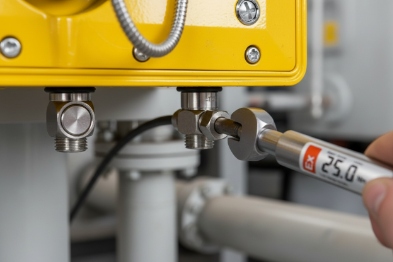
Code compliance depends on using certified sealing fittings or glands per the local scheme, proper equipotential bonding, and selecting a T-class (often T4 or T6) that remains safe at the highest ambient temperature and near hot equipment.
Sealing fittings: Zone vs Class/Div differences
-
In Zone-based (ATEX/IECEx) installs, certified glands are the normal method. Barrier glands may be required depending on cable type and certificate rules.
-
In Class/Div installs, conduit runs may require sealing fittings in specified locations to prevent gas migration through conduit systems. The exact placement is dictated by code and the site electrical standard.
A clear rule for tenders: the phone supplier should provide a recommended gland list and entry thread details, and the installer should follow certified components only.
Grounding and bonding: reduce risk and improve stability
Bonding 9 the enclosure to the station equipotential network helps:
-
reduce ESD and static issues
-
improve surge paths during storms
-
reduce noise pickup on long cable routes
A good install uses:
-
a short, robust bond from the phone earth stud
-
corrosion-resistant bonding hardware
-
continuity checks recorded at commissioning
T4 vs T6: choose by site temperature and proximity to hot equipment
T-class selection is not only about the gas type. It is about maximum surface temperature. At gas stations:
-
T4 is common and often sufficient in many locations.
-
T6 offers a lower maximum surface temperature and more margin, but it can restrict allowable ambient Ta or power dissipation depending on product design.
The practical selection method is:
-
follow the area equipment schedule (required T-class)
-
confirm device nameplate T-class matches
-
confirm Ta ambient range includes worst-case station temperatures
-
avoid mounting near hot compressor surfaces or exhaust paths when possible
A short inspector-friendly checklist
| Item | What to verify | Why it passes inspection |
|---|---|---|
| Ex marking | Zone/Class-Div, group, T-class, Ta | matches hazardous area drawing |
| Cable entry | certified glands or conduit seals | preserves explosion protection |
| Unused entries | certified plugs | no leak paths |
| Bonding | short equipotential bond | reduces spark and surge risk |
| Functional test | hotline call + paging + relay test | proves workflow readiness |
When these steps are followed, Ex SIP telephones become a reliable part of the station safety system and daily operations, even in remote compressor locations.
Conclusion
Explosion-proof SIP telephones suit natural gas stations when compressor/PRS ratings match Zone/Class-Div rules, IP66/67 and 316L handle UV and sour exposure, integrations use PBX/PAGA/PLC interfaces, and sealing, bonding, and T-class choices are installed to code.
Footnotes
-
Natural gas: Hydrocarbon gas mixture consisting primarily of methane used as fuel. ↩
-
Zone 1: Hazardous area classification where explosive gas is likely to occur in normal operation. ↩
-
IP66: Ingress Protection rating indicating dust-tightness and resistance to powerful water jets. ↩
-
316L: Low-carbon version of 316 stainless steel with superior corrosion resistance. ↩
-
sour gas: Natural gas containing significant amounts of hydrogen sulfide (H2S). ↩
-
PBX: Private Branch Exchange, a private telephone network used within a company. ↩
-
PAGA: Public Address and General Alarm system used for site-wide broadcasting and safety. ↩
-
SIP: Signaling protocol used for initiating real-time voice and video sessions. ↩
-
Bonding: Electrical connection of metallic parts to ensure equipotentiality and safety. ↩








