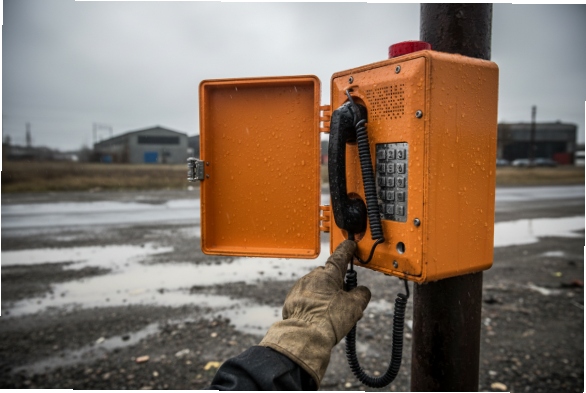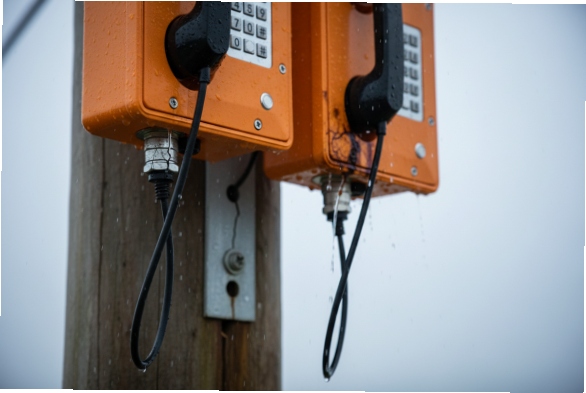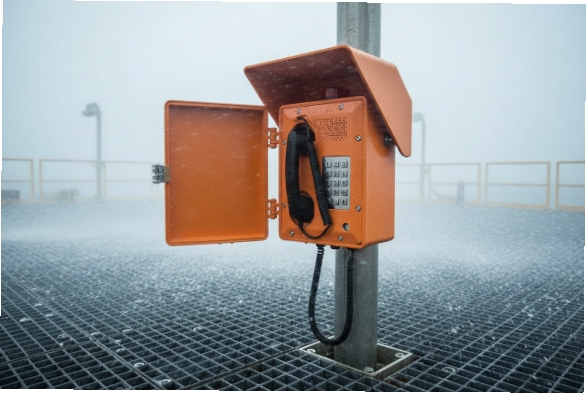

Loading terminals look routine until a spill, vapor release, or overfill alarm hits. Then the crew needs a working phone right at the rack, not a device that fails in splash, salt wind, or a compliance check.
Yes. Explosion-proof SIP telephones are suitable for liquid loading terminals when the Ex rating matches the truck/ship loading hazard zones, the enclosure survives fuel splash and salt-laden winds, and the phone integrates with PBX, PAGA, and ESD/overfill workflows using compliant wiring and accessories.

Loading terminals need three things: correct Ex rating, marine durability, and fast alarm workflow
Loading racks and jetties are predictable high-risk points
Liquid loading 1 is a controlled release process. Vapors appear during:
-
connection and disconnection
-
venting and line clearing
-
drips at couplers and arms
-
sampling and draining
-
ship loading where wind can carry vapor along the jetty
This is why loading arms, manifolds, and rack walkways often sit inside Zone 1/2 or Class I Div areas.
The environment is harsher than many plant areas
Terminals often sit by the sea or in open fields. Phones face:
-
fuel splash and chemical cleaning
-
salt-laden winds and corrosion
-
heavy rain and washdown
-
vibration from pumps and traffic
-
lightning surges on long rack cable routes
So the selection must address sealing, corrosion, and surge protection, not only hazardous-area approval.
The phone must fit how operators work during loading
Operators need:
-
one-touch call to control room
-
loud alerts and visible status
-
beacons/strobes for emergency attention
-
integration with PAGA horns for evacuation tones
-
clean interface to overfill and ESD logic (through PLC or controller)
| Terminal pain point | What to specify | Why it matters |
|—|—|—|
| Vapor-zone compliance | Zone 1/2 or Div 1/2 + correct gas group | avoids inspection failures |
| Outdoor exposure | IP66/67 + 316L hardware + UV-stable seals | prevents early failure |
| Emergency response | hotline + beacon trigger + PAGA integration | speeds escalation |
| Overfill/ESD events | dry-contact I/O + PLC mapping | keeps safety logic auditable |
| Operator usability | cord management + gloves-friendly design | reduces missed calls |
Now let’s answer the first question: what ratings cover truck racks and ship loading arms?
Which Zone 1/2 or Class I Div 1/2 ratings cover truck and ship loading arms?
Loading points are often classified more strictly than surrounding yard areas. The exact rating must follow the hazardous area classification 2 drawing for the rack and jetty.
Truck and ship loading arms and their immediate connection points are commonly treated as the most stringent hazardous locations in a terminal. Nearby operator positions often require Zone 1 (EPL Gb) or Class I Div 1 at the closest practical points, while surrounding rack areas may be Zone 2 (EPL Gc) or Class I Div 2 depending on ventilation and distance.

Practical guidance for terminal layouts
A useful approach is to define “zones by function”:
-
Connection zone: couplers, arms, manifolds, drains → plan for stricter rating.
-
Operator zone: call points and E-stop landings → often still classified, but can sometimes be placed just outside the strictest boundary if the site layout allows.
-
Yard zone: open areas away from active releases → often less stringent.
Product variety changes gas group assumptions
Terminals load:
-
gasoline, diesel, jet fuel
-
ethanol blends
-
solvents or chemicals
-
crude or condensate
Owners often standardize to a conservative gas group 3 so equipment can move between racks without re-evaluation. Many terminals choose at least IIB capability for hydrocarbon vapors, and some choose IIC-capable devices for broader coverage. The project spec and the stored product list decide.
Tender table for quick selection
| Terminal point | Typical classification direction | Safer device requirement line |
|—|—|—|
| Truck loading arm connection | highest release likelihood | Zone 1 Gb or Div 1 near the point |
| Rack platform call station | often still classified | Zone 1 or Zone 2 per drawing, with loud alert |
| Ship loading arm on jetty | strong vapor + wind | Zone 1 Gb preferred near arm, marine durability |
| Yard gates and parking | lower risk | Zone 2/Div 2 or rugged non-Ex by policy |
Once the hazard rating matches, the next challenge is durability: fuel splash, salt wind, and washdown.
Will IP66/67, 316L housings resist splash, fuels, and salt-laden winds?
Terminals combine chemical exposure and marine exposure. A phone that survives one may fail in the other if seals and hardware are weak.
Yes. IP66/IP67 sealing and 316L housings can resist fuel splash, rain, and salt-laden winds when gaskets and cable entries are compatible with hydrocarbons and when brackets, fasteners, and glands are corrosion-resistant. The installed entry system is the deciding factor for IP performance.
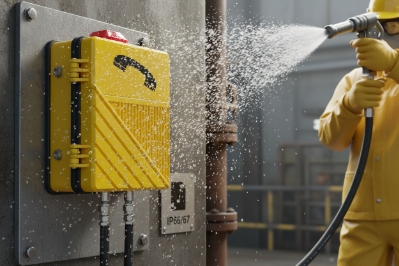
IP66 vs IP67 for rack and jetty
-
IP67 is valuable where pooling water, wave splash, or flooding can occur, especially on jetties and low points near bunds.
In practice:
-
racks often specify IP66 as baseline
-
jetties and exposed coastal points often specify IP67 for added margin
316L and NEMA 4X: focus on the “small parts”
Corrosion at terminals usually starts at:
-
fasteners and brackets
-
gland locknuts
-
hinges and handset cord armor
-
nameplates and label edges
So a good spec includes:
-
316L fasteners 5 and brackets
-
marine-grade glands
-
UV-stable seals and coatings
-
anti-galling practice for stainless threads
Lightning and surge resilience needs system design
Terminals have long cable routes along racks and pipe bridges. Surges can come from lightning and switching. The design should include:
-
fiber backbone between cabinets
-
PoE switches 6 on UPS
-
Ethernet/PoE surge arresters at boundaries
-
clean bonding to the equipotential network
| Exposure | What to require | Why it reduces failures |
|—|—|—|
| Fuel splash | chemical-compatible seals | stops swelling and leaks |
| Salt wind | 316L hardware + marine glands | slows corrosion and seizure |
| Washdown | IP66/67 + correct entry system | keeps ingress protection real |
| Lightning | bonding + SPDs + fiber | prevents repeat port damage |
With durability set, terminals want integrated workflow: PBX calling 7, PAGA horns, beacon strobes, and overfill/ESD events.
Can phones integrate with IP PBX, PAGA, beacons, and overfill/ESD systems?
A loading rack phone is part of a safety system. It should trigger attention and support quick escalation, but it should not replace the safety logic.
Yes. Ex SIP phones can integrate with IP PBX for hotline and group calling, trigger PAGA horns via paging servers or controller inputs, activate beacons through relay outputs, and interface to overfill/ESD systems through PLC inputs and outputs. The safest model keeps ESD actions in the safety system and uses the phone for alarm triggers and communication.

IP PBX: define emergency routing and escalation
PBX integration enables:
-
one-touch hotline to control room
-
automatic escalation if unanswered
-
call recording if required
-
monitoring of registration health
For multi-rack terminals, templates and auto-provisioning reduce MTTR when units are swapped.
PAGA horns: two reliable options
-
Multicast paging with VLAN/QoS and IGMP snooping 8
-
Relay trigger from phone to a paging controller input for pre-recorded tones
Many terminals like relay triggers for critical tones because it stays stable even if multicast is congested.
Overfill/ESD: interface through PLC for auditability
Overfill systems and ESD valves 9 should be controlled by the safety logic. The phone can:
-
receive an input trigger (overfill alarm active) and auto-dial dispatch
-
drive a relay to trigger a beacon or a local annunciator input
-
send status events upstream via SNMP/syslog through a gateway
| System | Phone interface | What it supports | Key safety note |
|—|—|—|—|
| PBX | SIP | emergency calling | priority routing and failover |
| PAGA horns | multicast or relay trigger | evacuation tones | QoS/IGMP or hardwired trigger |
| Beacons | relay to controller | visible alert at rack | do not overload relay |
| Overfill/ESD | PLC I/O mapping | escalation and logging | keep shutdown logic in PLC/ESD |
Now, terminals also need operator-friendly accessories. Racks are busy places, and cords can get damaged. The last question covers cord reels, seal-offs, and Ex-rated foot switches.
What cord reels, seal-offs, and EX-rated foot switches improve safety?
Small ergonomic improvements can prevent big incidents. A crew member with gloves and wet hands should not fight a handset cord or search for a tiny button.
Cord management (reels or controlled-length cords), correct seal-offs and certified cable entries, and Ex-rated foot switches can improve safety by speeding emergency actions and reducing damage and ingress failures.

Cord reels: use carefully and specify the right features
Cord reels can keep the handset cord off the ground and reduce damage from vehicles and hose-down. Still, the reel must be suitable for:
-
the hazardous area (if installed in the classified zone)
-
corrosion and washdown
-
mechanical durability and pull force
In many terminals, a simpler option is a rugged coiled cord or armored cord with strong strain relief. If a reel is used, it should not compromise sealing or create a snag hazard on the platform.
Seal-offs and conduit practice: inspection-critical
For Class/Div installations, seal-off fittings 10 in conduit systems are often required to prevent vapor migration. For Zone installs, certified glands and barrier seals may be required depending on cable type and certificate instructions.
A good terminal method statement includes:
-
gland/seal-off locations
-
certified part numbers
-
compound and cure procedure where applicable
-
inspection photos and torque marks
Ex-rated foot switches: hands-free emergency triggering
On loading racks, hands-free triggers help when operators wear gloves or carry sampling gear. A foot switch can:
-
trigger an emergency call
-
activate a relay output for a beacon
-
trigger a paging controller input
The foot switch must be Ex-rated for the same area classification and must be installed with the same care as any other Ex device. The phone should treat foot-switch input as a controlled trigger with clear latching and reset behavior.
A simple accessory decision table
| Accessory | Benefit | Best use case | What to verify |
|—|—|—|—|
| Cord reel | reduces cord damage | high-traffic racks | hazardous rating + corrosion + pull force |
| Armored/coiled cord | simple, robust | most racks | strain relief and spare kits |
| Seal-offs | prevents vapor migration | Class/Div conduit systems | correct location and listed parts |
| Ex foot switch | hands-free emergency trigger | loading arm operations | Ex rating + reset logic + test mode |
A terminal that combines correct rating, durable build, stable integration, and operator-friendly accessories will see fewer incidents and fewer maintenance trips.
Conclusion
Explosion-proof SIP telephones suit liquid loading terminals when rack and jetty ratings match Zone/Class-Div rules, IP66/67 and 316L handle splash and salt wind, integrations support PBX/PAGA/PLC workflows, and accessories like cord control and Ex foot switches are installed with compliant seal-offs and entries.
Footnotes
-
Understand the mechanics of fluid transfer systems in industrial environments. ↩
-
Guidelines for defining risk zones in explosive atmospheres. ↩
-
Classification of gases determines equipment safety requirements. ↩
-
Standard for protection against powerful water jets and dust. ↩
-
Marine-grade stainless steel essential for corrosion resistance. ↩
-
Technology delivering data and electrical power via network cables. ↩
-
Internet Protocol Private Branch Exchange for enterprise telephony. ↩
-
Safety system designed to minimize consequences of emergency situations. ↩
-
Crucial components preventing gas passage through conduit systems. ↩