
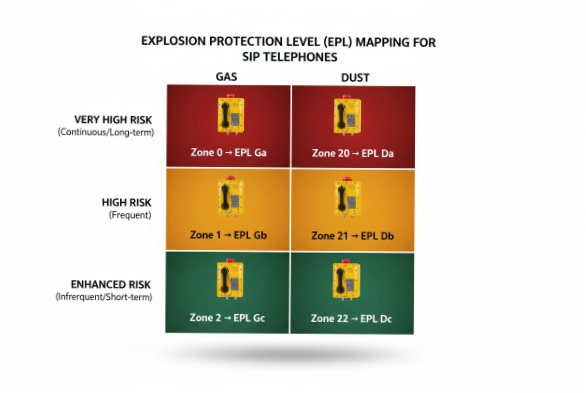
Selecting the correct Equipment Protection Level (EPL) is about balancing safety probability with operational reality. The EPL rating (e.g., Gb, Db) tells you not just where a device can go, but how likely it is to become an ignition source during a fault. While traditional "Zone" classifications dictate the minimum requirement, the EPL system allows for a risk-based approach to equipment selection.
EPL ratings should be selected by matching the equipment’s protection level to the zone’s risk profile: use EPL Gb/Db for high-risk Zone 1/21 areas where explosive atmospheres are likely, and EPL Gc/Dc for lower-risk Zone 2/22 areas. However, standardized "over-specifying" (using Gb in Zone 2) is a common best practice to simplify inventory and increase safety margins.
The "Belt and Suspenders" of Safety
As a manufacturer at DJSlink, I often see customers confused between the "Zone" (the environment) and the "EPL" (the device capability).
- Zone: Tells you how often gas/dust is present.
- EPL: Tells you how reliable the device’s protection is.
Ideally, they match 1:1. But in critical infrastructure, we often recommend installing a "High Protection" (Gb) phone in an "Enhanced Protection" (Zone 2) area. Why? Because if a seal fails or a forklift hits the unit, the Gb device has rugged design margins that a Gc device lacks.
When is EPL Ga/Gb required versus Gc in gas areas?
Gas EPLs are denoted by G (Gas) followed by a letter indicating protection level (a=Very High, b=High, c=Enhanced).
EPL Gb (High Protection) is the standard requirement for Zone 1, where gas is likely present during normal operation. EPL Gc (Enhanced Protection) is sufficient for Zone 2, where gas is unlikely. EPL Ga (Very High) is reserved for Zone 0 (continuous gas), but since telephones are rarely installed inside fuel tanks, Ga is almost never required for SIP endpoints.
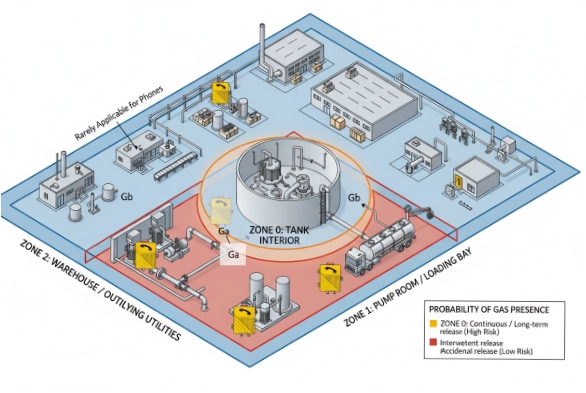
The Breakdown
-
- Context: Inside a pipe or fuel tank.
- Phone Suitability: Virtually non-existent. You don’t make calls from inside a gasoline tank.
-
EPL Gb (Zone 1):
-
EPL Gc (Zone 2):
Do dust areas need EPL Da/Db or Dc for compliance?
Dust is trickier than gas because it settles. A layer of dust can cause overheating even if it doesn’t explode immediately. The EPLs are D (Dust) followed by a, b, c.
Yes, compliance requires matching the rating: EPL Db is mandatory for Zone 21 (likely dust clouds like conveyors/crushers), while EPL Dc covers Zone 22 (settled dust). EPL Da (Zone 20) is for continuous clouds inside silos, a location where telephones are generally not installed.
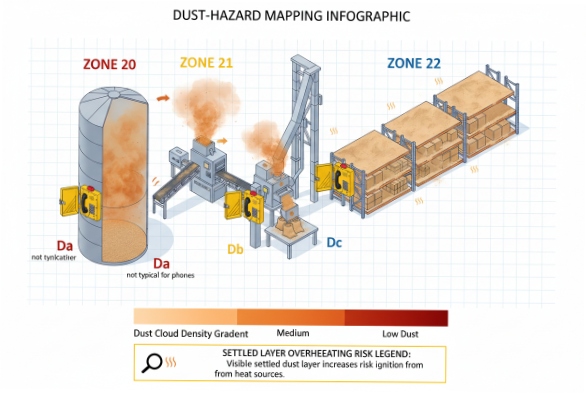
The Breakdown
-
- Context: Inside a flour silo or coal hopper.
- Phone Suitability: Not applicable.
-
EPL Db (Zone 21):
- Context: Next to a conveyor belt transfer point, crusher, or bagging station.
- Requirement: The phone must be "Dust Ignition Proof." It seals dust out entirely.
-
EPL Dc (Zone 22):
- Context: A dusty warehouse aisle.
- Requirement: "Dust Protected." Some dust might get in, but not enough to cause a fire.
How do EPL choices affect enclosure design and cost?
The jump from "c" (Enhanced) to "b" (High) is the biggest cost driver in the industry. It changes the fundamental physics of the device.
Selecting a higher EPL (Gb/Db) significantly increases cost and weight because it dictates heavy cast-aluminum or stainless steel "Flameproof" (Ex d) enclosures capable of containing an internal explosion. Lower EPL (Gc/Dc) allows for lighter, "Non-Sparking" (Ex n) designs that rely on high-quality sealing rather than brute strength, reducing unit cost by 30-50%.
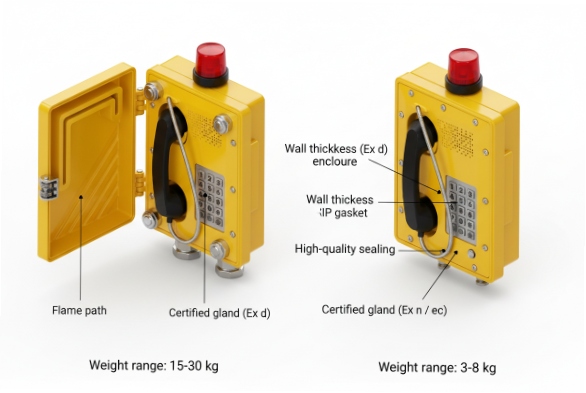
The Design Gap
| Feature | EPL Gb/Db (Zone 1/21) | EPL Gc/Dc (Zone 2/22) |
|---|---|---|
| Enclosure | Heavy Wall: Cast Aluminum/SS. Must withstand 4x internal pressure. | Standard Wall: High-impact GRP or thin metal. Just needs to be robust. |
| Cable Entry | Threaded: Requires certified Ex d glands 5. | Standard: Can use simpler Ex e glands. |
| Weight | Heavy (5-15 kg). | Light (2-5 kg). |
| Cost | High ($$$). | Moderate ($$). |
Which processes typically mandate higher EPL margins?
Sometimes, meeting the minimum code isn’t enough. Corporate risk policies often dictate a "Zone + 1" strategy.
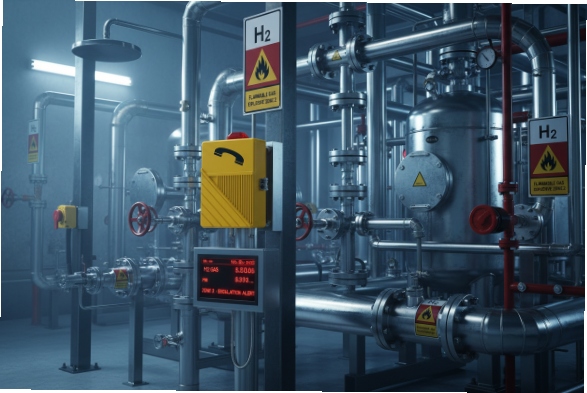
Processes involving Hydrogen (Group IIC), high-pressure offshore extraction, or critical emergency mustering stations typically mandate EPL Gb/Db equipment even in Zone 2 areas. This extra margin ensures that the communication link survives unforeseen gas leaks or physical damage that would compromise a lower-rated device.
Where We Recommend Over-Specifying
-
Hydrogen/Acetylene Plants (Group IIC):
- These gases are so volatile that a "Zone 2" can become a "Zone 0" in seconds. We always recommend EPL Gb IIC phones here.
-
Offshore Platforms:
- Salt corrosion attacks seals. A Gc rating relies heavily on seals. A Gb (Ex d) rating relies on a flame path 6 that is less susceptible to catastrophic failure from minor corrosion.
-
Standardization:
- Large plants often buy only Gb/Db phones. It prevents maintenance errors (e.g., accidentally installing a Zone 2 phone in a Zone 1 area) and simplifies spare parts inventory.
Conclusion
EPL ratings are your risk management tool. While EPL Gc/Dc offers a cost-effective solution for peripheral storage areas, the core process zones—pumps, crushers, and loading arms—demand the rugged certainty of EPL Gb/Db. When in doubt, choosing the higher protection level buys you insurance against the unpredictable nature of hazardous environments.
Footnotes
-
IEC standards defining Equipment Protection Levels for explosive atmospheres. ↩
-
A type of protection where the enclosure can withstand an internal explosion. ↩
-
A type of protection for equipment that is non-sparking in normal operation. ↩
-
IECEx guides providing detailed information on hazardous area classification. ↩
-
Cable glands designed to maintain the integrity of Ex d enclosures. ↩
-
The interface between two parts of an enclosure that prevents the transmission of an internal explosion. ↩








