Choosing between "Flameproof" and "Intrinsically Safe" is the most fundamental engineering decision in hazardous area communications. The wrong choice can mean paying triple for installation wiring or ending up with a phone that is too quiet for a noisy drilling rig.
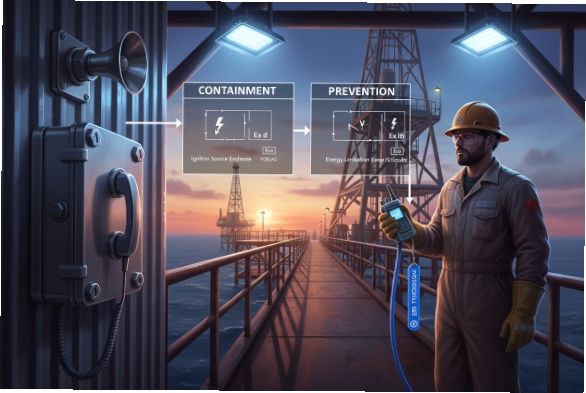
The core difference is the safety strategy: Ex d (Flameproof) relies on a heavy-duty enclosure to contain an internal explosion and cool the escaping gas via flamepaths, whereas Ex ib (Intrinsic Safety) limits the electrical energy below the ignition threshold so a spark simply cannot occur. Ex d is standard for fixed heavy-duty stations; Ex ib is standard for mobile handsets.
The "Brute Force" vs. "Smart Design" Approach
At DJSlink, we manufacture both types because they serve different masters.
-
Ex d (Flameproof) is the "Brute Force" method. We assume the gas will get in and the electronics will spark. So, we build a fortress (the enclosure) to keep the explosion inside.
-
Ex i (Intrinsic Safety) is the "Smart Design" method. We design the electronics so they are too weak to start a fire. It requires sophisticated energy management.
| Feature | Ex d (Flameproof) | Ex ib (Intrinsic Safety) |
|---|---|---|
| Philosophy | Containment: "Let it bang, but keep it inside." | Prevention: "Don’t let it spark." |
| Voltage/Power | High Power (110V/220V/PoE+). Loud speakers. | Low Power. Restricted voltage/current. |
| Enclosure | Heavy Cast Aluminum/Stainless Steel. | Lightweight Plastic or thin Metal. |
| Installation | Simple (Direct connect), but heavy cabling. | Complex (Requires Zener Barriers/Isolators). |
Does Ex d contain internal explosions via flamepaths?
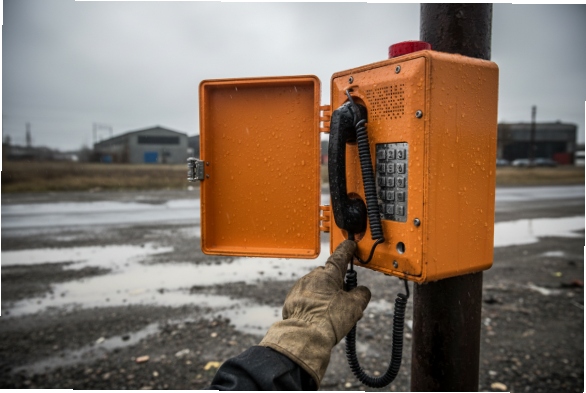
When you look at a DJSlink Ex d telephone, you’ll notice the cover screws are huge and the mating surfaces are wide. This is not just for aesthetics; it’s engineering precision.
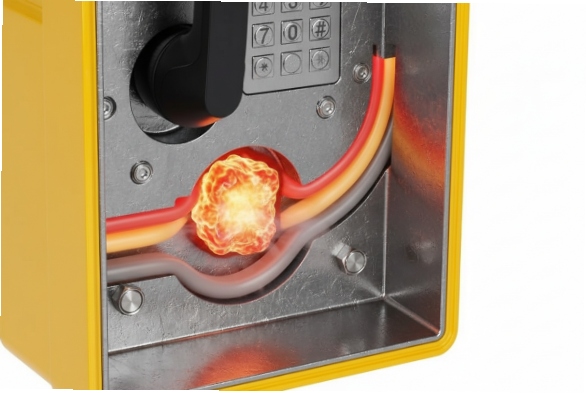
Yes, Ex d enclosures are designed to withstand the pressure of an internal explosion. They feature "flamepaths"—precisely machined gaps between joint surfaces (like the lid and body)—that are long and narrow enough to cool down escaping hot gases below the ignition temperature of the external atmosphere.
The Critical Role of the "Gap"
The "flamepath" 1 is the secret weapon of Ex d.
- It is NOT airtight. In fact, gas is expected to enter.
- The Gap (Mesg): The Maximum Experimental Safe Gap is critical. For Hydrogen (IIC), this gap is microscopic (often <0.15mm).
- The Danger: A single scratch on this machined surface ruins the protection. If a technician pries the lid open with a screwdriver and damages the flange, the phone is no longer explosion-proof.
Application Insight: This is why we use Ex d for our Public Address (PA) Systems and Loud Ringers. To drive a 30-watt horn speaker, you need power levels that Intrinsic Safety usually forbids. Ex d lets us use high power safely.
Does Ex ib limit energy to prevent ignition?
Intrinsic safety is like putting a governor on an engine. It ensures that even under fault conditions (like a short circuit), there isn’t enough thermal or electrical energy to ignite the gas.
Yes, Ex ib uses zener diodes and resistors to clamp voltage and limit current, ensuring that any spark energy is below the "Minimum Ignition Energy" (MIE) of the hazardous gas. "ib" specifically allows for one fault (safe for Zone 1), while "ia" allows for two faults (safe for Zone 0).

The Trade-off: Safety vs. Power
- The Benefit: Since there is no "explosion" to contain, the device can be made of lightweight plastic. This is why almost all portable radios and mobile inspection tablets are Ex ib/ia.
- The Limitation: You are strictly limited in power. An Ex ib phone might not be as loud as an Ex d phone because the amplifier is energy-starved.
- The "System" Cost: An Ex ib fixed telephone usually requires a separate Safety Barrier (Zener Barrier 2 or Galvanic Isolator) installed in the safe area control room. This adds cost and complexity to the wiring plan.
Which concept fits handsets vs fixed stations?
If you are outfitting an oil rig, you will likely use a mix of both. Knowing where to put which device optimizes your budget and user experience.
Ex d is the standard for fixed "Wall-Mount" stations because it allows for direct connection to mains power (AC) or standard PoE 3 without external barriers, supporting high-volume speakers. Ex ib is standard for "Mobile" handsets and portable radios where weight is a critical factor and high power is not required.
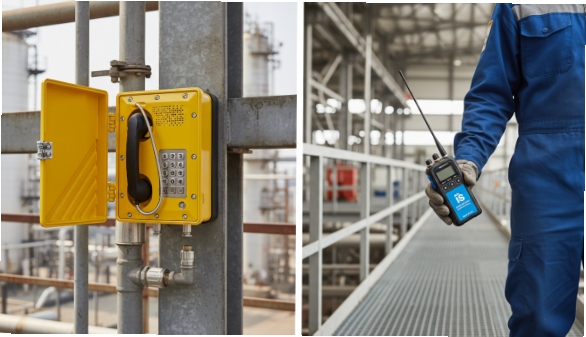
The Hybrid Solution: Ex d [ib]
Most modern DJSlink fixed telephones are actually a hybrid: Ex d [ib].
-
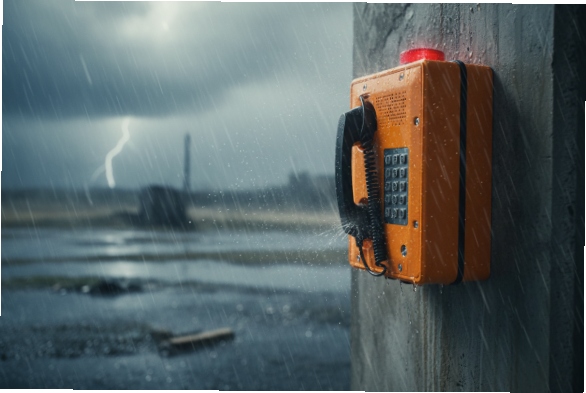
Main Body (Ex d): The heavy box on the wall is Flameproof. It handles the 220V/110V power and the loud speaker driver.
-
Handset (Ex ib): The cord and the handset itself are Intrinsically Safe.
- Why? If the curly cord gets cut or the handset is smashed, the energy inside that specific circuit is too low to cause a spark.
- Benefit: You get the power of Ex d with the safety of Ex ib where the user touches the device.
How do maintenance and cable choices differ?
This is where the operational costs (OPEX) come in. Installing Ex d is mechanically harder; maintaining Ex i is electrically harder.
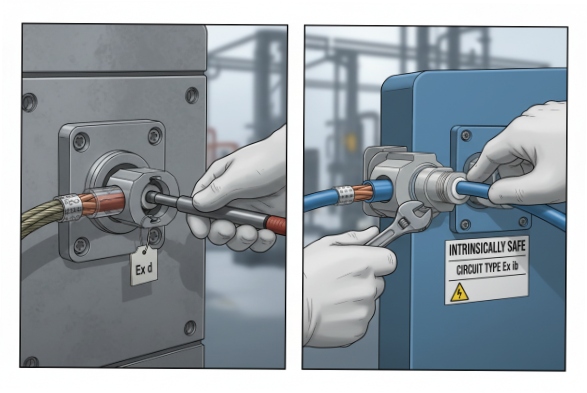
Ex d requires specialized "Barrier Glands" (if the cable is not filled) and strictly forbids opening the enclosure while energized ("Live Maintenance"). Ex ib allows for standard cables (often blue) and simple plastic glands, and crucially, permits "Live Maintenance" on the IS circuits since the energy is already safe.
The Maintenance Checklist
| Activity | Ex d (Flameproof) | Ex ib (Intrinsic Safety) |
|---|---|---|
| Opening Cover | NEVER while powered. Must obtain "Hot Work Permit" and isolate power first. | ALLOWED while powered (if truly IS). Useful for troubleshooting signal issues. |
| Cable Glands | Must use certified Ex d metal glands 4 (often nickel-plated brass). Improper glanding voids cert. | Can use Ex e plastic glands. Much cheaper and faster to install. |
| Cabling | Round, compact cables required to seal the gland. Armored cable 5 preferred. | Standard instrument cable. Blue sheath is mandatory convention to identify IS circuits. |
| Grease | Non-hardening grease required on flamepaths to prevent corrosion. | Not required. |
DJSlink Pro Tip: For retrofitting old plants, Ex d is often preferred. You don’t need to find space in the control cabinet for new IS barriers; you just run the power cable to the Ex d phone, seal the gland, and you’re done.
Conclusion
The choice between Ex d and Ex ib comes down to power versus weight. Choose Ex d for fixed, high-volume telephones where you want simple "plug-and-play" installation without external barriers. Choose Ex ib for mobile devices or when you need the flexibility of live maintenance. For the best of both worlds, look for DJSlink’s Ex d [ib] hybrid models, which give you the ruggedness of a fortress with the safety of a smart circuit.
Footnotes
-
The interface between two parts of an enclosure that prevents the transmission of an internal explosion. ↩
-
A safety device used in electrical circuits to limit the energy available to a spark or arc. ↩
-
A technology for wired Ethernet LANs to allow the electrical current necessary for the operation of each device to be carried by the data cables rather than by power cords. ↩
-
Cable glands designed to maintain the integrity of Ex d enclosures. ↩
-
Electrical cable with a protective metal layer to prevent physical damage. ↩