Selecting the wrong equipment protection level (EPL) isn’t just a paperwork error; it’s a safety violation that can shut down your facility. Engineers often confuse "safe enough" with "compliant," but in the world of hazardous areas, the distinction between Ga and Gb determines whether a device can survive rare accidents or constant exposure to explosive gas.
The primary difference lies in the protection level: Ga (Very High Protection) allows for two independent faults and is safe for continuous hazard exposure (Zone 0), whereas Gb (High Protection) allows for one fault and is designed for occasional exposure (Zone 1). You can distinguish them by the suffix on the marking string (e.g., Ex ia IIC T4 Ga).
EPL: The Modern Safety Yardstick
For decades, we relied solely on "Zones." Now, the Equipment Protection Level 1 (EPL)** gives us a more precise way to match the risk of the equipment to the risk of the environment.
At DJSlink, we primarily manufacture Gb (Zone 1) equipment because it covers 95% of industrial voice communication needs. Ga (Zone 0) equipment is incredibly specialized and rare for telephony. Why? Because Zone 0 is usually inside a fuel tank or a pipe. If you are standing inside a fuel tank to make a phone call, you have bigger problems than certification!
However, understanding this distinction is vital for portable equipment (like radios) and for ensuring you don’t overspend on unnecessary ratings or under-spec for critical areas.
Which Zones typically require Ga versus Gb equipment?
The relationship between the Zone (the environment) and the EPL (the equipment) is strict. You must match the tool to the territory.
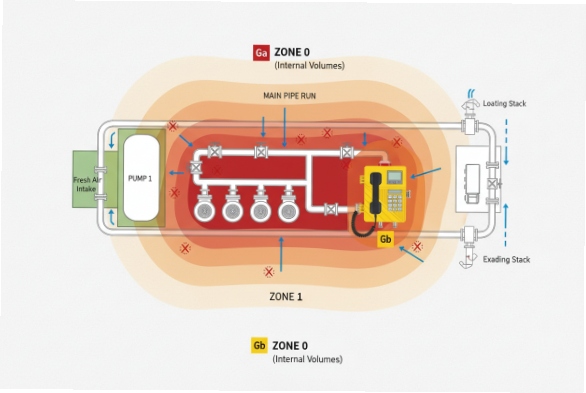
Zone 0 (Continuous Hazard) requires Ga equipment, which is designed to remain safe even if two independent failures occur. Zone 1 (Intermittent Hazard) requires Gb equipment, which is safe during normal operation and one expected fault. Zone 2 (Abnormal Hazard) requires Gc equipment.
The Practical Breakdown
-
Zone 0 2 / EPL Ga:** This is the "Red Zone." An explosive atmosphere is present continuously or for long periods (>1000 hours/year).
- Typical Device: Sensors inside a tank, or ultra-safe portable radios.
- Telephone Context: Extremely rare for fixed phones.
-
Zone 1 / EPL Gb: This is the "Orange Zone." Explosive gas is likely to occur in normal operation (10–1000 hours/year).
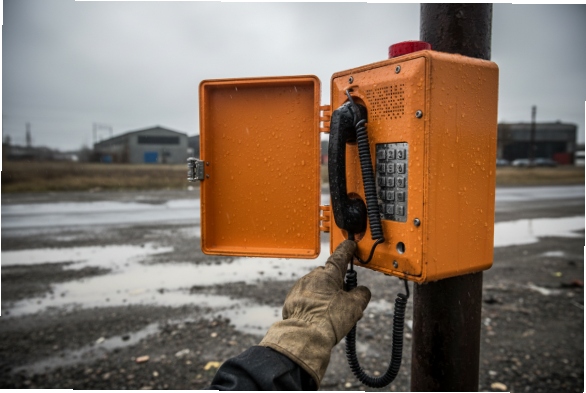
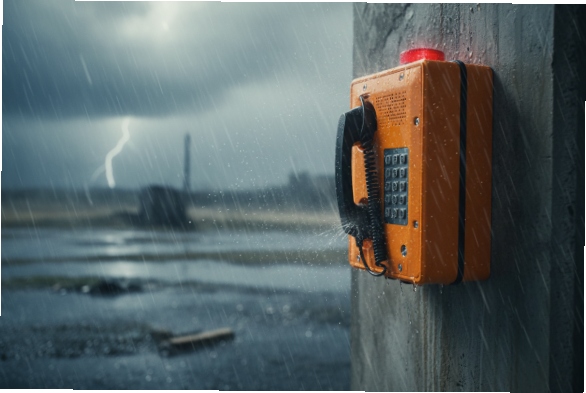
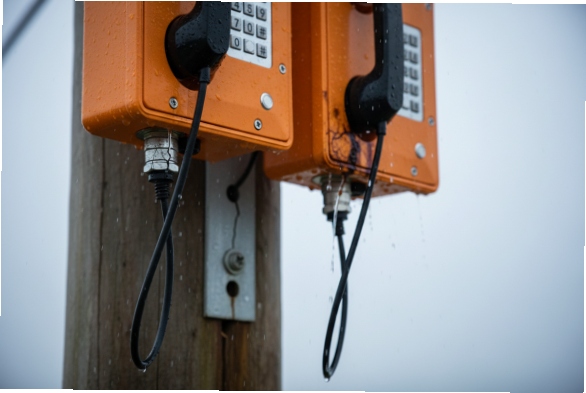
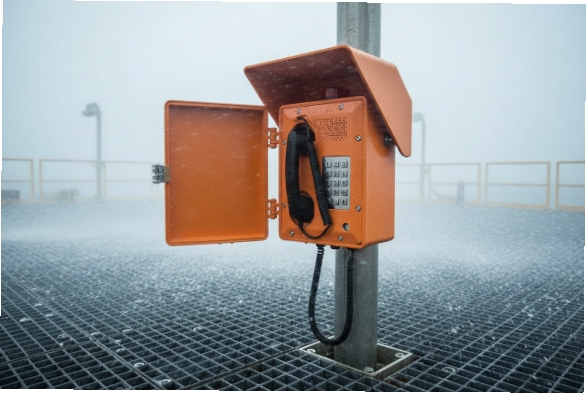
- Typical Device: The standard DJSlink Explosion-Proof Telephone mounted near a loading dock or pump station.
-
Zone 2 / EPL Gc: This is the "Yellow Zone." Gas is not expected, and if it occurs, it’s for a short time (<10 hours/year).
- Typical Device: Weatherproof industrial phones with basic non-sparking certification (Ex nR or Ex ec).
Can Gb devices be installed in Zone 0 areas?
This is a hard rule with no exceptions. You cannot downgrade safety in a higher-risk zone.
No, Gb devices strictly cannot be installed in Zone 0 areas. Zone 0 demands the "Very High" protection of Ga. However, the reverse is true: Ga devices can safely be installed in Zone 1 or Zone 2, though this is often not cost-effective.
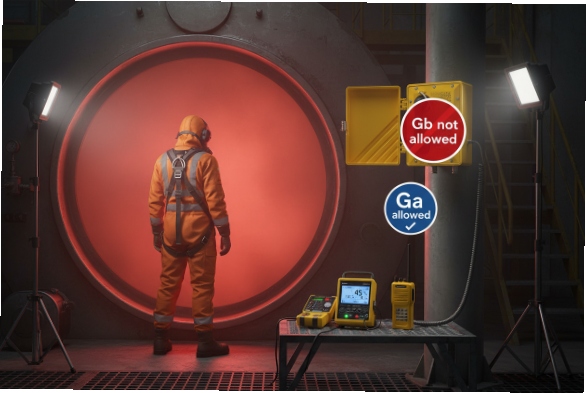
The Hierarchy of Safety
Think of it like climbing gear.
- Ga (Zone 0 gear): Rated for hanging off a cliff (Two safety ropes). You can use it to climb a ladder (Zone 1), but it’s overkill.
- Gb (Zone 1 gear): Rated for climbing a ladder (One safety rope). You cannot use it to hang off a cliff. If your one safety line fails, you fall.
DJSlink Insight: We often see tenders requesting "Zone 0 Telephones." We always clarify: "Do you really mean Zone 0?" 99% of the time, the client actually means Zone 1 (the area around the tank). Clarifying this saves our clients thousands of dollars, as Ga engineering is significantly more expensive.
How do labeling and documentation show Ga/Gb?
The label is your source of truth. You need to know exactly where to look to confirm the EPL.
In the IECEx/ATEX marking string, the last two letters explicitly state the EPL (e.g., Ex db IIC T6 Gb). For ATEX specifically, you also look at the Category: "1G" equates to Ga, "2G" equates to Gb, and "3G" equates to Gc.
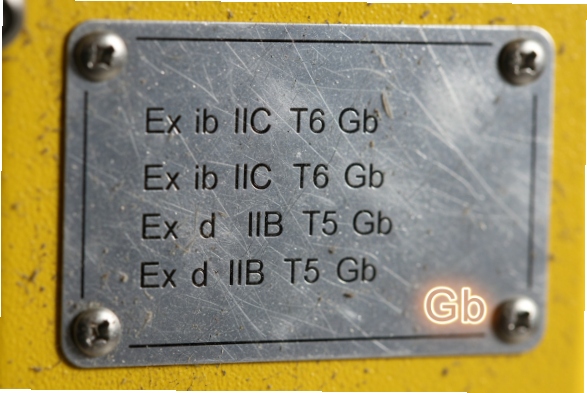
Decoding the String
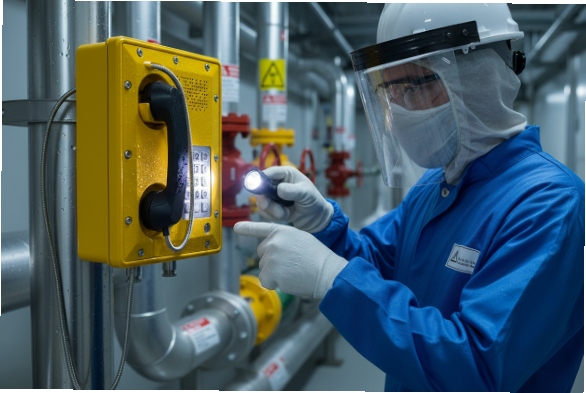
When inspecting a DJSlink phone, look at the bottom line of the ATEX/IECEx marking:
-
Example 1 (Standard Plant Phone):
II 2G Ex db IIC T6 Gb- 2G: ATEX Category 2 3 for Gas (High Protection).
- Gb: Equipment Protection Level Gb.
- Verdict: Safe for Zone 1.
-
Example 2 (Intrinsically Safe Portable):
II 1G Ex ia IIC T4 Ga- 1G: ATEX Category 1 for Gas (Very High Protection).
- Ga: Equipment Protection Level Ga.
- Verdict: Safe for Zone 0.
Common Pitfall: Don’t confuse the Gas Group (e.g., IIC) with the Protection Level (Ga/Gb). "IIC" tells you what kind of gas (Hydrogen); "Gb" tells you how safe the device is.
What risk assessments justify EPL selection?
Why not just buy Ga for everything and be safe? Because risk assessment is about balancing safety with practicality and cost.
EPL selection is justified by the "Zone Classification" study, which calculates the probability of gas presence. Risk assessments consider the frequency of release, ventilation efficiency, and the consequences of ignition. Using Ga equipment everywhere is technically safe but economically inefficient and limits your choice of available high-power devices.
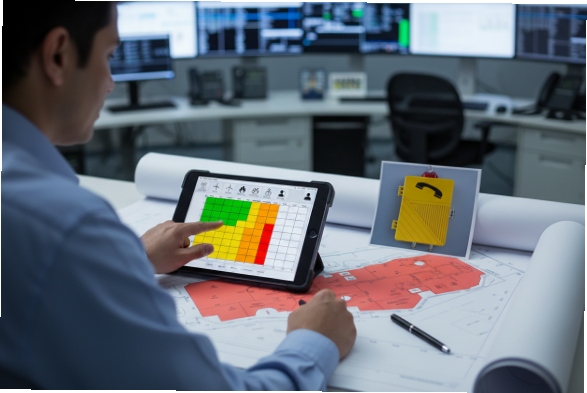
The Trade-Offs
-
Power vs. Protection:
- Ga (Zone 0): Almost always limited to Ex ia (Intrinsic Safety). This means low power. You can’t have a 110dB horn speaker or a high-brightness strobe light in Zone 0 because the energy required exceeds the strict safety limits.
- Gb (Zone 1): Allows Ex d (Flameproof). This lets DJSlink build robust, loud, mains-powered phones that can ring over the sound of a compressor.
-
Availability: There are very few Ga fixed telephones on the market. If your risk assessment says "Zone 0," you might be forced to use portable radios instead of a fixed line.
DJSlink Recommendation: If your risk assessment identifies a location as Zone 0, try to move the telephone mounting point a few meters away into Zone 1. This allows you to use a robust Gb device with better audio performance and lower cost.
Conclusion
Distinguishing Ga and Gb is about understanding the "Red Zone" vs. the "Orange Zone." Ga is for Zone 0 (continuous danger, two-fault safety), while Gb is for Zone 1 (intermittent danger, one-fault safety). Always check the label for the "Ga" or "Gb" suffix and the ATEX "1G" or "2G" category. At DJSlink, we help you navigate these choices to ensure you get the rugged performance of Gb equipment wherever safe, avoiding the limitations of Ga unless absolutely necessary.