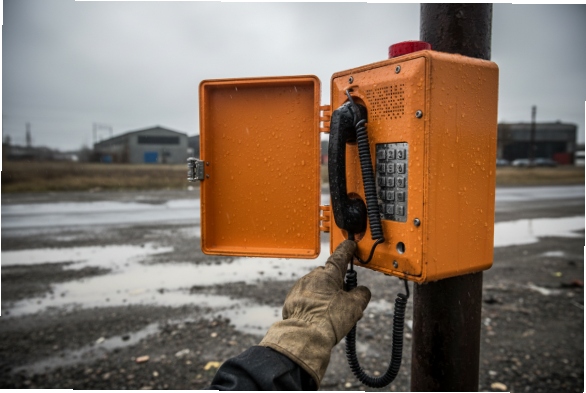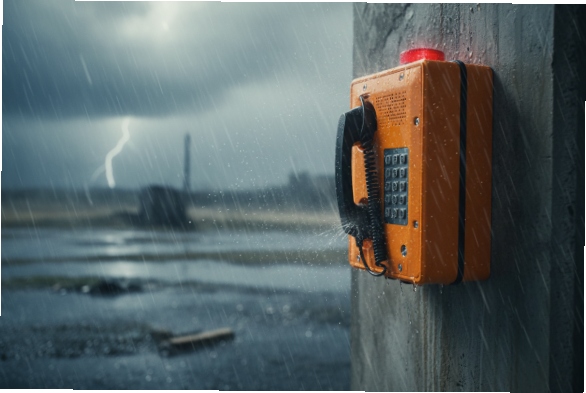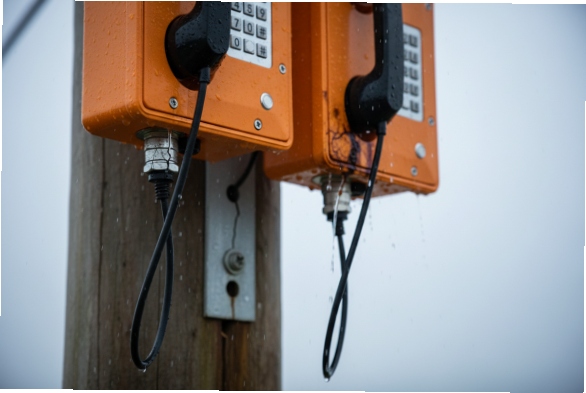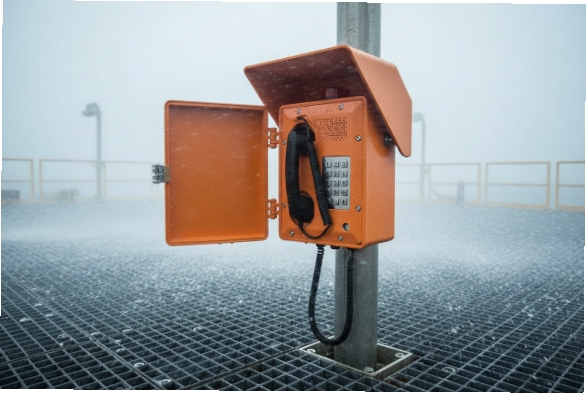
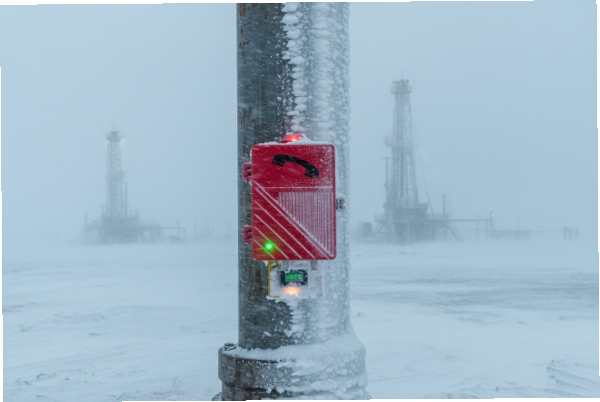
Extreme climates can cripple standard communication gear 1, leaving your team isolated when safety matters most. Are you risking liability by installing phones that freeze in the Arctic or melt in the desert?
Most certified explosion-proof telephones support a standard ambient temperature range of −20°C to +60°C. However, specialized models for harsh environments are readily available with extended ranges from −40°C (and even −55°C) up to +70°C, ensuring reliability in everything from Siberian oil fields to Middle Eastern refineries.
The Critical Role of Ambient Temperature in Hazardous Areas
In the world of industrial manufacturing, "ambient temperature" 2 is not just a weather report; it is a critical engineering constraint that defines safety. At DJSlink, we design our communication hardware to survive where humans cannot. The standard operating range for the majority of Ex-certified equipment, including our own SIP intercoms, typically falls between −20°C and +60°C. This covers the vast majority of industrial applications, from indoor chemical processing plants to temperate outdoor facilities.
However, global energy exploration pushes these boundaries. We see increasing demand for devices that can withstand the "thermal shock" of rapid temperature changes. The housing material plays a massive role here. Glass Reinforced Polyester 3 (GRP) is fantastic for corrosion resistance, but aluminum alloy bodies often provide better heat dissipation for the internal electronics in high-temperature zones.
Material Resilience and Internal Heating
When we specify a phone for a project, we look beyond just the air temperature. We must consider humidity. As noted in industry data, these ranges almost always assume high relative humidity 4 (90–95% non-condensing). A phone rated for +60°C must maintain that rating even when the air is thick with moisture, which impedes natural cooling.
Furthermore, the electronics inside—specifically the LCD screens and VoIP chipsets—are sensitive. Standard LCDs become sluggish or unreadable below −20°C. This is why the "supported range" is not just about the enclosure not cracking; it is about the device remaining functional.
| Range Classification | Typical Temperature Span | Target Environment |
|---|---|---|
| Standard Industrial | −20°C to +55°C | Indoor plants, Temperate outdoors |
| Extended Cold | −40°C to +60°C | North Sea offshore, Northern US/Canada |
| Extreme Polar | −55°C to +60°C | Arctic Circle, LNG terminals |
| Extreme Heat | −20°C to +70°C | Middle East deserts, Steel mills |
The capability to operate across these bands effectively makes an explosion-proof phone a "drop-in" replacement for standard units, but with the ruggedness required for Zone 1 and Zone 2 areas 5.
Now, let’s look at the specific extremes you asked about.
Are −40/−55 °C to +60/+70 °C options available?
Project managers often struggle to find a single device model that works across their global assets, from Alaska to Dubai. Is it possible to standardize on one unit for such disparate climates?
Yes, high-specification models are certified for these extremes. "Arctic" variants can operate down to −55°C, while "Desert" or high-heat variants are rated up to +70°C. Many fleet operators standardize on the −40°C to +60°C range as a versatile "universal" solution.
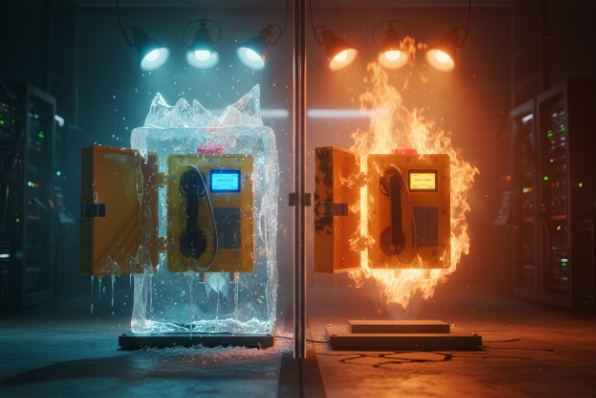
Extreme Climate Engineering
In my experience dealing with global integrators, the −40°C to +60°C range is becoming the "gold standard" for procurement. Why? Because it simplifies inventory. If you stock a phone rated for this wide band, you can deploy the same spare unit to a facility in Norway or a plant in Texas without worrying about compliance.
However, achieving the −55°C or +70°C targets requires specialized engineering. For the lower end (−55°C), we often use special low-temperature silicone gaskets and internal potting compounds that do not become brittle and crack, which would compromise the flamepath 6. For the upper end (+70°C), the internal electronics must be industrial-grade automotive components 7, capable of handling heat that would fry a consumer-grade capacitor.
The Trade-off of Specialization
It is important to note that while these options exist, they often come with trade-offs. A phone built for −55°C might be overkill for a factory in Germany and will cost significantly more due to the component grading. Conversely, a unit rated for +70°C might have a larger physical footprint to accommodate larger heatsinks.
For very hot regions, we also have to look at the "solar load." A spec sheet might say +70°C ambient, but if the phone is black and sits in direct sunlight, the internal temperature can easily exceed +90°C. This is why material color (often bright yellow or red) is not just for visibility—it is for thermal management.
| Feature | Standard Model | Extreme Model (-55/+70) |
|---|---|---|
| Gasket Material | EPDM Rubber | Low-temp Silicone / Viton |
| Cable Entries | Standard Polyamide | Nickel-plated Brass / SS |
| Display | Standard LCD | OLED or Heated LCD |
| Cost Factor | 1.0x | 1.5x – 2.0x |
Selecting the right range prevents premature failure. But temperature does not just affect the hardware; it affects the safety certification itself.
How does ambient affect T-class and duty cycle?
Safety engineers know that a device’s surface temperature cannot exceed the ignition temperature of the surrounding gas. But does a hotter day mean your safety margin disappears?
Ambient temperature directly dictates the Temperature Class (T-Class). A phone might be rated T6 (max surface 85°C) at +40°C ambient, but de-rated to T5 (max surface 100°C) at +60°C ambient. High ambient heat also reduces the duty cycle for power-hungry components like beacons or amplifiers.
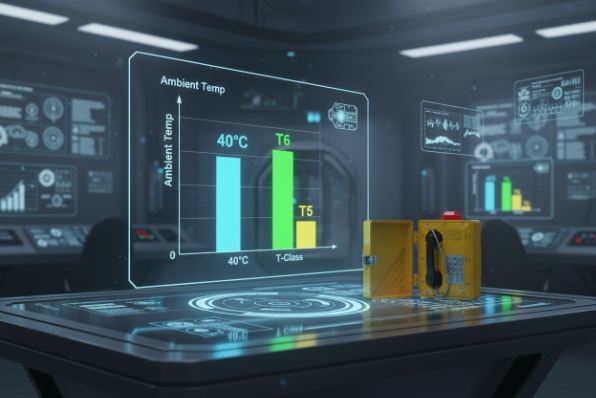
The Thermodynamics of Safety
This is the most technical part of the selection process, and where I see the most mistakes. The T-Class is not a static number; it is dynamic based on the environment.
The "T-rating" defines the maximum surface temperature the device will reach under worst-case fault conditions.
-
T6 (85°C limit): The safest rating. To maintain this, the device must stay cool. Usually, this limits the ambient temperature (Ta) to around +40°C or +50°C.
-
T5 (100°C limit): Allows the device to get hotter. This relaxation often permits the ambient temperature to rise to +60°C or +70°C.
So, if you require a T6 rating because you are dealing with Carbon Disulphide (which has a very low ignition temp), you might not be able to use the phone in a +60°C environment. You have to balance the Temperature Class 8 against the Ambient spec.
Duty Cycle and Internal Heat
Modern VoIP Ex phones are computers. They have processors that generate their own heat. When you add a 15-watt loudspeaker or a flashing Xenon beacon powered by the phone, the internal temperature rises sharply.
If the ambient air is already +60°C, the internal rise from a long PA broadcast could push the components past their thermal limit. Therefore, at high ambient temperatures, we often specify a "duty cycle" (e.g., 5 minutes on, 15 minutes off) for high-power functions to prevent overheating. Passive analog phones do not have this issue as much, but for smart SIP devices, it is a real constraint.
| Ambient Temp (Ta) | Typical T-Class Achieved | Application Suitability |
|---|---|---|
| Up to +40°C | T6 (Best) | Ultra-volatile gases |
| Up to +55°C | T5 or T6 | General Oil & Gas |
| Up to +70°C | T4 or T5 | High-heat process areas |
Always check the certificate. It will explicitly state the relationship, often looking like: "T6 @ Ta ≤ +40°C, T5 @ Ta ≤ +60°C".
So, if the environment is too extreme for the base unit, can we modify it?
Do heater/fan kits extend operating envelopes?
When nature pushes the mercury off the scale, passive protection might not be enough. Can we actively condition the environment inside or around the phone?
Yes, thermostatically controlled heater kits are standard for extending operation into sub-zero ranges (preventing LCD freezing and condensation). However, cooling fans are rarely used due to explosion-proof sealing requirements; instead, external sunshades and passive heatsinks are used to manage high heat.
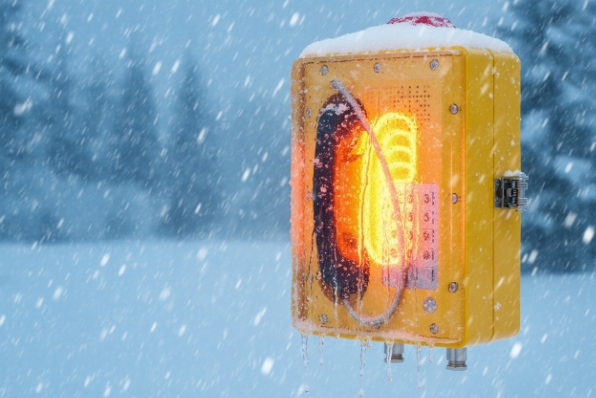
Active and Passive Thermal Management
For cold climates, active heating is a lifesaver. We install small, resistive heating elements inside the enclosure. These are connected to a thermostat that kicks in when the internal temp drops below roughly +5°C or 0°C.
This does two things:
-
Protects the Screen: It keeps the Liquid Crystal Display 9 from freezing and becoming sluggish.
-
Prevents Condensation: By keeping the internal air warmer than the external chassis, we prevent dew from forming on the circuit board, which is a major cause of short circuits in humid, freezing conditions.
The Problem with Cooling
Cooling is much harder. You cannot simply put a fan on an Ex d (flameproof) enclosure because you cannot blow air through a sealed, explosion-proof box. It would break the certification.
Therefore, for high temperatures, we rely on Sunshades (or Roofs). A simple stainless steel sunshade can lower the effective surface temperature of a phone by 15°C to 20°C by blocking direct solar radiation. It is a low-tech solution that provides high-tech results. For the electronics, we use conduction cooling—transferring heat from the CPU directly to the thick metal housing, effectively turning the whole phone into a giant heatsink.
| Accessory | Function | Impact on Range |
|---|---|---|
| Internal Heater | Raises internal temp | Extends low end (e.g., -20 to -40) |
| Sunshade | Blocks solar load | effectively extends high end reliability |
| Breather Drain | Equalizes pressure | Prevents seal failure in cycling temps |
| Insulation | Retains heat | Reduces heater power consumption |
If you are installing outside the catalog range, these accessories are not optional; they are mandatory for survival.
Finally, how do you prove to an inspector that your phone is compliant?
How is ambient shown on the nameplate?
During a safety audit, the paperwork matters as much as the hardware. Where do you find the definitive proof of the device’s temperature limits?
The ambient temperature range is permanently marked on the certification label (nameplate), typically designated as "Ta" or "Tamb". It usually appears alongside the ATEX/IECEx coding, for example: "Ex db IIC T6 Gb (-40°C ≤ Ta ≤ +60°C)".
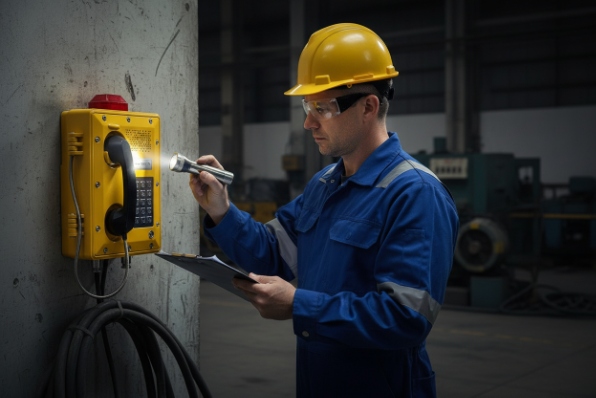
Decoding the Certification Label
The nameplate is the "passport" of the device. In the hazardous area world, if it is not on the label, it does not exist. You will find the ambient range specifically marked with the symbol Ta.
It is crucial to verify this physical label against your site’s zone drawings. I have seen cases where a procurement officer bought a standard "Zone 1 Phone" thinking it was good for everywhere, only to find the label said Ta -20°C to +40°C. When installed in a desert facility where temps hit +50°C, that phone was technically non-compliant and a safety violation, even if it still worked.
Reading the Code
The marking often combines the T-Class and Ambient range.
-
Single Range:
Ta: -30°C...+60°C(Simple, applies to the whole unit). -
Split Range:
T6 (-30°C < Ta < +50°C) / T5 (-30°C < Ta < +65°C)(Complex, depends on how you classify the zone).
Never assume the brochure matches the label. Brochures are marketing; the label is the legal certification. Always ask for a photo of the nameplate or the actual certificate before shipping.
| Marking Symbol | Meaning | Example |
|---|---|---|
| Ta / Tamb | Ambient Temperature Range | -40°C ≤ Ta ≤ +60°C |
| T-Class | Max Surface Temp Class | T6 or T5 |
| IP Rating | Ingress Protection 10 | IP66 (Dust/Water tight) |
Conclusion
Understanding ambient temperature capabilities is vital for safety and compliance. Standard explosion-proof phones cover −20°C to +60°C, but extended ranges (−40°C to +70°C) are available for extremes. Always match the Ta rating on the nameplate to your site’s specific T-Class requirements, and utilize heaters or sunshades to ensure longevity in harsh climates.
Footnotes
-
Overview of hardware used for transmitting information in industrial settings. ↩
-
Definition of the surrounding air temperature affecting equipment performance. ↩
-
Properties of GRP material including corrosion resistance and strength. ↩
-
Explanation of moisture content in the air and its impact on electronics. ↩
-
Classification of hazardous areas based on the frequency of explosive gas presence. ↩
-
Technical definition of the gap allowing gas escape without igniting the atmosphere. ↩
-
Standards for parts designed to withstand vehicle engine bay conditions. ↩
-
System categorizing equipment by maximum surface temperature to prevent ignition. ↩
-
Technology used in visual interface screens and its temperature limitations. ↩
-
Standard rating system defining levels of sealing against dust and water. ↩