
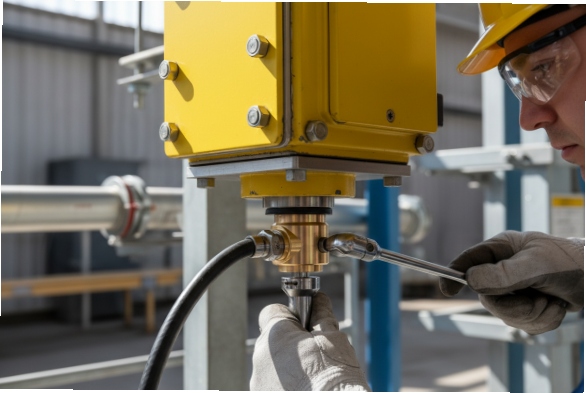
You can buy the most expensive explosion-proof telephone in the world, but if you use a $2 plastic gland from the hardware store, you have built a bomb. The cable entry point is the single most common point of failure in hazardous area inspections 1. It is the literal weak link in the chain of safety.
Cable sealing selection depends entirely on the protection concept and gas group. For Ex d (Flameproof) enclosures, you typically need certified Ex d barrier glands (compound-filled) or compression glands with specific cable requirements. For Ex e (Increased Safety) or Ex t (Dust), you need certified glands that maintain the IP rating (IP66). Always match the gland’s thread, size, and material to the equipment.
The Gatekeeper of Safety
At DJSlink, we often see perfectly good phones fail inspection because the installer used the wrong gland.
-
The Function: A gland must do two things: 1) Grip the cable so it doesn’t get pulled out, and 2) Seal the enclosure to prevent gas/dust ingress or flame propagation.
-
The stakes: In an Ex d enclosure 2, the gland must contain an explosion. In an Ex e enclosure 3, it must keep water out.
Let’s break down the rules so you get it right the first time.
Are Ex d sealing fittings or Ex e glands required?
The type of gland MUST match the type of protection of the telephone.
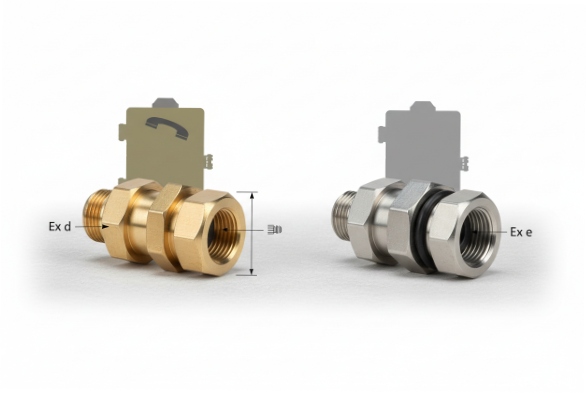
If the telephone is Ex d (Flameproof), you must use an Ex d certified gland (or sealing fitting with conduit). If the telephone is Ex e (Increased Safety) or Ex i (Intrinsic Safety), you must use an Ex e certified gland. Never use an Ex e gland on an Ex d enclosure unless it is dual-certified, as it cannot contain an explosion.
The Compatibility Matrix
| Phone Type | Required Gland Type | Function |
|---|---|---|
| Ex d (Flameproof) | Ex d | Must withstand explosion pressure. Often heavy brass/SS. |
| Ex e (Increased Safety) | Ex e | Must seal against water/dust (IP66). Often plastic or metal. |
| Ex i (Intrinsic Safety) | Ex e (or Ex i blue) | Keeps water out. Blue cap indicates IS circuit. |
| Ex t (Dust) | Ex t | Must be dust-tight (IP6X). |
DJSlink Note: Most of our heavy-duty industrial phones are Ex d. This means you generally need a metal Ex d gland. Using a plastic Ex e gland on a heavy cast-aluminum Ex d phone is a critical safety violation.
Do dust areas need Ex t, IP66/67-rated glands?
Dust is sneaky. It can bypass seals that stop water.
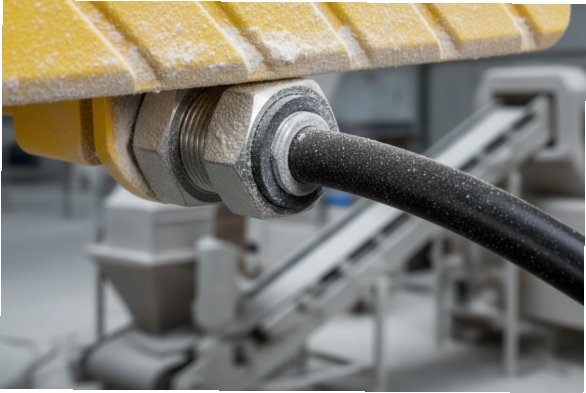
Yes, for dust environments (Zone 21/22), the gland must be certified Ex t (or Ex tb/tc) and provide a minimum ingress protection of IP6X (typically IP66). Standard industrial glands may not meet the rigorous "dust-tight" testing requirements of IEC 60079-31.
The IP Requirement
-
The Thread Seal: For dust, the connection between the gland and the box is critical.
- Metric Threads: require a sealing washer 4 (IP washer) to stop dust creeping down the threads.
- NPT Threads: seal on the taper, but thread tape/sealant is recommended.
-
The Cable Seal: The rubber ring inside the gland must compress tightly around the cable sheath. If the cable is not round (e.g., flat cable), standard glands will leak dust.
Are barrier glands needed for IIC gases?
This is the most debated topic in installation. When do you need the messy epoxy compound (barrier gland 5) vs. a simple rubber seal?
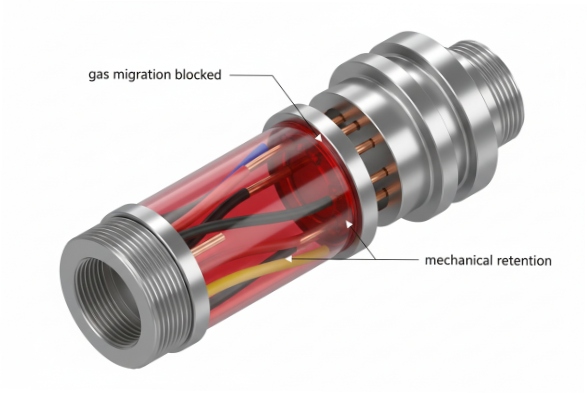
Barrier glands (compound-filled) are mandatory for Ex d enclosures in IIC (Hydrogen) areas if: 1) The cable is not solid/compact (has gaps between cores), OR 2) The enclosure volume is greater than 2 liters (which many phones are). However, recent IEC 60079-14 updates allow compression glands if the cable is "effectively filled" and tested to not transmit gas.
The "Gas Migration" Problem
Why use a barrier?
- Explosion: If an explosion happens inside the phone, the pressure pushes hot gas down the inside of the cable (between the wires).
- The Fuse: This gas can travel through the cable to the control room and explode there.
- The Solution: The Barrier Gland uses liquid epoxy that hardens around the individual wires, blocking the path solid.
DJSlink Advice: For simplicity and safety, we often recommend Barrier Glands for all Ex d installations unless you are 100% sure your cable is "compact and filled." It eliminates the guesswork during inspection.
How do jacket materials resist chemicals and UV?
The gland is metal, but the cable is plastic. If the cable sheath melts or cracks, the gland loses its grip.
Cable jacket materials must be selected for the specific environment. PVC is standard but poor for cold/UV. Polyethylene (PE) or XLPE is better for UV/water. For chemical plants, specialized jackets like LSZH (Low Smoke Zero Halogen) or lead sheathing may be required to resist hydrocarbon attack and prevent the "wicking" of chemicals.
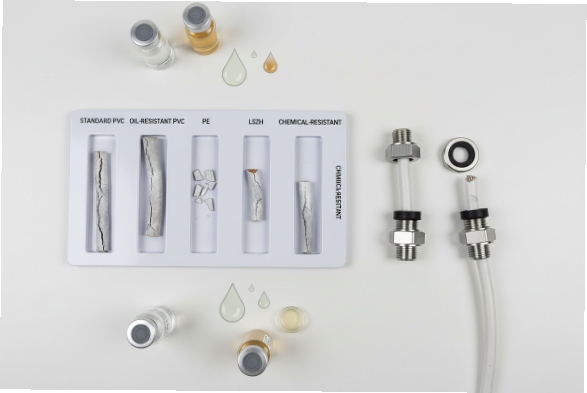
Matching Cable to Environment
- Outdoor/Sun: Black is best (Carbon Black 6 loaded). Grey PVC often cracks in 2-3 years.
- Oil/Grease: standard PVC 7 hardens when exposed to oil. Use oil-resistant variants.
- Cold (-40°C): Standard jackets shatter. Specification must demand "Cold Impact" properties.
The Gland Interface:
The gland seal material (the rubber ring) must also match.
At DJSlink, we configure the gland seals based on the "Ta" (Ambient Temp 10) of the order.
Conclusion
The gland is the final seal. For Ex d phones, default to Barrier Glands or high-quality compression glands approved for your specific cable type. For dust (Ex t) and harsh weather, prioritize IP66 sealing and UV-resistant cable jackets. Never mix Ex e glands with Ex d housings. A chain is only as strong as its weakest link—don’t let that link be the cable entry.
Footnotes
-
Standards and guidelines for inspecting hazardous areas to prevent safety failures. ↩
-
Explanation of how Ex d flameproof enclosures are designed to contain explosions. ↩
-
Overview of the Increased Safety (Ex e) protection concept for hazardous areas. ↩
-
The critical role of sealing washers in maintaining IP ratings for equipment. ↩
-
Technical details on how barrier glands prevent gas migration through cables. ↩
-
How carbon black is used in materials to provide essential UV resistance. ↩
-
Properties and industrial applications of Polyvinyl Chloride (PVC) in cables. ↩
-
Thermal and chemical resistance properties of Neoprene as a sealing material. ↩
-
Advantages of silicone rubber seals for extreme temperature environments. ↩
-
Understanding ambient temperature ratings and their impact on equipment selection. ↩








