
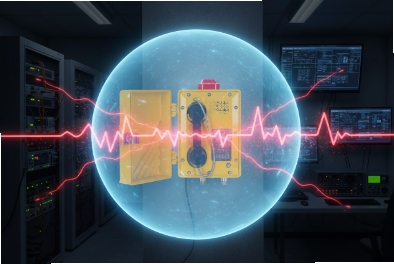
While safety is the primary concern for explosion-proof devices, electromagnetic compatibility 1 (EMC) is the silent guardian of network reliability. A noisy power supply in a SIP phone can knock out radio communications in a control room.
Explosion-proof SIP telephones, classified as Multimedia Equipment (MME), must meet EN 55032 emission standards. This typically involves adhering to Class A limits for industrial use, ensuring that Conducted Emissions (150kHz–30MHz) on PoE lines and Radiated Emissions (30MHz–6GHz) from the enclosure do not interfere with nearby sensitive electronics.
The Noise Police: EN 55032
As the face of DJSlink, I often have to clarify why a rugged industrial phone needs to meet the same standards as a home router. EN 55032 2 (which replaced the old EN 55022) is the specific product standard for "Multimedia Equipment." Since a modern SIP phone processes audio, video (sometimes), and data, it falls squarely into this category.
In a hazardous area, "noise" isn’t just annoying static. It’s electromagnetic energy that can interfere with 4-20mA instrumentation loops, gas detectors, or the plant’s SCADA 3 system. If our phone "leaks" too much RF energy, it could theoretically cause a false trip on a safety sensor.
The standard divides the testing into two main battlegrounds:
-
Conducted Emissions: Noise traveling back up the power/data cable.
-
Radiated Emissions: Noise broadcasting through the air from the device itself.
Which EN 55032 conducted and radiated emission limits apply?
The limits depend on how the energy escapes. We measure different frequency bands because different components generate noise at different rates.
For SIP phones, Conducted Emissions are measured from 150kHz to 30MHz on both the AC/DC power ports and the wired network ports (PoE). Radiated Emissions are measured from 30MHz up to 1GHz (or 6GHz for high-speed devices), with strict limits in dBuV/m to protect the radio spectrum.
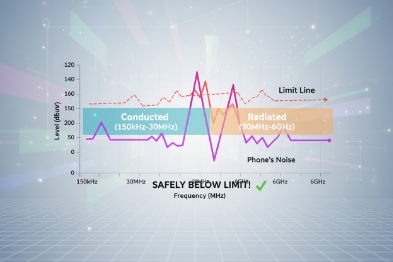
The Frequency Spectrum
When we test DJSlink phones, we are looking for spikes in specific areas:
-
Conducted (150kHz – 30MHz): This is usually caused by the Switching Power Supply (inside the PoE module). If the filtering is cheap, you’ll see massive spikes here. This noise travels along your CAT6 cables, potentially turning your entire cable run into an antenna.
- Limit (Class A, QP): 79 dBuV (at 150kHz) dropping to 73 dBuV.
-
Radiated (30MHz – 1GHz+): This is caused by the high-speed clock signals in the CPU and DDR RAM. Even though the phone is in a metal box, slots (like the display window or the handset cord entry) can leak RF.
- Limit (Class A, 10m distance): 40 dBuV/m (up to 230MHz) / 47 dBuV/m (up to 1GHz).
Note: Since most modern SIP phones have processors running faster than 108MHz, we are often required to test Radiated Emissions up to 6GHz, not just 1GHz.
Should EN 55032 Class A or Class B be specified for industrial projects?
This is a common point of confusion in tender documents.
For strictly industrial hazardous areas (refineries, mines), EN 55032 Class A is the industry standard and legally sufficient. However, Class B (Residential/Commercial) has tighter limits (typically 10dB lower). Specifying Class B provides a higher safety margin but is harder to achieve for high-power industrial devices.
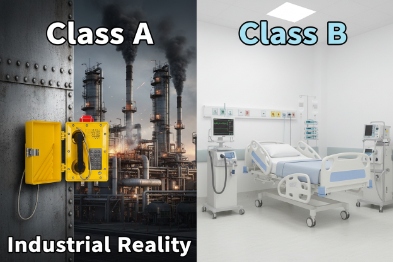
Class A vs. Class B: The Industrial Reality
Class A is designed for "non-residential" environments. It assumes the equipment is in a factory where there is already a bit of electrical noise. Equipment marked Class A must carry a warning in the manual: "Warning: This equipment is compliant with Class A of CISPR 32. In a residential environment this equipment may cause radio interference."
Class B is for homes and offices. It is much stricter because your neighbor doesn’t want your phone charger interfering with their TV.
At DJSlink, we design our Explosion-Proof phones to Class A because they are intended for Zone 1/2 heavy industry.
-
Why Class A? It allows for slightly more robust power filters which are better at handling the "dirty power" found in factories, without failing the emission test.
-
When to ask for Class B? If the phone is being installed in a "Light Industrial" area, like a laboratory or a clean room mixed with very sensitive scientific equipment, Class B might be safer. But for a drilling rig? Class A is perfect.
| Class | Environment | Limits | Typical Application |
|---|---|---|---|
| Class A | Industrial / Heavy Commercial | Higher (Relaxed) | Refineries, Mines, Power Plants. |
| Class B | Residential / Light Commercial | Lower (Strict) | Offices, Homes, Hospitals. |
How is EN 55032 testing handled for PoE and metal Ex enclosures?
Testing an explosion-proof device isn’t as simple as putting a plastic router on a table. The massive ground plane of the housing changes everything.
Testing requires the use of an Impedance Stabilization Network (ISN) specifically for the PoE/Telecommunication port to measure data-line noise. The heavy metal Ex housing must be grounded to the test table’s reference plane, simulating real-world installation, which often helps shield radiated noise but can exacerbate ground-loop currents in conducted tests.
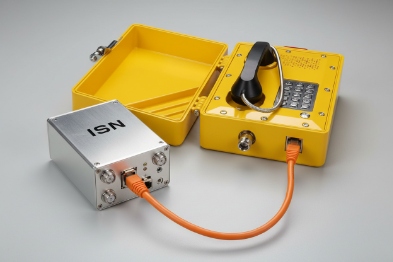
The Shielding Double-Edged Sword
The cast-aluminum alloy body of a DJSlink Ex phone is essentially a Faraday cage 4. This is great for Radiated Emissions. It keeps the high-frequency CPU noise inside. We rarely fail Radiated tests because of this natural armor.
However, Conducted Emissions are trickier.
-
PoE Testing: We don’t just plug it into a wall. We connect the Ethernet cable to an ISN 5 (Impedance Stabilization Network)**. This device separates the "noise" from the "data" so we can measure just the noise.
-
Shielded Cables: We must use Shielded Twisted Pair (STP) cables during the test if the manual specifies them. If we test with STP and you install with UTP (Unshielded), the certificate is technically void because UTP radiates more noise.
-
Grounding: In the test chamber, we bolt the phone’s earth stud to the metal table. This mimics the plant installation. If this ground path isn’t clean, noise circulates and spikes the readings.
What EN 55032 evidence should be requested for CE/UKCA?
Trust, but verify. A "CE" sticker is easy to print. A test report is hard to fake.
Request the full EN 55032 Test Report from an accredited ISO 17025 laboratory, ensuring it specifically lists the "Telecommunication Port" results (not just AC mains). Check that the Bill of Materials (BOM) in the report matches the delivered unit, especially regarding the power module and main processor, as these are the primary noise sources.

The Evidence Checklist
When auditing a supplier, asking for "The EMC Report" separates the manufacturers from the assemblers.
-
Check the Date: EN 55032:2015+A11:2020 is the current benchmark. If they send you a report for EN 55022 (the old standard), it’s invalid.
-
Check the Graph: Look at the "Margin." If the noise touches the limit line (0dB margin), that’s risky. A good design should have at least a 3dB to 6dB safety margin below the limit.
-
Traceability: Does the report list the specific Power Supply Unit (PSU) or PoE Module used? If the report lists a "MeanWell" supply but the phone contains a generic "NoName" brand, the EMC results are worthless. We freeze our BOM to ensure the phone you buy is the exact same phone we tested.
Conclusion
EN 55032 compliance is the hallmark of a well-engineered electronic device. For explosion-proof telephones, meeting Class A limits ensures they can coexist peacefully with the complex ecosystem of sensors and radios in a hazardous facility. By understanding the importance of the PoE/Telecommunication Port testing and the benefits of our metal enclosure, you can be confident that DJSlink phones are silent in the spectrum, even when they are loud in the field.
Footnotes
-
The ability of electrical equipment to function satisfactorily in its electromagnetic environment without introducing intolerable electromagnetic disturbances. ↩
-
International standard for electromagnetic compatibility of multimedia equipment – Emission requirements. ↩
-
Control system architecture using computers, networked data communications and graphical user interfaces for high-level process supervisory management. ↩
-
An enclosure used to block electromagnetic fields. ↩
-
Specialized coupling/decoupling network used for EMC conducted emissions measurements on telecom ports. ↩








