
Are you struggling to select the right explosion-proof telephone for hazardous areas 1? Picking the wrong protection type can lead to safety risks and high costs. Let us solve this.
Choosing between Ex d and Ex e explosion-proof telephones depends on your hazardous area risk level. Ex d contains internal explosions for high-risk zones. Ex e prevents ignition sources in lower-risk areas. Your choice impacts safety, maintenance, weight, and overall cost.
Understanding the Core Differences Between Ex d and Ex e
We often face the challenge of selecting the right equipment for hazardous area risk level 2. It is important to break down the core philosophies behind Ex d and Ex e. Ex d, or flameproof protection, allows an internal explosion to happen. However, the enclosure is strong enough to contain it. The hot gases cool down before they escape. This makes Ex d ideal for higher-power telecom and signaling functions. These functions cannot be made intrinsically safe 3.
Ex e: The Path of Increased Safety
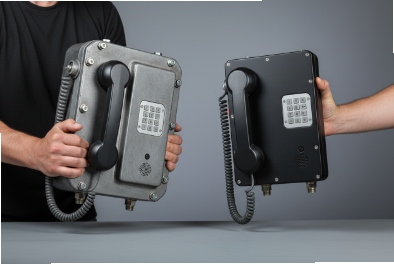
On the other hand, Ex e relies on increased safety. This means the telephone has no arcs, no sparks, and secure terminals. We must use components that do not normally cause ignition. Ex e does not contain explosions. It avoids ignition sources during normal operation and single faults. This fundamental difference shapes every aspect of the telephone’s design and application. For example, Ex d enclosures are heavy and usually metal. They add mechanical protection but also weight and cost. Ex e telephones are typically lighter. They are easier to install because they do not need heavy covers or flamepaths.
Integrating Extra Devices
At DJSlink, we see clients integrate extra field devices on the same housing, like beacons, horns, or heaters. In these cases, you must choose Ex d. These devices push the circuit beyond what Ex e can safely handle. Ex d is widely used in Zone 1 areas 4 where higher energy is needed. Ex e is common where equipment inherently operates at low energy. You must align your choice with the specific hazardous zone classification and gas group ratings 5. We always suggest evaluating the exact environmental risks before making a final decision.
| Feature | Ex d (Flameproof) | Ex e (Increased Safety) |
|---|---|---|
| Core Concept | Contains internal explosions | Prevents ignition sources |
| Enclosure | Heavy, robust, usually metal | Lighter, often GRP |
| Risk Level | High-risk, Zone 1 | Lower-risk, Zone 1 or 2 |
| Maintenance | Complex, requires care | Simpler, easier access |
Now that we know the basic principles, we need to look closer at the practical aspects of installation and upkeep.
Do Maintenance and Cable Gland Choices Differ?
High maintenance costs and complex installations drain your budget. Incorrect cable glands can even void your safety certification. We need clear guidelines for these choices.
Yes, maintenance and cable gland choices differ greatly. Ex d requires certified flameproof barrier glands and complex maintenance. Ex e allows simpler Ex e glands and offers easier maintenance access without disturbing critical joints, reducing your downtime.
The Complexity of Ex d Upkeep
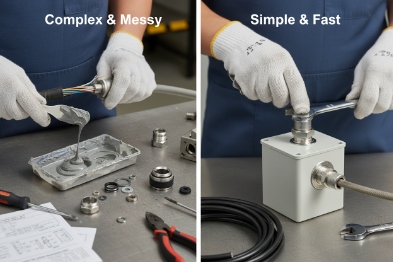
Maintenance routines for explosion-proof telephones vary significantly based on the protection method. When you choose Ex d, maintenance is complex and can be costly. The heavy construction requires careful assembly. Technicians must ensure precise thread engagement to maintain flamepath integrity 6. If you scratch a flamepath during an inspection, the whole enclosure might fail. This requires highly trained staff and longer service times.
Simplifying Upkeep with Ex e
Choose Ex e when maintenance access and reduced downtime are important. There is no flamepath to reassemble. Inspections are much simpler. Technicians can easily open the enclosure to check connections. This saves a lot of labor time. We at DJSlink always remind clients to consider long-term operating costs, not just the initial purchase price. Easier access means your communication systems stay online longer.
Cable Gland Requirements
Cable glands 7 are another major difference. Ex d installations often require certified flameproof cable glands or specialized barrier glands. You must match these perfectly with the heavy conduits or armored cables. Ex e generally allows simpler Ex e or Ex tb glands, provided you follow the basic installation rules. This difference alone can save hours of installation time. In retrofit sites already using heavy flameproof junction boxes and conduits, Ex d telephones align better with existing practice. However, in new builds aiming for lighter cabinets and IS wiring, Ex e telephones reduce installation labor and material costs.
| Aspect | Ex d | Ex e |
|---|---|---|
| Maintenance Complexity | High (protect flamepaths) | Low (easy access) |
| Downtime | Longer | Shorter |
| Cable Glands | Flameproof or barrier glands | Standard Ex e glands |
| Best for | Retrofit sites with conduits | New builds with IS wiring |
Which Option Suits High-Vibration, Outdoor Installations?
Severe outdoor conditions and heavy vibrations quickly destroy weak communication equipment. Replacing broken phones disrupts operations. You must select a rugged design built for harsh environments.
Ex d enclosures suit high-vibration, outdoor installations due to their robust, metal construction. They withstand mechanical shocks effectively. However, high-quality Ex e enclosures made from reinforced materials can also survive outdoors if they meet strict ingress protection standards.
Surviving Harsh Environments
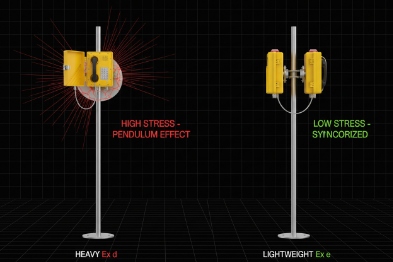
Outdoor environments present unique challenges for communication systems. Wind, rain, temperature changes, and constant vibration from nearby machinery test the limits of any equipment. Ex d enclosures are typically heavy, robust, and made to withstand high internal pressures. This inherent strength makes them excellent for high-vibration areas. The thick metal walls resist mechanical impacts and environmental stress very well. They will not easily crack under pressure.
Evaluating Ex e for Harsh Conditions
We should not dismiss Ex e for outdoor use. Modern Ex e telephones often use advanced Glass Reinforced Polyester 8 materials. These materials are lighter but still offer strong resistance to corrosion and weather. For outdoor installations, the key factor is the Ingress Protection 9 rating. Both Ex d and Ex e telephones must have high IP ratings, like IP66 or IP67, to keep out water and dust. A good Ex e phone will handle normal outdoor weather perfectly fine.
Making the Right Choice
If the installation site experiences extreme mechanical shocks, Ex d is the traditional, safe choice. The metal body provides peace of mind in heavy industrial sites. However, if weight is an issue and the vibration is moderate, a high-quality Ex e unit is a smart alternative. We must ensure the chosen equipment matches the specific environmental profile. At DJSlink, we test our units rigorously to ensure they perform reliably in both scenarios. We make sure the internal parts do not shake loose over time.
| Factor | Ex d Performance | Ex e Performance |
|---|---|---|
| Mechanical Strength | Very High (Metal) | High (GRP or Metal) |
| Vibration Resistance | Excellent | Good to Excellent |
| Corrosion Resistance | Requires specific coatings | Very good with GRP |
| Ingress Protection | Usually IP66/IP67 | Usually IP66/IP67 |
How Do Cost, Weight, and Footprint Compare?
Heavy equipment increases shipping costs and complicates mounting procedures. Budget overruns happen when hidden installation costs add up. Comparing these practical metrics is critical for your project.
Ex d telephones are heavier, bulkier, and more expensive due to their thick metal enclosures. Ex e telephones are lighter, easier to handle, and have a smaller footprint. Ex e provides a more cost-effective solution for initial purchase and maintenance.
The Heavy Burden of Ex d
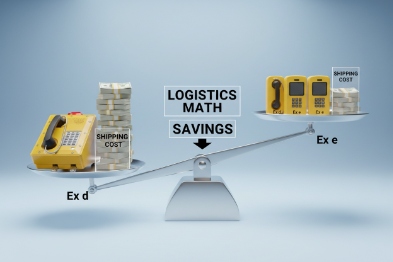
Project managers must look closely at cost, weight, and footprint. These factors directly affect the total cost of ownership. Ex d enclosures are heavier and bulkier. They are usually made of cast aluminum or stainless steel. This heavy construction adds significant weight and cost. You might need special brackets or stronger structures to mount them securely on a wall. The initial purchase price is generally higher because of the specialized components and heavy materials. Shipping these heavy units across the world also costs much more money.
The Efficiency of Ex e Designs
Ex e telephones offer a clear advantage here. They are typically lighter and easier to install. Because they do not need thick flamepaths or heavy explosion-proof covers, their footprint is smaller. This makes them ideal for tight spaces in factories or on offshore platforms where space is limited. You can save money on shipping, handling, and installation labor. One worker can often install an Ex e phone, while an Ex d phone might need two workers to lift.
Total Cost of Ownership
We must also consider ongoing upkeep. Ex d maintenance can be complex and costly. Ex e maintenance is simpler and less expensive. Therefore, Ex e is often the more cost-effective solution overall. However, you cannot compromise safety for cost. Use Ex e where the risk is less severe. Use Ex d for environments with a higher risk of explosive gases, requiring maximum containment assurance. At DJSlink, we help clients balance these factors to find the most efficient solution for their specific zone requirements.
| Metric | Ex d Telephones | Ex e Telephones |
|---|---|---|
| Initial Cost | Higher | Lower |
| Weight | Heavy | Light |
| Footprint | Bulky | Compact |
| Installation Labor | Higher | Lower |
Can Ex e Units Meet IIC With Proper Design?
Gas group IIC represents the most easily ignitable gases like hydrogen. Failing to meet this standard in dangerous zones is disastrous. Can lighter Ex e designs handle this extreme risk?
Yes, Ex e units can meet Gas Group IIC requirements with proper design. By combining increased safety with robust components and strict clearances, manufacturers create Ex e telephones safe for hydrogen environments without needing heavy flameproof containment.
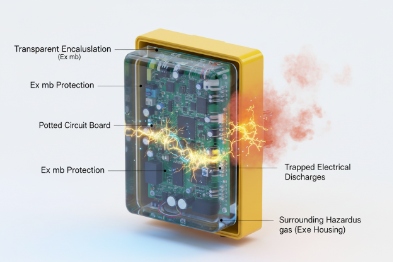
Engineering for IIC Safety
Gas Group IIC is the most stringent classification for explosive gases. It includes highly volatile substances like hydrogen and acetylene 10. Many people assume only heavy Ex d enclosures can handle IIC environments. However, this is not true. Ex e units can certainly meet IIC standards if designed correctly. The Ex e concept focuses on preventing the occurrence of arcs, sparks, or hot surfaces entirely. It does not try to contain an explosion; it stops the explosion from ever starting.
The Benefit of Ex e in IIC Zones
To achieve an IIC rating, an Ex e telephone must use enhanced insulation and very robust components. Engineers must maintain strict creepage and clearance distances inside the enclosure. The terminals must be extremely secure to prevent any accidental sparking, even under fault conditions. By eliminating the ignition source, the equipment becomes safe for the most easily ignitable gases. This provides a huge advantage for buyers and engineers.
Modern Industry Trends
You can install lightweight, easy-to-maintain equipment in highly dangerous hydrogen zones. It avoids the need for massive, heavy Ex d boxes. We see this trend growing in modern chemical plants and refineries. Ex e offers enhanced safety by preventing ignition sources while balancing ease of maintenance and cost. At DJSlink, we carefully engineer our equipment to meet these strict global standards. We want to ensure safety without adding unnecessary bulk to your project.
| Requirement | Ex d Approach for IIC | Ex e Approach for IIC |
|---|---|---|
| Primary Method | Contain hydrogen explosion | Prevent any spark/heat |
| Construction | Very tight flamepaths | Strict electrical clearances |
| Component Focus | Enclosure strength | Terminal security |
| Weight Impact | Very Heavy | Remains Light |
Conclusion
Select Ex d for maximum explosion containment in high-risk zones. Choose Ex e for lightweight, cost-effective safety and easy maintenance in lower-risk areas. Choose wisely for ultimate safety.
-
Overview of international standards for electrical equipment used in explosive atmospheres. ↩ ↩
-
Technical guide on assessing risks and measures for sites handling hazardous substances. ↩ ↩
-
Explanation of the protection technique that limits electrical and thermal energy to prevent ignition. ↩ ↩
-
Definitions of ATEX zones where explosive atmospheres are likely to occur occasionally. ↩ ↩
-
Comprehensive guide to gas groups and temperature classes in hazardous environments. ↩ ↩
-
Detailed explanation of how flameproof enclosures contain internal explosions through precise flamepaths. ↩ ↩
-
A technical resource for selecting the correct cable glands for industrial and hazardous applications. ↩ ↩
-
Information on the properties and benefits of using GRP for durable industrial enclosures. ↩ ↩
-
Guide to understanding IP ratings for water and dust resistance in electrical enclosures. ↩ ↩
-
Safety and health data regarding acetylene, a highly flammable gas in Group IIC. ↩ ↩








