

Choosing between modern IP technology and traditional analog systems for hazardous areas is a critical decision affecting safety and budget. Making the wrong choice can lead to integration nightmares or costly infrastructure upgrades.
SIP phones are best for facilities requiring advanced integration, remote monitoring, and unified communications, while analog phones remain the superior choice for legacy cable reuse, extreme cable distances, and simple line-powered redundancy scenarios.
The Shift from Voltage to Data
For decades, the standard for industrial communication was the simple 2-wire copper loop. It was rugged, reliable, and understood by every electrician on site. However, as the voice of DJSlink, I have witnessed a massive shift in the last 15 years. The "smart factory" or Industry 4.0 revolution is pushing IP (Internet Protocol) connectivity into every corner of the plant, including Zone 1 and Zone 2 hazardous areas.
Clients often come to me asking, "Jason, should we stick with what we know, or upgrade to SIP?" The answer is rarely a simple yes or no. It depends on your existing infrastructure, your functional requirements, and your maintenance capabilities.
An analog phone is essentially a powered speaker and microphone. It relies on the PBX for everything. If the line cuts, it’s dead. A SIP 1 phone, on the other hand, is a mini-computer. It has intelligence. It can monitor its own health, negotiate codecs, and even trigger local alarms if the server goes down. But that intelligence comes with complexity.
Here is a high-level comparison of the two technologies:
| Feature | Analog (POTS) | SIP (VoIP) |
|---|---|---|
| Transmission | Electrical Voltage | Data Packets (IP) |
| Cabling | 2-wire Copper (twisted pair) | Cat5e/Cat6 or Fiber |
| Intelligence | Dumb Endpoint | Smart Endpoint |
| Power | Line Powered (from PBX) | PoE (Power over Ethernet) or local 24V |
| Primary Advantage | Simplicity & Range | Features & Manageability |
What infrastructure is required for SIP Ex phones compared with analog lines?
The physical layer is often the deciding factor in retrofits. If you have miles of existing copper wire buried in concrete, ripping it out for Ethernet is a massive expense.
SIP infrastructure demands a robust IT backbone including PoE switches, VLAN configuration for QoS, and Cat5e/Fiber cabling within 100-meter limits. In contrast, analog systems require only simple twisted-pair copper cabling and standard FXS gateways, supporting runs of several kilometers without signal boosters.
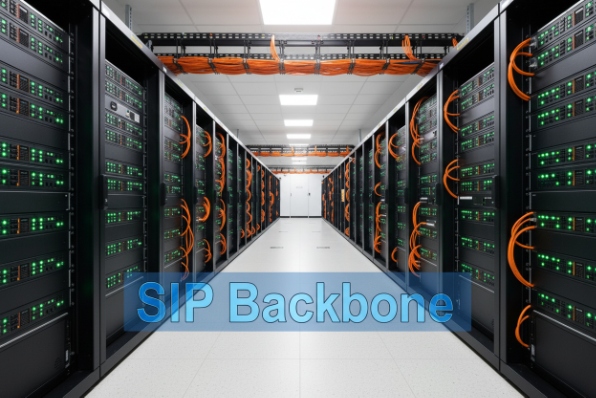
The Backbone: IT vs. Electrical
Deploying SIP phones in an explosion-proof environment is an IT project, not just an electrical one. With analog systems 2, you could run a cable 3 kilometers from the control room to a remote pump station, and it would just work. The resistance might lower the volume slightly, but the call would go through.
With SIP, you are bound by the laws of Ethernet. Copper Ethernet (Cat6) has a hard limit of 100 meters (328 feet). In a sprawling refinery, this is a major limitation. To overcome this, you need:
- Fiber Optic Interconnects: running fiber to remote cabinets.
- Industrial Switches: Ruggedized switches located in the field (often requiring their own Ex-proof enclosures) to convert fiber back to copper for the final few meters to the phone.
- Power over Ethernet (PoE 3): The switch provides power. This means the switch itself needs a robust power source.
Bandwidth is rarely an issue for voice (100kbps per call is negligible), but Quality of Service (QoS) is vital. Voice packets must be tagged with high priority in the VLAN 4 settings. If someone downloads a large manual on the same network, your emergency call shouldn’t jitter.
| Requirement | SIP / VoIP | Analog |
|---|---|---|
| Cabling | Cat5e / Cat6 / Fiber | 2-Core Telephone Cable |
| Max Distance | 100m (Copper) / 20km+ (Fiber) | 3km – 5km (depending on gauge) |
| Power Source | PoE Switch or Local DC | Central PBX / Gateway |
| Network Config | IP Addressing, VLANs, Subnets | None (Plug & Play) |
How do SIP Ex phones integrate with IP PBX and dispatch systems vs analog?
Modern plants demand more than just point-to-point calling. They need broadcasting, alarm integration, and system-wide visibility.
SIP Ex phones integrate natively via software APIs to offer video, group broadcasting, and health monitoring (SNMP), whereas analog phones are limited to basic voice and DTMF, requiring expensive hardware gateways to interface with modern IP-based dispatch consoles.
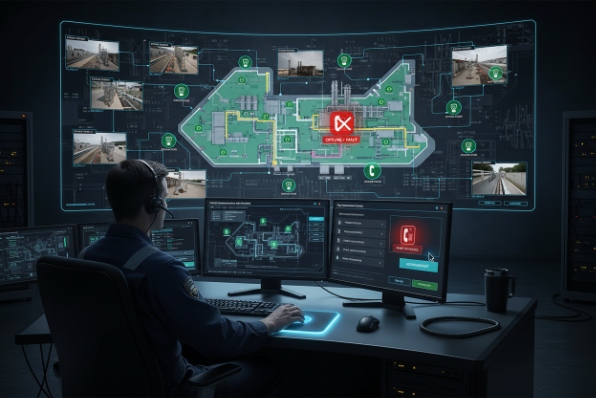
The Feature Gap: Smart vs. Dumb Endpoints
This is where DJSlink SIP phones truly shine. An analog phone is passive. It cannot tell you if its microphone is broken until someone tries to use it and fails. A SIP phone can perform self-diagnostics and send an SNMP trap or email to the admin if the handset is disconnected or the registration fails.
In a PAGA (Public Address and General Alarm) scenario, SIP is superior. With Multicast, a dispatcher can press one button, and 500 SIP phones will instantly turn on their speakers to broadcast an evacuation message. This does not strain the server because the traffic is broadcasted network-wide. Doing this with analog requires complex zone controllers and massive amplifiers.
Furthermore, integration with third-party software (like Genetec or Milestone security centers) is seamless with SIP. The phone is just another IoT device. You can trigger a camera to record when the emergency phone goes off-hook. With analog, you are restricted to detecting "voltage drop" or "DTMF tones," which is archaic and limited.
| Feature | SIP Integration | Analog Integration |
|---|---|---|
| Health Check | Auto-report via SNMP/Syslog | Manual Inspection required |
| Broadcasting | Multicast (Scalable, Free) | Hardware Zone Controllers (Costly) |
| Video | Native support (if camera equipped) | Impossible |
| Configuration | Remote Web UI / Auto-provisioning | Dip switches / Physical adjustment |
Which option stays reliable during power loss and long cable runs?
While SIP wins on features, reliability in worst-case scenarios is where analog technology fights back. Simplicity often equals durability.
Analog phones offer superior reliability during total power failures as they are line-powered from the central exchange, requiring only central UPS backup. SIP phones rely on a chain of distributed switches; if any intermediate switch loses power or fails, the connection is severed regardless of the central server status.

The Fragility of the Daisy Chain
In a safety-critical environment, we must ask: "What happens when the lights go out?"
For an analog system, you only need to backup the central equipment rack (PBX 5 /Gateway). If that rack has a large UPS and diesel generator, your phones will work for days, even if the rest of the plant is dark. The phones draw power directly from the copper lines.
SIP systems have a distributed failure mode. Your central server might be up, but if the Edge Switch in Zone 2 loses power, the phones connected to it are dead. To achieve the same reliability as analog, you must install UPS backups for every single field switch cabinet. This significantly increases maintenance and battery replacement costs.
Additionally, regarding cable runs, analog is more forgiving of poor cabling. A slightly corroded contact might introduce static on an analog line, but you can still shout and be heard. On a digital SIP connection, packet loss results in "robot voice" or the call dropping entirely.
| Scenario | SIP Phone Risk | Analog Phone Risk |
|---|---|---|
| Central Power Loss | System Down (needs central UPS) | System Down (needs central UPS) |
| Field Power Loss | Phone Dead (Switch needs local UPS) | Phone Works (Powered from center) |
| Cable Damage | High (Packet loss = drop) | Low (Static/Noise but usable) |
| Cable Distance | High (Need repeaters >100m) | Low (Works up to kms) |
What documents and total cost items should be compared when sourcing?
Procurement officers often look at the unit price of the phone and stop there. This is a mistake that leads to budget overruns during installation.
When sourcing, compare the Total Cost of Ownership (TCO) including cabling (fiber vs. copper), intermediate hardware (switches vs. none), and maintenance labor. Crucially, verify valid ATEX/IECEx certificates for the specific Zone, and demand EMC reports to ensure the phones won’t interfere with sensitive plant instrumentation.

The Hidden Costs of Ownership
A SIP explosion-proof phone is generally more expensive to buy upfront than its analog counterpart—often 20-30% more due to the advanced PCB and software stack. However, the Operational Expenditure (OPEX) tells a different story.
If you buy analog phones, budget for "truck rolls." Every time you need to change a speed dial number or adjust the volume, a technician must physically go to the phone, unscrew the heavy explosion-proof casing, and flip dip switches. In a hazardous area, this requires a "Hot Work Permit" and safety supervision. It is expensive and slow.
With SIP, I can reconfigure 100 phones from my desk in 5 minutes. I can update firmware, change speed dials, and adjust gain levels remotely using protocols like SNMP 6. The savings in maintenance labor over 5 years often eclipses the initial hardware cost difference.
Documentation is also key. Ensure the certificate matches the intended use (Gas vs. Dust).
| Cost Item | SIP Phone Impact | Analog Phone Impact |
|---|---|---|
| Hardware (CAPEX) | Higher (Phone + Switches) | Lower (Phone only) |
| Cabling (CAPEX) | High (Fiber/Cat6) | Low (Telephone wire) |
| Config (OPEX) | Near Zero (Remote Management) | High (Physical Site Visits) |
| Spares | Standard IT Switches | Proprietary Gateways/Cards |
| Certificates | Check for specific Model | Check for specific Model |
Conclusion
The choice between SIP and Analog is a balance of features versus infrastructure. If you have a modern fiber backbone and need smart integration like PAGA 7, SIP is the clear winner. If you are retrofitting a site with existing copper and need extreme range without power injection, analog remains a robust, cost-effective champion. At DJSlink, we manufacture both because we know every site has unique constraints.
Footnotes
-
Session Initiation Protocol, the standard signaling protocol for VoIP. ↩
-
Plain Old Telephone Service, referring to traditional analog voice transmission. ↩
-
Power over Ethernet technology passing electric power along with data on Ethernet cabling. ↩
-
Virtual Local Area Network used to segment traffic for security and performance. ↩
-
Private Branch Exchange, a telephone system within an enterprise that switches calls. ↩
-
Simple Network Management Protocol used for monitoring and managing devices on IP networks. ↩
-
Public Address and General Alarm system used for emergency broadcasting. ↩








