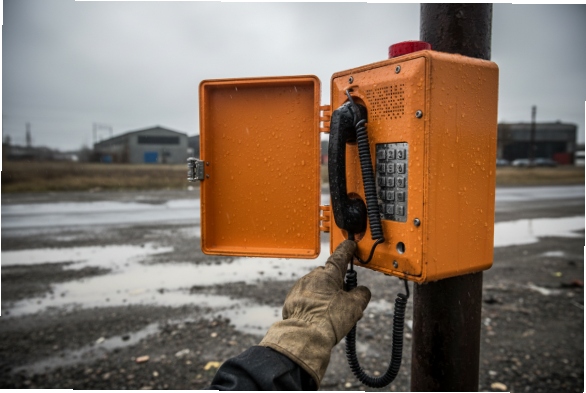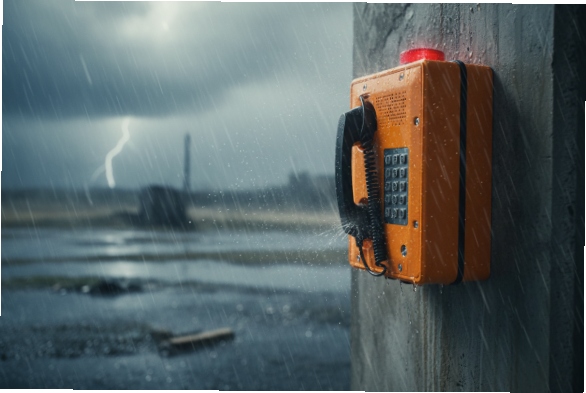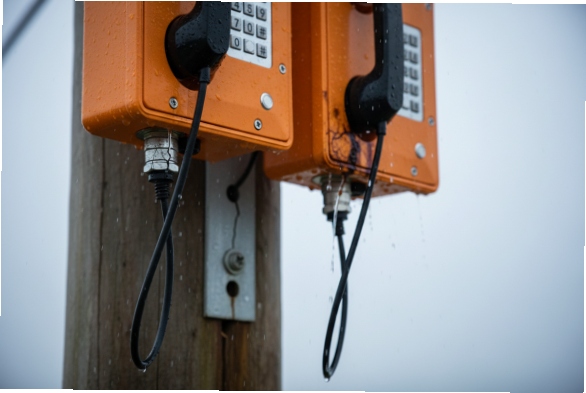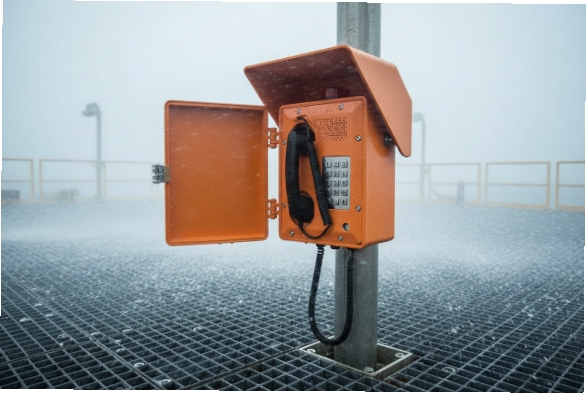
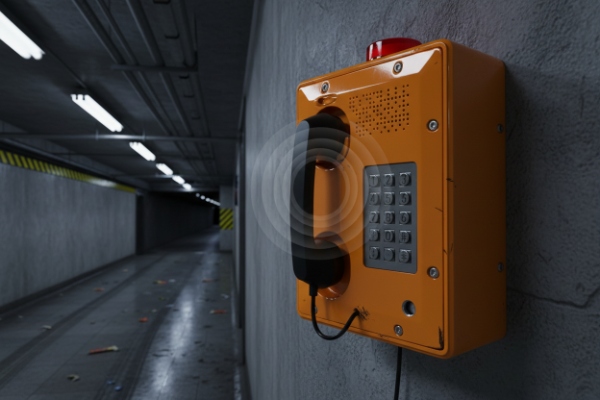
The IK (Impact Protection) rating of a weatherproof telephone indicates its ability to withstand mechanical shocks, such as impacts or vandalism, in harsh environments. This rating is essential for determining how durable the telephone’s enclosure is against accidental knocks, impacts from heavy objects, or intentional vandalism.
Weatherproof telephones typically achieve an IK08 to IK10 impact protection level, depending on the design and intended application.
The IK rating scale ranges from IK00 (no protection) to IK10 (highest protection), with higher ratings offering greater resistance to mechanical shocks. For weatherproof telephones, the choice of IK rating depends on the risk of physical impact and vandalism in the installation environment. (See IK rating chart 1)
Is IK10 Verified on All Faces, Including Window and Keypad?
IK10 protection applies to the entire telephone enclosure, but it’s important to confirm whether it is verified on all faces, including the window and keypad, as these parts are more vulnerable to impact damage.
IK10 protection should be verified on all faces, including the window and keypad, to ensure comprehensive durability against impact.
Enclosure Durability
-
Front Plate and Window: The front plate and window of the telephone must be designed to withstand impacts up to 20 joules (equivalent to a 5 kg mass dropped from 400 mm). These components should be made from reinforced materials, such as thick polycarbonate 2 or tempered glass, to meet IK10 standards.
-
Keypad Protection: The keypad, being a critical user interface, must also be tested for impact resistance. It should maintain functionality and structural integrity after impact, ensuring it remains operational even in harsh conditions.
Verification of IK10
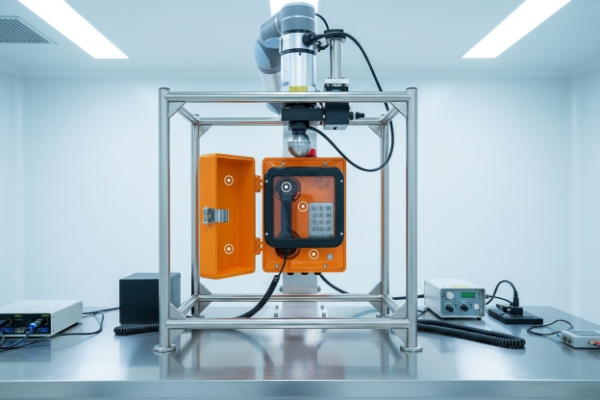
- Testing Standard: IK10 rating verification is typically done through testing that subjects all parts of the telephone, including the keypad and window, to impacts using standardized equipment. This ensures that every face of the telephone is capable of withstanding heavy mechanical shocks. (Learn about impact testing 3)
What Mounting Substrate Is Required to Reach IK10 Performance?
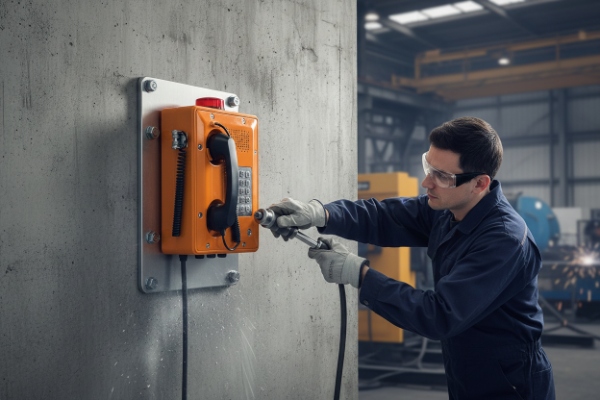
To achieve IK10 impact protection, the mounting substrate must be sturdy and able to absorb the impact energy without compromising the enclosure’s integrity.
A strong, solid mounting substrate, such as concrete, steel, or reinforced walls, is required to ensure that the telephone can withstand IK10-level impacts.
Importance of Proper Mounting
-
Solid Substrate: A weak or unstable mounting surface can cause the telephone to absorb more shock and potentially fail, even if the enclosure itself is rated for IK10 protection. It’s important to mount the telephone on a surface that can handle the force of impacts, such as a reinforced concrete 4 wall or pillar.
-
Reinforced Mounting Brackets: In some cases, additional mounting brackets or support structures may be necessary to ensure the telephone is securely fixed in place and can endure impacts without loosening or damaging the unit.
Are Handset, Hook Switch, and Keypad Tested to the Same IK?
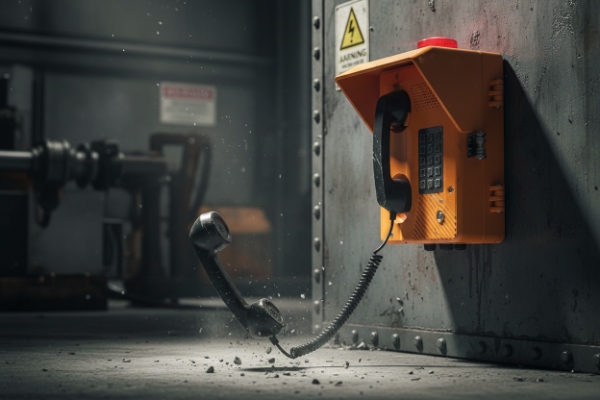
The handset, hook switch, and keypad are critical parts of the telephone that should also be able to withstand mechanical impacts, but they may be tested under different conditions compared to the overall enclosure.
Handset, hook switch, and keypad components are typically tested to the same IK rating as the rest of the telephone, ensuring consistent impact resistance across all parts.
Handset and Hook Switch Testing
-
Impact Resistance: The handset and hook switch should be able to withstand impacts similar to the rest of the telephone. These components are often exposed to physical wear, especially in high-vandalism areas, so they need to be impact-resistant to the same degree as the enclosure.
-
Design Considerations: The design of these components should be reinforced to resist impact without breaking or losing functionality. For example, a handset with a robust casing and a well-designed magnetic hook switch 5 will contribute to the overall IK10 rating.
Keypad Durability
- Button Protection: The keypad is typically made from durable materials, such as reinforced plastic or rubber, to ensure it remains functional even after being struck. IK10 testing should verify that the keypad can handle impacts without cracking or losing its tactile functionality 6.
What Test Energy and Hammer Type Were Used Per EN 62262?
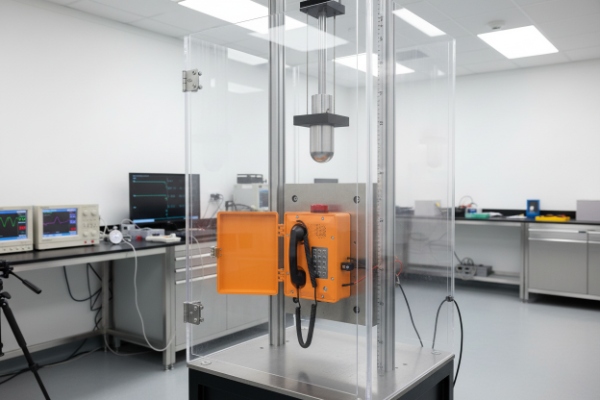
The IK rating is determined through standardized testing according to EN 62262, which outlines the procedures for testing the impact resistance of enclosures.
The IK10 rating is tested using a 5 kg hammer dropped from a height of 400 mm, delivering an impact energy of 20 joules.
EN 62262 Testing Method
-
Test Energy: The IK10 rating requires the telephone to withstand impacts of 20 joules 7, which is equivalent to a 5 kg mass dropped from a height of 400 mm. This test simulates a significant impact, such as someone intentionally hitting the telephone with a heavy object or a strong blow.
-
Hammer Type: The hammer used in the test has a specified shape and hardness to deliver a consistent, controlled impact. The impact is applied to different parts of the telephone, including the front panel, window, and keypad, to ensure uniform protection. (See IEC 62262 standard 8)
Conclusion
A weatherproof telephone typically achieves an IK08 to IK10 impact protection level, with IK10 being ideal for high-vandalism or industrial settings. IK10-rated telephones are tested for durability on all faces, including the window and keypad, and require solid mounting substrates to achieve the necessary protection. Proper impact testing, following EN 62262 9 standards and using methods like the pendulum impact test 10, ensures that the telephone is capable of withstanding heavy impacts and mechanical shocks, providing reliable performance even in demanding environments.
Footnotes
-
Explains the correlation between IK code numbers (00 to 10) and impact energy in joules. ↩
-
Information on polycarbonate sheet materials, often used for impact-resistant windows. ↩
-
Details the testing procedures and equipment used to certify enclosures for IK impact protection ratings. ↩
-
Overview of reinforced concrete properties, highlighting its strength as a mounting substrate. ↩
-
Explains how reed switches work, commonly used in durable magnetic hook switches. ↩
-
Discusses the importance of tactile feedback in keypad design and durability. ↩
-
Detailed breakdown of the IK code system and corresponding impact energies. ↩
-
Reference to the IEC 62262 standard defining degrees of protection provided by enclosures against external mechanical impacts. ↩
-
Overview of IK rating testing services provided by certification bodies like TÜV SÜD. ↩
-
Describes the pendulum impact test method used to verify impact resistance according to international standards. ↩