

A weatherproof telephone may survive rain, dust, and vandals, but if the keypad dies early, the whole terminal becomes a dead box on the wall or at the roadside.
Most weatherproof telephone keypads are rated around 500,000 to 1,000,000 actuations per key, and heavy-duty metal vandal keypads often claim up to 2,000,000 presses on the protected switch element.
When planning an outdoor or industrial project, keypad lifecycle is not just a number to print in a catalog. It links directly to test standards, temperature and salt fog conditions, IP66 sealing under real use, and the quality of endurance and abrasion reports that buyers can see. So it makes sense to unpack each of these points in a simple way.
How many actuation cycles are validated per IEC 60512 or IEC 60068?
Buyers often see “1,000,000 key presses” on a datasheet and stop asking questions. The real issue is how those presses were tested and which standard supports the claim.
Keypad life on weatherproof telephones is usually validated to 500,000–1,000,000 actuations per key with IEC 60512 and IEC 60068 style cycling tests that define force, speed, and pass/fail criteria.
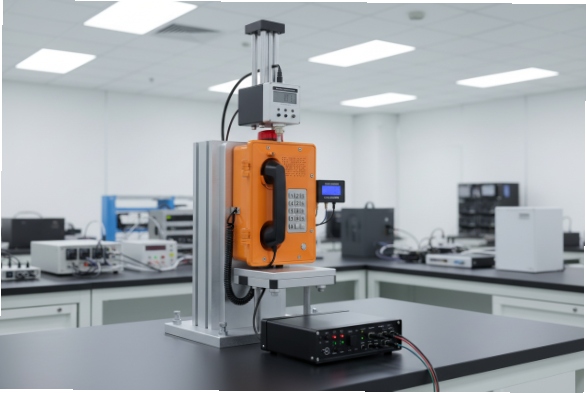
Mechanical lifecycle vs electrical behavior
A keypad has a mechanical life and an electrical life, even when the switch is sealed inside silicone. Mechanical life tells us how many presses the structure can take before domes, rubber or metal parts wear out. Electrical life 1 tells us how long the contacts continue to give a clean, stable signal with acceptable bounce. In weatherproof telephones, mechanical life commonly sits between 500,000 and 1,000,000 presses per key. Vandal-resistant metal keypads may quote 2,000,000 presses, because the switch is protected behind a robust front plate.
How IEC 60512 and IEC 60068 enter the picture
IEC 60512 2 covers tests for connectors and electromechanical components. Vendors often use parts of it to define actuation speed, force, and number of cycles. IEC 60068 covers environmental tests like temperature, humidity, vibration, and so on. A serious vendor combines both ideas: first define a test rig that presses the key with a controlled force and travel, then run hundreds of thousands of cycles while monitoring contact resistance and bounce. The documents may not state every clause number, but the structure follows these standards.
Vendor test plans on top of the standard
On top of IEC references, many manufacturers create their own detailed test plans. These plans set the key force (for example 3–5 N), the actuation rate (like 3–5 presses per second), and the number of cycles. The test might run 1,000,000 presses on a subset of keys that represent the worst case, such as “0”, “#”, or a hotline key that gets heavy use. After cycling, the lab checks for tactile loss, stuck keys, changes in travel, and electrical failures.
| Keypad Type | Typical Rated Life per Key | Notes on Test Approach |
|---|---|---|
| Sealed silicone dome | 500,000–1,000,000 | IEC 60512/60068 style cycling under set force |
| Membrane dome with overlay | 500,000+ | Often tested on flat panels, then in full keypad |
| Metal vandal-resistant | 1,000,000–2,000,000 | Robust mechanics, switch often behind metal face |
Is the rating maintained from −40 °C to +70 °C under salt fog and UV?
A keypad may last a million presses in a warm lab, but outdoor phones sit in snow, desert heat, UV, and marine air. That environment changes the real lifecycle.
Good weatherproof keypads are validated so their cycle rating still applies across a wide range, often from about −40 °C to +70 °C, with added exposure to UV and salt fog.
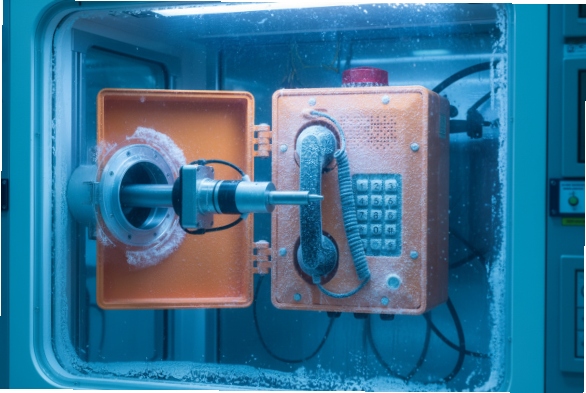
Why temperature and UV matter for keypad life
Temperature swings change everything in a keypad. Silicone gets stiffer in cold conditions and softer in heat. Metal plates expand and contract. Plastics age faster under strong UV, especially in high-altitude or coastal sites. If the keypad is only tested at room temperature, the claimed lifecycle may not hold when the phone spends years on a sunlit platform or in a cold tunnel. For this reason, serious weatherproof designs link their lifecycle rating to a defined operating range such as −40 °C to +70 °C.
Salt fog and corrosion around keys
In coastal or chemical plants, salt fog and corrosive vapors are serious threats. They can creep into edges, attack metal tops, and stain or lift legends. Even if the internal switch is sealed, corrosion can change key feel and travel. Many vendors therefore combine lifecycle tests with environmental tests like salt mist spray 3 and UV aging. They may follow IEC 60068-2 salt mist procedures and run UV exposure 4 cycles on keypad samples, then repeat a subset of the actuation tests to confirm that key force, travel, and contact behavior stay inside tolerance.
Material choices that support wide-range ratings
To keep the rating valid over this wide range, the design uses stable materials. Sealed silicone keypads with proper fillers handle UV and temperature better than basic rubber. Metal vandal keypads use stainless steel fronts with gaskets behind them. In harsh climates, this mix of materials helps the keypad reach its promised 500,000–1,000,000 presses even after years of sun and salt. In project work, I always check if the lifecycle number is linked to something like “over full operating temperature range 5” rather than only “at 25 °C.”
| Stress Factor | Typical Test or Design Response |
|---|---|
| Low temperature | Actuation tested down to −25/−40 °C |
| High temperature | Tests up to +55/+70 °C in heated chambers |
| UV exposure | UV aging of silicone or overlays, then inspection |
| Salt fog | Salt mist tests, then partial re-cycling of keys |
Does the keypad retain IP66 sealing after 1 million presses?
Ingress protection ratings look very strong on paper, but each key press flexes the seal slightly. Over time, this movement can open micro paths for water and dust.
Well-designed weatherproof telephone keypads are tested so that after up to 1,000,000 presses, the sealing system still supports IP66 or higher, with no leaks through key stems or membrane edges.
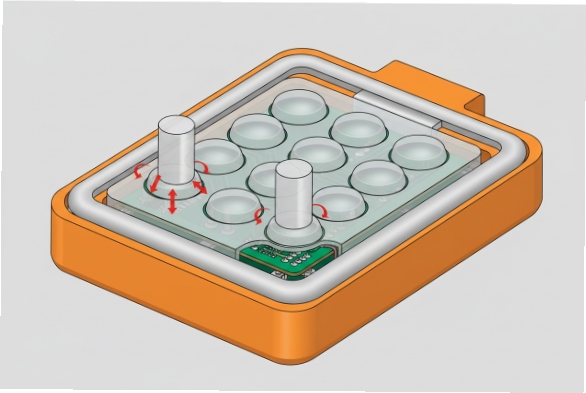
IP rating is a system property, not just a gasket
IP66 or IP67 does not belong to a single gasket or O-ring. It belongs to the assembled product: enclosure, keypad, seals, and all fasteners. When a user presses a key, the front surface flexes and the internal switch moves. If the sealing design is weak, this motion can slowly pump moisture or fine dust through gaps. So, a real IP66 6 lifecycle test must consider both static sealing and dynamic movement over the full actuation count.
How sealed silicone and metal keypads keep water out
Sealed silicone keypads usually use a single molded sheet with integrated key domes and a sealing lip that fits into a groove in the front panel. Each key press compresses the dome, but the peripheral sealing lip stays constant. This design keeps the motion away from the main seal. Metal vandal keypads often use individual keys that press onto a sealed switch or sensor behind a thick front plate, with O-rings or gasket sheets between metal surfaces. The water path is blocked at the panel level, not at the switch level. Both approaches can reach IP66 if the mating surfaces and compression are correct.
Verifying IP after endurance tests
A strong validation plan runs life tests first, then IP tests. For example, the lab may cycle a group of keys 1,000,000 times with dust present, then perform the IP66 water jet test on the same unit. If no water enters and the keys still work, the design proves that mechanical wear did not compromise the sealing. Some vendors document this with combined statements like “keypad tested to 1,000,000 operations per key and maintains IP66 rating.” When I check designs for harsh sites, I look for phrasing that links the cycle test and IP test together, not as separate standalone claims.
| Keypad Type | Typical Sealing Concept | IP Behavior Under Cycling |
|---|---|---|
| Silicone sheet | One-piece mat with perimeter seal | Movement localized to domes |
| Metal vandal | Rigid front plate + rear gasket + O-rings | Front face acts as continuous barrier |
| Membrane + overlay | Flat sealed sandwich over PCB contacts | Depends on adhesive and edge sealing |
Are third-party endurance, debounce, and abrasion test reports available?
Many tenders now ask not only for a lifecycle number, but also for proof. They want to see test reports, debounce data, and even legend abrasion results.
For critical projects I look for third-party reports showing keypad endurance, debounce timing, and legend abrasion, so the lifecycle rating is backed by real measurements and not only internal claims.
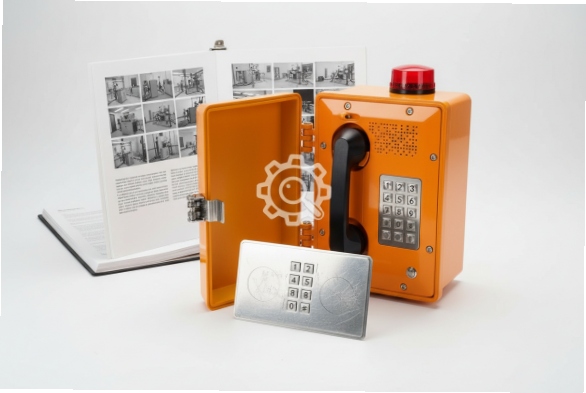
Why third-party testing adds trust
Internal tests are important, but they depend on how honest and careful the vendor is. When an independent lab repeats or witnesses the tests, the result gets more weight in the eyes of engineers, inspectors, and end users. Third-party endurance reports usually describe the test rig, the standards used, the exact number of cycles per key, and the measured changes in electrical and mechanical behavior. This level of detail lets a project team judge whether the keypad will survive the expected duty level at a station, tunnel, or platform. (See product certification benefits 7)
Debounce and electrical quality of each press
Keypad lifecycle is not only about “does the key still move.” It is also about the signal quality each time the key closes. Debounce tests measure how long the contact signal jumps between open and closed when the user presses or releases the key. Telephony and control systems prefer a clean transition with a known maximum bounce time (refer to switch bounce 8). If the switch starts to bounce longer after hundreds of thousands of cycles, it can cause double digits, missed digits, or noisy inputs. Proper test reports will log bounce time before and after endurance cycling, and show that it stays within spec.
Abrasion of legends and surface coatings
In public and industrial sites, keys are pressed with gloves, dirty fingers, or even tools. Legends can fade, and coatings can wear off. Some labs run abrasion tests (like RCA abrasion 9) with standard rub media or cycles, then inspect the keys for readability and surface damage. This matters because a keypad that still works electrically but has lost its legends can cause mis-dialing in an emergency. For vandal metal keypads, laser-etched or engraved markings often pass these tests better than printed inks.
What to ask vendors for
When working with large integrators, it helps to ask vendors for specific documents: endurance reports referencing IEC 60512 or similar, debounce measurements before and after cycling, and abrasion results on legends. If the project is in a regulated sector, like rail or oil and gas, third-party or witnessed tests make it easier to pass design reviews. (Learn about testing lab accreditation 10)
| Test Type | What It Checks | Why It Matters in the Field |
|---|---|---|
| Endurance | Number of actuations to failure | Confirms real lifecycle per key |
| Debounce | Contact bounce time and stability | Prevents missed or double key events |
| Abrasion | Legend and surface wear | Keeps keys readable over many years |
| Third-party audit | Independent review of test setup | Increases trust in the published ratings |
Conclusion
A strong weatherproof telephone keypad combines a high cycle rating with proven performance across temperature, salt fog, UV, IP66 sealing, and documented endurance and abrasion tests that specifiers can actually verify.
Footnotes
-
Explains mechanical and electrical life ratings for switches and keypads. ↩
-
Overview of IEC 60512 standard for testing electromechanical components. ↩
-
Guide to ASTM B117 salt spray testing for corrosion resistance. ↩
-
Describes ASTM G154 standard for UV exposure testing of non-metallic materials. ↩
-
Discussion on operating temperature ranges for industrial electronics. ↩
-
Definitions of IP ratings, including IP66 for dust and water protection. ↩
-
Benefits of third-party product certification for quality assurance. ↩
-
Technical article explaining switch bounce and debounce techniques. ↩
-
Information on RCA abrasion wear testing for coatings and legends. ↩
-
International Laboratory Accreditation Cooperation (ILAC) overview. ↩







