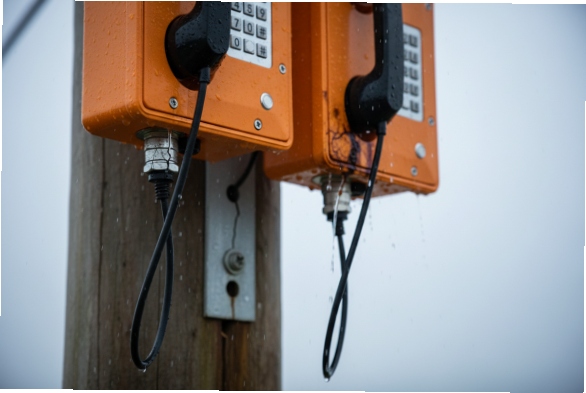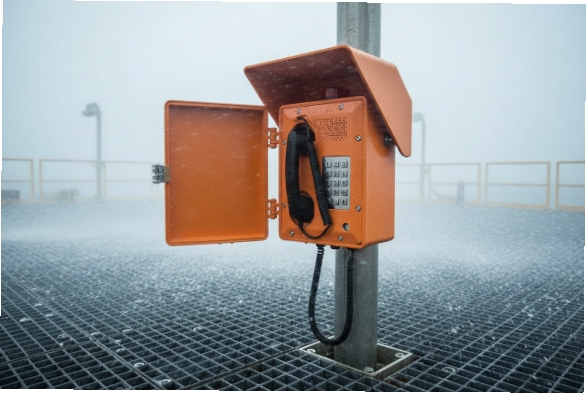
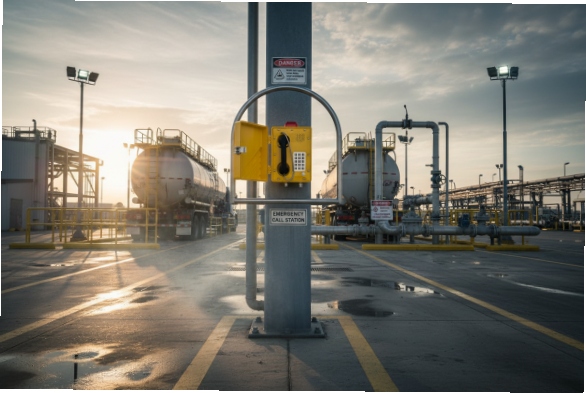
Managing flammable liquids like gasoline, solvents, or crude oil requires a zero-tolerance policy for ignition sources. A single spark from a standard telephone hook-switch in a vapor-rich loading bay can trigger a catastrophic explosion. Facility managers often struggle to balance the desperate need for communication in these remote transfer zones with strict safety compliance.
Yes, explosion-proof SIP telephones are specifically engineered for flammable liquid areas. Certified for Class I Division 1/2 and Zone 1/2 environments, they feature flameproof (Ex d) enclosures that contain internal sparks and robust sealing to withstand corrosive chemical vapors, ensuring safe, reliable communication where it matters most.
The Vapor Threat and the Communication Solution
In facilities handling flammable liquids—whether it’s a midstream oil terminal, a paint manufacturing plant, or a pharmaceutical solvent store—the danger isn’t always the liquid itself; it’s the invisible vapor cloud. These vapors can travel long distances to find an ignition source. As a representative of DJSlink, I have toured facilities where operators were forced to walk 500 meters out of a "classified zone" just to make a call because they lacked suitable equipment on-site. This is a massive safety gap.
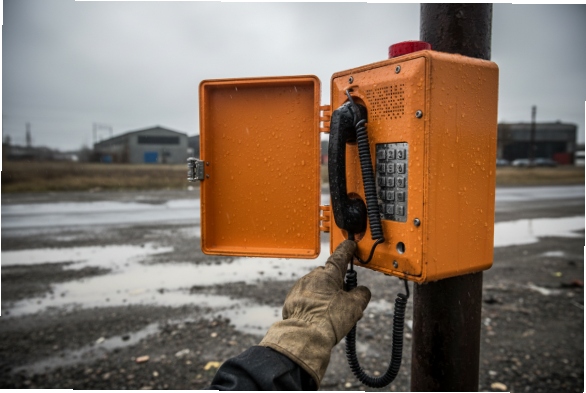
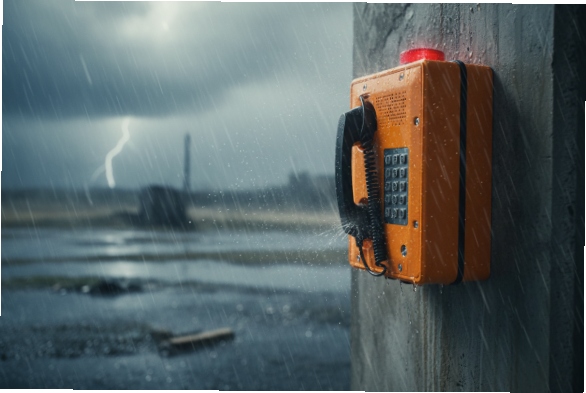
Installing an explosion-proof SIP telephone directly at the loading rack or pump station closes this gap. It provides an immediate lifeline for reporting spills, coordinating flow rates, or triggering emergency shutdowns. But "suitability" here means more than just not blowing up. It means the device must survive the environment—corrosive fumes, rain, UV exposure—and integrate with the plant’s digital infrastructure.
Why Standard Phones are Lethal Here
Standard analog or IP phones have unsealed relays, hook switches, and ringers that generate tiny electric arcs during normal operation. In a non-hazardous office, this is irrelevant. In a Class I area, that micro-arc is enough to ignite a propane or acetone mixture.
Suitability Checklist
| Feature | Requirement for Flammable Liquids | Why it Matters |
|---|---|---|
| Ignition Protection | Flameproof (Ex d) | If gas enters and ignites inside, the housing contains the pressure and cools the flame path so it doesn’t ignite the outside atmosphere. |
| Connectivity | SIP / PoE | Allows the phone to sit on the existing data network, reducing cabling complexity in hazardous areas. |
| Durability | Chemical Resistance | Vapors from ketones 1 or acids can melt standard plastic. We use GRP or Aluminum with specialized coatings. |
By deploying correctly rated SIP phones, you aren’t just meeting a regulation; you are enabling real-time operational control in your most volatile zones.
Now, let’s explore the specific ratings and technical details that define a truly safe installation.
Which Zone 1/2 or Class I Div 1/2 ratings cover pumps and loading?
Navigating hazardous area classifications can be confusing, especially with the mix of North American (Class/Div) and International (Zone) standards. A pump seal failure can instantly turn a "safe" area into a lethal one. Choosing the wrong rating for your specific zone—like putting a Division 2 phone in a Division 1 area—is a code violation that endangers lives.
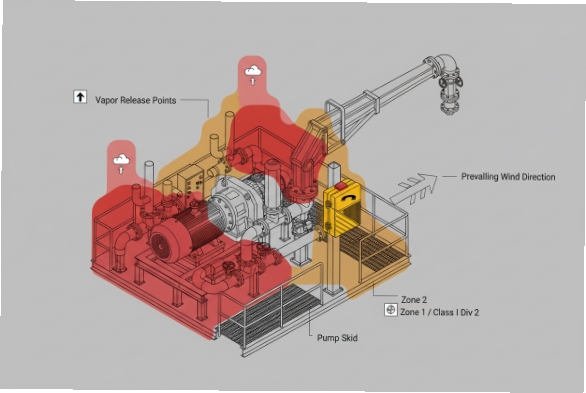
For high-risk areas like pump seals, fill ports, and tanker loading arms where vapors exist frequently, Class I Division 1 or Zone 1 ratings are mandatory. For surrounding storage areas or piping manifolds where vapors are only present during accidental leaks, Class I Division 2 or Zone 2 ratings are sufficient.
Mapping the Hazard to the Phone
Understanding where you are placing the phone determines the certification you need. At DJSlink, we advise clients to look at their site’s "Area Classification Drawing," but here is a general guide for liquid handling.
1. The High-Risk "Red" Zones (Zone 1 / Class I Div 1)
These are areas where ignitable concentrations of flammable gases or vapors are likely to exist under normal operating conditions.
- Locations: Inside the containment dyke of a floating roof tank, within 1.5 meters of a pump seal, or directly at the loading arm connection point.
- Required Phone: Must be certified Ex d (Flameproof) or Ex ib (Intrinsically Safe). It assumes gas will be present.
2. The Moderate "Yellow" Zones (Zone 2 / Class I Div 2)
These are areas where flammable vapors are not likely to occur in normal operation and, if they do, will only exist for a short time (e.g., during a gasket failure).
- Locations: Warehouse aisles storing sealed drums, areas surrounding the immediate pump bay, or pipe racks.
- Required Phone: A Zone 2 2 rated phone is often non-sparking (Ex nA) or hermetically sealed.
- Cost Tip: While you can use a Zone 1 phone in a Zone 2 area (and many do for standardization), you cannot do the reverse.
Gas Groups Matter
It’s not just the Zone; it’s the gas type.
- Group IIA (Group D): Propane, Gasoline, Acetone. (Most common).
- Group IIB (Group C): Ethylene, Ether.
- Group IIC (Group A/B): Hydrogen, Acetylene. (The most dangerous).
- Recommendation: Always specify a phone rated for IIC (Group A/B). It covers all gas groups, future-proofing your installation if the chemical process changes.
Do IP66/IP67 enclosures and Ex d glands prevent ignition sources?
While "Ex" ratings handle explosions, "IP" ratings handle the daily assault of the environment. A flammable liquid area is often wet—either from rain, condensation, or frequent wash-downs to clear spills. If water gets into an explosion-proof enclosure, it can short-circuit the electronics, creating an internal spark that—while contained—destroys the device.
Yes, IP66/IP67 enclosures ensure the phone remains dust-tight and waterproof against heavy seas or high-pressure jets, preventing corrosion that could compromise the flame path. However, the enclosure is only as good as its cable entry; certified Ex d glands are critical to seal the cable bedding, stopping flames from traveling down the conduit system.
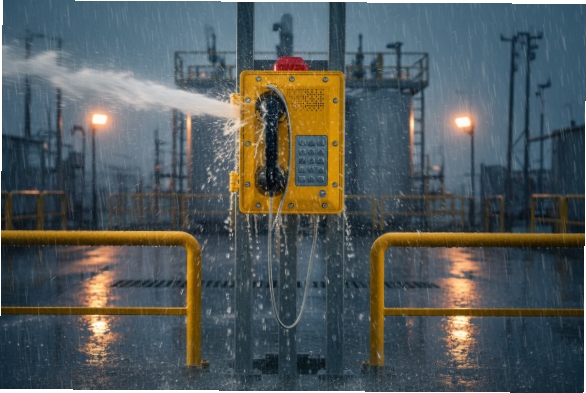
The First Line of Defense: The Enclosure
The housing of an explosion-proof phone (typically Die-cast Aluminum or Glass Reinforced Polyester – GRP 3) serves two distinct purposes:
-
Explosion Containment (Ex d): If gas enters and ignites, the heavy walls contain the pressure. The "flame path" (the gap between the lid and body) is long and tight, cooling the escaping hot gas so it doesn’t ignite the outside air.
-
Ingress Protection (IP):
The Achilles’ Heel: Cable Glands
I cannot stress this enough: The cable gland is the most common point of failure.
In flammable liquid areas, vapors can migrate inside the cable insulation (known as "cold flow"). If you use a standard plastic gland, or even a generic metal one:
- Vapors enter the enclosure.
- An internal explosion occurs.
- The flame shoots out through the cable entry, bypassing the flame path.
- The Result: The external atmosphere ignites.
The Solution: You must use Barrier Glands or Compound-Filled Glands. These utilize a setting compound (like epoxy) to seal around the individual conductors, blocking the passage of gas through the cable itself.
Material Compatibility
For liquid chemical areas, the enclosure material must resist the specific solvent.
- Aluminum: Good for fuels (Diesel/Petrol).
- GRP (Polyester): Better for acidic or alkaline environments where aluminum might corrode.
- Stainless Steel (316L): The ultimate choice for offshore or highly corrosive chemical plants.
Can phones integrate with IP PBX, PAGA, beacons, and ESD systems?
In a modern smart refinery or chemical plant, a phone cannot be an island. It must be a node in the safety system. When a spill occurs, operators need to do more than just talk; they need to warn others and stop the flow. SIP technology allows these robust physical devices to interact seamlessly with software-based control systems.
Absolutely. These phones function as standard SIP endpoints on any IP PBX (Cisco, Avaya, Asterisk). Beyond voice, their programmable I/O relays can trigger external flashing beacons for visual alerts in noisy pump rooms, initiate plant-wide PAGA broadcasts, and even integrate with Emergency Shutdown (ESD) loops to halt pumps immediately upon activation.
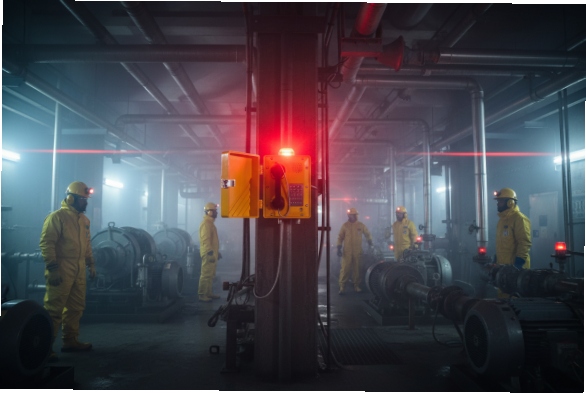
The Power of Integration
At DJSlink, we design our phones to be "Safety Control Stations." Here is how they integrate into the workflow of a flammable liquid facility:
1. PAGA (Public Address & General Alarm) Integration
Pump rooms are loud. An operator might not hear a standard evacuation siren.
- Feature: SIP Multicast 5.
- Action: The control room initiates an "All Call." The SIP phone auto-answers and broadcasts the warning through its internal speaker or an external 30W horn.
2. Visual Beacons (The "Flash" Alert)
Flammable liquid fires produce thick black smoke. Audio alarms might be drowned out.
- Setup: A high-intensity Xenon Strobe (Ex-rated) is powered via the phone’s auxiliary relay.
- Scenario: Incoming call or Emergency Alert.
- Result: The strobe flashes blindingly (Red or Blue), cutting through smoke and noise to alert operators visually.
3. ESD (Emergency Shutdown) Loop
This is the most critical feature for liquid transfer.
- Scenario: A loading arm disconnects, spraying fuel.
- Action: The operator lifts the phone handset or presses a dedicated "Emergency" button.
- System Response:
Network Efficiency
Using PoE 7 (Power over Ethernet)** allows you to run a single Ethernet cable for both data and power. This reduces the number of spark-producing connections and simplifies the barrier gland installation requirements.
What T-class and wiring methods satisfy facility standards?
Not all flammable liquids burn at the same temperature. Carbon Disulfide can ignite at 90°C, while Gasoline requires roughly 280°C. The "T-Class" (Temperature Class) of your equipment must be lower than the auto-ignition temperature of the liquid’s vapor. Getting this wrong means the phone itself becomes a hot surface igniter, even without a spark.
To satisfy facility standards, the phone’s T-rating (e.g., T6) must stay below the auto-ignition temperature of the specific vapor present (e.g., T3 for Kerosene). Wiring must strictly follow local codes like NEC Article 501, typically requiring rigid metal conduit with sealing fittings (EYS) within 18 inches of the enclosure to prevent flame migration.
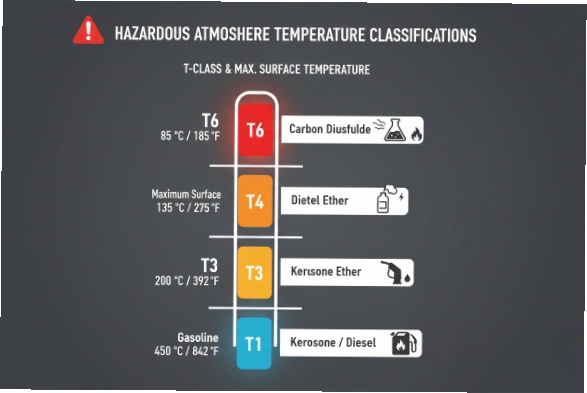
Decoding the T-Ratings
The T-Rating defines the maximum surface temperature the equipment will reach under fault conditions.
| T-Class | Max Surface Temp | Safety Context |
|---|---|---|
| T1 | 450°C | Safe for Methane, Propane. |
| T3 | 200°C | Safe for Kerosene, Diesel, Jet Fuel. |
| T4 | 135°C | Safe for Diethyl Ether 8. (Standard for most Ex equipment). |
| T6 | 85°C | Safe for Carbon Disulfide 9. (The safest, coolest rating). |
Rule of Thumb: Always aim for T6 or T5 if possible. It covers almost every industrial liquid, removing the guesswork for safety officers.
Wiring Methods: Conduit vs. Cable
North American Standard (NEC 500)
- Rigid Metal Conduit (RMC): The gold standard. Heavy steel pipes thread directly into the phone.
- Sealing Fittings (EYS seals): You must pour a cement-like sealing compound 10 into a fitting within 18 inches of the phone. This stops gas from traveling back through the pipe to the safe area control room.
International Standard (IEC/ATEX)
- Armored Cable: Flexible cable with a steel wire braid.
- Glanding: Relies entirely on the specialized gland discussed earlier. This is often faster to install and easier to maintain than rigid conduit.
Bonding and Grounding
Static electricity is a major killer in liquid transfer (flowing liquid generates static). The phone body typically includes an external Earth Stud. This must be connected to the facility’s grounding grid. If the phone is isolated, a static charge could build up on the housing and arc to a nearby pipe, igniting the vapor.
Conclusion
Flammable liquid areas demand a convergence of rugged physical protection and intelligent communication. By selecting Class I Div 1 / Zone 1 certified SIP telephones, ensuring proper Ex d glanding, and integrating them with ESD and PAGA systems, you transform a simple communication point into a critical safety asset. Don’t compromise; match the T-rating to your most volatile liquid and secure your facility’s voice backbone.
Footnotes
-
A functional group with the structure R2C=O, common in industrial solvents. ↩
-
A hazardous area classification where an explosive atmosphere is likely to occur in normal operation. ↩
-
Glass Reinforced Plastic, a composite material made of a plastic matrix reinforced by fine fibers of glass. ↩
-
Ingress Protection ratings defined by IEC standard 60529. ↩
-
A method of sending data to multiple destinations simultaneously using IP multicast. ↩
-
Programmable Logic Controller, an industrial digital computer which has been ruggedized and adapted for the control of manufacturing processes. ↩
-
Power over Ethernet, a technology for wired Ethernet LANs to allow the electrical current necessary for the operation of each device to be carried by the data cables rather than by power cords. ↩
-
A colorless, highly volatile flammable liquid used as a solvent. ↩
-
A volatile liquid used in the manufacture of viscose rayon and cellophane. ↩
-
A compound used to seal conduit fittings to prevent the passage of gases, vapors, or flames. ↩