
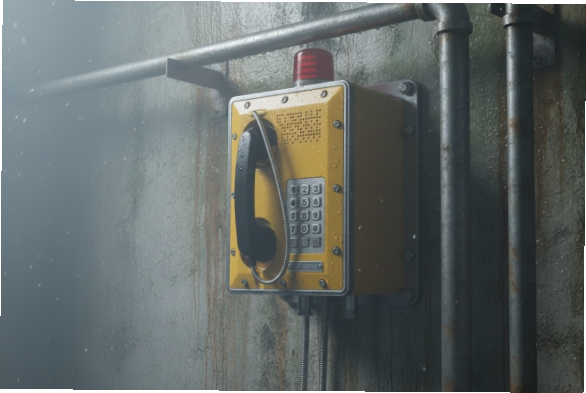
Humidity does not fail electronics in one day. It builds condensation, creeps into cable entries, and then the “reliable” phone drops calls when it matters.
Yes. Explosion-proof SIP telephones can run reliably in high-humidity sites when the enclosure system (IP seals + glands), moisture control (vents/heaters), and PCB protection are specified as one complete package.
A practical moisture-control blueprint that keeps Ex SIP phones alive
Humidity is not the enemy, condensation is
A device can survive 95% RH for a long time if water stays as vapor and stays outside the electronics. The real damage happens when temperature swings cross the dew point. That creates droplets on PCBs 1, terminals, and speaker paths. In plants, this happens at night cooling, cold start-ups, or when chilled pipes sit near a wall-mounted station. The result is corrosion, leakage current, and random reboots that look like “network issues.”
This is why a high-humidity spec should always be written as a three-layer defense:
1) Stop water entry (IP66/IP67 sealing plus correct glands and drip loops).
2) Reduce breathing (pressure equalization strategy in the upstream box, or certified vents where allowed).
3) Make internals tolerant (conformal coating, corrosion-resistant hardware, and controlled condensation by heater when permitted).
Keep Ex certification intact while managing moisture
Many teams try to “fix humidity” by adding a vent or heater after installation. In hazardous areas, that is risky. Any modification that changes the enclosure concept can void the Ex integrity. The safe path is to use:
-
factory-provided certified options, or
-
certified accessories designed for hazardous zones, or
-
moisture control in a separate certified junction box that feeds the phone.
Use measurable requirements instead of marketing words
The easiest way to stop arguments is to specify what will be tested and what will be inspected.
| Requirement | What to specify | Why it matters |
|—|—|—|
| Ingress | IP66/IP67 system including cable entry | most failures start at entry points |
| Humidity tolerance | tested high-humidity method + acceptance criteria | avoids “works in the lab only” |
| Corrosion control | stainless fasteners, plated parts banned in wet zones | prevents seized covers and broken earth bonds |
| Condensation plan | heater option (certified) or upstream vented box + desiccant | stops dew point cycling damage |
| Monitoring | alarm contacts or SNMP for offline/door open/humidity | prevents silent failure |
My go-to field rule
If a phone is in a wet area, treat the cable entry like a pump seal. If the entry is correct, most other problems go away. If the entry is wrong, nothing else saves the device.
Now the details, because your questions are the same ones I see in FAT/SAT 2 meetings.
Keep reading. The next section explains what IP66/IP67, breathable membranes, and anti-condensation heaters can and cannot do.
Do IP66/IP67 enclosures, breathable membranes, and anti-condensation heaters prevent moisture ingress?
High humidity makes people chase the wrong fix. Many buy IP67 and assume condensation disappears. Then the first cold night proves otherwise.
IP66/IP67 enclosures stop rain and spray, breathable membranes reduce pressure-driven “breathing,” and heaters reduce condensation by keeping internals above dew point. Used together (and used correctly), they prevent most moisture failures.
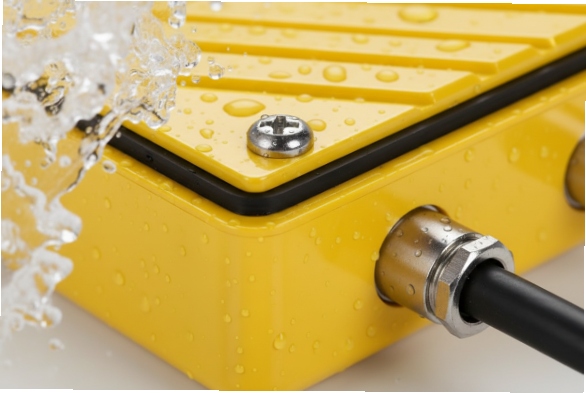
IP66/IP67: strong outer defense, not a condensation cure
IP66/IP67 3 mainly protects against dust and water jets or temporary immersion. That blocks external water entry, which is necessary in high humidity and washdown zones. But an IP rating does not guarantee the enclosure will stay dry inside. Temperature swings still pull moist air in through micro paths, cable jackets, or imperfect glands. Once that air cools, water appears inside.
A reliable IP strategy includes:
-
an enclosure with proven sealing geometry,
-
correct fastener torque that maintains compression,
-
and a cable entry system that matches the cable diameter and jacket hardness.
Breathable membranes: best used to protect seals from pressure cycles
Pressure equalization vents (often ePTFE 4 membranes) reduce the stress on gaskets during temperature cycling. They help limit the “pump effect” that pulls damp air and mist through weak seal paths. In many outdoor electronics, they reduce condensation risk because internal air exchange becomes controlled instead of random.
In hazardous-area Ex d 5 equipment, adding a vent is not a casual decision. The safe approach is to use vents only when they are part of the certified design, or to put the vent in a separate certified junction box feeding the device. For non-Ex or certain protected concepts, vents can be a simple win.
Anti-condensation heaters: the practical dew point tool
A small enclosure heater works because it moves the internal temperature a few degrees above ambient, which keeps surfaces above dew point. This is a proven approach in control cabinets and outdoor panels. The key detail is certification and power budget:
-
in hazardous zones, use certified heating solutions or factory-certified heater options,
-
size the heater for the enclosure volume and expected temperature swing,
-
and avoid creating hot spots that could violate the device temperature class.
A simple selection matrix
| Site condition | Best primary control | Best secondary control |
|—|—|—|
| Constant high RH, little temperature swing | IP66/IP67 + correct glands | conformal coating |
| High RH + big night/day swings | heater or controlled venting | desiccant in upstream box |
| Washdown + steam | IP66/IP67 + protected entries | sealed keypad + drain path |
| Outdoor + sun + rain | IP66/IP67 + UV-stable parts | vented upstream cabinet + heater |
The best results come when the phone, entry system, and upstream box are treated as one moisture system. If one part is weak, condensation finds it.
Are conformal-coated PCBs and stainless fasteners specified for 95% RH?
Humidity specs are often written as “95% RH,” but the device fails because the PCB surface leaks current, or because a fastener rusts and the cover cannot be serviced.
Yes. Conformal-coated PCBs and stainless fasteners are good practice for 95% RH service, but they must be paired with good sealing and corrosion control because coating is protection, not a waterproof wall.
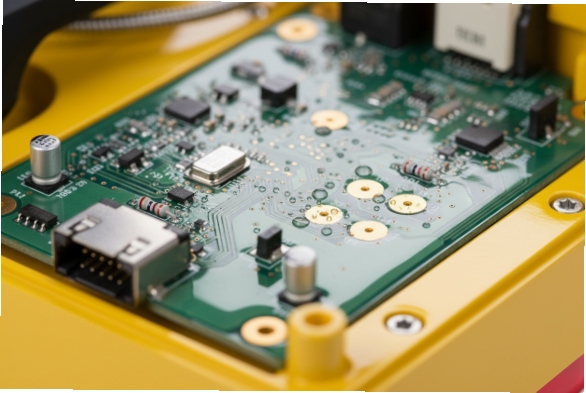
Conformal coating: what it protects, and what it does not
Conformal coating 6 helps protect electronics from moisture films, contamination, and corrosion. It also helps reduce leakage currents that appear when humidity combines with dust or flux residue. I usually ask suppliers to state the coating standard they qualify to, and what areas are left uncoated (connectors, test pads, relays).
Still, coating is not a magic barrier:
-
coating can be damaged during service,
-
sharp edges and tall components can create thin spots,
-
and connectors remain vulnerable if moisture pools.
A clean build also needs board cleanliness controls (low ionic contamination) and proper curing so the coating stays stable.
“95% RH” should be translated into a test method
Some humidity tests target “high humidity without condensation.” Others include condensation cycling. If the plant environment creates condensation, a non-condensing test is not enough. I prefer a spec that calls out:
-
high-humidity steady-state testing for base tolerance,
-
plus a temperature cycling or operational test that reflects dew point crossings.
This keeps the acceptance criteria honest.
Stainless fasteners: the right choice, with one caution
Stainless fasteners reduce rust streaks and reduce seizure from corrosion, but stainless can gall. In the field, galling 7 shows up as “the cover cannot be opened,” which turns a small repair into a shutdown. The practical fix is:
-
use correct stainless grades,
-
avoid stainless-on-stainless dry tightening in large threads,
-
apply suitable anti-seize where allowed,
-
and avoid mixed metals that set up galvanic corrosion in wet areas.
A spec table that avoids repeat failures
| Item | What to specify | Why it matters |
|—|—|—|
| PCB protection | conformal coating standard + coverage statement | prevents leakage and corrosion on boards |
| Cleanliness | board cleanliness control before coating | dirt + humidity becomes conductive film |
| Fasteners | stainless hardware, serviceable design | prevents rust and seized covers |
| Connectors | sealed connectors or protected terminals | most corrosion starts at contacts |
| Internal drainage | avoid moisture traps inside | coating does not help pooled water |
When this is done right, high RH becomes a manageable condition, not a life-shortener.
Can phones tie into IP PBX, PAGA, and BMS humidity alarms?
A phone in a humid zone is only useful if it stays connected and if the site can see problems before a failure. Integration is part of reliability.
Yes. SIP phones can register to IP PBX, receive and originate PAGA paging, and report status to BMS through SNMP or dry-contact-to-BMS gateways, while humidity alarms remain owned by the BMS sensors.
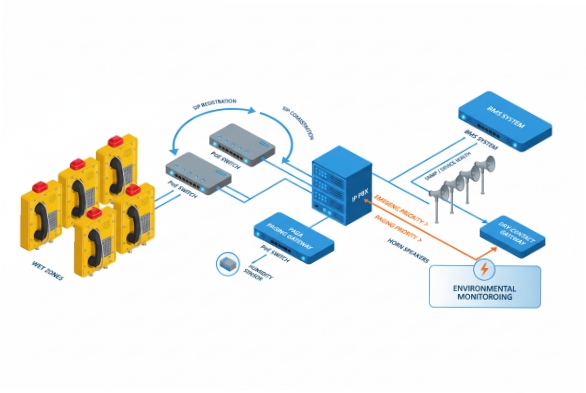
IP PBX: keep call paths simple and survivable
For humid industrial zones, the best PBX 8 features are basic:
-
hotline keys to control room and maintenance,
-
ring groups and escalation,
-
redundant PBX nodes or survivable gateways,
-
and clear station labeling like “Boiler Room East Door.”
If the PBX is stable, the endpoint can be simple. That is good, because service in wet areas should be minimal.
PAGA: paging is often the real emergency tool
In high humidity areas like pump galleries and tunnels, paging reaches more people than a call. A SIP phone can:
-
receive auto-answer paging,
-
trigger an emergency page through the PBX,
-
or work with a paging gateway to horns.
The important rule is priority. Emergency paging must override routine paging, and emergency calls must not be blocked by paging audio on stations.
BMS humidity alarms: use simple interface patterns
BMS 9 systems usually own humidity sensors and alarms. The SIP phone system can still participate in a clean way:
-
BMS alarm triggers a relay or network event,
-
the relay/event triggers an auto-dial callout to a paging message,
-
and the PBX logs that the message was sent.
For monitoring phone health, the simplest path is SNMP 10 or a dry-contact alarm module that reports “device offline” to the BMS. This keeps IT and facilities on the same dashboard without mixing safety logic into the phone.
Integration map
| Function | Owner system | Phone role |
|—|—|—|
| Voice calls | IP PBX | SIP registration and hotlines |
| Paging | PAGA gateway / PBX | receive auto-answer pages, trigger emergency page |
| Humidity alarm | BMS | trigger callout/page via relay or gateway |
| Device health | NMS/BMS | SNMP traps or dry-contact alarms for offline events |
When integration is planned early, maintenance gets visibility, and operators get a consistent emergency workflow.
What gland types and drip-loop practices ensure long-term reliability?
Most “humidity failures” are really cable-entry failures. Water tracks along cable jackets, enters the gland, and then the device dies slowly.
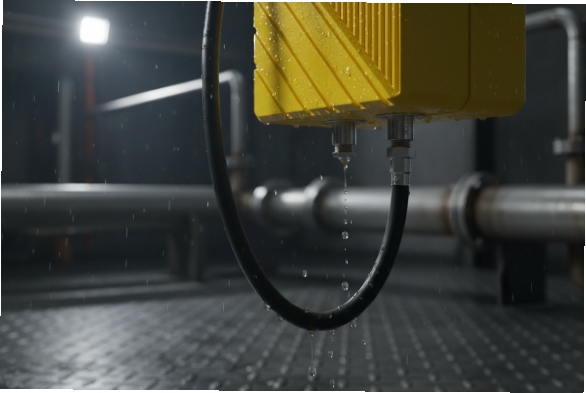
Use the correct hazardous-rated gland type for the protection concept, prefer stainless glands in wet zones, form drip loops at entries, and route cables so water cannot run straight into the enclosure.
Pick the gland type that matches the Ex concept
For hazardous locations, the cable gland must match the equipment protection concept and the cable construction. The gland is part of the explosion protection system and part of the ingress protection system. A mismatch can cause:
-
failed inspection,
-
failed IP sealing,
-
and moisture pumping through the entry.
Common patterns:
-
Ex d (flameproof) equipment often needs certified Ex d glands, and in some cases barrier glands depending on cable type and certificate conditions.
-
Ex e / Ex ec often uses certified increased-safety glands and controlled entry practices.
-
Non-hazard industrial still needs high-quality IP glands, but certification scope is different.
Drip loops and routing: cheap, high-value protection
A drip loop is a simple low point in the cable just before entry so water drips off instead of running into the gland. It works best when paired with:
-
downward-facing entries where possible,
-
a slope that keeps water away from the enclosure,
-
and avoidance of “cable gutters” created by tray lips.
I treat drip loops as mandatory in wet zones because they prevent the most common failure: water tracking into the gland over months.
Protect the entry from mechanical damage
In humid zones, people often use hoses. Hoses hit the entry. Carts hit the entry. That loosens glands and breaks seals. A small stainless guard or conduit elbow protection can extend life more than a thicker gasket.
Entry reliability table
| Entry detail | Best practice | What it prevents |
|—|—|—|
| Gland material | stainless in wet/corrosive zones | rust, seizure, and seal decay |
| Gland selection | matches Ex concept and cable type | certification and sealing failures |
| Drip loop | formed before every entry | water tracking into the enclosure |
| Orientation | downward or shielded entry | direct spray and pooling |
| Cable jacket | industrial, moisture-resistant jacket | wicking through damaged jacket |
| Inspection | retorque and seal checks on a schedule | slow loosening and hidden leaks |
When glands, routing, and inspection are handled with the same discipline as instrument tubing, high humidity stops being a threat. The phone becomes a stable endpoint, and the network team stops chasing “random” outages.
Conclusion
Explosion-proof SIP phones work in high-humidity environments when IP sealing, certified entry hardware, condensation control, and PCB protection are specified together and installed with disciplined drip-loop routing.
Footnotes
-
Printed Circuit Board: A board that connects electronic components using conductive tracks, pads, and other features etched from copper sheets. ↩
-
Factory Acceptance Test / Site Acceptance Test: Formal testing procedures to verify equipment meets specifications before and after installation. ↩
-
Ingress Protection Code: A standard that classifies the degree of protection provided by mechanical casings and electrical enclosures against intrusion, dust, accidental contact, and water. ↩
-
Expanded Polytetrafluoroethylene: A durable, microporous material often used in vents to allow air passage while blocking water and dust. ↩
-
Explosion-proof (Flameproof) Protection: A type of protection where the enclosure can withstand an internal explosion without igniting the surrounding atmosphere. ↩
-
A protective chemical coating or polymer film applied to electronic circuitry to protect against moisture, dust, chemicals, and temperature extremes. ↩
-
A form of wear caused by adhesion between sliding surfaces, often leading to seizure of threaded fasteners. ↩
-
Private Branch Exchange: A private telephone network used within a company or organization. ↩
-
Building Management System: A computer-based control system installed in buildings to monitor and control mechanical and electrical equipment. ↩
-
Simple Network Management Protocol: A standard protocol for collecting and organizing information about managed devices on IP networks. ↩








