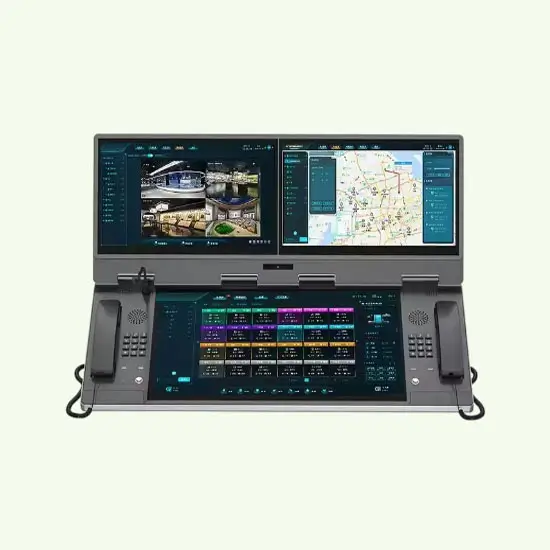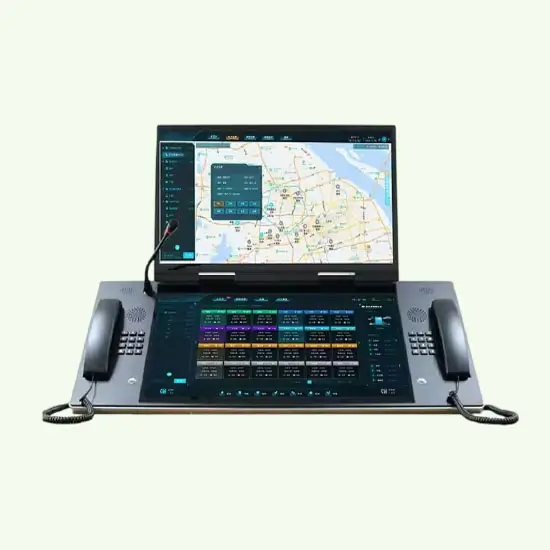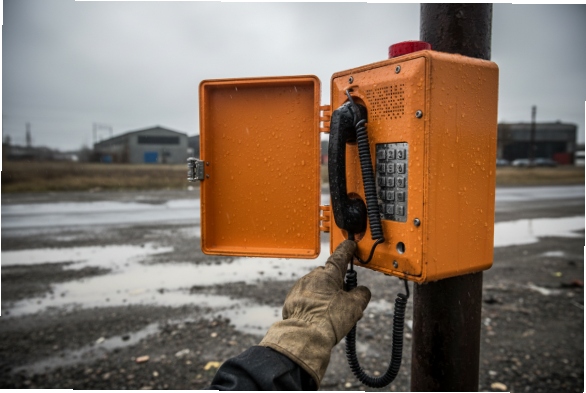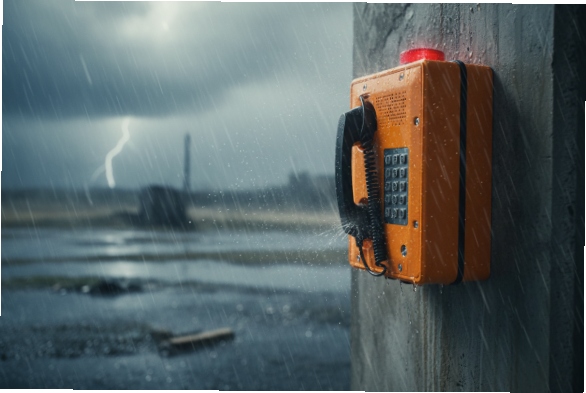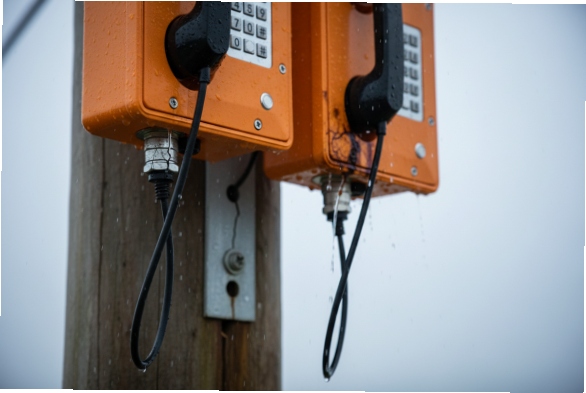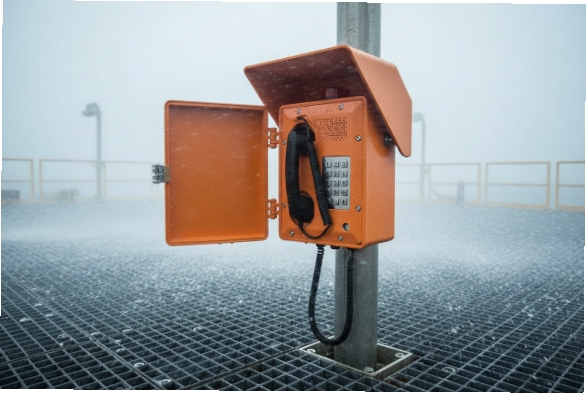

Vibration shakes loose what looked perfect on the bench. When the phone drops offline during a breakdown, the real cost is response time and downtime.
Yes. Explosion-proof SIP telephones can work in high-vibration zones, but Ex certification alone is not enough. Vibration-tested hardware, locked connectors, strain relief, and smart mounting decide reliability.
High vibration is a mechanical problem first, then a network problem
What high vibration really does to “good” equipment
In crushers, presses, mills, and vibrating screens, the failure is rarely “SIP stopped working.” The failure is mechanical drift that becomes an electrical fault. Screws back out. Connectors fret and oxidize. Cable jackets rub through at clamp points. A handset cradle cracks at the hinge pin. Then moisture and dust enter, and the device starts rebooting or the audio becomes weak.
This is why a phone can be fully compliant for hazardous gas 1, yet still be a poor fit for the mechanical environment. Ex marking helps with ignition risk, but it does not automatically cover resonance, shock, and long-term loosening.
The four common failure modes to design out
1) Loosening: fasteners, glands, and connectors unwind over time.
2) Fretting: micro-movement at contacts creates oxide and intermittent dropouts.
3) Resonance: a mount bracket matches machine frequency and amplifies motion.
4) Impact + vibration: people hit devices while working, and vibration finishes the damage.
A practical design approach that works on machines
A dependable station in a high-vibration area usually needs:
-
a rigid, short mount that avoids “springy” brackets
-
locking hardware on every fastener that matters
-
a connector system meant for vibration (M12 locking, or sealed terminals)
-
strain relief so the cable never carries the connector load
-
a service plan that includes torque checks, because vibration never stops
| Failure pattern | What you see on site | What fixes it most often |
|—|—|—|
| Random reboots | PoE drops, link flaps | M12 or sealed connectors + strain relief + better switch cabinet |
| One-way audio | mic or speaker fails after weeks | protected acoustic path + shock-rated handset and cradle |
| Water inside after months | gasket looks fine, but entry leaks | correct glands + drip loop + periodic retorque |
| Frequent replacement | housings crack or bend | IK-rated housing + guard ring + better mounting location |
A high-vibration phone project succeeds when the design team treats mounting and cabling like rotating equipment work, not like office IT.
Now the next step is simple: confirm whether vibration-tested mounts and locking connectors actually stop loosening in the real world.
Do IEC 60068 vibration-tested mounts and M12 connectors stop loosening?
Vibration loosens hardware in slow motion. The phone still works until it does not, and the failure looks “mysterious.”
IEC 60068 vibration-tested assemblies and locking M12 connectors reduce loosening a lot, but only when the mount design avoids resonance, the correct torque and locking methods are used, and the cable is strain-relieved.
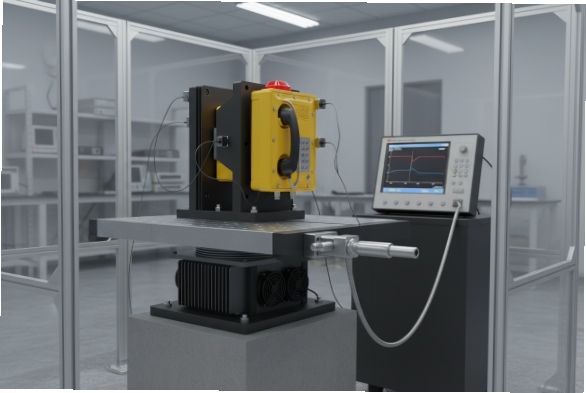
What to ask for when someone says “vibration tested”
“Vibration tested” is only meaningful when the test profile matches the real machine environment. A useful vendor answer includes:
-
which IEC 60068 2 method was used (sinusoidal, random, shock)
-
the frequency range and acceleration level
-
test duration per axis and number of axes
-
whether the test was done with the actual mount, cord, and connector installed
A phone can pass a light sine test and still fail on a random vibration spectrum from a crusher.
Why M12 usually beats RJ45 in high vibration
RJ45 3 relies on a plastic latch. Under vibration, the latch can relax, and the plug can micro-move. That movement creates fretting at the contacts. M12 4 is better because:
-
it is threaded and locks mechanically
-
sealing is stronger in wet/dust environments
-
the connection is harder to pull out by cable weight or movement
For Gigabit Ethernet, M12 X-coded is common. For slower links, other codings exist. The key point is not the coding. It is the locking and sealing behavior under vibration.
Mount design matters as much as connector choice
A heavy phone on a long bracket becomes a tuning fork. A short, stiff mount reduces motion. If a standoff is needed for heat or clearance, it should still be rigid and well supported.
Fasteners should use anti-loosening strategy that fits the site:
-
prevailing-torque nuts, lock washers designed for vibration, or mechanical locking plates
-
thread locking compounds only when permitted by plant standards and temperature range
-
safety wire on critical bolts in extreme vibration zones
| Item | What to specify | Why it helps |
|—|—|—|
| Mount bracket | short, thick, stiff, minimal overhang | reduces resonance amplification |
| Fasteners | mechanical locking method + torque spec | prevents slow back-out |
| Connector | M12 locking (sealed) | reduces fretting and unplug events |
| Cable | fixed clamp within short distance | removes cable load from connector |
| Inspection | torque recheck schedule | vibration always wins without maintenance |
A vibration-tested mount and M12 connectors are strong tools. They are not magic. The magic is the full mechanical stack: bracket stiffness, locking strategy, and strain relief.
Next is physical abuse. Crushers and presses do not only vibrate. They also hit things.
Will shock-rated, IK10 housings protect handsets on crushers and presses?
In high-vibration zones, devices get bumped, sprayed, and handled with gloves. A fragile handset will fail early.
Shock-rated designs and IK10 housings help a lot, but handset reliability depends on cradle mechanics, cord strain relief, and guards that stop direct impacts while still allowing fast use.
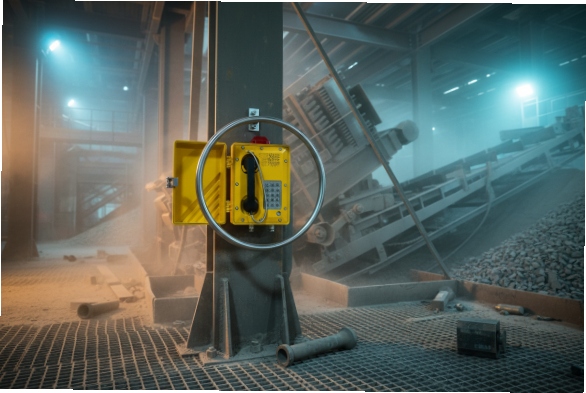
What IK rating covers, and what it does not
IK ratings 5 speak to impact resistance of the enclosure. That is important in crushers and presses because tools and materials hit the station. Still, IK does not guarantee:
-
the hook-switch survives repeated slams
-
the handset cord survives twisting
-
the mic/speaker ports stay clear under dust blast
-
the mounting bracket does not bend under vibration
So IK10 is a strong baseline for the box, but the “handset system” must also be designed for abuse.
Handset failure points to watch
The common weak points are:
-
hook-switch: gets stuck from dust, ice, or mechanical wear
-
cord: fails at the bend point if it is not strain relieved
-
cradle tabs: crack from repeated impact
-
speaker grill: clogs and reduces intelligibility
For extreme zones, hands-free call stations can be more reliable than handset models. They remove the “cradle impact” and “cord twist” failure modes. If a handset is required, a guarded cradle and armored cord helps.
Vibration plus shock needs a guard strategy
On crushers and presses, the safest station placement is often:
-
slightly off the main traffic line
-
on a rigid post with a protective hoop or guard ring
-
with a clear reach path so operators do not hit it while carrying tools
A guard ring should not trap dust. It should be easy to clean.
| Zone condition | Recommended physical spec | Why it lasts longer |
|—|—|—|
| Crusher platform | IK10 housing + guard ring + sealed audio ports | impact and dust blast are constant |
| Press line | IK10 + rigid mount + cord protection | frequent bumps and vibration |
| Washdown area | IP66 6/67 + smooth face + sealed keypad | cleaning is as harsh as vibration |
| Outdoor quarry | UV-stable parts + corrosion-resistant hardware | sun and dust combine to age plastics |
A tough housing reduces breakage, but the station still needs a “mechanical story” for the handset, cord, and mount. That story is what keeps the phone usable after a year of real work.
Now the system question: these stations are not standalone. They usually must connect into PBX, paging, and machine safety workflows.
Can units integrate with IP PBX, PAGA, and machine E-stop networks?
In a loud, vibrating plant, people do not want to hunt for numbers. They need one action that triggers the right response.
Yes. SIP stations can integrate with IP PBX for calling, PAGA for paging to horns/speakers, and machine networks for status and alarms—but E-stop safety functions must remain in the safety system.
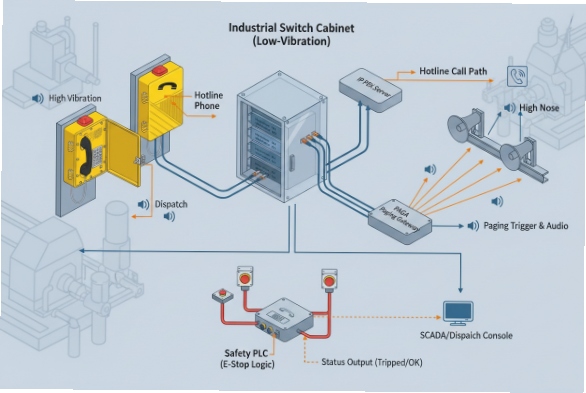
IP PBX: design for fast response, not office features
High-vibration areas are often high-noise areas. The PBX 7 plan should be simple:
-
one-button hotline to control room or maintenance dispatch
-
ring groups with escalation
-
clear station naming that matches signage (“Crusher 2 East Deck”)
-
auto-recovery after PoE drops
A station that reconnects cleanly after a brief link flap is more valuable than one with a long feature list.
PAGA: paging is how you reach people near machines
A SIP 8 phone can participate in paging by:
-
receiving auto-answer paging from trusted sources
-
triggering a paging event through PBX or dispatch
-
interfacing to paging gateways that feed horn amplifiers
Priority rules matter. Emergency pages should override routine pages. Emergency calls should not be blocked by paging playback.
E-stop networks: keep safety logic separate and auditable
E-stops and safety trips belong in a safety PLC, safety relay system, or certified safety network. The SIP phone should not be part of the trip chain. A clean pattern is:
-
safety system triggers a status output to a PLC/SCADA
-
PLC/dispatch triggers callouts, paging, and beacon behavior
-
SIP station provides voice coordination and confirmation
This gives both safety compliance and operational clarity.
| Integration goal | Best owner system | What the SIP station should do |
|—|—|—|
| Emergency voice | IP PBX | hotline + ring group + location ID |
| Area alert | PAGA 10/dispatch | receive and play emergency pages |
| Beacon activation | PLC/alarm module | station triggers PLC input, PLC drives power |
| E-stop status visibility | safety PLC to SCADA | station shows alarm indicator, optional auto-call |
Integration is straightforward when the plant defines “who owns what.” The phone owns communication. The safety system owns trips. The PLC/dispatch owns escalation.
The final part is the part most teams under-scope: cabling and resonance control.
What cable strain relief and isolation pads reduce resonance damage?
Vibration failures often start in the last 300 mm of cable. The connector survives, but the cable breaks right behind it.
Use aggressive strain relief, short service loops, proper clamps, and vibration-friendly routing. Add isolation pads only when they do not create new resonance or break bonding requirements in hazardous areas.
Strain relief: treat the cable like a moving part
A good high-vibration cable setup includes:
-
a fixed clamp close to the entry so the connector never carries load
-
a controlled service loop that prevents tight bends during vibration
-
abrasion protection where the cable touches steel edges
-
a route that avoids rubbing against vibrating guards or panels
For Ethernet, jacket choice matters too. A cable that is too stiff in cold climates can crack at the bend. A cable that is too soft can creep under clamps. Industrial-rated jacket materials and correct clamp pressure keep the shape stable.
Glands and entry: the cable must not “pump” the seal
In vibration zones, a gland can loosen slowly if the cable is moving. This is where:
-
correct gland size to cable OD
-
a locking method on the gland body
-
and a clamp that immobilizes the cable
make the biggest difference.
A drip loop is still useful outdoors and in washdown areas. It keeps water from tracking into the entry and reduces the chance that wet dust becomes paste at the gland shoulder.
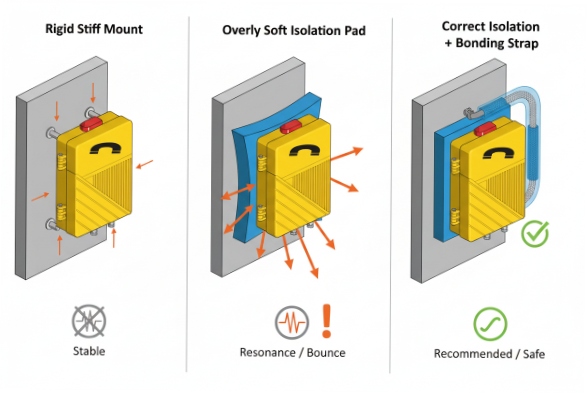
Isolation pads: useful, but easy to misuse
Isolation pads and rubber mounts can reduce vibration transfer. They can also create resonance if the pad stiffness matches the machine frequency. A safe approach is:
-
use isolation when the mount is on a vibrating skid and relocation is impossible
-
keep the mount stiff enough that the phone does not bounce
-
avoid thick soft pads that turn the station into a pendulum
In hazardous areas, isolation can also interfere with bonding. If the phone is isolated from the structure, add a bonding strap that stays low resistance and is protected from fatigue.
Simple resonance checks that prevent repeat failures
A quick field check is to observe the phone during full-speed operation. If the handset visibly shakes, the mount is too flexible or resonant. The fix is usually a stiffer bracket, a shorter lever arm, or a different mounting point.
| Symptom | Likely root cause | Best practical fix |
|—|—|—|
| Link drops on vibration peaks | connector fretting or cable fatigue | M12 + clamp near entry + better routing |
| Gland loosens over months | cable motion works the gland | immobilize cable + locking gland method |
| Phone “bounces” visibly | mount resonance | shorten bracket + add stiffener + relocate |
| Cord breaks near handset | no strain relief | armored cord + strain relief + cord guard |
| Bonding fails | isolated mount fatigues strap | protected bonding strap + periodic check |
When strain relief and mount stiffness are correct, the station stops acting like part of the machine and starts acting like infrastructure. That is the goal.
Conclusion
Explosion-proof SIP phones can handle high vibration when mounts, connectors, strain relief, and safe integration patterns are engineered for the machine, not copied from office installs.
Footnotes
-
A location where fire or explosion hazards may exist due to flammable gases, vapors, mists, or combustible dusts. ↩
-
A series of international standards for environmental testing of electrotechnical products, including vibration and shock. ↩
-
A standard connector used for Ethernet networking, susceptible to vibration-induced failure. ↩
-
A circular connector with a threaded locking mechanism, offering robust connections in harsh environments. ↩
-
An international numeric classification for the degrees of protection provided by enclosures for electrical equipment against external mechanical impacts. ↩
-
A rating system classifying the degree of protection provided against intrusion, dust, accidental contact, and water. ↩
-
Private Branch Exchange: A telephone system that switches calls between users on local lines while allowing all users to share external phone lines. ↩
-
Session Initiation Protocol: A signaling protocol used for initiating, maintaining, and terminating real-time sessions. ↩
-
A safety mechanism used to shut down machinery in an emergency situation. ↩
-
Public Address/General Alarm: A system used to broadcast voice messages and alarm tones in industrial settings. ↩