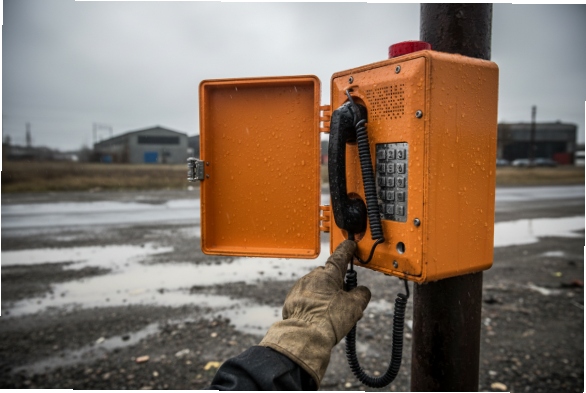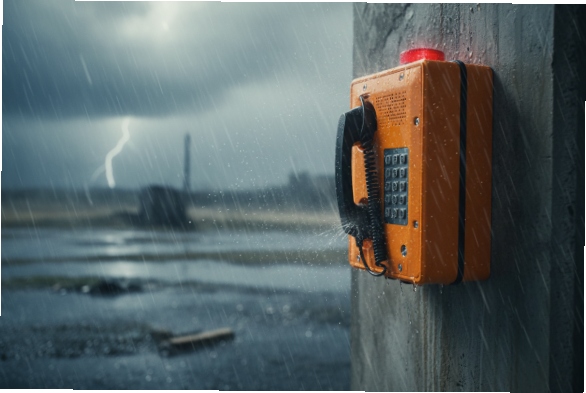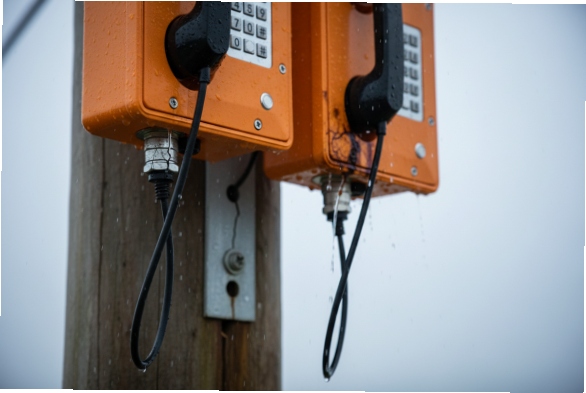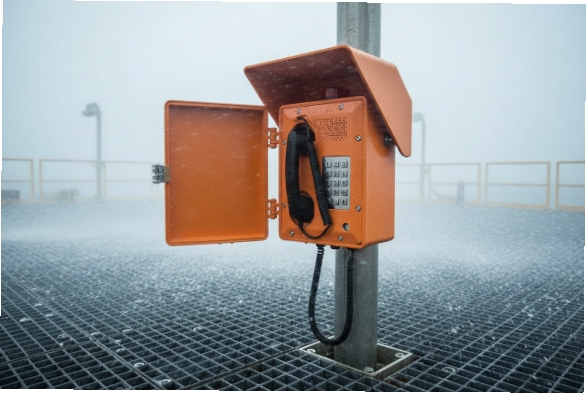
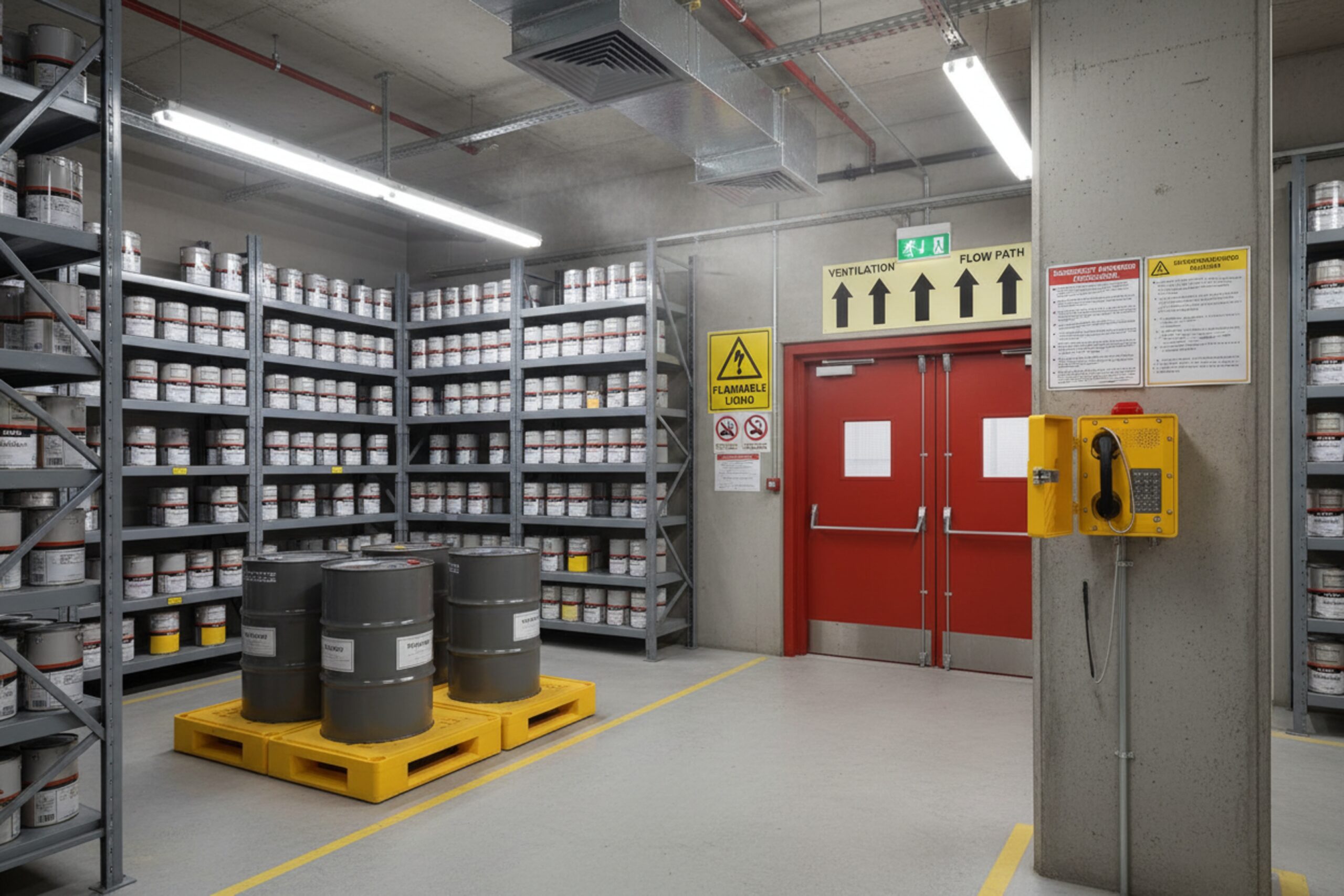
Paint storage rooms stay quiet until a drum leaks or a ventilation fan trips. Then solvent vapors rise fast, and the room becomes an ignition-risk space with poor visibility and high stress. A non-rated phone can fail inspection or become unusable after a few washdowns.
Yes. Explosion-proof SIP telephones are suitable for paint storage rooms when the device rating matches the solvent vapor classification (Zone 1/2 or Class I Div 2), the enclosure and gaskets resist solvent fumes and cleaning, and the installation uses certified Ex d glands, bonding, and compliant ventilation practices.
Paint storage rooms need compliance first, then chemical durability and fast alarm workflow
Paint storage is usually “vapor risk,” not “process risk”
A paint store or solvent warehouse typically involves:
-
sealed containers most of the time
-
occasional leaks and spills
-
transfer/staging activities during receiving and issuing
-
limited room volume that can trap vapors if ventilation is weak
That often makes the area less severe than a spray booth, but it still demands a certified solution because vapors can appear quickly during abnormal events.
The phone must survive daily reality
Even in a warehouse, phones face:
-
solvent fumes that degrade seals and labels
-
wet cleaning and washdowns
-
forklift bumps and handling accidents
-
static risks from packaging, pallets, and PPE
So the selection should emphasize:
-
correct hazardous-area marking
-
solvent-compatible seals
-
IP sealing that stays intact after maintenance
-
robust mounting and bonding
A procurement-friendly baseline for paint storage rooms
| Topic | Minimum requirement to start with | Why it matters |
|—|—|—|
| Hazard rating | Zone 2 1 / Div 2 (or stricter if required) | matches abnormal vapor presence |
| Materials | 316L 2 hardware + solvent-resistant gaskets | resists fumes and corrosion |
| Sealing | IP66 3 minimum, IP67 where washdown/pooling occurs | keeps electronics protected |
| Workflow | SOS hotline + beacon trigger + paging | fast escalation |
| Installation | Ex d glands + bonding + ventilation compliance | passes inspections |
Now, let’s answer your first question: what ratings usually cover solvent warehouses and paint storage rooms?
Which Zone 1/2 or Class I Div 2 ratings cover solvent warehouses?
Most paint storage rooms are designed so vapors are not expected during normal operation. The main risk comes from abnormal conditions like leaks, open containers, or ventilation failure.
Many paint storage rooms and solvent warehouses are specified as Zone 2 (EPL Gc) or NEC Class I Div 2, with Zone 1 or Div 1 reserved for areas with frequent opening, dispensing, or transfer where vapors can be present during normal operation. The correct rating must follow the facility’s hazardous area classification and the room’s operating procedures (storage-only versus dispensing/decanting).

How to decide if Zone 1 is needed
A paint store can drift toward Zone 1 if it includes:
-
regular decanting or mixing inside the room
-
open solvent sinks or cleaning stations
-
poorly ventilated corners with routine vapor presence
-
frequent container opening at the point of use
If the room is truly storage-only with controlled ventilation and no routine open transfers, Zone 2 / Div 2 is often the target.
Placement strategy that reduces cost and improves compliance
A practical approach is:
-
place the phone near the exit or just outside the strictest classified boundary when allowed
-
install additional SOS call points outside the room to reduce time inside the vapor space during emergencies
-
keep the device away from the highest spill likelihood zones (drum staging and transfer points)
Gas group and T-class: tie them to the solvent list
Solvents vary across paints and coatings. Many sites run multiple products, so the equipment schedule often uses a conservative standard. Your tender language should require:
-
gas group coverage per the room equipment schedule
-
T-class per schedule, with Ta ambient range that covers worst-case room temperature
Once the rating is correct, durability is the next gate: solvent fumes and cleaning cycles destroy weak seals and labels.
Do IP66/67, 316L, solvent-proof gaskets endure fumes and washdowns?
A phone may pass IP tests when new, then fail after repeated wipe-down with IPA, thinner, or degreasers. The housing metal survives, but the seals and interface parts often do not.
Yes. IP66/IP67 sealing and 316L housings can endure paint storage fumes and washdowns when gasket and keypad materials are compatible with the solvents used, and when cable entries are sealed with the correct certified glands and plugs.

IP66 vs IP67 in paint storage rooms
-
IP66 is usually enough for washdown jets and spray.
-
IP67 adds margin in low mounting points, near drains, and areas where water can pool.
If the room uses aggressive wet cleaning, IP67 is a safer choice.
What “solvent-proof gaskets” should mean in procurement
Instead of a vague label, request:
-
gasket material identification and compatibility statement against the site solvent list
-
low compression-set performance so seals remain tight after cycles
-
chemical-resistant label/legend method (so keys stay readable)
Key areas to protect:
-
keypad and emergency button seal
-
terminal chamber seal
-
cable gland sealing interface
316L is good, but small parts decide long life
To keep corrosion and maintenance headaches low, specify:
-
316 stainless fasteners and brackets
-
corrosion-resistant gland locknuts
-
anti-galling practice for stainless threads
-
minimal crevices that trap paint dust and solvent residue
| Exposure | Common weak point | Better requirement |
|—|—|—|
| Solvent fumes | gasket swelling | verified compatibility with solvents |
| Washdowns | glands and seams | IP66/67 with specified gland set |
| Forklift bumps | housing window and bracket | IK strength + protected mounting |
| Long-term corrosion | fasteners and locknuts | 316 hardware and consistent metals |
Once the phone survives the environment, it should support the safety workflow: PBX calls, paging, visible signals, and gas detection escalation.
Can phones connect to IP PBX, PAGA, beacons, and gas detection?
A paint storage room needs fast escalation. Staff may need to call security, EHS, or a control room, and the site may want automatic action when gas sensors trigger.
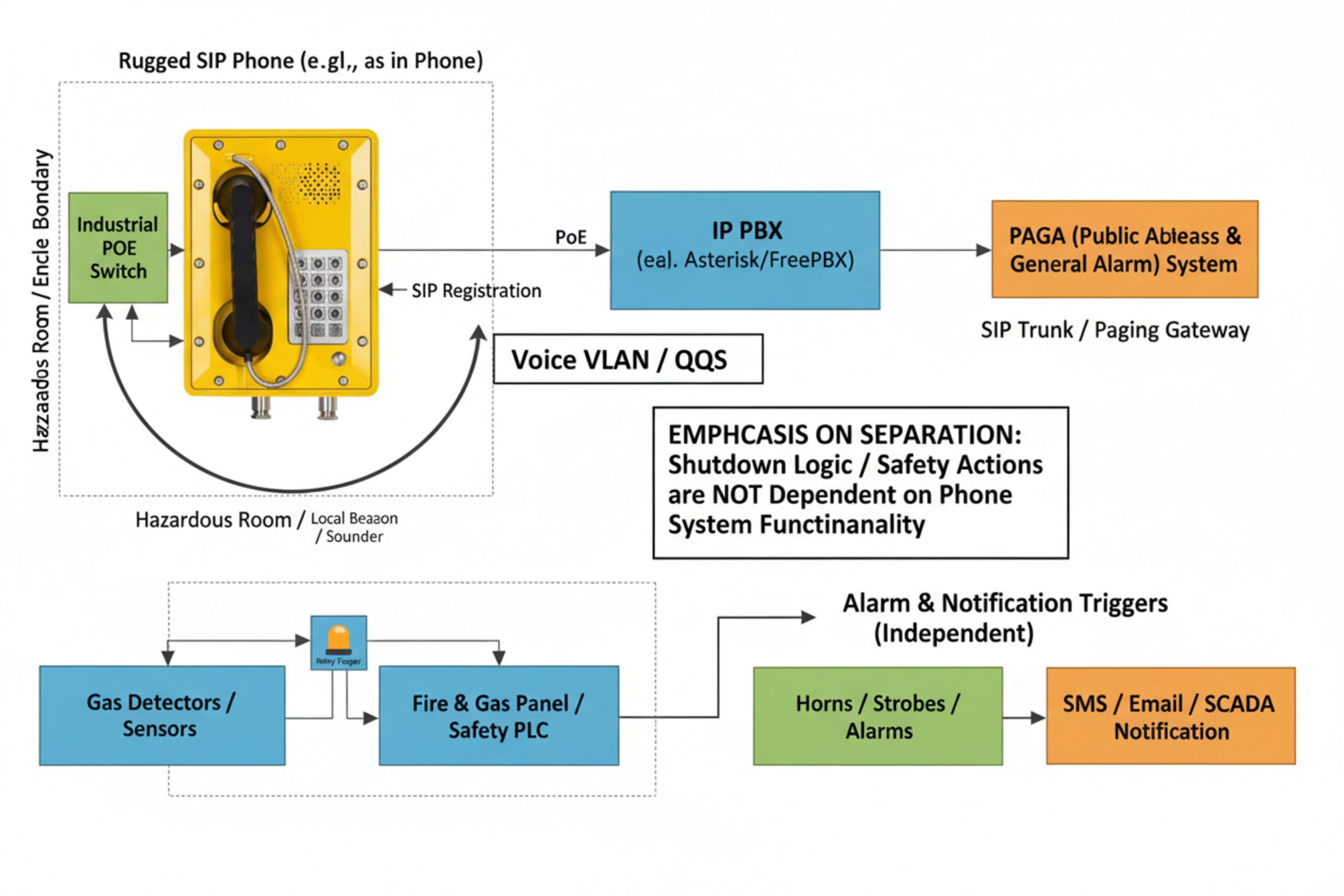
Yes. Ex SIP telephones can register to an IP PBX for hotline and group calling, integrate with PAGA through paging groups or multicast, trigger beacons through relay outputs, and cooperate with gas detection through dry-contact inputs or PLC/alarm-panel mapping that triggers auto-dial and paging.
PBX: auto-dial SOS and escalation
-
one-touch hotline to the right group
-
escalation if unanswered
-
NTP-synced logs for incident review
-
remote health monitoring (registration and faults)
PAGA: make evacuation audible through closed doors
PAGA horns or speakers are useful because:
-
storage rooms can be isolated behind fire doors
-
alarms must reach nearby corridors and staging areas
Paging can be done via multicast or through a paging controller.
Beacons: visible alerts at the door
Many facilities place a beacon outside the solvent room. A phone relay can trigger:
-
a strobe above the door
-
a beacon controller input for a zone
This helps responders locate the event point fast.
Gas detection: keep safety logic in the alarm system
The clean approach is:
-
gas detector 5 triggers alarm panel/PLC logic
-
alarm panel triggers beacons and paging
-
phone receives an input trigger and auto-calls a response group
This keeps the phone out of the safety chain while still supporting rapid response.
| System | Best interface | What to verify |
|—|—|—|
| PBX | SIP hotline + failover | no-answer escalation timing |
| PAGA | multicast or controller trigger | paging priority and clarity |
| Beacon | relay to controller input | latching/reset behavior |
| Gas detection | panel/PLC mapping + phone input | sensor-to-call latency |
Now, the last part is what inspectors focus on: Ex d glands, bonding, and ventilation. This is where most rejections happen.
What Ex d glands, bonding, and ventilation standards must be met?
In solvent storage, the phone must stay compliant even after maintenance. Inspectors check the cable entry system, earthing, and ventilation controls first.
Compliance requires certified Ex d (flameproof) glands that match the device certificate and cable type, robust equipotential bonding to control static and surges, and ventilation designed and maintained so vapor accumulation is controlled per the facility hazard study and operating procedures.
Ex d glands: match protection concept and cable construction
For Ex d 6 / Ex db enclosures:
-
glands must be certified for Ex d use
-
glands must match armored or unarmored cable type
-
cable OD must fit the seal range
-
unused entries must be sealed with certified plugs
In paint storage, corrosion resistance matters. A corroded gland can compromise sealing and make maintenance impossible.
Bonding: short, obvious, and recorded
Bonding should:
-
connect the phone earth stud to the local equipotential bar
-
use corrosion-resistant lugs and hardware
-
avoid paint layers under the lug contact area unless bonding washers are used
-
include a continuity test record at commissioning
Bonding reduces static risk and improves surge resilience on long cable routes.
Ventilation: the control layer that supports Zone 2 intent
A solvent warehouse is often classified as Zone 2/Div 2 because ventilation 7 prevents sustained vapor accumulation. To keep that true:
-
ventilation should run reliably and be monitored
-
airflow patterns should avoid dead zones
-
alarm procedures should define actions during fan failure
-
doors and storage density should not block vents
For projects, the phone location should consider ventilation. Avoid placing phones deep in a poorly ventilated corner.
Installation checklist that passes audits
| Item | What passes | Common failure |
|—|—|—|
| Cable entry | certified Ex d glands + plugs | industrial glands, open entries |
| Bonding | short equipotential bond 8 + record | no record, poor contact due to paint |
| Ventilation | designed + maintained + monitored | fan failures treated as “normal” |
| T-class/Ta | matches equipment schedule | wrong Ta range or T rating |
| Commissioning | call test + relay/beacon test | no proof of workflow |
If these points are handled, Ex SIP phones become reliable call points in paint storage rooms and support safe response without adding operational burden.
Conclusion
Explosion-proof SIP telephones 9 suit paint storage rooms when solvent zoning drives Zone 2/Div 2 (or stricter) selection, IP66/67 and solvent-compatible seals survive fumes and cleaning, integrations support PBX/PAGA 10/beacon/gas workflows, and Ex d glands, bonding, and ventilation controls pass inspection.
Footnotes
-
Area where explosive atmospheres are not likely to occur in normal operation. ↩
-
Molybdenum-bearing stainless steel with high resistance to chemical corrosion. ↩
-
Protection rating ensuring the device is dust-tight and resistant to water jets. ↩
-
A private telephone network used within a company for internal and external calls. ↩
-
Safety device that monitors the atmosphere for the presence of toxic or combustible gases. ↩
-
Flameproof protection method for cable glands preventing ignition transfer. ↩
-
Mechanical system crucial for maintaining a non-hazardous atmosphere by diluting vapors. ↩
-
Electrical connection that keeps all metal parts at the same voltage to prevent sparking. ↩
-
VoIP communication devices utilizing the Session Initiation Protocol. ↩
-
Integrated system combining public address announcements with general alarm tones. ↩