
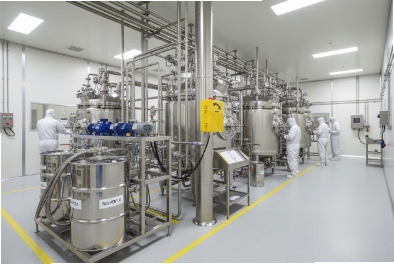
A pharma workshop needs two things at the same time: strict compliance and strict hygiene. One wrong device can fail a hazardous-area review, and one wrong surface can fail a sanitation and validation audit.
Yes. Explosion-proof SIP telephones can be suitable for pharmaceutical workshops when solvent rooms are correctly classified, the housing and seals tolerate VHP and IPA sanitation, and the cabling and documents meet cleanroom validation expectations.
A practical way to select Ex SIP phones for pharma without breaking GMP
Pharma has two overlapping control systems
In pharma workshops, compliance is not only “Ex.” It is also GMP 1 and cleanability. That changes how a phone should be specified:
-
Hazardous-area compliance: Zone/Class-Div, gas group, T-class, Ta range
-
Hygiene and cleaning: smooth surfaces, chemical resistance, sanitation cycle compatibility
-
Validation and documentation: traceable materials, test reports, change control
A phone that is perfect for a refinery may still be rejected in pharma if it has deep crevices, porous materials, or missing documentation.
Solvent rooms are common “classified islands” inside safe buildings
Typical pharma solvent-related spaces include:
-
solvent compounding rooms
-
weigh-and-dispense booths for flammable solvents
-
IPA storage and day tanks
-
cleaning chemical rooms
-
solvent waste collection points
These are often isolated zones inside a larger GMP facility. Many projects aim to keep most corridors and production suites non-classified, then classify only the solvent handling areas.
Why IP66/67 and surface design matter in sanitation
VHP 2 (vaporized hydrogen peroxide) and IPA sanitation expose equipment to:
-
oxidizing vapor
-
alcohol wipe-down
-
repeated wet cleaning
-
temperature and humidity swings in cycles
So selection must consider:
-
316L housing and hardware for corrosion resistance
-
gasket and keypad material compatibility with VHP and IPA
-
a smooth, cleanable geometry that does not trap residues
-
IP sealing that stays intact after repeated sanitation
A shortlist of what should be in the tender
| Requirement category | What to specify | Why it prevents rework |
|—|—|—|
| Classification fit | Zone 1/2 or Class I Div + group + T-class | passes hazardous-area review |
| Cleanability | smooth 316L, wipe-down design | supports GMP cleaning SOPs |
| Sanitation resistance | VHP/IPA compatible seals | prevents swelling and cracking |
| Integration | PBX, paging, alarms, access control | supports facility workflow |
| Validation package | material, certificates, IQ/OQ support | passes quality audits |
With this baseline, the first technical question is: what hazardous-area ratings suit solvent compounding rooms?
Which Zone 1/2 or Class I Div 2 ratings suit solvent compounding rooms?
Solvent compounding rooms are the most common reason pharma projects consider Ex devices. Vapors can be present during charging, mixing, transfer, and spill response. Ventilation design strongly affects classification.
Many pharma solvent compounding rooms are designed to be Zone 2 (EPL Gc) or Class I Div 2, with stricter areas (Zone 1 or Div 1) only at defined release points or inside enclosures if the hazard study identifies normal-operation vapor presence. The final rating must follow the facility’s hazardous area classification and the solvent list used in the room.

Practical zoning patterns in pharma
Pharma design teams often try to:
-
limit the extent of classified zones
-
control vapor by local exhaust ventilation (LEV)
-
keep ignition sources outside the defined boundary
That usually results in:
-
Zone 2 / Div 2 classification for general solvent handling spaces
-
localized stricter zones right at transfer points when required
Gas group and T-class: follow the solvent SDS list
IPA 3 is common, but it is not the only solvent. Many workshops also use acetone, ethanol, MEK, and blends. The equipment schedule should define:
-
required gas group coverage
-
required temperature class
-
allowable ambient temperature range (Ta)
A good procurement line references “as per area equipment schedule” and then lists the exact marking needed on the device nameplate.
A useful requirement table for typical pharma solvent areas
| Area | Likely vapor scenario | Safer rating target |
|—|—|—|
| Solvent compounding room | abnormal vapor presence | Zone 2 / Div 2 in many designs |
| Transfer points / open pouring | higher local release | Zone 1 if normal release is credible |
| Solvent waste collection | spill risk | Zone 2, with careful placement |
| Corridor outside room | low risk | non-classified, cleanable device |
Once the rating is correct, the next question is sanitation durability. VHP is tough, and IPA wipe-down is daily routine.
Do IP66/67, 316L housings tolerate VHP and IPA sanitation?
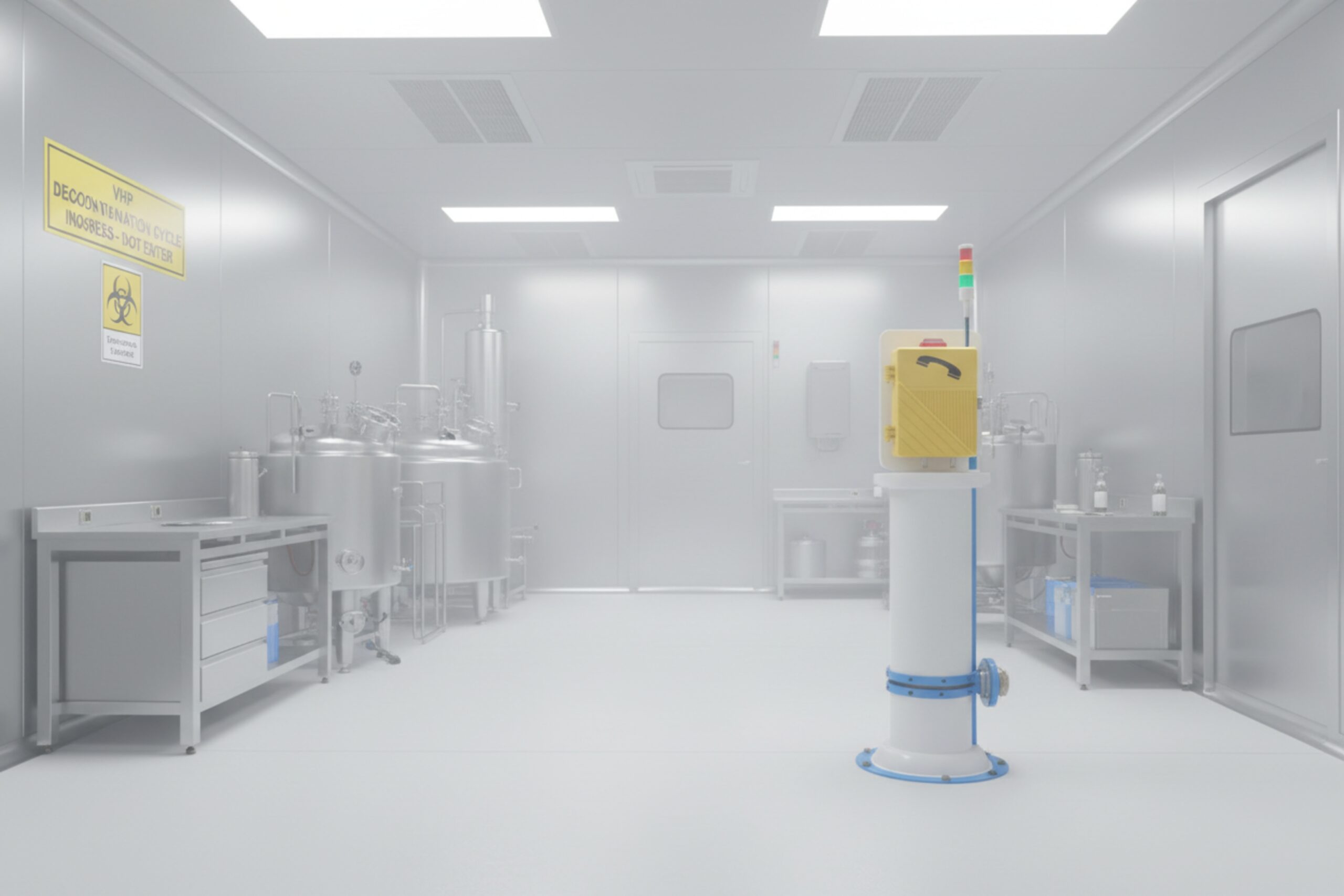
Many devices survive IPA wipes, but fail under repeated VHP cycles because oxidizers attack polymers and some coatings. The real risk is not the metal housing. It is the seals, labels, and interface parts.
Yes. IP66/IP67 and 316L housings can tolerate pharma sanitation when seals, keypads, and labels are compatible with VHP exposure and repeated IPA wipe-down. The device should also have a cleanable geometry and corrosion-resistant hardware so sanitation does not create hidden failure points.
What VHP and IPA typically damage first
-
gasket materials that lose elasticity
-
keypad elastomers that harden or crack
-
printed legends and labels that fade
-
coatings that chalk or lose adhesion at edges
-
fasteners that seize after repeated wet cycles
So the correct spec is not only “316L.” It should also define:
-
gasket material and compatibility
-
smooth faceplate design
-
minimal crevices and exposed threads
-
replaceable parts strategy for wear items
IP66 vs IP67 in sanitation
-
IP67 adds safety margin if devices are heavily sprayed or if condensation and pooling can occur during cycles.
Many pharma users choose IP66 as baseline and select IP67 in:
-
wash zones
-
near drains
-
low mounting points
A materials compatibility checklist
| Component | What to request | Why |
|—|—|—|
| Housing | 316L stainless, smooth finish | cleanable and corrosion resistant |
| Seals | VHP/IPA compatible, low compression set | maintains sealing after cycles |
| Labels | chemical-resistant marking method | avoids unreadable keys |
| Hardware | stainless fasteners, anti-galling practice | reduces maintenance failures |
Once sanitation and durability are handled, integration is the next value. Pharma sites want controlled communications and alarm flows tied to building systems.
Can units link to IP PBX, PAGA, BMS alarms, and access control?
Pharma facilities run on structured workflows. Calls, alarms, and access events must be traceable. A phone that can link to PBX and building systems reduces response time and supports audit trails.
Yes. Ex SIP telephones can link to an IP PBX for controlled calling and logs, integrate with PAGA via paging groups or multicast, report status to BMS through SNMP/syslog or gateways, and support access control workflows using relay I/O and event triggers—while keeping safety and access logic in the appropriate controllers.

IP PBX: controlled calling with audit-friendly logs
-
hotline to security or EHS desk
-
defined call groups by room or suite
-
time-stamped call logs aligned with NTP
-
role-based dialing restrictions if required
PAGA: evacuation messages in PPE environments
PAGA 6 or paging is useful because:
-
some areas are noisy
-
PPE reduces audibility
-
evacuation messages need priority
Paging can be done via:
-
multicast paging with VLAN/QoS and IGMP control
-
relay triggers into a paging controller for predefined tones
BMS alarms: map device health and events
BMS 7 integration typically uses:
-
SNMP traps for device up/down, temperature, fault states
-
syslog for event logging
-
gateway mapping if the BMS needs BACnet/Modbus representations
A phone can support:
-
a relay trigger to request door release (through controller logic)
-
input status from door forced/open signals
-
emergency call workflows linked to access events
| Facility system | Best interface | What to verify |
|—|—|—|
| PBX | SIP registration + templates | call routing and failover |
| PAGA | multicast or controller trigger | paging priority |
| BMS | SNMP/syslog via gateway | alarm mapping and timestamps |
| Access control | relay/I/O through controller | permissions and audit logs |
Now, the last gate in pharma is documentation and cleanroom-ready installation. Without validation documents and correct glands, the phone can be rejected even if it is technically correct.
What cleanroom cabling, glands, and validation documents are required?
Pharma projects live and die on documentation. Quality teams want traceability, controlled changes, and proof that the installed device matches the approved design.
Cleanroom-ready installation typically requires smooth, cleanable cable routing, sealed glands that match the Ex certificate, and a validation document pack that supports IQ/OQ and traceability. The exact requirements depend on the facility GMP standard and the room classification.

Cleanroom cabling: reduce particle traps and simplify cleaning
A good cabling approach uses:
-
smooth conduit or cleanable trunking where required
-
sealed penetrations and minimal exposed ties
-
routing that avoids horizontal ledges and dust traps
-
separation from high-noise power wiring to protect voice quality
For solvent rooms that are classified, the wiring method must also meet Zone/Class requirements, including certified entries and seals.
Glands and seals: match Ex conditions and hygiene needs
For Ex enclosures, cable glands 8 must be:
-
certified for the same protection concept and zone level
-
matched to cable type and diameter
-
corrosion resistant to sanitation agents
-
installed with controlled torque and documented
In pharma, it helps when the gland and entry system also supports:
-
easy wipe-down
-
minimal crevices around locknuts
-
repeatable re-termination procedures under change control
Validation documents: what quality teams usually ask for
A vendor should be able to provide:
-
Ex certificates (ATEX/IECEx or listing docs) and nameplate details
-
IP/IK test evidence and material declarations
-
sanitation compatibility statements for VHP/IPA exposure (or material data)
-
installation instructions and conditions of use
-
batch traceability or QC records for critical components
-
support documents for IQ/OQ 9, including checklists and test steps
A simple validation pack table helps procurement:
| Document | Why it is needed | Who reviews it |
|—|—|—|
| Certificate + marking | hazardous-area compliance | EHS / engineering |
| Material and finish spec | cleanability and corrosion | QA / validation |
| IP sealing evidence | sanitation and reliability | engineering |
| Installation method statement | controlled build | EPC / QA |
| IQ/OQ checklist | test and acceptance | validation team |
| Change control notes | ongoing compliance | QA |
When these documents are ready and the installation method is cleanroom-appropriate, Ex SIP phones become a reliable part of a pharma solvent workflow without creating GMP audit risk.
Conclusion
Explosion-proof SIP telephones suit pharmaceutical workshops when solvent rooms are classified correctly, 316L and VHP/IPA-compatible seals survive sanitation, integrations support PBX/PAGA/BMS/access workflows, and cleanroom cabling plus full validation documents meet GMP audits.
Footnotes
-
Regulations ensuring pharmaceutical products are consistently produced and controlled. ↩
-
Effective bio-decontamination method used in sterile manufacturing environments. ↩
-
Common solvent and cleaning agent used in pharmaceutical processes. ↩
-
Standard defining protection levels against water and dust ingress. ↩
-
Internet-based private branch exchange for managing enterprise calls. ↩
-
Communication system for public address and general alarm distribution. ↩
-
Control system that monitors and manages building mechanical equipment. ↩
-
Device designed to attach and secure the end of an electrical cable. ↩
-
Validation process verifying equipment installation and operational performance. ↩








