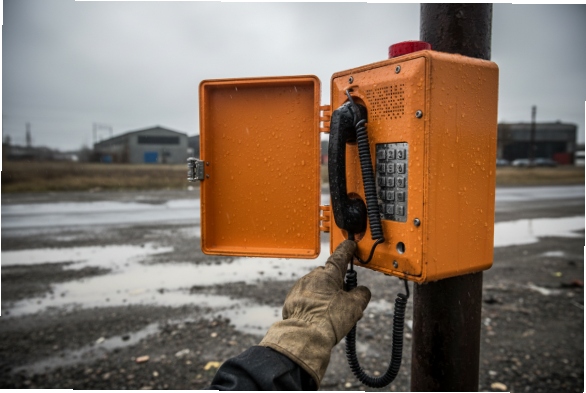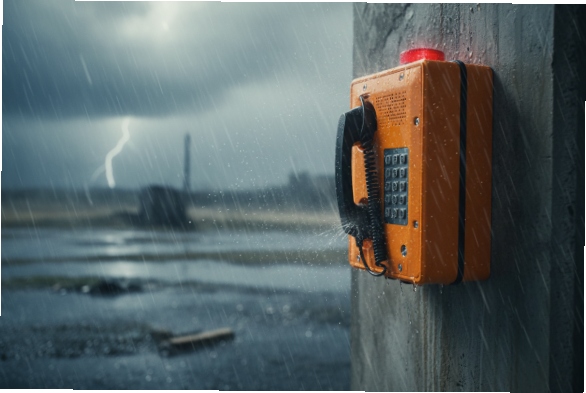
Many hazardous sites still run on legacy copper lines 1. When a new Ex phone cannot talk to that old PBX, the project stalls, and emergency calling becomes a risk.
Yes. An explosion-proof telephone can connect to analog lines if it has a native POTS interface (FXO) or uses a certified path via an ATA or gateway, and the line’s ring, current, REN, and loop length match the phone’s specs.
Analog connectivity is possible, but the “where” of the analog port matters
Start with the real question: where does the analog circuit live?
Analog calling is simple at the user level, but it is tricky in hazardous areas because the analog interface is an electrical circuit that can carry ring voltage and fault energy. The key is not only “can it connect,” but where the analog interface sits.
There are three common patterns:
1) A native analog Ex phone that connects directly to a POTS/analog PBX port.
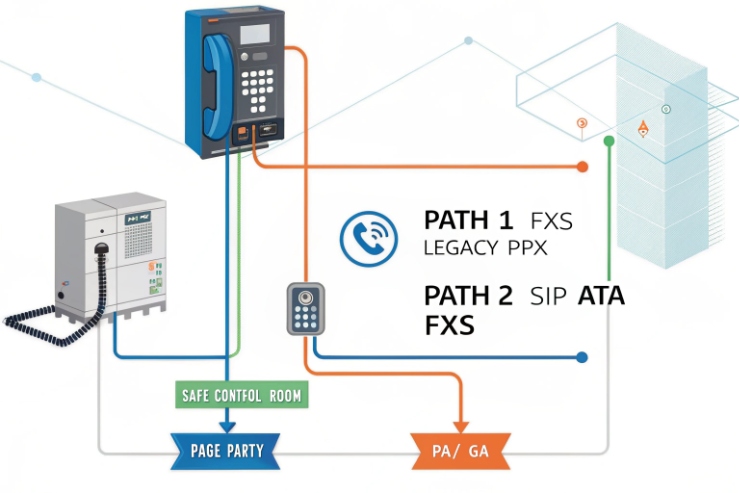
2) A SIP Ex phone that stays IP in the hazardous area, while an ATA/gateway converts SIP to analog in a safe area.
3) A hybrid design where the hazardous-area device supports both SIP and analog, or a system uses an Ex terminal plus a nearby certified barrier and a remote analog interface.
The safest procurement approach is to decide if the analog conversion must be in the hazardous zone. In many projects, the best answer is no. Keep the hazardous area device as SIP, then place the ATA or FXO gateway in a safe control room. That reduces maintenance risk and makes upgrades easier.
Still, some sites need direct analog because the cable already exists and the PBX port is fixed. In that case, a native analog explosion-proof telephone is the cleanest path because certification and wiring are straightforward.
A practical lesson from retrofit jobs is simple: most “it does not ring” issues are not defects. They are mismatch problems: ring voltage too low, REN too high, or loop too long. So analog compatibility must be checked before purchase, not after install.
A small checklist avoids most failures
| Item to confirm | Why it matters | What to request from supplier | Typical site pitfall |
|---|---|---|---|
| Analog port type (FXO vs FXS) | Wrong port means it will never work | Port type clearly stated | People say “analog” but mean different things |
| Ring spec (VAC and cadence) | Phone may not ring or may false ring | Minimum ring voltage + supported cadence | PBX ring is low due to long loop |
| Loop current and on-hook impedance | Audio level and dialing stability | Off-hook current range | High resistance in old cabling |
| REN | Too many devices kill ringing | REN value at target frequency | Multiple phones on one extension |
| Loop length and cable gauge | Decides voltage drop and noise | Recommended max loop length | Corroded joints increase resistance |
Which interfaces enable analog connectivity—FXS/FXO ports, ATAs, or hybrid Ex phones for legacy PBXs?
Hot projects move fast, and “analog” gets used as a catch-all word. That causes wrong parts to be ordered, then delays follow, and the hazardous area team must do rework.
Analog connectivity is enabled by the correct interface: an Ex analog phone typically needs an FXO-style POTS line interface, while ATAs provide FXS ports for analog devices; gateways can offer FXO/FXS mixes; and hybrids are used when one device must cover both SIP and legacy PBXs.
FXO vs FXS in plain terms
FXS and FXO are often mixed up. A simple rule helps:
-
FXS provides dial tone, battery, and ring voltage. It behaves like the “phone company wall jack.”
-
FXO receives dial tone and ring. It behaves like a “telephone device” that plugs into the wall jack.
So:
-
An analog PBX extension port 2 is usually FXS (it powers a phone).
-
A phone that connects to that PBX extension is FXO-like in behavior.
Most native analog telephones are built to connect to an FXS line. So if an explosion-proof telephone is called “analog/POTS,” it is normally intended to plug into an FXS source (PBX, PSTN line, FXS gateway port).
ATAs and where they fit
A SIP ATA 3 usually provides FXS ports. That means it is made to connect standard analog phones or paging amps to a SIP system. For an Ex project, this is useful when:
-
The hazardous area device is not analog. For example, a SIP Ex phone stays in the hazardous zone, and analog gear is somewhere else.
-
Or the legacy PBX is analog, but conversion is done in a safe area using a gateway that presents FXS to the legacy analog phone circuits or FXO toward a PSTN trunk.
Hybrid Ex phones and why they exist
A hybrid Ex phone can be useful when sites are migrating in phases:
-
Today: analog PBX extension.
-
Next year: SIP platform.
A dual-interface device can reduce future replacement work. The risk is complexity. More interfaces mean more settings, more spares, and more test cases. For some plants, that is fine. For others, simple wins.
How are ring voltage, line current, REN, and loop length verified for compatibility and reliability?
On paper, analog looks universal. In real plants, analog lines are messy. Old joints add resistance. Spare pairs are mislabeled. PBX ports are set to low ring. All of this shows up as missed calls and weak audio.
Compatibility is verified by measuring and matching: ring voltage under load, ring cadence, off-hook loop current, REN limits on the PBX port, and loop resistance/length; then confirming DTMF and caller ID decoding with the actual PBX configuration.
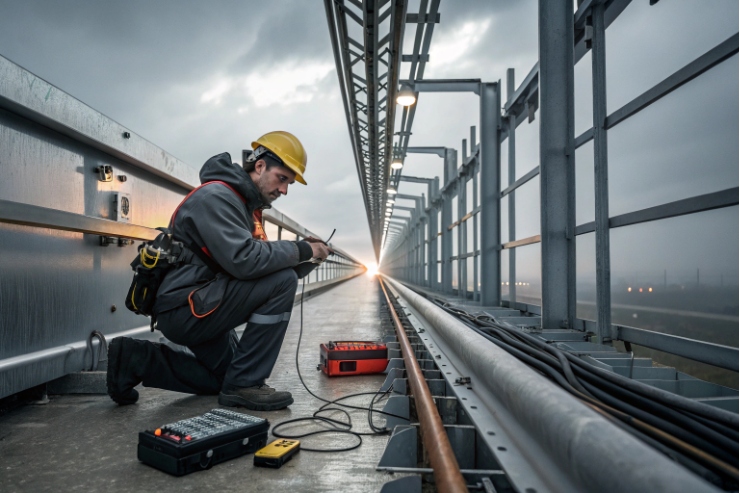
Ring voltage and cadence: prove it at the far end
Many failures happen because ring voltage 4 is measured at the PBX rack, not at the phone. Long loops drop voltage. Corroded terminals drop voltage. So ring must be checked at the device end, with the device connected.
Key points to verify:
-
Minimum ring voltage the phone needs to trigger ringing.
-
Ring frequency and cadence used by the PBX (some ports use different patterns).
-
Ring under load (some systems sag when a real REN is attached).
Line current and loop resistance: stable dialing and audio depend on it
Once off-hook, the phone needs enough loop current to power its analog interface and maintain proper transmit level. Too little current can cause weak audio or dialing failures.
REN: a small number that causes big headaches
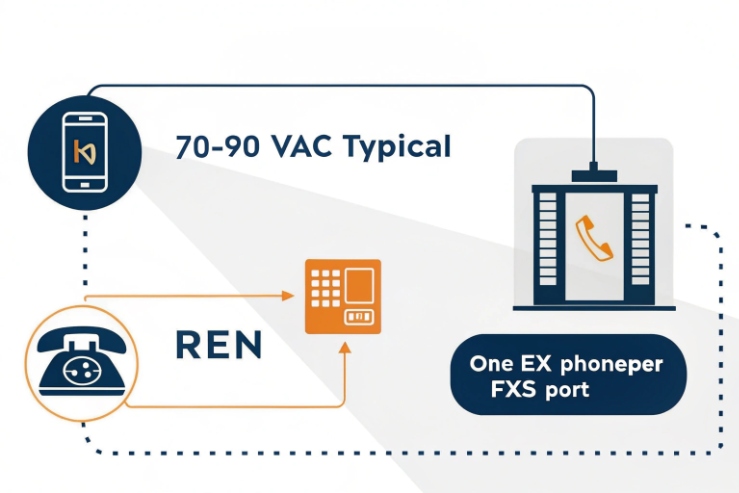
REN (Ringer Equivalence Number 5) is a load measure for ringing. A port has a maximum total REN it can drive. If multiple devices share one extension, the ring may fail. In industrial practice, it is better to avoid parallel analog devices unless the PBX is designed for it.
Do analog models support emergency features—auto-dial, DTMF, caller ID, and PAGA integration?
When an alarm happens, the phone must do the same thing every time. No one wants a device that works in normal calls but fails during a real emergency event.
Yes, many analog explosion-proof telephones support emergency functions like one-touch or auto-dial, DTMF dialing, caller ID (where the line provides it), and integration to paging/PAGA through analog interfaces or external controllers, but each feature depends on PBX signaling and site architecture.
Auto-dial and hotline modes
Analog Ex phones often support Hotline (lift handset and it dials a preset number) and One-touch keys. For emergency use, hotline is simple and reliable. Still, hotline must be tested with the PBX because some PBXs require a short pause before digits.
DTMF: in-band, but still not always consistent
DTMF is common, but problems happen when the PBX uses pulse dialing or long loops introduce noise. A good analog Ex phone should support standard DTMF generation and should keep tone levels stable.
PAGA integration: think in system blocks
PAGA integration 6 can mean several things: dialing into a controller via DTMF or triggering a paging zone through a PBX feature code. Analog Ex phones can participate, but the integration usually sits in the PBX or paging controller.
When should I use a SIP ATA versus a native analog Ex phone—certification, maintenance, and total cost?
A fast buying decision can look cheap and still cost more later. The wrong choice shows up as service calls, failed inspections, and spare parts chaos.
Use a SIP ATA (or SIP gateway) when IP is available and the hazardous area device can stay SIP while analog conversion sits in a safe area; choose a native analog Ex phone when the copper line must terminate in the hazardous zone and certification, simplicity, and long-loop behavior are the priority.
Certification and hazardous area boundaries
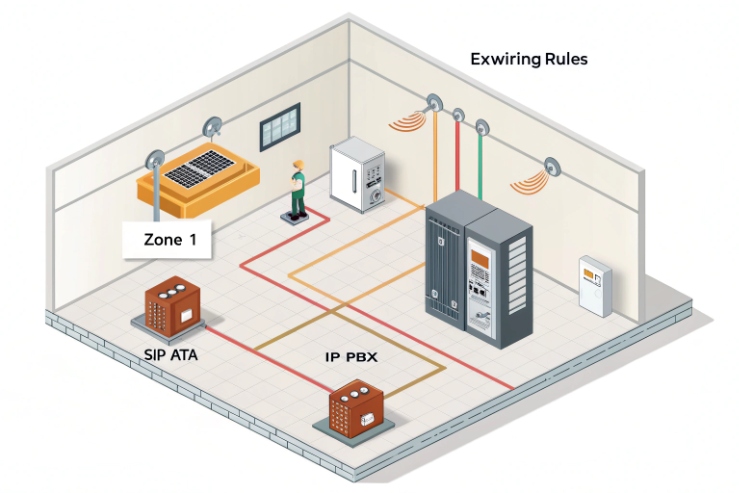
Hazardous area certification 7 is the first filter. If an analog interface must be in the hazardous area, the device doing that job must be certified for that environment and protection concept. This is where a native analog Ex phone is strong.
If the analog interface can be moved to a safe area, a SIP Ex phone plus a standard ATA or gateway becomes attractive. The Ex device stays on Ethernet. The analog conversion hardware sits in a controlled cabinet where technicians can replace it without hot work permits.
Maintenance and spares
Maintenance cost is often higher than purchase price over the life of a phone. A native analog Ex phone has fewer network moving parts and no SIP registration issues. Conversely, a SIP Ex phone plus gateway needs IP and VLAN planning but offers centralized configuration.
Conclusion
Explosion-proof telephones can connect to analog lines, but success depends on the right interface, verified ring and loop limits, proven emergency behavior, and a system choice that fits certification and lifecycle cost.
Footnotes
-
Overview of Plain Old Telephone Service (POTS) and its use of copper wire infrastructure. ↩ ↩
-
Detailed explanation of how analog devices interface with modern VoIP networks through specific ports. ↩ ↩
-
A guide to Analog Telephone Adapters used to bridge legacy hardware with IP communications. ↩ ↩
-
Technical details regarding the AC voltage used to trigger ringer circuits in telephony. ↩ ↩
-
Understanding the REN value to ensure telephone lines aren’t overloaded by too many devices. ↩ ↩
-
Information on Public Address and General Alarm systems for large industrial facility safety. ↩ ↩
-
Global standards for testing and certifying electrical equipment for safe use in explosive atmospheres. ↩ ↩