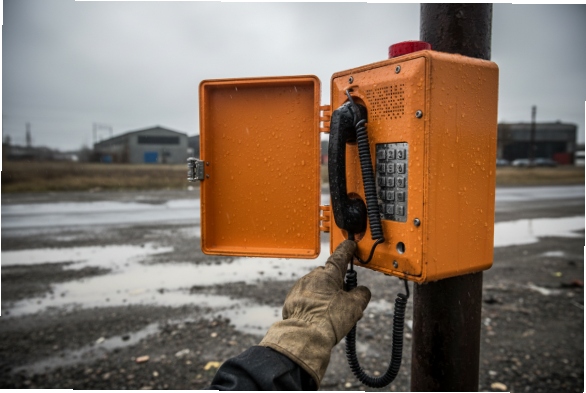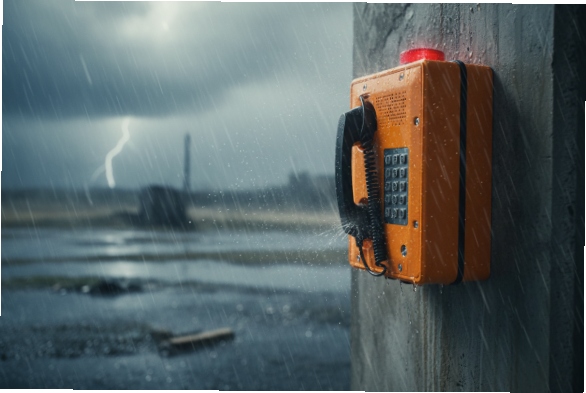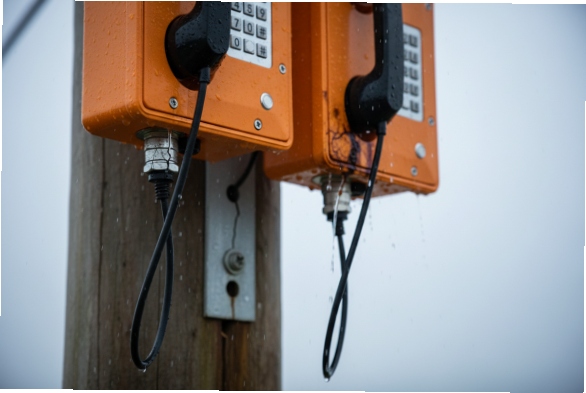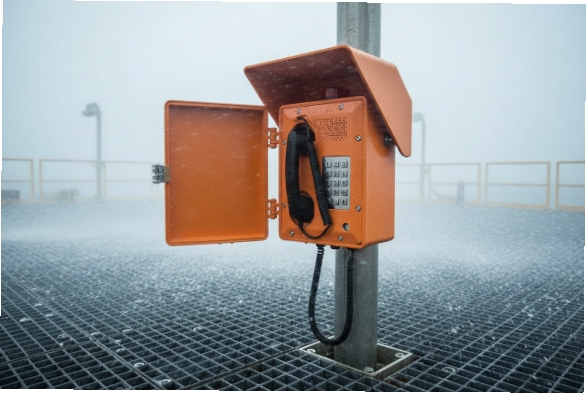
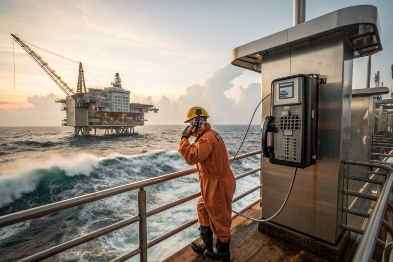
A hazardous-area phone that forces handset use can slow response when hands are busy. In loud plants, that delay turns a small issue into a bigger event.
Yes, many explosion-proof SIP telephones support hands-free calling, including full-duplex speakerphone, when acoustic design, AEC/noise tuning, mounting, and power/thermal limits are matched to the real site.
Hands-free in hazardous areas works when the whole chain is designed for it
Hands-free is a feature, but intelligibility is the requirement
Hands-free calling in an hazardous-area phone 1 is not only “speaker on.” The real target is speech that stays understandable with PPE, distance, reverberation, and high background noise. A full-duplex speakerphone 2 can work well, but it needs a balanced system: speaker output, mic direction, echo control, and noise control must fit the environment. If any one part is pushed too hard, the call becomes thin, clipped, or starts to howl.
The common hands-free modes seen in Ex SIP deployments
Most explosion-proof SIP telephones 3 deployments use one or more of these modes:
-
Hands-free dialing for routine calls where users stand close to the unit.
-
Auto-answer intercom for gate, control-room, or safety station workflows.
-
Paging / group announcements via unicast or multicast.
-
Priority override for emergency instructions.
Each mode has different audio stress. Paging is one-way, so it tolerates more delay. Two-way emergency calls need low delay and stable double-talk behavior.
A simple way to decide if hands-free is realistic at a location
Hands-free quality depends on the location more than people expect. Steel walls and corners create reflections. Wind adds low-frequency noise. Open decks reduce reflections but add turbulence. A hands-free Ex phone that sounds great in a quiet room can sound rough on a drilling deck if mounting and profiles are not right.
| Hands-free use case | Main risk | What usually fixes it | What to verify |
|---|---|---|---|
| Two-way full-duplex talk | Echo + noise overlap | AEC tail + volume policy + mic direction | No howling at max approved volume |
| Auto-answer intercom | False open mic + privacy | Whitelist, tone, short auto-answer timer | Correct SIP headers and rules |
| Paging (unicast/multicast) | Codec mismatch + delay | Fixed paging codec + ptime policy | Paging is intelligible at distance |
| Priority override | User confusion + audio clash | Clear tone, barge-in rules, priority levels | Predictable behavior every time |
Hands-free can be a real advantage in hazardous zones, but it needs clear specs and a clean acceptance test. The next sections break down what to ask for and how to deploy it without surprises.
Is full-duplex speakerphone supported with specified SPL, AEC tail length, and noise suppression for noisy plants?
In high-noise areas, a weak speakerphone sounds fine for one person and fails the moment two people talk. That is when echo, pumping, and feedback appear.
Full-duplex hands-free is often supported on Ex SIP phones when the unit provides enough acoustic output, an AEC tail long enough for the space, and moderate noise suppression that does not clip speech during double-talk.
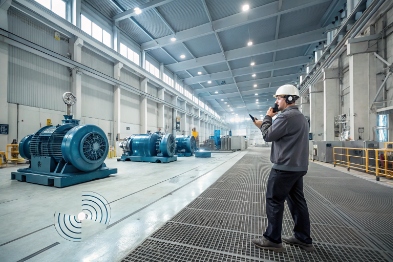
Speaker output: SPL is only useful if it is measured the same way
Hands-free output is usually described as SPL at a distance (often 0.5 m or 1 m). In industrial sites, “loud enough” depends on background noise and PPE. A practical approach is to request:
-
a measured SPL value and the distance used,
-
the distortion limit at that SPL,
-
the speaker amp power rating.
Many plants do well when the phone can be clearly heard near the unit and still understood without users pressing their ear to the grill. If the site demands long-distance talkback, hands-free becomes harder, and a handset or PTT headset often becomes the better tool.
AEC tail length: match reflections, not marketing
The AEC tail length 4 is the time window the echo canceller can model. Short tails work in open areas with weak reflections. Longer tails help in tunnels, steel corridors, and tight alcoves. A practical plan is:
-
start with a mid-length tail for general industrial rooms,
-
use longer tails for tunnels and hard reflective spaces,
-
cap speaker volume so the system does not chase impossible loop gain.
Noise suppression: keep it moderate so digits and consonants survive
Noise suppression helps most with steady machinery noise. It helps less with sudden impacts. Over-aggressive suppression can remove consonants and make emergency phrases unclear. The best hands-free tuning usually combines:
-
directional mic capture,
-
moderate suppression depth,
-
AGC with a strict max gain limit,
-
a limiter to prevent overload.
What mounting height, mic–speaker placement, and IP66/67 design ensure intelligible hands-free audio?
A strong phone can still sound bad if it is mounted too high, placed in a corner pocket, or aimed into reflective steel. Small physical choices decide most hands-free outcomes.
Hands-free intelligibility improves when the phone is mounted at a consistent speech height, the mic is oriented toward the user and away from strong reflections, and the IP66/67 design uses proper acoustic membranes and drainage so water protection does not block speech.
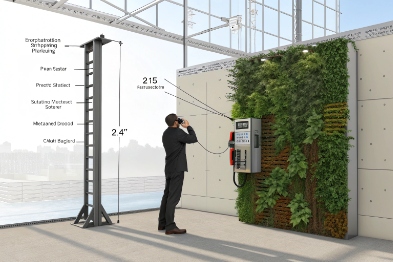
Mounting height: keep the mouth-to-mic distance realistic
A practical mounting height puts the microphone near the average mouth position for a standing user. If mounted too high, users speak upward and off-axis. If mounted too low, users lean down and create burst noise. In many industrial installs, the best result comes from mounting the unit so the mic area is around upper chest to mouth height for most users, then adding clear signage that shows where to speak.
IP66/67 and audio: sealing must not choke the acoustic path
The IP66/67 design 5 protection often uses:
-
acoustic membranes that pass sound but block water,
-
sealed grills with labyrinth paths,
-
gaskets that maintain compression over time.
These parts can reduce high frequencies if poorly designed. High frequencies carry consonants, so the design must keep speech clarity while staying sealed. For hands-free, it also helps to prevent water pooling in front of the speaker port. Drain channels and downward-facing geometry reduce that risk.
How do SIP features—auto-answer, multicast paging, priority override, and barge-in—work in hands-free mode?
Hands-free is not only audio. It is also call control. If auto-answer or paging behaves inconsistently, users stop trusting the system.
In hands-free mode, SIP features usually work by combining speakerphone auto-answer rules with paging or priority signaling; multicast paging plays through the speaker, priority calls can override normal calls, and barge-in can force audio delivery based on configured permissions and tones.
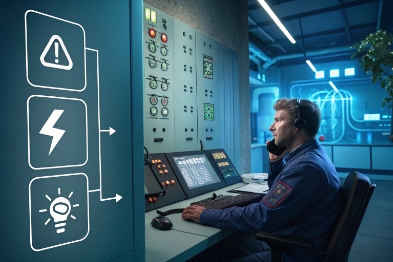
Multicast paging: great for scale, strict about the path
The multicast paging 6 can deliver fast, synchronized announcements without setting up many calls. In hands-free mode, the phone plays the page through its speaker. The main risks are:
-
codec support mismatch on the paging source and endpoints,
-
network multicast flooding if switches are not configured well,
-
wrong priority interaction with normal calls.
Paging usually works best when the paging codec and packetization are fixed and tested end-to-end.
What power and thermal limits apply—PoE class, amplifier wattage, and -40 to +70 °C ambient for reliability?
Hands-free audio asks more from power and thermal design than handset mode. If PoE is undersized or ambient derating is ignored, the speaker amp becomes weak or the unit becomes unstable.
Power and thermal limits depend on the exact model, but hands-free reliability usually improves when PoE budget matches the amplifier load, UPS covers the PoE switch, and the Ex certificate ambient range is respected, including any derating near extreme temperatures.
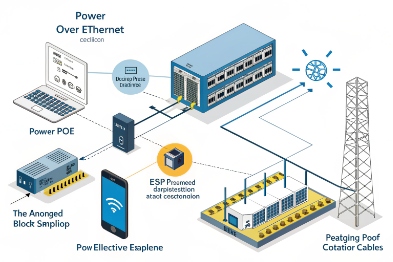
PoE budgeting: plan for peak audio, not idle draw
Many SIP phones run on Power over Ethernet 7 standards, but hands-free loudspeaker output can increase consumption. The safest approach is to:
-
confirm PoE standard support (802.3af or 802.3at) in the datasheet,
-
budget switch power per port with margin,
-
consider cold-start and inrush behavior,
-
keep cable runs within good practice to avoid voltage drop.
For emergency systems, power must include the network. A perfect Ex phone still fails if the PoE switch is not on UPS.
Conclusion
Explosion-proof telephones can support hands-free calling, but success depends on acoustic design, mounting, SIP feature rules, and power/thermal planning that match the real noise and environment.
Footnotes
-
US safety guidelines defining hazardous locations and requirements for electrical safety equipment. ↩ ↩
-
Technical explanation of simultaneous two-way communication systems used in telecommunications. ↩ ↩
-
Overview of safety standards for electrical equipment used in potentially explosive atmospheres. ↩ ↩
-
Guide to echo cancellation technology that removes reflected sound in speakerphone systems. ↩ ↩
-
International standard for measuring the resistance of an enclosure to dust and water ingress. ↩ ↩
-
Method for efficient one-to-many communication across IP networks used for site-wide announcements. ↩ ↩
-
Standard for delivering electrical power along with data on Ethernet cabling. ↩ ↩