

Plant noise can swallow words, then people start shouting. Shouting adds distortion. The call gets worse, and the emergency message turns into guesses.
Noise reduction in an explosion-proof telephone is effective when the phone uses the right DSP stack and the right hardware, then it is tuned to the site so speech stays clear without sounding clipped or robotic.
Noise reduction is only “effective” when speech stays understandable at the worst moment
Noise control is a stack, not a single switch
Most Ex telephones that claim “noise reduction” are combining several blocks. Each block solves a different problem. …Digital Signal Processing (DSP) 1 algorithms handle tasks like filtering out steady ambient hums and managing gain levels. Microphone direction and placement reduces noise before software touches it. AGC keeps voice level stable when users change distance. Wind filtering removes low-frequency bursts that overload the mic. Echo control protects hands-free mode so the speaker does not feed the mic.
If one block is missing, the system often compensates by pushing another block too hard. That is when speech starts to sound chopped, thin, or delayed. In real deployments, the best result comes from moderate settings that work every day, not maximum suppression that only looks good in a lab.
“SNR improvement in dB” needs context
A measured Signal-to-Noise Ratio (SNR) 2 improvement is a useful number, but it can be misleading if it does not state where it was measured or which noise type was tested. In the field, a practical target is not “silence.” The real target is: the far end understands commands, names, and digits on the first try. That often means modest gains plus better speech directivity.
Which noise control algorithms are supported—beamforming, noise suppression, AGC, wind filtering—and what SNR improvement in dB is typical?
Industrial buyers often expect one number. Real noise reduction is a mix of physics and algorithms. The exact dB gain depends on noise type and how close the talker is.
Most Ex SIP phones use a combination of directional mic design, single- or dual-mic noise suppression, AGC, and wind filtering. Typical perceived SNR improvement is often 6–12 dB in steady noise, and lower for fast-changing noise, while wind filtering can remove much more low-frequency rumble when hardware is right.
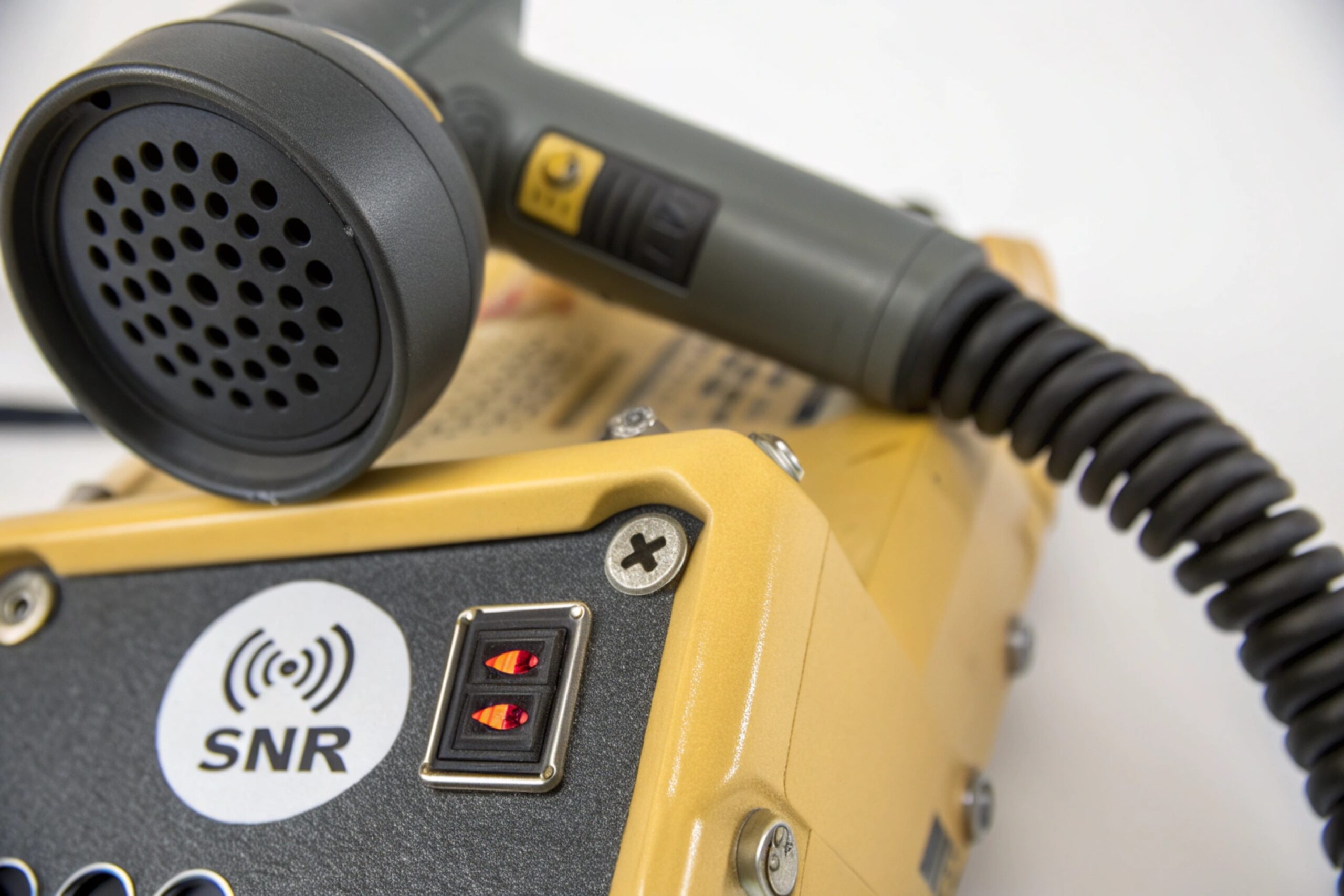
What algorithms are common in Ex telephones
- Beamforming (dual-mic or array): Uses multiple microphones to “aim” at the talker. Works best in hands-free designs.
- Noise suppression (NS): Spectral filtering methods that estimate and reduce steady noise like fans or engines.
- AGC (Automatic Gain Control): Stabilizes voice levels when people move away from the unit.
- Wind filtering: Targets low-frequency turbulence. Needs hardware help like wind meshes to be truly effective.
How is noise reduction tuned—mic gain, AGC thresholds, profiles—for refineries, drilling decks, and mines via web UI or API auto-provisioning?
A phone can ship with “default” settings that are safe for an office. A plant is not an office. Tuning decides whether the audio sounds natural or stressed.
Noise reduction is tuned by setting mic gain headroom, AGC target and max gain, noise suppression depth, wind detection sensitivity, and hands-free profiles. Many SIP endpoints allow this through a web UI and through auto-provisioning files or APIs so each site type gets a stable profile.
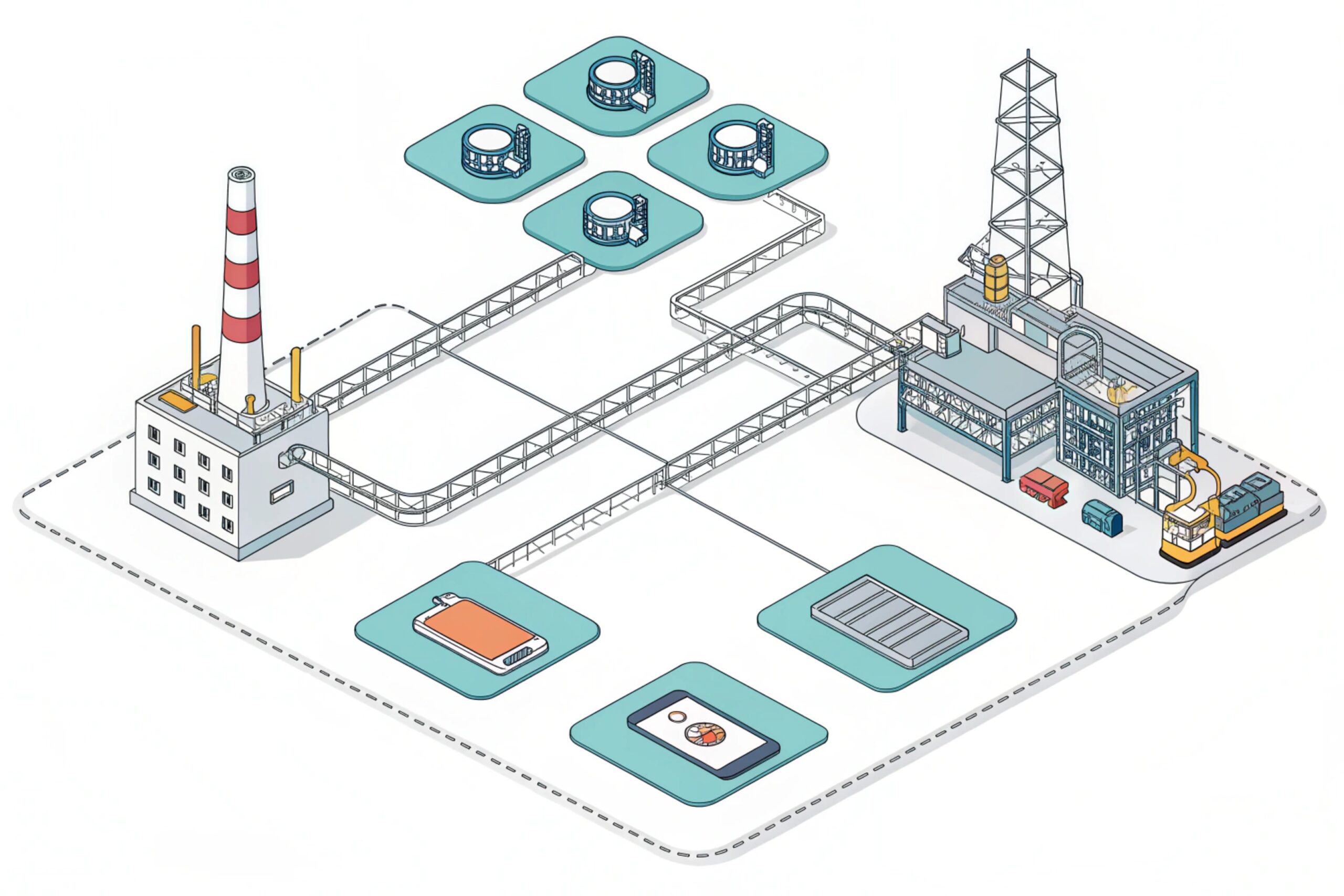
Profiles that fit common heavy-industry zones
Refineries usually require moderate suppression to handle steady pump noise. Drilling decks need strong wind filtering and faster limiters for sudden gusts. Mines benefit from beamforming to reject reverberant echoes in narrow corridors. Using an API auto-provisioning 3 system allows these profiles to be deployed consistently across a global fleet without manual site visits.
How does noise reduction affect voice quality—MOS/STI, added latency, clipping—with Opus/G.722 codecs, PLC/FEC, and jitter buffers on SIP networks?
Teams often blame the codec when the real issue is the signal going into it. Noise reduction changes that signal, so it also changes overall quality scores.
Noise reduction can improve intelligibility and MOS in noisy sites, but it can add small processing delay, create artifacts if too aggressive, and interact with codecs and jitter buffers. Opus and G.722 can carry clearer speech, yet the best result still depends on stable gain and controlled packet loss.

Codec and NR interaction
A cleaner input makes modern codecs work significantly better. The Opus codec 4 handles mixed conditions well and can maintain high clarity at lower bitrates. Alternatively, the G.722 5 standard provides wideband clarity that improves understanding of consonant sounds in machinery bays.
Quality metrics: use both numbers and listening
Common benchmarks like the Mean Opinion Score (MOS) 6 help compare profiles, while the Speech Transmission Index (STI) [^7] is ideal for measuring intelligibility in noisy paging scenarios. The final acceptance should always include real phrases with digits to ensure reliability.
What hardware choices improve results—directional microphones, acoustic wind mesh, handset vs hands-free design, or external Ex-rated headsets and PTT?
DSP can only improve what the microphone captures. In high SPL zones, hardware is the main difference between “understandable” and “guessing.”
Directional microphones, dual-mic layouts for beamforming, acoustic wind meshes, and well-designed handset close-talk paths usually improve results more than pushing DSP harder. For the loudest zones, an Ex-rated headset with PTT can deliver the biggest jump in intelligibility.

…Microphone and Mesh Protection
A directional mic reduces off-axis noise naturally. Acoustic wind meshes stop turbulence at the source, which is critical for offshore decks. Handset designs usually offer the best SNR because they keep the microphone closest to the talker’s mouth.
Conclusion
Noise reduction in Ex telephones can be very effective when hardware captures clean speech, DSP stays moderate, and profiles are tuned and provisioned for each site’s noise and wind.
Footnotes
-
Learn how Digital Signal Processing (DSP) utilizes mathematical techniques to enhance and filter audio signals in industrial devices. ↩ ↩
-
A complete guide to Signal-to-Noise Ratio (SNR) and its importance in measuring audio clarity. ↩ ↩
-
Understanding how an API auto-provisioning interface streamlines the management of large industrial phone networks. ↩ ↩
-
Technical details on the Opus codec, a versatile audio format designed for high-quality speech and music. ↩ ↩
-
Overview of the G.722 wideband audio codec standard used for high-definition voice in telecommunications. ↩ ↩
-
Explaining the Mean Opinion Score (MOS) metric for evaluating the perceived quality of voice communications. ↩ ↩








