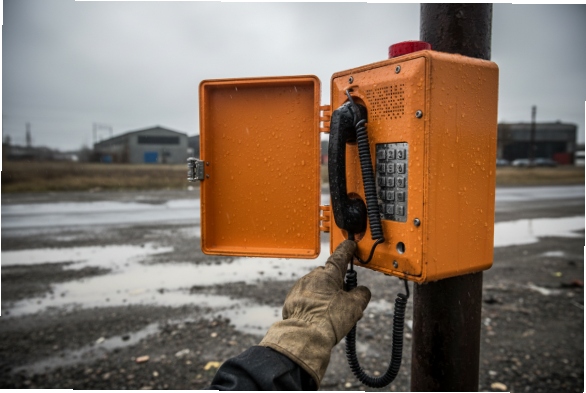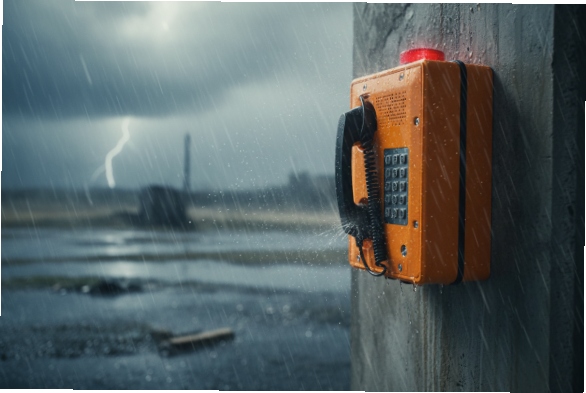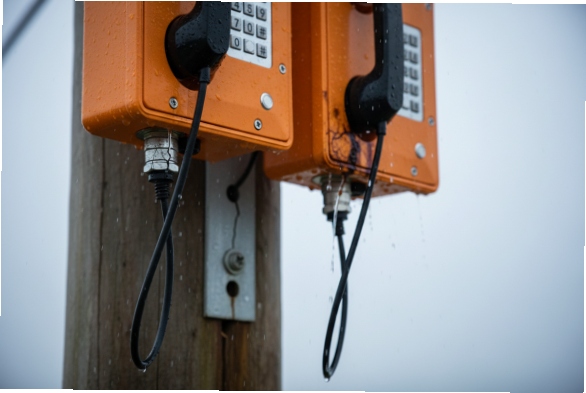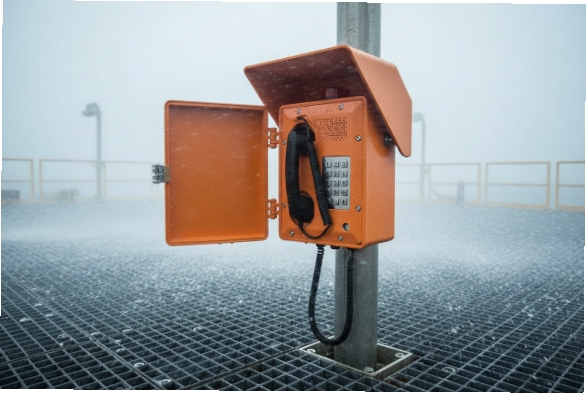
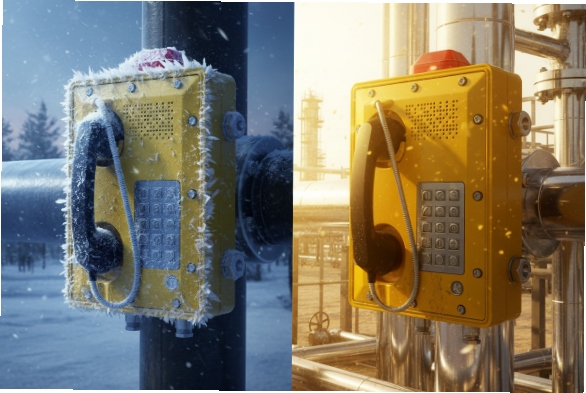
Electronics hate extremes. Batteries fail in the arctic cold, and processors throttle in the desert heat. But for an explosion-proof telephone 1 installed on a pipeline in Siberia or a refinery in Qatar, failure is not an option.
Standard explosion-proof telephones typically support an ambient temperature range of -20°C to +55°C. However, specialized "extreme climate" models are available with certified ranges from -40°C (or even -55°C) up to +70°C. The specific range is always marked on the nameplate as "Ta" and directly influences the device’s Temperature Class (T-Rating).
The "Ta" Factor: Why It Defines Your Safety
At DJSlink, we design our hardware to survive where humans cannot. The "Ambient Temperature" 2 ($T_{amb}$ or $T_a$) is the temperature of the air surrounding the equipment.
It is critical to understand that the $T_a$ rating is part of the safety certification. You cannot simply take a phone rated for +40°C and install it in a +50°C compressor room. If you do, the internal components might overheat, exceeding the certified T-Class 3 surface temperature and potentially igniting the explosive atmosphere.
Let’s explore how we engineer for the freeze and the fire.
Are −40/−55 °C to +60/+70 °C options available?
The standard "-20°C to +40°C" is often insufficient for modern global energy projects. Clients demand broader operational windows.
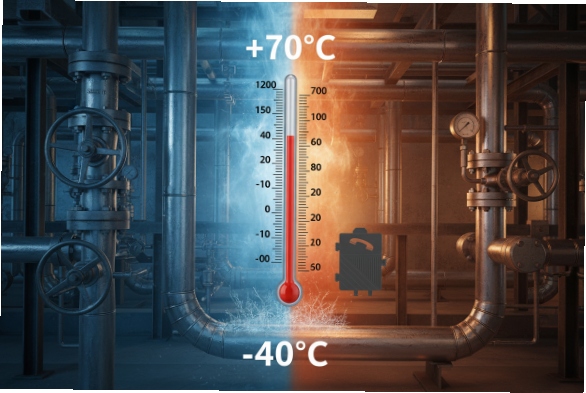
Yes, high-specification models are available for extreme ranges. "Arctic" variants utilize special low-temperature seals and electronics to reach -40°C or -55°C, while "Desert/Tropical" variants use enhanced passive cooling and high-temp components to operate safely up to +70°C.
Engineering for the Extremes
-
The Cold Challenge (-40°C to -55°C):
-
Cables: Standard PVC 4 cracks and shatters. We use silicone or specialized elastomers.
-
Seals: O-rings 5 become brittle and leak. We use low-temp silicone.
-
Electronics: LCD screens 6 freeze (turn black/slow). Electrolytic capacitors 7 lose capacitance.
-
-
The Heat Challenge (+60°C to +75°C):
-
Overheating: The internal amplifier generates heat. If the air outside is already 70°C, shedding that heat is difficult.
-
Battery Safety: Lithium batteries 8 can become unstable. We often switch to supercapacitors 9 or high-temp chemistry.
-
DJSlink Note: Always specify your site’s extreme min/max, not just the average. We can customize the internal build (e.g., adding a heating element) to match your specification.
How does ambient affect T-class and duty cycle?
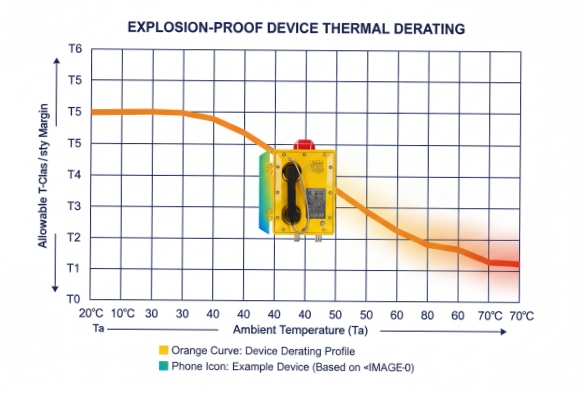
This is the most misunderstood physics concept in our industry. The hotter the air, the hotter the phone, and the lower the safety margin.
There is a direct inverse relationship: as the maximum ambient temperature rises, the allowable T-Class may need to be derated (e.g., from T6 to T5). High ambient temperatures may also require a reduced duty cycle (e.g., shorter calls or PA announcements) to prevent the internal amplifier from generating excess heat that pushes the surface temperature over the limit.
The Heat Math
-
Formula: $T{surface} = T{ambient} + T_{internal_rise}$
-
Scenario:
-
A phone generates 20°C of heat during use.
-
Case A (Ta = 40°C): Surface = 40 + 20 = 60°C. Safe for T6 (Limit 85°C).
-
Case B (Ta = 70°C): Surface = 70 + 20 = 90°C. FAIL T6. Must be rated T5 (Limit 100°C).
-
Critical Insight: If you require a T6 rating in a hot environment, we may have to electronically limit the volume of the loudspeaker to reduce the internal heat rise ($T_{rise}$).
Do heater/fan kits extend operating envelopes?
Active climate control is common in large cabinets, but inside a compact phone, space is tight.
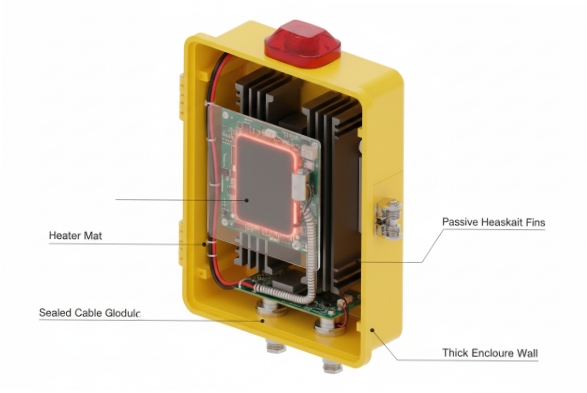
Thermostatically controlled heaters are commonly used to extend the lower operating limit (e.g., enabling an LCD display to work at -40°C). However, cooling fans are rarely used in explosion-proof phones due to the difficulty of certifying moving parts and air exchange; instead, heavy-duty passive heatsinks and efficient Class-D amplifiers are used to manage high temperatures.
The "Cold Start" Solution
For sites in Russia or Canada, DJSlink offers a "Cold Start" Kit:
-
Heater Mat: A small heating element placed behind the LCD and mainboard.
-
Thermostat: Turns on when temp drops below -10°C.
-
Function: It keeps the electronics warm enough to function instantly when the handset is lifted, even if the casing is covered in ice.
For heat, we rely on physics, not fans. The aluminum enclosure itself acts as a giant heatsink 10. This is why our high-temp phones often have external fins—to increase surface area for cooling.
How is ambient shown on the nameplate?
The label is the law. You must verify the marking matches your site conditions.
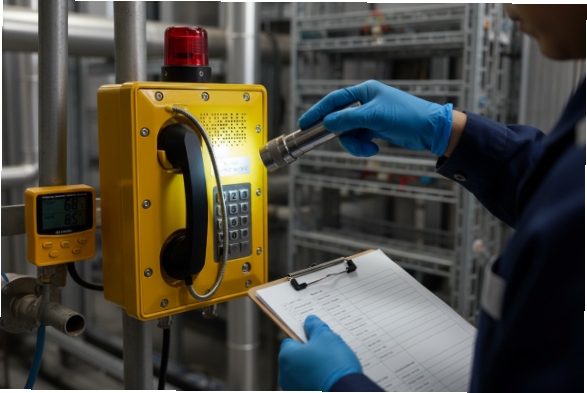
The ambient temperature range is explicitly marked on the certification label, typically following the prefix "Ta" or "Tamb" (e.g., Ta: -40°C ... +60°C). If no ambient temperature is marked, the standard default range of -20°C to +40°C is implied by IEC standards.
Reading the Label
When inspecting a DJSlink phone, look for this specific line:
| Marking | Meaning | Suitability |
| :— | :— | :— |
| (None) | -20°C to +40°C | Standard Indoor / Mild Outdoor |
| Ta: -20°C … +55°C | -20°C to +55°C | General Industrial / Summer Heat |
| Ta: -40°C … +60°C | -40°C to +60°C | Cold Climates / Northern Europe |
| Ta: -20°C … +70°C | -20°C to +70°C | Middle East / Desert / Boiler Rooms |
Warning: Never install a standard device (implied +40°C max) in a hot desert environment (+50°C). Even if it works, the certification is void because the notified body has not validated the safety at that temperature.
Conclusion
The ambient temperature rating ($T_a$) is the environmental boundary of your safety certificate. Whether you need to survive the -40°C Arctic freeze or the +70°C Desert heat, DJSlink has engineered solutions with specialized seals, heaters, and heatsinks. Always check the "Ta" marking on the nameplate to ensure the device is legally and physically capable of handling your site’s thermal reality.
Footnotes
-
Specialized communication devices designed to prevent spark ignition in hazardous environments. ↩
-
The temperature of the surrounding air which directly impacts equipment safety ratings. ↩
-
A safety classification defining the maximum allowable surface temperature of equipment. ↩
-
A standard thermoplastic material that often becomes brittle in extreme cold. ↩
-
Mechanical gaskets used for sealing that require specific materials for cold resilience. ↩
-
Display technology susceptible to freezing or sluggish performance in low temperatures. ↩
-
Electronic components that risk losing capacitance and effectiveness in extreme cold. ↩
-
Power sources that can become chemically unstable in high-temperature environments. ↩
-
Robust energy storage alternatives used to replace batteries in extreme conditions. ↩
-
A passive heat exchanger component that dissipates heat into the surrounding medium. ↩