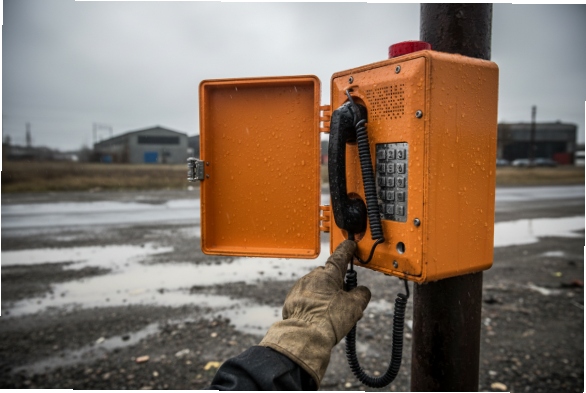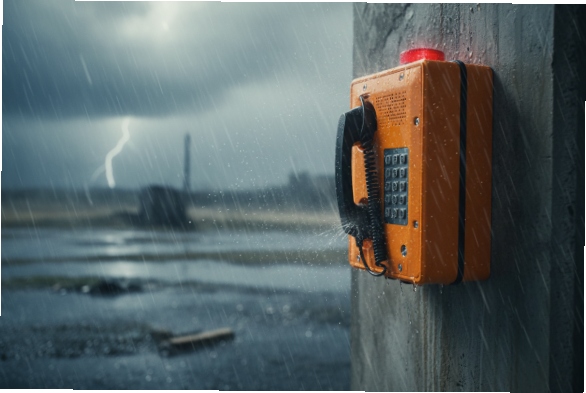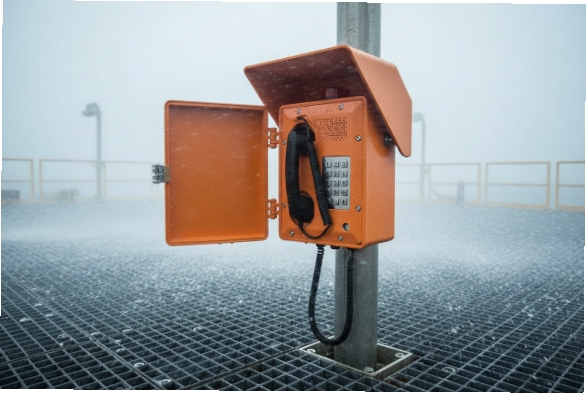
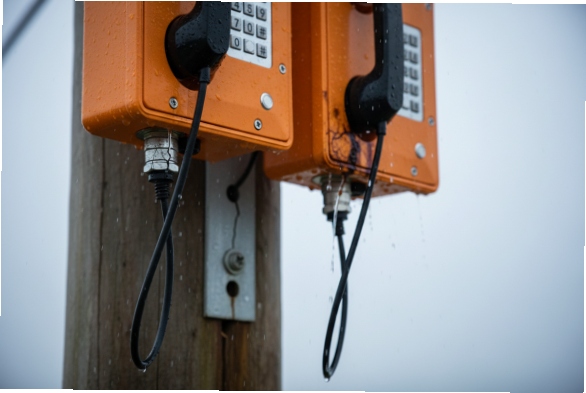
A weatherproof telephone can have perfect electronics and sealing, but one wrong cable gland choice can still let in salt, chemicals, or UV damage and kill the system.
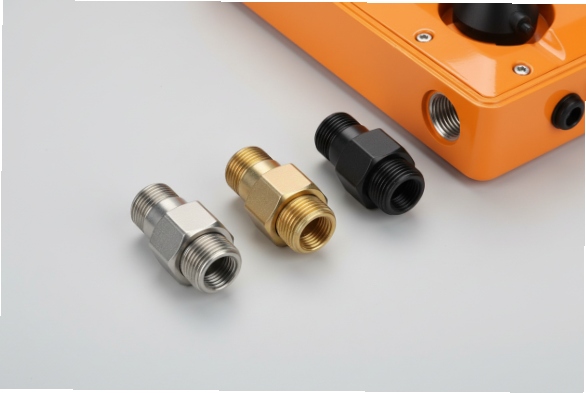
For weatherproof telephones I choose cable glands by environment: UV-stabilized polyamide for clean outdoor, nickel-plated brass for industrial, and 316L stainless steel for coastal or chemical sites, all rated at least IP66/IP67.
In real projects, the cable gland is often treated as a small hardware accessory. In fact, it is part of the enclosure system. It decides if the IP rating in the brochure is real on the pole, in the tunnel, or on the ship. So it is worth breaking the topic into materials, threads, seals, EMC/Ex performance, and certifications.
Should I specify 316L stainless, nickel-plated brass, or polyamide for coastal and chemical sites?
Many engineers start with a simple question: “Can I just use plastic glands everywhere?” The concern comes later, when rust stains or hairline cracks appear around the cable entry.
For harsh coastal, marine, or chemical sites I specify 316L stainless glands; for standard industrial areas nickel-plated brass is enough, and for non-corrosive outdoor zones UV-stabilized polyamide works well.
How I group environments before choosing a gland material
The first step is to group the site into simple categories. There are clean outdoor areas with sun and rain but almost no aggressive chemicals. There are standard industrial plants with some oil mist, mechanical abuse, and occasional cleaning. There are also very aggressive zones such as offshore platforms, fertilizer plants, or coastal bridges with constant salt fog. Each group pushes us toward a different gland material.
316L stainless steel for the worst conditions
For coastal, marine, or chemical sites, 316L stainless is the safest default. It has very high corrosion resistance, handles salt spray (see 316 vs 304 1), and stands up well in many chemical atmospheres when matched with the right seal material. It also resists impact and vandalism better than plastic. The cost is higher, but the replacement cost of a corroded phone station on a jetty or in a refinery is much higher than the price difference of a gland.
Nickel-plated brass for tough but moderate environments
In many factories, power plants, and tunnels, nickel-plated brass gives a good balance. The metal body handles mechanical stress and offers better EMC behavior than standard plastic. The nickel layer provides moderate corrosion resistance that is fine for indoor or semi-sheltered areas. In damp but non-saline outdoor sites, nickel-plated brass often runs for many years without visible damage, as long as the plating quality is good and the enclosure material is compatible.
UV-stabilized polyamide for general outdoor
For clean outdoor sites with no strong chemicals or salt, UV-stabilized polyamide 2 (nylon) works well. It is light, non-corrosive, and easy to install. It also avoids galvanic corrosion issues between dissimilar metals. I use it for car parks, campuses, and general building exteriors, where the main risks are UV, rain, and moderate temperature changes.
| Environment Type | Recommended Gland Body | Typical Use Cases |
|---|---|---|
| Clean outdoor, non-corrosive | UV-stabilized polyamide | Campus, public buildings, car parks |
| Industrial, moderate corrosion | Nickel-plated brass | Factories, tunnels, power plants |
| Marine, coastal, chemical | 316L stainless steel | Jetties, offshore, refineries, chemical |
Which thread standards—M20/M25 or 1/2″ NPT—match the enclosure and maintain IP66/67?
A gland can have the perfect material and seal, but the wrong thread type will still ruin the installation. Leaks often start from a mismatched thread or adapter.
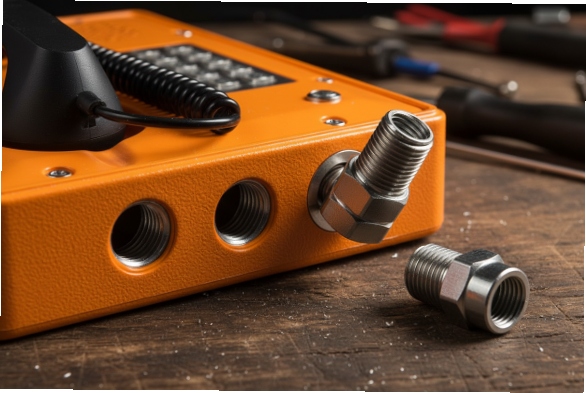
I always match cable gland thread to the enclosure standard: M20/M25 for metric housings, 1/2″ NPT for NPT hubs, using certified adapters only when needed to keep IP66/67.
Why the thread type matters more than many people think
The thread does more than hold the gland in place. It defines how the sealing washer sits against the enclosure wall and how torque spreads over the surface. A correct pairing keeps the gasket compressed evenly and preserves the IP rating. A mismatched thread can leave tiny paths for water and dust, even when the gland “feels” tight with a wrench. So the first rule is simple: follow the enclosure drawing.
Metric vs NPT in weatherproof telephone housings
Many European and Asian weatherproof telephone housings use metric threads, most often M20 or M25 3. These give enough room for standard power and signal cables, and they pair well with flat sealing washers on smooth, painted walls. North American and some oil and gas markets still prefer NPT, often 1/2″ NPT 4, with tapered threads that seal gradually as they tighten. When the housing has molded or machined NPT hubs, I pick glands with matching NPT threads to avoid stress or cracks.
Using adapters without losing IP rating
Sometimes the site stock is metric but the enclosure hub is NPT, or the opposite. In that case, I avoid homemade combinations like wrapping tape or forcing threads. Instead, I use certified thread adapters 5 that carry their own IP rating and, if needed, Ex rating. The adapter gives a proper sealing surface and restores the protection level. I also check that the adapter’s gasket material matches the environment, not just the thread shape.
Simple checklist for thread selection
I keep a short checklist: read the enclosure datasheet for thread type and maximum number of entries, choose glands with the same thread standard, add flat or O-ring seals as specified, and use only certified adapters when mixing standards. This small discipline prevents many leaks and keeps the IP66/67 or higher rating valid in real conditions.
| Enclosure Type | Typical Thread Standard | Gland Choice |
|---|---|---|
| EU/Asia GRP or metal housing | M20 / M25 | Metric glands with flat gasket |
| North American metal housing | 1/2″ NPT | NPT glands with tapered thread |
| Mixed or retrofit installations | NPT ↔ M adapters | Certified adapters + right glands |
Do EMC and Ex-rated glands with EPDM/NBR seals cover temperature and chemical resistance needs?
In heavy industry, the cable entry must do more than keep the rain out. It must handle EMC noise, explosive atmospheres, and chemicals, all while holding the same IP rating.
For demanding sites I use EMC or Ex-rated glands with the right seal material: EPDM for water and UV, NBR for oils and fuels, and extras like 360° shielding where EMC is critical.
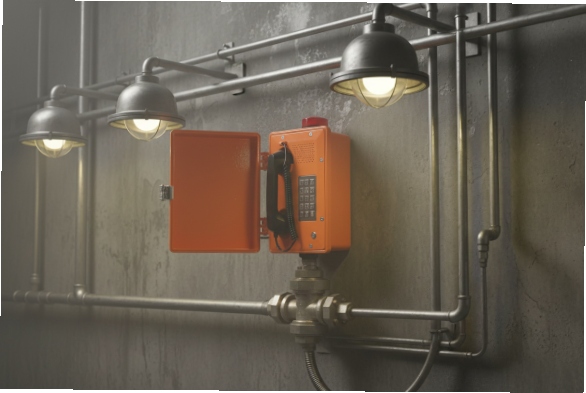
EMC glands for noisy electrical environments
In plants with large motors, VFDs, or long copper runs, the weatherproof telephone and its cable can pick up noise. EMC glands 6 help by bonding the cable shield to the enclosure in a controlled way. They often use a spring or clamp that grips the braid or foil and gives a 360° connection to the metal body. When that body is bonded to earth, the shield has a clean path for interference currents. I use EMC glands on shielded Ethernet, control, or audio cables whenever the EMC plan calls for it.
Ex-rated glands for hazardous areas
In ATEX or IECEx zones, standard IP66 glands are not enough. Ex-rated glands 7 are tested so they do not become an ignition source. They may include compound barriers, specific clearances, and temperature markings. When a weatherproof telephone is certified for Zone 1 or Zone 2, the cable gland must have matching Ex type, gas group, and temperature class. It is not safe to mix a general-purpose IP gland with an Ex d or Ex e enclosure and assume the system stays certified.
Choosing between EPDM and NBR seals
The body of the gland is only half the story. The internal seals and grommets often use elastomers like EPDM, NBR, silicone, or FKM/Viton. For general outdoor use with rain, UV, and ozone, EPDM 8 is a solid choice. It holds up well in weather and has a good temperature range. When the cable can be exposed to oil, fuel, or many hydrocarbons, NBR is stronger. In hot chemical service, FKM or similar materials may be better, even though they cost more. Matching the seal compound to the site chemistry prevents swelling, cracking, or hardening that would kill the IP rating.
Covering temperature and chemical needs with the right mix
To cover both temperature and chemistry, I read the gland datasheet for its full temperature range with the selected seal material. Many Ex and EMC glands list a lower and upper service temperature and also list key chemical resistances. I then compare that list with the process fluids, cleaning agents, and ambient temperatures at the site. This simple cross-check is just as important as the IP66/67 mark, especially in refineries, chemical plants, or hot engine rooms.
| Seal Material | Best For | Less Suitable For |
|---|---|---|
| EPDM | Water, UV, ozone, outdoor | Oils, fuels, many hydrocarbons |
| NBR | Oils, fuels, lubricants | Strong weathering and ozone load |
| FKM / Viton | High temp, aggressive chemicals | Very low-temperature climates |
| Silicone | Very low and high temperatures | Many oils and solvents |
What clamping range, strain relief, and certifications (IP68/ATEX/UL) should be required?
Even with the perfect material and thread, a cable that slips or pulls out under load can break the line or open a leak path. Certifications also decide if the inspector will sign off.
I match the gland’s clamping range closely to the cable diameter, require real strain relief, and look for certifications like IP68, ATEX, and UL to fit the project’s safety and compliance needs.
Clamping range and choosing the right gland size
Every cable gland lists a clamping or sealing range, for example 6–12 mm. I always measure the actual cable outer diameter, not just the nominal size on the drawing, because jackets vary between vendors. Then I pick a gland size where the cable diameter sits comfortably in the middle of the range, not at the extreme limit. This gives better sealing and allows for some tolerance. If the cable is too small for the gland, the installer may over-tighten the cap and still fail to get a proper seal.
Strain relief to protect the telephone and the cable
A weatherproof telephone on a pole or wall can see cable movement from wind, vibration, or accidental tugs. Good glands provide strain relief 9 by gripping the jacket evenly around the circumference. This reduces force on the terminals and seals. I avoid “just decorative” glands and look for ones tested to pull-out and bend-resistance standards. In many designs, the gland becomes part of the mechanical chain that protects the internal PCB and terminals from stress.
Understanding the certification stack
Certifications show how far the gland has been tested. IP66/67 is the minimum to match a weatherproof housing. IP68 10 adds depth and time for immersion, which is useful for pits or flood-prone sites. ATEX or IECEx marks are mandatory in explosive atmospheres. UL or CSA marks are often required for North American projects, especially in regulated industries like oil and gas or rail. When the weatherproof telephone itself has ATEX or UL certification, the cable gland must carry compatible marks or the overall approval can be void.
Matching certification to typical customer profiles
Different customer groups care about different labels. An industrial integrator may focus on ATEX and IP68. A campus security team might care more about UL and basic IP66. When I design a standard BOM, I try to choose a gland family that covers all these needs with only small variations. This keeps stock simple while still fitting projects in Europe, North America, and Asia.
| Requirement Type | Typical Target for Weatherproof Telephones |
|---|---|
| Ingress Protection | IP66/IP67 minimum, IP68 for immersion risk |
| Hazardous Area | ATEX / IECEx for Zone 1/2 or Div 1/2 |
| Safety / Market | UL, CSA, or CE depending on region |
| Mechanical | Proven strain relief and pull-out resistance |
Conclusion
Choosing cable glands for a weatherproof telephone means matching material, thread, seals, clamping range, and certifications to the real site environment, not just the catalog picture or lowest price.
Footnotes
-
Comparison of 304 and 316 stainless steel, highlighting 316’s superior corrosion resistance. ↩
-
Discusses the benefits of polyamide cable glands for standard outdoor applications. ↩
-
Technical data on ISO metric threads (M20, M25) for cable gland selection. ↩
-
Explains the NPT thread standard commonly used in North American installations. ↩
-
Overview of thread adapters and reducers for ensuring compatibility in cable entry systems. ↩
-
Description of EMC cable glands and their role in shielding against electromagnetic interference. ↩
-
Guide to ATEX and IECEx cable glands for hazardous area compliance. ↩
-
Details on EPDM rubber properties, including resistance to weathering and ozone. ↩
-
Explanation of strain relief bushings and their importance in protecting cable connections. ↩
-
Definition of the IP68 rating for submersion protection in enclosures. ↩