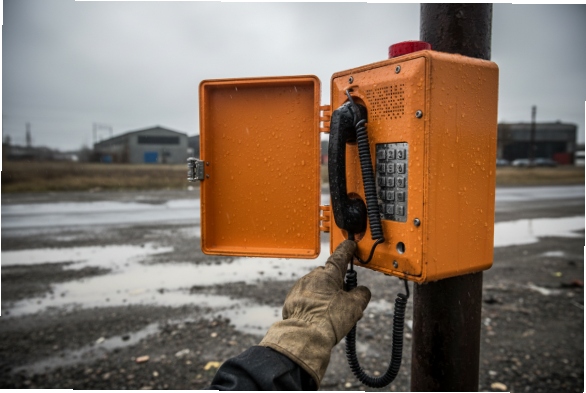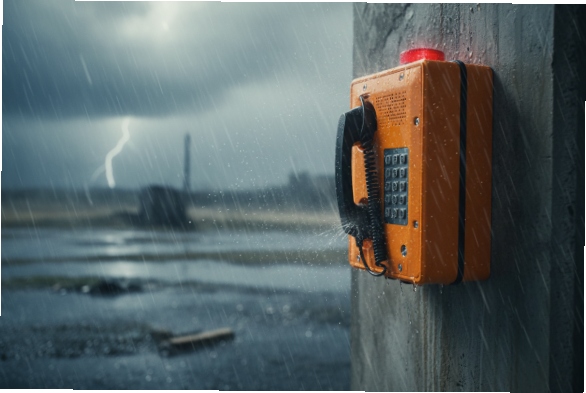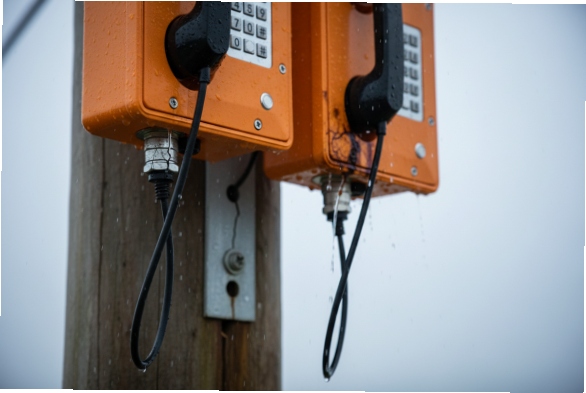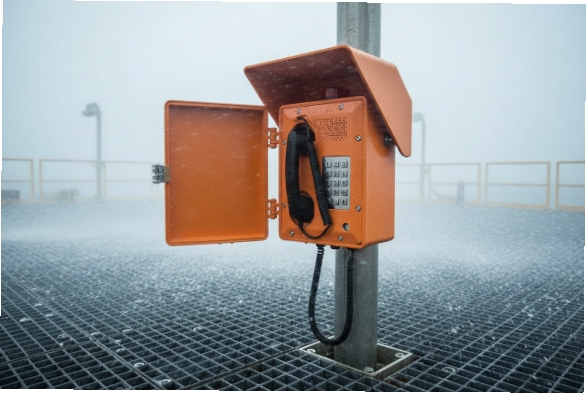
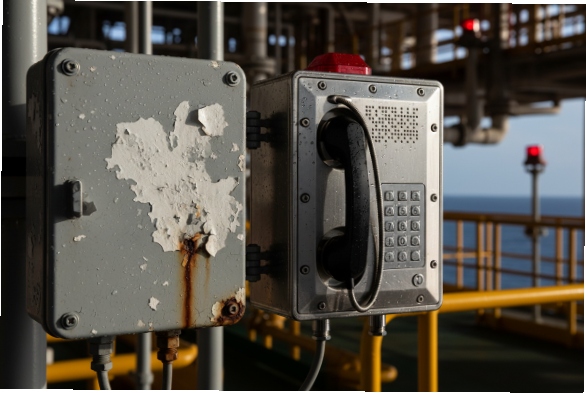
Corrosion is the silent killer of industrial electronics. In offshore oil rigs or chemical plants, a telephone isn’t just fighting the risk of explosion; it’s fighting a daily battle against salt spray, hydrogen sulfide, and acidic humidity. If the enclosure rots, the "explosion-proof" integrity vanishes.
For harsh environments, the gold standard is NEMA 4X (or IP66 with specific corrosion protections). The most effective materials are Marine Grade Stainless Steel (316L) or Glass Reinforced Polyester (GRP). Coated aluminum is acceptable for onshore use but often fails offshore. Always check for "Salt Spray Test" validation in the datasheet.
The Salt and The Acid: Understanding the Threat
At DJSlink, we’ve seen competitors’ phones turn into piles of rust within six months on a North Sea platform. Why? Because they focused on the "Ex" rating but ignored the "Environment."
- Pitting: Tiny holes in the metal that compromise the flamepath.
- Crevice Corrosion: Rotting under the gaskets or screw heads.
- Galvanic Corrosion 1: When dissimilar metals (like a steel screw in an aluminum body) eat each other.
To survive, you need to specify the right armor for your battle.
Do 316L, duplex, or coated alloys meet chemical exposure?
Not all "Stainless Steel" is created equal. "Standard" stainless steel will rust in a marine environment. You need to pay for the right grade.
316L Stainless Steel (Marine Grade) is the industry requirement for offshore and high-acid environments due to its molybdenum content, which resists pitting. Duplex stainless steel is even stronger but cost-prohibitive for telephones. Coated aluminum alloys are suitable for general industrial use but require strictly controlled painting processes to survive coastal zones.
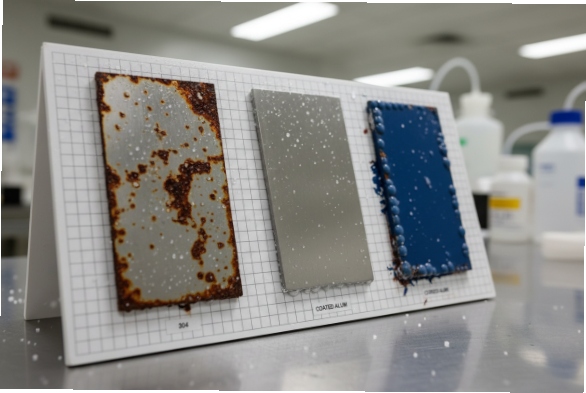
The Material Hierarchy
| Material | Cost | Corrosion Resistance | Best Application |
|---|---|---|---|
| Aluminum Alloy (coated) | $ | Low/Medium | Warehouses, Factories, Onshore Oil & Gas. |
| Stainless Steel 304 | $$ | Medium | Food Processing (Washdown), Indoor Chemical. |
| Stainless Steel 316L | $$$ | High | Offshore Rigs, Ships, Coastal Refineries. |
| GRP (Polyester) | $$ | Extreme | Acidic environments where metal fails. |
Critical Insight: DJSlink offers both. For an inland refinery, our powder-coated aluminum is cost-effective. But for a rig in the Gulf of Mexico, we strictly advise 316L or GRP 2. If you cheap out on 304 for offshore, you will be replacing the units in a year.
Are fasteners, hinges, and glands corrosion-matched?
A chain is only as strong as its weakest link. A 316L stainless steel housing is useless if the hinge pins rust shut or the screws seize up.
Yes, all external components must be galvanically compatible. We use 316 Stainless Steel for all external fasteners and hinges to prevent galvanic corrosion. Cable glands should be Nickel-Plated Brass or Stainless Steel; avoiding direct contact between bare aluminum and stainless steel is critical to preventing "seizing" or rapid oxidation.
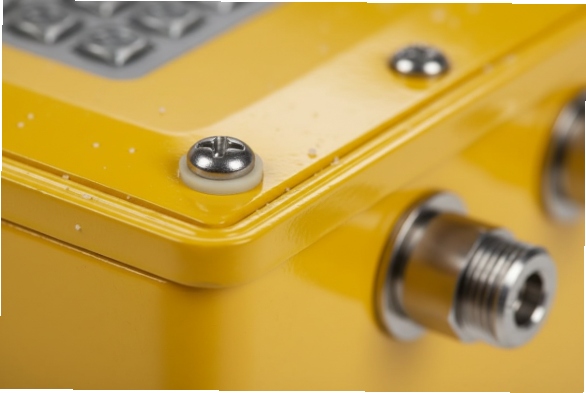
The "Battery Effect" (Galvanic Corrosion)
If you screw a stainless steel bolt directly into a bare aluminum housing and add saltwater, you create a battery. The aluminum becomes the "anode" and corrodes rapidly to protect the steel.
The DJSlink Solution:
- Passive Separation: We use nylon washers or specialized grease to break the electrical path between dissimilar metals.
- Matched Materials: On our premium lines, the housing, the keypad plate, and the screws are all 316L. Same metal = no battery effect.
- Glands: Never use a plain brass gland on a stainless steel phone. Use Nickel-Plated Brass or SS316 glands to ensure the entry point doesn’t become the failure point.
Do labels and windows resist UV and solvents?
Industrial cleaning crews often spray everything with harsh solvents. If your safety label wipes off, the phone is legally non-compliant. If the display window turns yellow from the sun, the phone is unusable.
Labels must be chemically etched into metal (Stainless Steel) or protected by a UV-resistant overlay to survive solvents like acetone. Display windows should be made of UV-stabilized Polycarbonate or Tempered Glass to prevent yellowing ("crazing") and brittleness caused by long-term sun exposure.
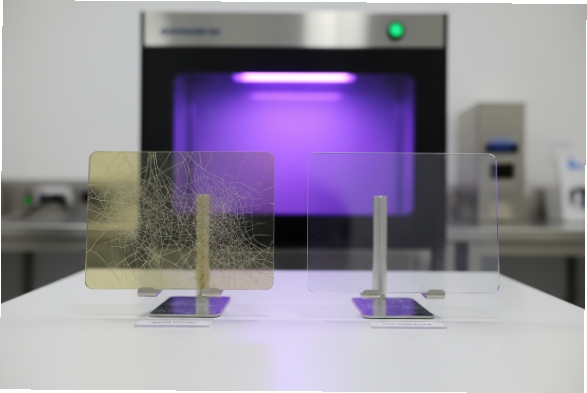
The "Fading" Threat
- Labels: A simple printed sticker will peel off in high humidity or fade under UV light. DJSlink uses laser-engraved or chemically etched stainless steel plates riveted to the body. Even if the paint fails, the safety data remains legible.
- Windows: Cheap plastics absorb UV radiation, turning yellow and cracking (crazing). This ruins the IP rating 3. We specify UV-Stabilized Polycarbonate 4 that can handle years of direct desert sun without degrading.
What tests validate long-term corrosion performance?
Don’t take the manufacturer’s word for it. Look for the standardized test results in the technical qualification file.
The industry benchmark is the Neutral Salt Spray (NSS) test (ASTM B117 or IEC 60068-2-11). A high-quality offshore telephone should pass at least 1000 hours of salt spray exposure without "Red Rust." Additional tests include SO2 (Sulfur Dioxide) exposure for simulating industrial pollution.
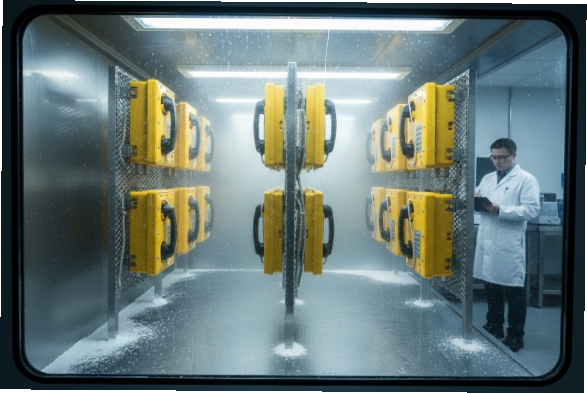
Interpreting the Datasheet
When you compare DJSlink with a cheaper competitor, check the "Environmental Specs":
- Standard: 96 Hours Salt Spray. (Okay for indoor/light industrial).
- High Performance: 500-1000 Hours Salt Spray. (Required for coastal/offshore).
- Severe: 2000+ Hours. (Usually requires specialized marine paint systems or GRP).
The Reality Check: If a datasheet claims "Marine Ready" but doesn’t list a Salt Spray hour rating, be suspicious. True durability is measured in hours of suffering in a test chamber.
Conclusion
Corrosion resistance is the defining factor for the lifespan of your investment. While NEMA 4X 5 is the baseline, the real protection comes from choosing 316L Stainless Steel 6 or GRP for harsh areas, ensuring galvanic compatibility of fasteners, and demanding proof of 1000+ hour Salt Spray testing. At DJSlink, we engineer our phones not just to pass the explosion test, but to survive the salt, sun, and chemicals that attack them every day.
Footnotes
-
An electrochemical process in which one metal corrodes preferentially when it is in electrical contact with another, in the presence of an electrolyte. ↩
-
Glass Reinforced Plastic, a composite material made of a plastic matrix reinforced by fine fibers of glass. ↩
-
Ingress Protection ratings defined by IEC 60529. ↩
-
A group of thermoplastic polymers containing carbonate groups in their chemical structures. ↩
-
NEMA Enclosure Types, standards for electrical enclosures used in North America. ↩
-
A molybdenum-bearing austenitic stainless steel known for its corrosion resistance. ↩