
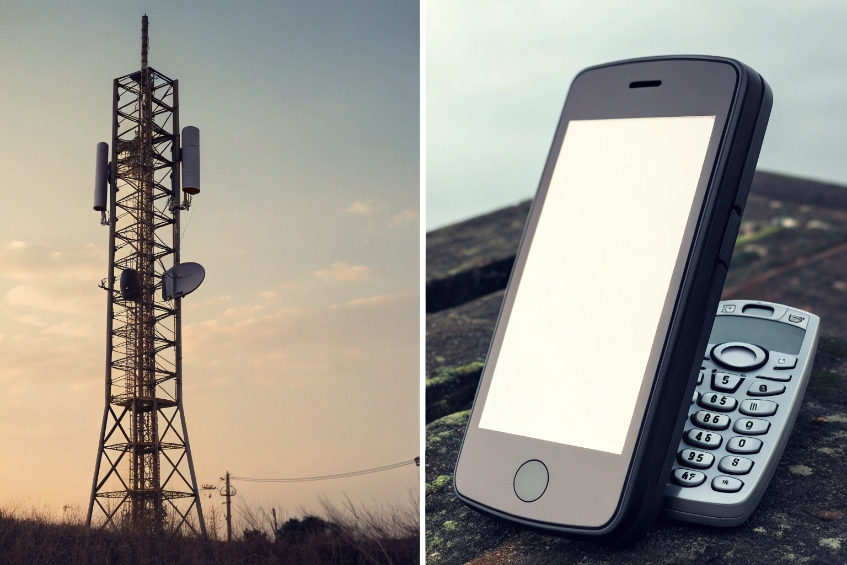
People still ask “Is this a GSM phone?” even though networks have moved to LTE and 5G. The labels in marketing pages are often more confusing than helpful.
A GSM phone today simply means a SIM-based phone on GSM-family networks; in practice you need an unlocked LTE/5G device with the right bands and VoLTE, not a 2G-only “GSM” handset.
Modern mobile networks are all descendants of GSM (Global System for Mobile Communications) 1 on the signaling side, but the old 2G/3G layers are being shut down in many countries. So the real questions are: does the device support my carrier’s LTE/5G bands, is VoLTE enabled, and can I integrate it (or a GSM gateway) cleanly with my SIP PBX? The rest of this article walks through those points and also why GSM–SIP calls sometimes sound worse than pure SIP.
How does GSM compare with LTE and VoLTE for me?
If you still think of “GSM vs CDMA”, you are stuck in a 2010 mindset while your carriers are busy switching off 2G and 3G.
GSM is the older 2G/3G radio and voice stack, LTE is the 4G data layer, and VoLTE is voice over LTE. For real-world use, you want LTE/5G with VoLTE, not a GSM-only device.
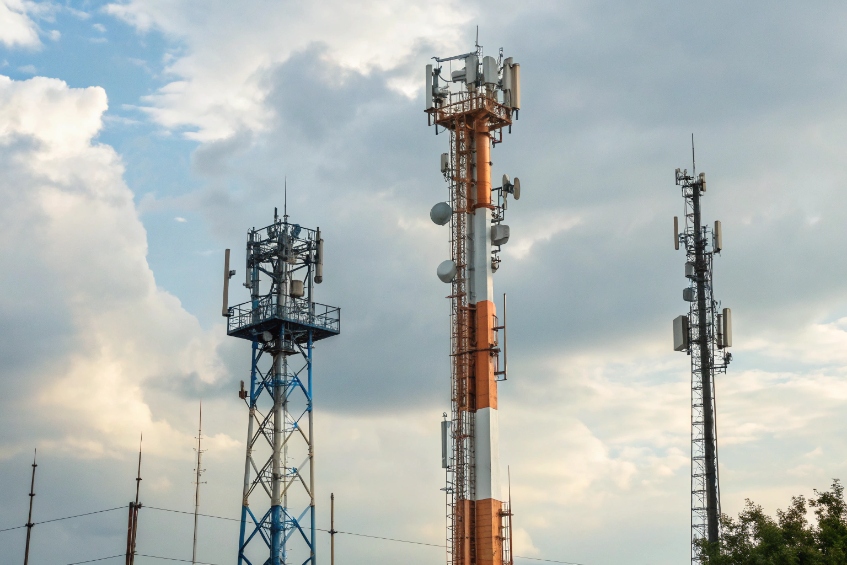
Where GSM, LTE, and VoLTE sit in the stack
At a high level, you can think of it like this:
| Layer | GSM (2G/3G era) | LTE / VoLTE (4G/5G era) |
|---|---|---|
| Radio access | 2G GSM / EDGE, 3G UMTS / HSPA | LTE, LTE-Advanced, 5G NR |
| Voice path | Circuit-switched (GSM, AMR, etc.) | VoLTE / VoNR (SIP/RTP over IP on the radio) |
| Identification | SIM card | SIM or eSIM |
| Services | Voice, SMS, basic data | HD voice, data, VoLTE, VoWiFi, rich services |
Old GSM voice is “circuit-switched”. The network sets up a dedicated channel for your call. Long Term Evolution (LTE) 2 by itself is data only, so Voice over LTE (VoLTE) 3 uses SIP/RTP over the LTE data bearer. To you it still looks like a normal call, but technically it behaves closer to a VoIP call through a carrier-grade SIP core.
For your purchasing decisions:
- A 2G/3G-only GSM phone is basically a dead end in many markets. It may register only on a shrinking 2G layer, or not at all.
- A 4G LTE phone without VoLTE certification might fall back to 3G for voice, or fail voice once 3G is retired.
- A modern LTE/5G phone with VoLTE is the safe path. It stays compatible as operators re-farm spectrum.
What matters more than the word “GSM”
Instead of chasing the “GSM” label, I always look at:
- Bands: which LTE and 5G bands the device supports vs the target carriers.
- VoLTE / VoWiFi: confirmed support and, in some regions, explicit carrier whitelisting.
- Unlocked status: carrier-unlocked or factory-unlocked so you can drop in local SIMs or eSIM profiles.
- Dual SIM / eSIM: helpful if you want separate work and personal numbers, or one SIM for voice and one for data.
For IoT, feature phones, or GSM gateways, pure 2G is still alive in some regions, but I treat it as a short-to-medium term technology. When I design hardware for the long term, I prefer LTE-M (Cat-M1) 4 or Narrowband IoT (NB-IoT) 5 modules where the carrier supports them, rather than betting on 2G being kept forever.
Can my GSM gateway connect to a SIP PBX?
This is where “GSM” really matters for PBX work: not in the handsets, but in how you bring mobile networks into your VoIP environment.
Yes. A GSM gateway can connect to your SIP PBX as a trunk or FXO-style interface, so your PBX can place and receive calls through mobile networks as if they were another carrier.
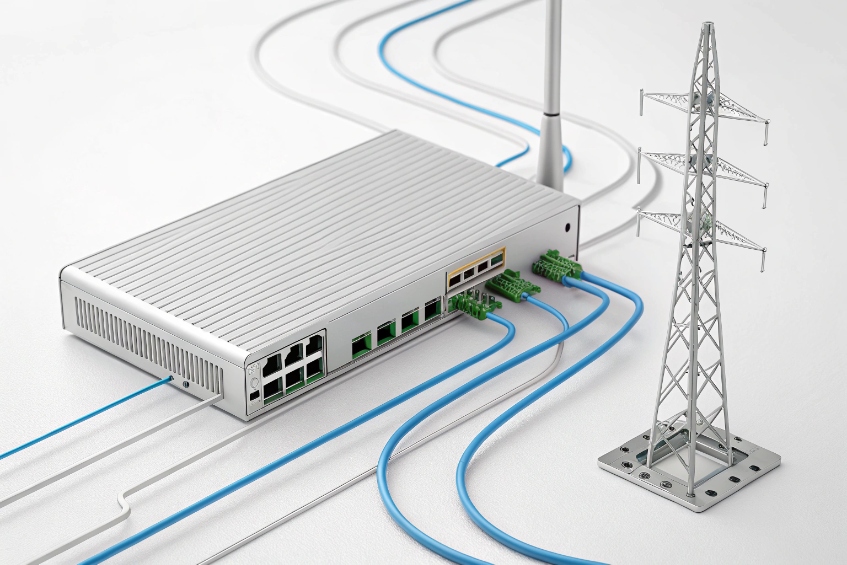
What a GSM gateway actually does
A GSM (or LTE) gateway is basically a small base station client with SIM slots on one side and SIP or analog ports on the other. It:
- Registers to the mobile network using a SIM (or multiple SIMs).
- Presents itself to your PBX as a SIP trunk using SIP (RFC 3261) 6, multiple SIP accounts, or analog lines.
- Bridges audio between GSM codecs on the radio side and G.711 (or another VoIP codec) on the SIP side.
Common use cases:
- Mobile fallback: if your SIP carrier or fixed lines fail, PBX can still dial out via mobile.
- Least-cost routing: route calls to mobile numbers through GSM where that is cheaper.
- Local presence: use local mobile SIMs in regions where fixed SIP lines are hard to obtain.
- SMS integration: some gateways expose SMS via API or SIP MESSAGE.
Typical connection patterns:
| Topology | PBX sees it as | Good for |
|---|---|---|
| SIP GSM gateway | SIP trunk / peers | Modern IP PBX and UC systems |
| Analog GSM desk gateway | FXO into legacy PBX | Older PBXs with only analog trunks |
| Multi-SIM SIP gateway | Multiple trunks/accounts | Load-sharing, multi-carrier SIM setups |
Things to watch when connecting to SIP
To make a GSM–SIP bridge behave well in a serious SIP environment:
- Put the gateway on a voice/security VLAN, not a random LAN segment.
- Use SIP over UDP/TCP with predictable RTP port ranges, and set firewall rules accordingly.
- Normalize dial plans so PBX and gateway agree on how to dial mobile numbers (with or without country prefixes).
- Decide who controls caller ID: PBX, gateway, or SIM/carrier defaults.
In projects where we deploy SIP intercoms and emergency phones, GSM gateways are often a backup path. They sit behind the same PBX as the SIP trunks, but only pick up outbound calls when the primary carrier or fixed internet link fails. That way, you still have minimal voice reach even during a WAN outage.
Will my GSM device work in my target countries?
Buying hardware and then finding out it only connects on 2G in one small corner of your target market is a very expensive way to learn about bands.
A GSM-family device will work abroad only if it supports the right LTE/5G bands and local voice features like VoLTE. Band charts and 2G/3G shutdown plans matter more than the word “GSM” on the box.

Check bands and generations, not just SIM slots
For international use, I always think in three checks:
-
Generations
- Is 2G/3G still active in the target country? Many are shutting them down.
- Does the device support LTE for data and at least one mainstream 4G band there?
-
Frequency bands
- Every region uses different band mixes (e.g., band 3, 7, 20 in parts of Europe; other sets in the Americas, Asia, etc.).
- Your device must list those bands in its specs, or you will see limited or no service.
-
Voice on LTE (VoLTE)
- Some operators only allow voice if the device is on their VoLTE whitelist.
- “Works with data only” is not enough if you need normal voice calls on that SIM.
A simple risk table:
| Device type | Risk level abroad | What I check first |
|---|---|---|
| 2G/3G-only GSM handset | Very high | Assume short life; avoid for new purchases |
| LTE phone but no band list | High | Look up exact model + supported bands |
| “US-only” carrier-locked phone | Medium to high | Unlock status and foreign band support |
| Factory-unlocked “global” LTE/5G | Lower, but still check | Confirm bands for each target country |
| LTE/5G IoT/GSM gateway | Medium | Module’s band set and regional SKUs |
Practical steps before you deploy or travel
For personal phones or field devices:
- Choose factory-unlocked, multi-band LTE/5G models. “Global” or “international” often means more bands.
- Prefer models that support eSIM, so you can easily load local prepaid plans.
- Double-check at least one online band compatibility database for your exact model and target carriers.
For GSM gateways or industrial devices:
- Order regional variants of the radio module when available. Vendors often offer “EU”, “US”, “APAC” SKUs with different band sets.
- Check if the operator is planning 2G/3G shutdown during the lifetime of your deployment.
- If you do large fleets, talk to carriers about M2M/MVNO profiles on LTE Cat-M or NB-IoT instead of only classic GSM.
If you do this work up front, “GSM” becomes a family of options instead of a gamble. The device either has the right bands and features for your countries, or it does not, and you decide before you buy.
Why do GSM-SIP calls have poor audio quality?
Connecting mobile networks to your SIP PBX sounds simple on paper, but many people are surprised when GSM–SIP calls sound worse than pure SIP–SIP calls.
GSM–SIP calls often sound poor because you combine radio issues, codec transcoding, level mismatches, and jitter. Each extra conversion between GSM and G.711 (or other codecs) adds loss and delay.
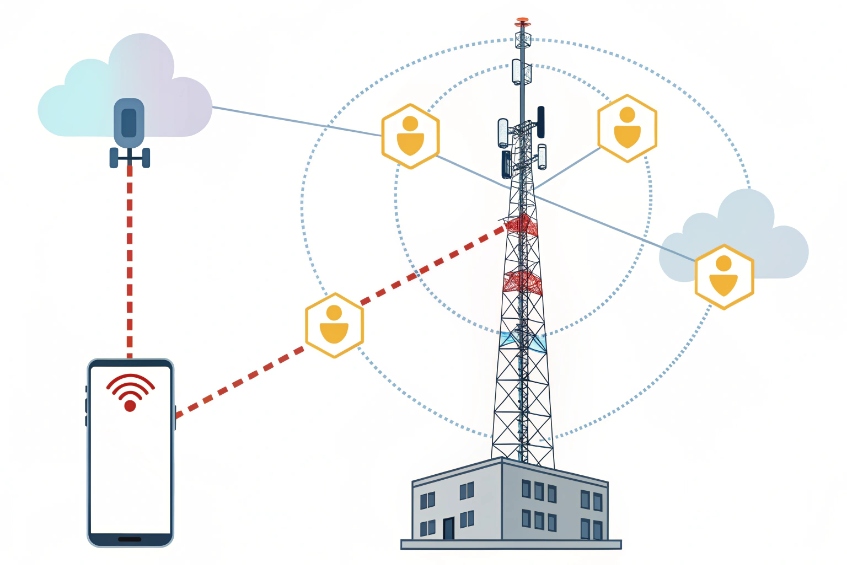
Where quality is lost in the path
A typical GSM–SIP call route looks like:
Mobile handset ⇄ Base station ⇄ Mobile core ⇄ GSM gateway ⇄ SIP PBX ⇄ SIP phone
Each hop can hurt quality:
- Radio side: low signal, interference, or congestion on GSM/UMTS/LTE gives artifacts before the gateway even sees the audio.
- Codec transcoding: GSM/AMR/AMR-WB on the mobile side → transcoded to G.711 or G.729 on the SIP side. Every conversion loses a bit of clarity.
- Jitter and buffering: the gateway must buffer both radio and IP jitter. Poor tuning causes choppiness or delay.
- Echo and levels: if echo cancellation and gain staging are wrong, you hear echo, clipping, or very low volume.
A quick symptom–cause mapping:
| Symptom | Likely causes |
|---|---|
| “Robot” or metallic voice | Low radio signal, heavy transcoding |
| Noticeable one-way delay | Buffers on gateway + radio + network |
| Very low or very loud audio | Level mismatches between GSM and SIP sides |
| Echo when using speakerphones | Weak echo cancellation in gateway or PBX |
| Only GSM calls sound bad | Gateway settings, SIM network quality |
How to improve GSM–SIP voice in real deployments
There are several levers you can pull:
-
Radio conditions
- Place the gateway where the mobile signal is strong and stable. Sometimes an external antenna makes a big difference.
- Use SIMs from carriers with good local coverage at that site.
-
Codec choices
- On the SIP trunk toward your PBX, stick to G.711 as a first choice. Avoid unnecessary extra transcoding (for example, GSM → G.729 → Opus).
- If your gateway allows it, ensure its internal DSP handles GSM/AMR to G.711 cleanly.
-
Jitter buffers and QoS
- Configure jitter buffers on the gateway and PBX to reasonable values, not extremes.
- Put the gateway on a voice VLAN and apply QoS so RTP from the gateway is not competing with bulk data.
-
Gain and echo
- Calibrate input and output levels on the gateway so SIP endpoints see normal volume.
- Enable and fine-tune echo cancellation, especially if calls terminate on speakerphones or analog ports.
-
Routing strategy
- Prefer pure SIP carriers for critical voice paths, and treat GSM gateways as backup or specialized routes (for mobile termination, SMS, or last-resort failover).
- Avoid long “hairpin” paths where a call goes SIP → GSM → SIP → GSM when you could route it once through a more direct SIP trunk.
In many of our own integrations, as soon as we stop double transcoding and clean up radio placement, GSM–SIP audio jumps from “barely usable” to “good enough” for backup and mobile scenarios. It will rarely sound as clean as end-to-end HD SIP, but it does not have to be painful to listen to.
Conclusion
You do not need a “GSM phone” label; you need an unlocked LTE/5G device with the right bands and VoLTE, and, if you bridge mobile to SIP with GSM gateways, a careful design so those calls stay clear and reliable.
Footnotes
-
GSM background and terminology so you can interpret “GSM phone” claims correctly. ↩ ↩
-
LTE overview to understand why “4G data” is separate from the voice layer. ↩ ↩
-
VoLTE basics for checking whether a device can place voice calls on modern LTE networks. ↩ ↩
-
LTE-M summary for long-life IoT designs where 2G is risky or being retired. ↩ ↩
-
NB-IoT overview for low-bandwidth devices that need wide coverage and long battery life. ↩ ↩
-
SIP call setup reference for understanding how gateways and PBXs signal voice sessions. ↩ ↩








