
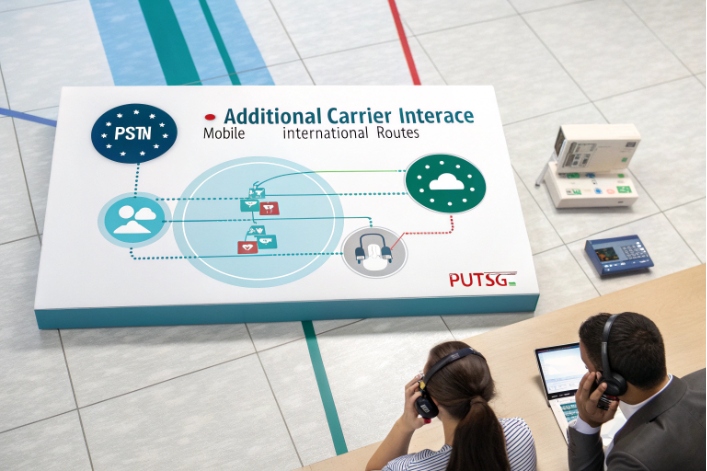
Carrier outages and cost swings make voice networks fragile. If all your calls depend on one carrier, a single failure can take your whole contact center offline.
Additional Carrier Interface (ACI) is an architecture that connects a phone system or contact center to multiple telecom carriers through one integration, so you gain redundancy, failover, and cost control instead of relying on a single provider.
In this article I use ACI to mean “Additional Carrier Interface” in telephony, not Cisco’s data center ACI 1. The goal is simple: keep calls flowing even when one carrier fails or underperforms. ACI sends traffic over several carriers at the same time, and the platform decides which path to use based on cost and quality. This matters a lot for contact centers and SIP devices, such as intercoms and emergency phones, that must stay reachable at all times.
Where is ACI used in telephony networks?
Many teams still plug their PBX phone system 2 or platform into one “trusted” carrier and hope for the best. When that carrier has trouble, every inbound and outbound call suffers at once.
ACI is used anywhere call continuity and reachability matter most, especially in contact centers, UC platforms, SIP trunking hubs, and global enterprises that need multi-carrier redundancy and better international routing.

Typical ACI deployment scenarios
In a classic setup, ACI sits between the enterprise phone system and several carriers. From the PBX side, there is only one integration. From the carrier side, there are many trunks. The ACI layer decides which carrier to use for each call.
Contact centers use ACI to protect customer experience. When one carrier shows high post-dial delay or a drop in answer–seizure ratio (ASR), traffic shifts to another carrier. The agents keep talking, and callers do not see the underlying problem. For global traffic, ACI picks the carrier with better completion and caller ID presentation for each country.
Unified communications platforms use ACI for the same reason, but often at a larger scale. A regional office might keep a local carrier for domestic calls, while the ACI layer chooses a different carrier for mobile or international traffic. This can cut costs and improve voice quality at the same time.
From the view of a SIP hardware vendor like us, ACI explains why customers want carrier diversity behind a single SIP interface. Door stations, emergency phones, and industrial endpoints all register or send calls to one platform. That platform then uses ACI to fan out across different carriers in the background.
| Environment | How ACI is used | Main benefit |
|---|---|---|
| Inbound contact centers | Multi-carrier inbound DID and toll-free termination | Fewer outages, better reachability |
| Outbound campaigns | Multiple carriers for global dialing | Better ASR and caller ID |
| UC / enterprise voice | Mix of local, mobile, and international trunks | Cost control and quality per region |
| Safety / emergency voice | Redundant paths for SOS, intercom, and elevator lines | No single carrier failure point |
How does ACI connect to PBX trunks?
On paper, “multi-carrier” sounds simple. In real networks, mixing many carriers into one PBX or contact center can create routing mess, dial-plan chaos, and complex failover logic.
ACI connects to PBX trunks by acting as a single logical trunk to the PBX or SBC on one side and maintaining separate trunks to multiple carriers on the other side, with routing rules that choose the best carrier per call.
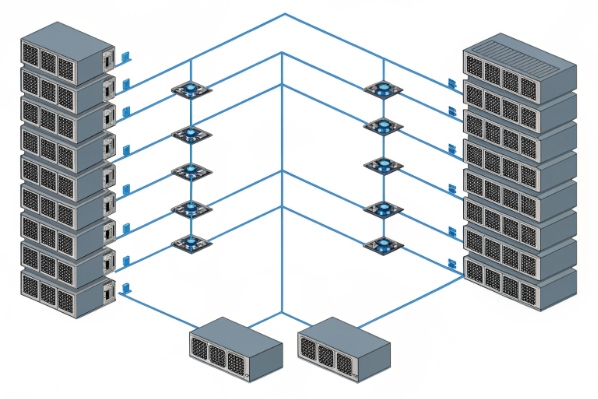
Logical view: one trunk in, many trunks out
Most PBXs and contact center platforms prefer to see one or a few trunk groups, not dozens. ACI solves this with a “hub” design. On the PBX side, you define a small set of SIP trunks (or legacy PRI/E1 in older sites) into an SBC or carrier interface element. On the far side of that element, you maintain several independent carrier trunks.
For SIP, the ACI layer is often a Session Border Controller (SBC) 3 or dedicated carrier interface module that knows how to:
- Register or peer with multiple carriers at the same time
- Keep separate routing and credentials per carrier
- Apply least-cost or quality-based routing rules
- Detect failures and shift calls to backup carriers
From the PBX point of view, all outbound calls go to the same SIP trunk group. The PBX only needs rules for dialed numbers and extensions. The ACI layer then decides, “This call to Country A should go over Carrier 1, but this call to Country B should go over Carrier 2.”
For inbound calls, each carrier delivers DIDs or toll-free numbers into the ACI layer. The ACI then hands those calls to the PBX over the same trunk set. If one carrier cannot deliver a specific number block, ACI may provide backup paths or use alternate numbers, depending on the design.
| Side | Sees what | Main job |
|---|---|---|
| PBX / contact center | One or few trunk groups to the ACI interface | Simple dial plan and queue logic |
| ACI / SBC | Many trunks, one per carrier | Routing, failover, number translation |
| Carriers | One enterprise “peer” each | Deliver or accept calls for their number sets |
For legacy TDM, the concept is the same, only with physical PRI/E1 circuits instead of SIP trunks. A gateway or SBC still sits in the middle and acts as the ACI layer.
Is ACI relevant during SIP migration?
When teams migrate from TDM to SIP, they already deal with many moving parts. It can feel tempting to simplify and choose one big SIP carrier instead of managing several.
ACI stays very relevant during SIP migration, because it lets you mix old and new trunks, add SIP carriers gradually, and reduce the risk of outages while you shift traffic step by step.
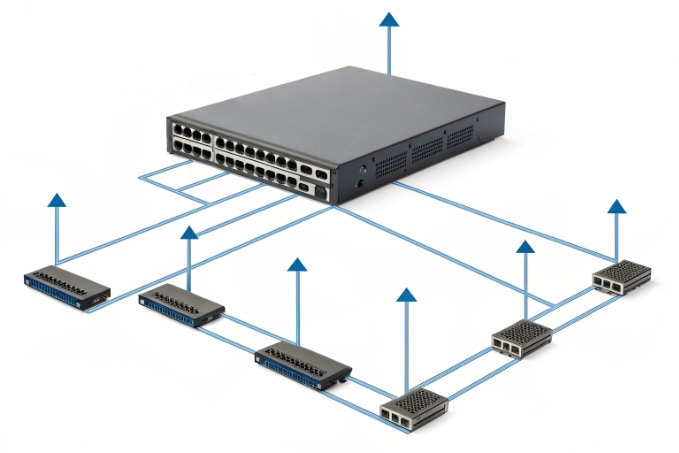
Using ACI as a safety net in hybrid stages
Most real migrations are hybrid for a while. Some sites keep PRI circuits. Others move to SIP. Certain numbers move earlier than others. ACI gives you a stable “middle layer” while this happens.
In one common pattern, the SBC or ACI module connects to:
- Legacy TDM trunks from your old carrier
- New SIP trunks from one or more SIP carriers 4
- The existing PBX and any new IP-based platforms
You can then move traffic in phases:
- Start sending a small share of outbound calls over a new SIP carrier.
- Move low-risk inbound numbers first, then high-value DIDs later.
- Test international routes on multiple carriers and keep the best mix.
If a new carrier has issues, ACI makes it easier to swing traffic back to a known-good path. That reduces business risk and helps your team learn SIP operations without a “big bang” cutover.
Carrier diversity also helps with modern requirements like caller ID trust, numbering changes, and regional regulations. Different carriers may handle STIR/SHAKEN 5 or local CLIs in different ways. With ACI, you can prefer the carrier that gives better attestation or more stable presentation for each type of call.
For projects that involve SIP endpoints in the field—intercoms, emergency phones, industrial phones—ACI can protect those critical lines during migration. The device always calls the same SIP registrar or SBC. Behind that, you can change carriers and routes without touching each device.
| Migration step | How ACI helps |
|---|---|
| Early pilot | Route only a fraction of calls to new SIP |
| Hybrid TDM + SIP | Mix old and new trunks behind one interface |
| Geographic rollout | Use different carriers per region |
| Post-migration tuning | Adjust carrier mix based on quality and cost |
What modern alternatives replace ACI?
Traditional ACI often feels like specialized hardware or a licensed module in a legacy platform. In cloud and SIP worlds, the same ideas live in newer forms with different names.
Modern alternatives to classic ACI include multi-carrier–aware SBCs, cloud contact center platforms with built-in carrier diversity, BYOC models, and CPaaS-based routing engines that do quality-based carrier selection.
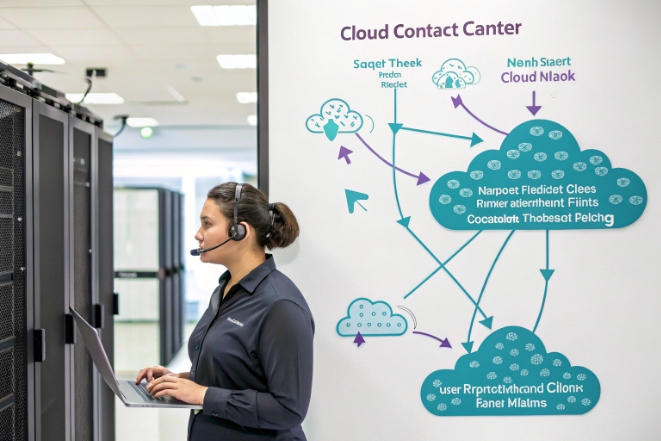
From hardware interface to software and cloud routing
Today, the “ACI role” is usually played by software:
- Session Border Controllers (SBCs) that support many SIP trunks and fine-grained routing rules
- Cloud contact centers that abstract carriers behind their own network
- CPaaS platforms that provide programmable call control and carrier selection 6
With these tools, you no longer need a special “ACI card.” Instead, you configure routing tables, priorities, and rules. For example, you might:
- Use Carrier A first for domestic landlines, Carrier B for mobile, Carrier C for a specific country
- Fall back from one carrier to another when ASR drops or post-dial delay grows
- Shift traffic during maintenance windows or regional outages
Some cloud providers bundle all of this into their own backbone. They peer with many carriers, but you only see one “smart trunk” into the cloud. Others expose a Bring Your Own Carrier (BYOC) model 7, where you plug your chosen carriers into the platform. In both cases, the ACI function is there. It just looks more like “routing policies” than a separate interface.
As a SIP endpoint manufacturer, the pattern is clear. Customers want carrier choice and failover. They also want simple integration for their devices and PBXs. Modern SBCs and cloud routing engines give them that. Our devices point at one SIP domain, and the carrier complexity stays behind the scenes.
| Approach | Where used | ACI-like benefit |
|---|---|---|
| On-prem SBC | Large enterprises, data centers | Multi-carrier SIP, policy and security |
| Cloud CCaaS carrier mesh | Contact centers in the cloud | Built-in redundancy and global reach |
| BYOC into CCaaS / UCaaS | Enterprises with their own carriers | Keep contracts, gain cloud flexibility |
| CPaaS routing engine | Programmable voice apps | Dynamic routing from code and APIs |
In short, ACI as a concept is alive and well. The label may fade, but the need for multi-carrier resilience and cost control is only stronger now that voice runs on IP and cloud.
Conclusion
Additional Carrier Interface is no longer a single box; it is a design pattern for using many carriers behind one voice platform to gain redundancy, quality, and control.
Footnotes
-
Cisco’s Application Centric Infrastructure explains the data center ACI the article is not about. Back ↩
-
Learn how a private branch exchange (PBX) phone system works in enterprise telephony. Back ↩
-
Overview of Session Border Controllers securing SIP trunks and managing VoIP routing between networks. Back ↩
-
Guide to SIP trunking, benefits, and how internet-based trunks replace legacy phone lines. Back ↩
-
FCC overview of STIR/SHAKEN caller ID authentication used to combat spoofed robocalls. Back ↩
-
Introduction to Communications Platform as a Service and embedding voice features via cloud APIs. Back ↩
-
Definition of Bring Your Own Carrier and why enterprises connect existing carriers to cloud platforms. Back ↩








