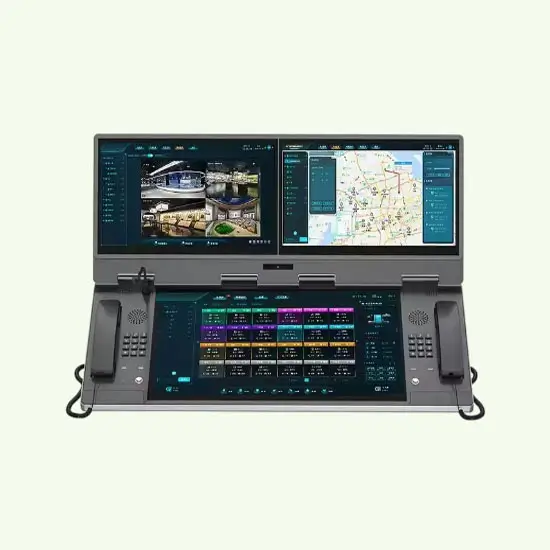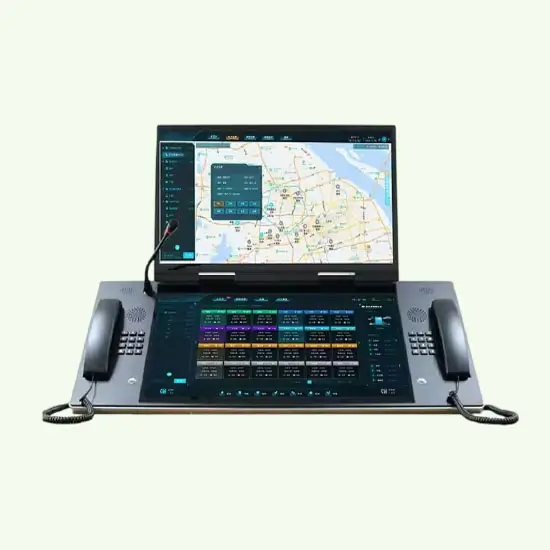

Customers want the right person on the first try. Intelligent routing 1 makes that happen without extra transfers or long waits.
An Intelligent Call Router (ICR) uses rules and data to match each caller to the best queue, agent, or self-service step, cutting transfers, lowering handle time, and lifting satisfaction.
I keep routing simple and data-driven. First, define what “best” means for the business. Then feed the router with clean skills, CRM context, and real-time queue health. Below I explain skills-based routing for FCR, data-driven routes by CRM/ANI/intent, dynamic treatment for VIPs and SLAs, and the reports that prove the design works.
How does skills-based routing improve my FCR?
Right problem, right person. That is the FCR engine. Skills connect the dots at speed.
Skills-based routing 2 maps caller needs to agent abilities, certifications, and languages. Better matches reduce repeats and transfers, which raises first contact resolution.

Why skills matter for FCR
First Contact Resolution (FCR) 3 improves when the first human who answers can actually solve the issue. Skills-based routing (SBR) formalizes this match. I define a compact skill set—product line, tier, language, tools access, and any legal certification. The IVR (or bot) 4 captures a clean intent and any proof points (account type, product SKU, language). The ICR looks at real-time availability and picks the lowest-cost, highest-fit destination. That might be a specific skill queue, a named expert, or even a self-service flow if confidence is high.
How I model skills without chaos
I avoid skill sprawl. Each agent gets a primary skill group and at most two secondary groups. I set proficiency levels (1–3) for depth. The router prefers Level 3, then Level 2, then Level 1. If wait time for Level 3 would break the SLA, it expands to Level 2 after a short guard time. This avoids endless waits and keeps transfers low.
A small table that guides decisions
| Input from IVR/CRM | Skill tag needed | Notes |
|---|---|---|
| “Cancel fiber plan” | Retentions_Tier2 + Billing | Needs save offers + policy |
| “Spanish technical wifi” | Tech_WiFi + ES | Language + domain |
| “Device RMA” | RMA + Warehouse_API | Tool access matters |
| “High-value outage” | NOC_Alerts + VIP | Faster path and callbacks |
Guardrails that protect FCR
I cap queue depth and allow smart overflow only to agents who close the issue type at ≥ the median QA score. Transfers count against the route. If transfer rate for a skill rises, I inspect the prompts and the skill map, then fix either the IVR wording or the agent skill tagging. This tight loop pushes FCR up without turning the map into a maze.
Metrics to watch while tuning SBR
- Transfer rate from first agent (target ↓).
- FCR verified by CRMs or seven-day repeat rate (target ↑).
- AHT variance by skill (stability = good mapping).
- Queue wait differences between primary and overflow pools (keep small).
Small, clean skill sets, clear guard times, and QA-aware overflow move FCR fast and safely.
Can I route by CRM data, ANI, or intent?
Yes. Caller history and intent turn a generic path into the right path. Use them, but keep rules transparent.
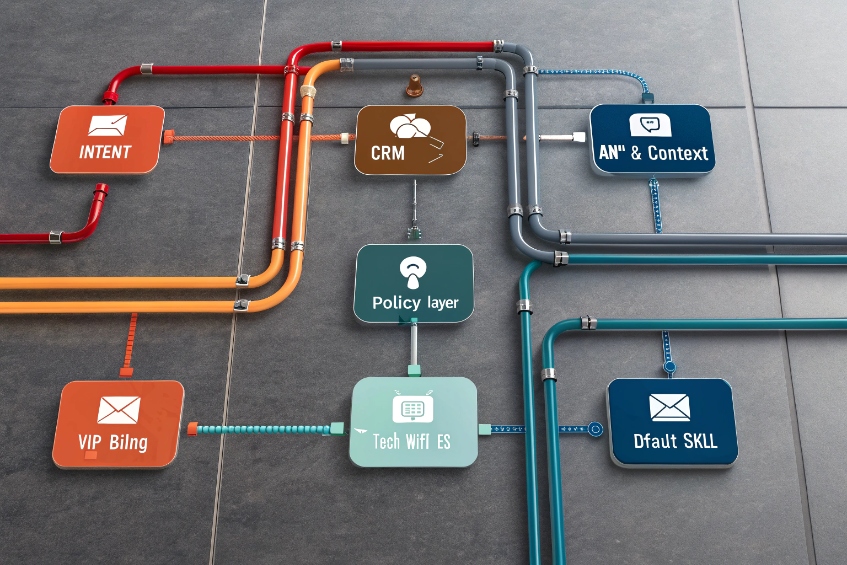
Route using CRM flags (tier, plan, debt, open case), ANI geography, and IVR/NLU intent. Combine them into simple, auditable policies with safe defaults.
The three inputs I trust
1) Intent: Captured by directed dialog (“say Billing or Support”) or NLU (“in a few words”). I keep an explicit fallback if confidence is low.
2) Identity & history: CRM profile 5, segment, tenure, open cases, recent orders, and prior outcomes. I only use fields that are complete and stable.
3) ANI and context: Country/area code, language preferences, and whether this is a callback. If a web session hands off, I also pass cart contents or page URL.
A simple policy layer
I write routing as readable rules. Example pseudo-policy:
IF caller.open_case == true THEN route_to(case_owner_queue)
ELSE IF intent == "billing_dispute" AND crm.tier == "VIP" THEN route_to(VIP_Billing)
ELSE IF intent == "tech_wifi" AND language == "ES" THEN route_to(Tech_WiFi_ES)
ELSE IF customer.value_score >= 80 THEN priority = priority + 2
ELSE route_to(default_skill)
If identity is unknown, I do not guess. I route by intent and language and let the first agent verify identity only when needed.
Data hygiene rules
- Whitelists > wild guesses: Use a small set of CRM fields you trust. Map missing values to safe defaults.
- Freshness matters: For example, debt/collections flags must be near real-time or skipped.
- Bias checks: Remove proxy variables that could create unfair outcomes (zip ≠ value). Keep an audit trail.
Intent handling and confidence
When NLU confidence drops below a threshold (say 0.6), I switch to a short directed menu or offer a human. For high confidence plus a known self-service path, I present the self-service step with a quick opt-out to an agent. This preserves trust while reducing handle time.
Table: inputs to destinations
| Signal | Example | Destination |
|---|---|---|
| ANI country | +971 | Middle East skill + Arabic IVR |
| CRM open ticket | Case #42718 | Case owner or continuity desk |
| Value score | 92 | Premium queue + shorter wait cap |
| Intent | “Replace modem” | Tech_RMA same-day |
Data makes routing smarter. Discipline makes it safe.
How do I prioritize VIPs and SLAs dynamically?
Not every call is equal. Some carry higher cost of delay. The router should reflect that in real time.
Use dynamic priorities based on customer value, promise windows, and queue health. Set caps to protect fairness and prevent starvation.
Priority buckets, not chaos
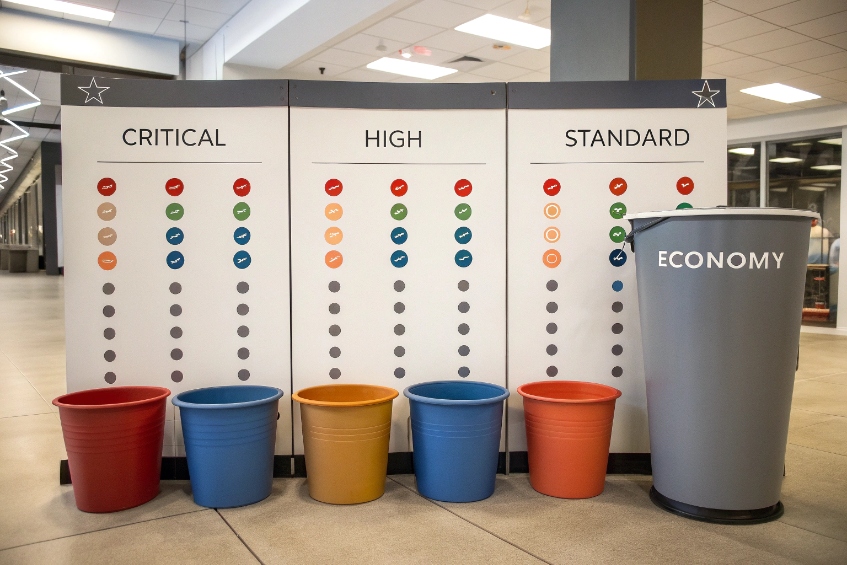
I group contacts into three or four priority buckets: Critical, High, Standard, Economy. A contact’s bucket comes from rules: VIP tier, outage impact, promised callback window, or regulatory deadlines. Each bucket has a queue weight, a max wait, and an age-based boost. For example, High starts above Standard, but any Standard contact that approaches its max wait gains priority to avoid starvation.
SLA-aware routing 6
If the system projects that a contact will breach SLA in the current queue, it raises the priority or offers an alternate treatment (callback, chat, or deflection to a faster channel with context). I keep capacity floors for core skills so VIPs do not consume everything. Floors guarantee a minimum number of active agents per crucial Standard queue.
Practical controls
| Control | What it does | Why it helps |
|---|---|---|
| Age boost | Raises priority as wait grows | Prevents starvation |
| Bucket caps | Limits % of agents a bucket may hold | Preserves fairness |
| Time slicing | Shares agents across buckets at set ratios | Smooths spikes |
| VIP spillover rules | Secondary skills after X seconds | Keeps promises realistic |
| Callback promises | Dynamic windows based on load | Controls experience under stress |
Example policy snippet
IF crm.tier == "VIP" THEN bucket = HIGH; max_wait = 120s
IF outage == true AND region == caller.region THEN bucket = CRITICAL
IF callback_due_in < 10m THEN bucket = HIGH; route_to(callback_desk)
IF bucket == HIGH AND holding_agents_ratio > 0.6 THEN cap_to(0.6); spill_to(next_skill)
What makes this fair
I publish the policy so operations, legal, and frontline teams understand it. I log the route reason on every contact. If BI shows any group’s waits expand beyond policy, I tune caps and floors. This keeps VIPs happy without breaking the base.
Signals that change priority on the fly
- Real-time SLA drift (two intervals below target).
- Abandon spikes in a given queue.
- Backlog age for digital tickets.
- Agent supply drops from sick calls or outages.
The router sees these and adjusts within guardrails. People notice smoother waits, not favoritism.
What reports show routing effectiveness?
If routing works, transfers fall and repeats shrink. I prove it with a tight set of reports and A/B tests.
Track FCR, transfer rate, queue wait by skill, misroutes, and repeat contact rate. Add fairness checks and cohort splits. Tie wins to dollars and CSAT.
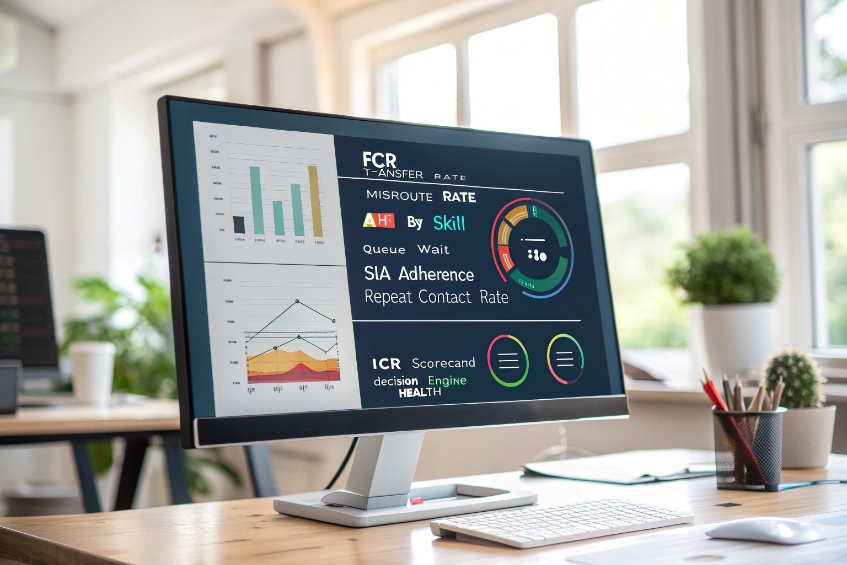
The core routing scorecard
| KPI | Definition | Why it matters | Target trend |
|---|---|---|---|
| FCR (verified) | Resolved with no repeat within 7 days | True one-and-done | ↑ |
| Transfer rate | % of agent-answered calls transferred | Route accuracy proxy | ↓ |
| Misroute rate | Re-queued within 120s | IVR/intent alignment | ↓ |
| AHT by skill | Talk+hold+wrap per skill | Skill health & training | Stable/↓ |
| Queue wait by skill | 80th percentile wait | Capacity match | Stable |
| SLA adherence | % met per skill/bucket | Promise kept | ↑ |
| Repeat contact rate | Same customer, same intent, 7d | Hidden rework | ↓ |
| Fairness index | Gaps in wait across cohorts | Bias sentinel | Stable/↓ |
A/B and holdout design
I never roll a new routing rule without a control. I split traffic 50/50 by intent for two weeks. The test arm uses the new rule; the control uses the old. I compare FCR, transfers, wait, and CSAT. If the lift is real and stable, I graduate the rule system-wide. For AI intent models, I also track confidence drift and no-match rates.
Diagnostics that find bad routes fast
- Top transfer pairs: “From X to Y” shows which mapping is wrong.
- Phrase heatmaps: Low NLU confidence terms drive copy fixes.
- Outcome by agent skill: If Level 1 closes better than Level 3, the skill ladder is wrong or training is uneven.
- Route reason logs: Each call stores the exact policy path. Missing reason = bug.
Dollars and experience
I convert routing wins into money and sentiment. Each 1-point rise in FCR reduces agent minutes and repeat calls. I multiply minutes saved by loaded $/minute to show monthly savings. I pair that with CSAT/NPS deltas for the same intents. Leaders see both value and experience gains, not just a prettier diagram.
Fairness and governance
For VIP uplift, I track wait distribution by segment to ensure base customers do not slip beyond policy. I run a weekly bias audit on the fields used in routing 7. If a field creeps into proxy behavior, I remove it or restrict it to explanations, not decisions.
When the reports are clear, routing debates end fast. The data shows which path wins.
Conclusion
An ICR is a decision engine: simple skills, clean data, and clear priorities. Match intent to ability, use CRM and ANI to add context, protect VIPs and SLAs with smart caps, and prove impact with transfers, FCR, and fairness. Keep rules readable and auditable, and routing will lift both experience and efficiency.
Footnotes
-
Overview of intelligent call routing and how it connects callers with the most qualified agents using data. ↩︎ ↩
-
Guide to skills-based routing strategies, benefits, and setup for modern contact centers. ↩︎ ↩
-
Explains first contact resolution metrics, benefits, and methods to improve FCR performance. ↩︎ ↩
-
Introduction to interactive voice response systems and their role in routing and self-service. ↩︎ ↩
-
High-level explanation of customer relationship management systems and how CRM data supports service personalization. ↩︎ ↩
-
Deep dive into call center service levels and practical tips for defining effective SLAs. ↩︎ ↩
-
Discusses AI-powered contact center routing, including fairness, transparency, and bias mitigation practices. ↩︎ ↩