Big backbones once ran on tiny cells. ATM promised low jitter for voice and video when IP was still growing up.
Asynchronous Transfer Mode (ATM) is a connection-oriented, cell-switched technology that moves traffic in fixed 53-byte cells (5-byte header + 48-byte payload) over virtual circuits for predictable latency and QoS.
ATM stitched together voice, video, and data over SONET/SDH rings 1 and copper access like DSL. It shaped the way we think about QoS today—then IP/MPLS took the crown.
Transition Paragraph:
Below I unpack how Asynchronous Transfer Mode 2 cells carry voice, why ATM lost to IP/MPLS, where you might still find it, and how QoS worked on those classic PVCs. I also share the practical terms that still show up in old configs and audits.
How do ATM cells carry voice traffic?
Customers do not hear “throughput,” they hear jitter. ATM’s tiny, fixed cells were built to make voice sound steady.
Voice rides ATM using adaptation layers: AAL1/AAL2 for circuit-style streams and compressed voice multiplexing, or AAL5 when voice is IP (RTP) riding over ATM. Fixed 53-byte cells keep serialization delay short and jitter tight.
Dive deeper Paragraph:
The mapping: from samples to cells
The ATM Adaptation Layer (AAL) 3 defines how different services map into fixed-size cells.
- AAL1 (Constant Bit Rate): Made for uncompressed, clock-recovered streams. Think circuit emulation (T1/E1 over ATM). It preserves timing with sequence numbers and optional pointer adjustment so the far end can reconstruct a continuous clock. For legacy PBX interconnects, AAL1 delivered “wirelike” behavior.
- AAL2 (Low-rate voice multiplexing): Packs many low-bit-rate voice channels (e.g., ADPCM, AMR) into mini-packets (CPS packets) inside the 48-byte payload. This avoided wasting a full cell per tiny sample and enabled efficient mobile voice trunks before all-IP cores.
- AAL5 (Data): When voice is IP (SIP/RTP), it rides IP over ATM using AAL5 4. AAL5 frames (CS-PDU) may span many cells; the last cell carries a trailer (length + CRC). Routers ran PPPoA or RFC 1483/2684 bridging/routing over AAL5, and RTP simply became “more IP packets” chopped into cells by the SAR (Segmentation and Reassembly) engine.
Why fixed cells helped voice
Small cells cap serialization delay on low-speed links (e.g., 155 Mb/s OC-3 and below). A full-size 1500-byte Ethernet frame can sit on the wire for ~8 ms at 1.5 Mb/s, but an ATM cell is tiny, so a voice cell never waits behind a jumbo frame. With CBR or VBR-rt contracts, the network reserved rate and bounded jitter/loss. That made early VoIP and circuit emulation viable before modern IP queuing and LLQ were common.
The “cell tax”
The 5-byte header on every 48-byte payload, plus AAL5 padding and trailer, creates overhead. For voice AAL2, packing efficiency is strong; for IP over AAL5, efficiency varies (≈9–20% overhead). This tax mattered as speeds rose and Ethernet became cheap.
| Voice over ATM mode | Adaptation | Efficiency | Typical use |
|---|---|---|---|
| Circuit emulation | AAL1 | High for TDM | PBX/T1/E1 over ATM |
| Compressed voice mux | AAL2 | Very high | Mobile MSC ↔ RNC backhaul |
| VoIP (RTP over IP) | AAL5 | Moderate; “cell tax” | Early IP trunks, DSL last-mile |
Why did ATM fade versus IP/MPLS?
The dream was one technology for everything. The market picked IP/Ethernet/MPLS because it was cheaper, simpler, and “good enough” at QoS—then far better at scale.
ATM lost to IP/MPLS due to economics (Ethernet volume), flexibility (variable packets), operational simplicity, and Multiprotocol Label Switching (MPLS) 5 QoS/TE matching carrier needs without the cell tax and per-VC complexity.
Dive deeper Paragraph:
Economics and Moore’s law
Ethernet silicon scaled faster and cheaper. Switch/router ports for Fast/GigE exploded in volume; OC-n ATM/SONET interfaces stayed niche. Paying a capacity and complexity premium for 48-byte payload cells became hard to justify when GigE delivered line-rate IP with simple ops.
Protocol gravity
Enterprises ran IP everywhere. As VPNs, MPLS L3VPNs, and then EVPN took off, service providers could sell IP-native services without adaptation gymnastics. ATM’s per-VC provisioning and OAM (F4/F5) were powerful but heavy compared to MPLS LSPs with LDP/RSVP-TE and simple IP OAM (later enhanced with BFD, TWAMP, Y.1731 on Ethernet).
QoS parity and then superiority
ATM offered crisp QoS classes (CBR, VBR-rt, VBR-nrt, ABR, UBR) and conformance policing. But IP/MPLS caught up: Differentiated Services (DiffServ) 6 gave class semantics; LLQ/CBWFQ and hierarchical QoS delivered fine shaping; MPLS TE/FRR handled traffic engineering and protection. Once carriers could guarantee voice/video SLAs with MPLS and Ethernet OAM (CFM/Y.1731), the ATM advantage faded.
Operational simplicity
Provisioning thousands of PVCs (VPI/VCI) across an ATM cloud is craftwork. IP/MPLS scaled with routing protocols and templates. Ethernet access (E-Line/E-LAN) simplified customer turn-ups. Meanwhile, the cell tax cut usable throughput and complicated troubleshooting (SAR layers, AAL nuances).
| Dimension | ATM | IP/MPLS/Ethernet |
|---|---|---|
| Unit | 53-byte cell | Variable packet |
| Provisioning | VPI/VCI per PVC/SVC | LSPs, VRFs, VLANs |
| QoS | Built-in classes | DiffServ + LLQ/H-QoS |
| OAM | F4/F5 ATM OAM | CFM/Y.1731, BFD, TWAMP |
| Cost/scale | High, niche silicon | Low, mass-market silicon |
Does ATM still appear in telco backbones?
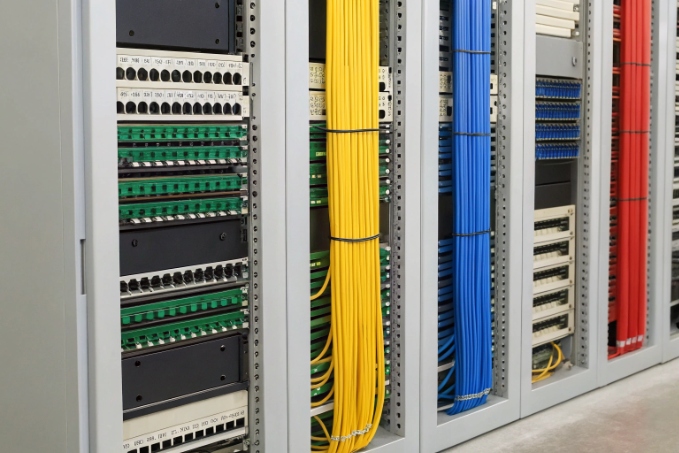
Not in the mainstream core. You may still see ATM at the edges of legacy systems, in specialized access, or lurking behind DSL gear and SONET shelves that never got a refresh.
ATM persists mainly in legacy DSL aggregation (DSLAMs), older SONET/SDH transport shelves, and niche circuit-emulation islands, often hidden under Ethernet/IP wrappers.
Dive deeper Paragraph:
Edge holdouts
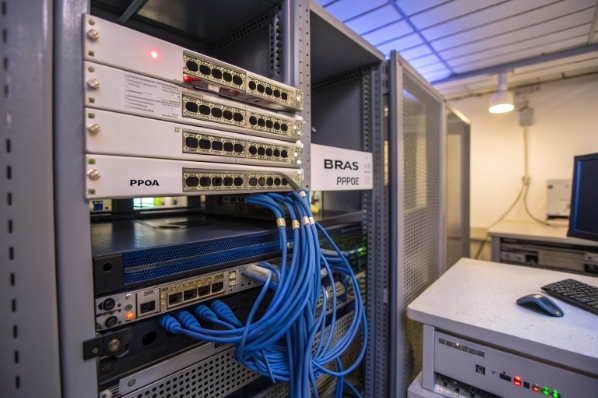
- DSL aggregation: Early ADSL used PPPoA/PPPoE over ATM backhaul 7 from DSLAMs to BRAS. Many networks have since migrated to Ethernet over xDSL (PTM, VDSL2) and pure IP BRAS; however, older areas may still expose ATM VPs/VCs.
- Transport shelves: Legacy SONET/SDH nodes supported ATM VC cross-connects. As operators move to OTN/Ethernet, the ATM cards are retired, but brownfield rings can linger for low-traffic routes or regulated services.
- Mobile backhaul (historical): Early 2G/3G RNC/MSC links ran AAL2/AAL5 over ATM. Modern backhaul is IP/MPLS with timing via SyncE/1588.
- Utilities and rail: Some protected TDM/ATM islands carry SCADA/voice with circuit emulation where replacement risk is high. Gateways encapsulate those circuits into pseudowires (PWE3/CESoPSN) over MPLS.
What you see in the wild
Audits reveal VPI/VCI maps, PVC naming, and CBR/VBR contracts in old configs. Operations teams often front those with Ethernet NIDs and MPLS pseudowires, so the ATM is “under glass.” Monitoring leans on F4/F5 OAM when the old shelf is still in service. Spares and vendor support drive retirement schedules; once parts go EoL, migration accelerates.
| Where | How it looks today | Migration path |
|---|---|---|
| DSL backhaul | PPPoA/PPPoE over ATM to BRAS | VDSL2/PTM → IPoE to BNG |
| SONET shelves | ATM VC cross-connect | OTN/Ethernet + MPLS |
| Circuit emulation | AAL1 CES | CESoPSN/PWE3 over MPLS |
How did QoS work on ATM PVCs?
ATM did QoS with math and contracts. You declared a traffic profile; the network policed and shaped to it; switches scheduled cells accordingly.
QoS used service categories (CBR, VBR-rt/nrt, ABR, UBR) with parameters like PCR, SCR, MBS, CDVT. Policing (leaky bucket), queue scheduling, and OAM kept delay/loss within targets on each PVC.

Dive deeper Paragraph:
Service categories and parameters
- CBR (Constant Bit Rate): For constant streams (AAL1, some AAL2). You specify PCR (Peak Cell Rate). The network ensures bandwidth and tight delay/jitter.
- VBR-rt (Variable Bit Rate, real-time): For bursty but delay-sensitive traffic (compressed voice/video). You declare PCR, SCR (Sustained Cell Rate), and MBS (Maximum Burst Size). Delay bounds are tighter than data classes.
- VBR-nrt: Similar to VBR-rt but without strict delay guarantees; good for transactional bursts.
- ABR (Available Bit Rate): For adaptive data. Uses Resource Management (RM) cells to tell endpoints available rate. Targets low loss but relaxed delay.
- UBR (Unspecified Bit Rate): Best effort. No guarantees.
CDVT (Cell Delay Variation Tolerance) defines how much jitter the policer tolerates around PCR/SCR. It prevents penalizing naturally clumped cells on long paths.
Policing and shaping
Ingress policers enforce the contract using leaky/token buckets. Cells beyond the conformance window are either dropped or marked CLP=1 (Cell Loss Priority) so they are preferentially discarded under congestion. Egress shapers smooth bursts to stay within SCR/PCR, reducing downstream drops and delay spikes.
Switches used simple, fast schedulers. With fixed cell size, weighted fair or priority scheduling delivered precise outcomes. EFCI (Explicit Forward Congestion Indication) in the cell header could signal congestion to ABR sources, which then reduced rates via RM feedback.
OAM that operators loved
F4/F5 OAM flows ran at the VP (VPI) and VC (VPI/VCI) levels for continuity checks, loopbacks, AIS/RDI defect signaling, and performance monitoring (delay/loss). That gave per-PVC visibility now echoed by Ethernet CFM/Y.1731 and BFD in IP/MPLS.
| QoS element | What it means | Typical usage |
|---|---|---|
| PCR | Absolute cell rate ceiling | CBR/VBR caps |
| SCR | Long-term average rate | VBR commit |
| MBS | Burst allowance (cells) | Short spikes |
| CDVT | Jitter tolerance in policing | Prevent false hits |
| CLP | Drop precedence bit | Protect in-profile cells |
| EFCI/RM | Congestion feedback | ABR adjustment |
Conclusion
ATM’s 53-byte cells gave early networks deterministic voice and strong per-VC QoS. IP/MPLS and Ethernet won on cost, scale, and “good-enough then great” QoS. If you still touch ATM, remember the building blocks—AAL1/2/5, VPI/VCI, PCR/SCR/MBS, CLP, and F4/F5 OAM—then plan the cleanest bridge to all-IP.
Footnotes
-
Background on SONET/SDH ring architectures that formed early ATM transport backbones. ↩︎ ↩
-
General overview of Asynchronous Transfer Mode technology, history, and protocol structure. ↩︎ ↩
-
Explains ATM Adaptation Layer types and how AAL1/AAL2/AAL5 map services to cells. ↩︎ ↩
-
RFC 2684 describing IP and multiprotocol encapsulation over ATM AAL5 for data traffic. ↩︎ ↩
-
Introduction to MPLS architecture, label switching, and traffic engineering for carrier backbones. ↩︎ ↩
-
Overview of DiffServ QoS model, per-hop behaviors, and class-based traffic treatment in IP networks. ↩︎ ↩
-
Details on PPP over ATM used in early DSL broadband backhaul deployments. ↩︎ ↩