
Post-Brexit regulations have created a maze of acronyms that can stall shipments at the border. Understanding the distinction between general product compliance and hazardous area safety is critical for importing industrial electronics into the United Kingdom.
UKCA (UK Conformity Assessed) is the overarching product marking that replaces the CE mark for the Great Britain market, covering safety, EMC, and radio compliance. UKEX specifically refers to the regulatory framework (UKSI 2016/1107) for equipment in potentially explosive atmospheres, effectively acting as the "UK version of ATEX" that dictates the technical standards and certification required to apply the UKCA mark to Ex devices.
Decoding the New British Standard
As the voice of DJSlink, I have spent the last few years helping our partners navigate the transition from a unified European standard to the new British system. The confusion often lies in the terminology. "Is it UKCA or UKEX?" The answer is: It is both.
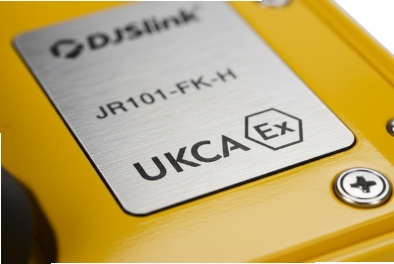
Think of UKCA as the umbrella. It is the visual symbol you print on the sticker. It tells the customs officer, "This product is legal to sell in Great Britain."
UKEX is the specific set of rules under that umbrella that applies to our industry (Explosion Proof). Just as ATEX 1 is the law for Ex products in the EU, UKEX is the law for Ex products in Great Britain. You cannot put the UKCA mark on an explosion-proof telephone without following the UKEX certification process if the product is for Zone 1 or Zone 2 use.
Here is the functional breakdown:
| Feature | UKCA (UK Conformity Assessed) | UKEX (UK Explosive Atmospheres) |
|---|---|---|
| Role | The Marking (Logo) | The Regulation (Certification) |
| EU Equivalent | CE Mark | ATEX Directive (2014/34/EU) |
| Legal Basis | UK Statutory Instruments | UKSI 2016 No. 1107 |
| Scope | All Goods (Toys, Electronics, Machinery) | Specific to Hazardous Areas |
| Visual | "UKCA" Logo | Ex Hexagon (εx) + Approved Body Number |
When is UKCA marking required for explosion-proof telephones in Great Britain versus Northern Ireland?
The United Kingdom is not a single regulatory block. The complexity arises from the Northern Ireland Protocol, which creates a regulatory split between "Great Britain" and "Northern Ireland."
UKCA marking and UKEX certification are mandatory for goods placed on the market in Great Britain (England, Scotland, and Wales). However, Northern Ireland continues to follow EU Single Market rules, requiring the CE mark (ATEX) or the UKNI mark if a UK body is used, meaning a single device often needs multiple markings for full UK access.
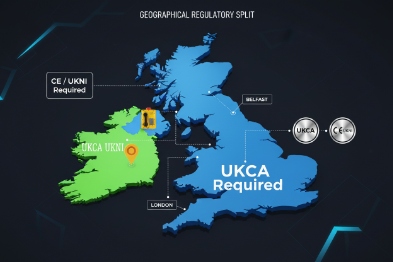
The GB vs. NI Divide
For a manufacturer like DJSlink, this means our labeling printers are working overtime. We have to treat Great Britain and Northern Ireland almost as different countries for compliance purposes.
-
Great Britain (England, Wales, Scotland):
-
Mark: UKCA.
-
Standard: UKEX (UKSI 2016/1107).
-
Deadline: As of the latest updates, the UK government has indefinitely recognized CE marking for some goods, but for Third-Party Assessed goods (like Ex phones requiring a Notified Body), the rules are stricter. You generally need a UK-recognized certificate.
-
-
Northern Ireland:
-
Mark: CE (if using an EU Notified Body) OR CE + UKNI (if using a UK Approved Body).
-
Standard: ATEX (EU rules apply).
-
Note: You cannot use the UKCA mark alone for goods placed in Northern Ireland.
-
This creates a scenario where a truly "universal" phone needs to carry CE, UKCA, and potentially UKNI marks to be sold freely across London and Belfast without repackaging.
| Region | Required Mark | Governing Body Type |
|---|---|---|
| Great Britain | UKCA | UK Approved Body 2 (e.g., CML, CSA UK) |
| Northern Ireland | CE (or CE + UKNI) | EU Notified Body (or UK App. Body) |
| European Union | CE | EU Notified Body |
Having the sticker on the phone is one thing; proving it is legal is another. Project managers in the UK are rigorous about documentation chains.
You must provide a ‘UK Type Examination Certificate’ issued by a UK Approved Body, a ‘UK Declaration of Conformity’ (DoC) referencing UK Statutory Instruments, and proof of a valid Quality Assurance Notification (QAN) that covers UKEX production. Providing ATEX documents alone for a GB project is no longer sufficient.
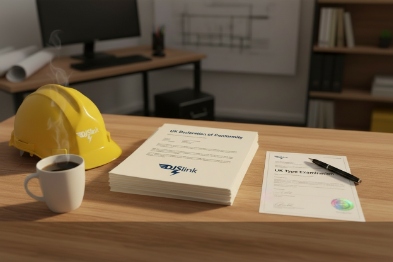
The Holy Trinity of Documents
When we ship a batch of DJSlink Ex phones to a refinery in Scotland, we attach a "Documentation Pack." If any of these three items are missing or reference the wrong legislation, the goods can be quarantined.
-
UK Type Examination Certificate:
-
This looks very similar to an ATEX certificate but is issued by a UK body (like Eurofins E&E CML Limited).
-
It cites UKSI 2016:1107 instead of the ATEX Directive.
-
Tip: Ensure the certificate number starts with the body’s identifier (e.g., CML 21UKEX…).
-
-
UK Declaration of Conformity (DoC):
-
This is a self-declaration signed by us (the manufacturer).
-
CRITICAL: It must list British Standards (BS EN 60079) and UK Regulations. If it lists "EN 60079" (EU) or "2014/34/EU" (ATEX), it is technically invalid for UKCA.
-
-
Quality Assurance Notification (UK QAN):
- Just like ATEX has a QAN for the factory, UKEX requires a UK QAN. This proves our factory is audited by a UK-approved auditor.
How do UKEX certification routes compare with ATEX and IECEx?
The technical standards are effectively identical, but the administrative path differs. This is good news for sourcing, as "re-certification" is often a paperwork exercise rather than a re-design.
UKEX standards (BS EN 60079) are technically harmonized with ATEX (EN 60079) and IECEx (IEC 60079). Therefore, a product with an existing IECEx/ATEX certificate can typically obtain UKEX certification through a ‘review and conversion’ process by a UK Approved Body without re-testing, provided the technical standards haven’t drifted apart.

The "Paperwork Bridge"
At DJSlink, we design our phones to meet IECEx 3 first. IECEx is the international gold standard. Because the UK, EU, and IEC all sit at the same technical table, the physics of an explosion didn’t change with Brexit.
-
IECEx: The baseline. Test report covers all technical data (temperature rise, impact test, IP rating).
-
ATEX: We send the IECEx report to an EU Notified Body. They issue an ATEX certificate.
-
UKEX: We send the same IECEx report to a UK Approved Body. They issue a UKEX certificate.
For a buyer, this means if you see a phone that is "IECEx Certified," it is highly likely it can get (or already has) UKEX and ATEX. However, you cannot legally install it in GB with only the IECEx paper. You need the UKEX certificate to legalize the installation under UK law (DSEAR).
| Certification | Region | Validity | Base Standard |
|---|---|---|---|
| IECEx | International | Voluntary (accepted in AU, NZ, SG, etc.) | IEC 60079 Series |
| ATEX | EU (27 Nations) | Mandatory Legal Requirement | EN 60079 Series |
| UKEX | Great Britain | Mandatory Legal Requirement | BS EN 60079 Series |
How should OEM/ODM changes be controlled to keep UKCA/UKEX validity?
In the world of manufacturing, components go End-of-Life (EOL). Changing a microchip or a relay in an explosion-proof phone is a major regulatory event.
Any design change affecting the ‘Schedule Drawings’ of the certificate requires a variation application to the UK Approved Body. The manufacturer’s Quality Management System (QMS) must log these changes under the specific UK QAN audit trail; unauthorized substitution of components voids the UKCA mark and places liability on the importer.
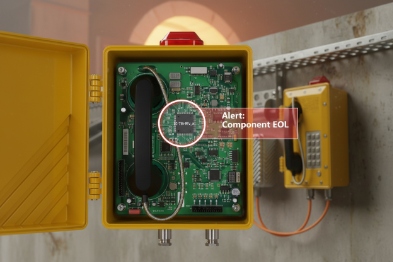
The Risk of "Silent Changes"
This is the biggest risk for companies doing OEM (private label) with manufacturers. You might buy a "UKEX Certified" phone, but if the factory changes the speaker supplier to a non-approved vendor without telling the certifier, that phone is no longer compliant.
Under UKEX (and ATEX), the certificate is tied to a set of Schedule Drawings. These drawings specify the exact materials, potting compounds, and safety components.
The Control Process:
-
Notification: We (DJSlink) identify a component EOL.
-
Assessment: Our internal Ex Authorized Person determines if it affects safety.
-
Application: If yes, we apply for a "Variation" to our UK Approved Body (e.g., CML).
-
Approval: They review and issue a "Issue X" supplement to the certificate.
-
Production: Only then can we use the new part.
For long-term supply contracts, I always advise clients to request the latest issue of the certificate and ask, "Have there been any variations since this date?"
Conclusion
Navigating UKCA and UKEX is less about technical reinvention and more about administrative diligence. The physics of safety remain the same, but the legal wrapper has changed. For any project in Great Britain, ensure your explosion-proof telephones carry the UKCA mark, are backed by a valid UK Type Examination Certificate, and that your supplier maintains a robust UK QAN to handle the inevitable component changes over the product’s lifecycle.








