
When calls surge, the same agents get hammered, new agents get overwhelmed, and customers wait longer. That mix burns teams out and hurts service fast.
Weighted call distribution routes inbound calls by assigned ratios, so each agent receives a share of calls that matches their weight over time, while still skipping agents who are not available.
Weighted routing is controlled fairness, not random balance
What “weight” really means
In weighted call distribution 1, a weight is a routing share. If one agent has weight 40 and another has weight 20, the first agent should receive about twice the offered calls over a steady period, as long as both remain eligible. Some PBXs ask for percentages. Others ask for integers. Most systems normalize the values, so the math still works even if the total is not 100.
Weighted routing is useful when agents are not equal. A senior agent can take more complex calls. A trainee needs fewer calls. A part-time agent should not get the same load as a full-time agent. Weighted routing also helps when a team spans sites. A main site can take 70% of calls and a backup site can take 30%, then each site distributes inside its own team.
What happens when an agent is busy or on break
Weighted routing only applies to eligible agents. If someone is on a call, in wrap-up, in break, or offline, their share is temporarily redistributed. A healthy system does this without stalling. The caller should not wait for a “high weight” agent who is not ready.
Where weighted routing fits in the routing stack
In most IP PBXs, weighted routing sits inside an automatic call distribution (ACD) queue 2, ring group, or a hunt group 3. The call often flows like this:
- Caller reaches a DID, IVR, or queue entry point.
- The PBX checks eligibility rules (ready state, skills, capacity).
- The PBX applies the weighted selection logic.
- If no answer, the PBX retries, overflows, or offers callback.
| Concept | What it controls | What it does not control | Why it matters |
|---|---|---|---|
| Weight | Share of offers | Call length and difficulty | Sets expected load balance |
| Eligibility | Who can receive calls now | How skilled they are | Keeps routing responsive |
| Skills filter | Who is qualified | How many they should get | Prevents wrong transfers |
| Priority | Who gets calls first | Fairness across the whole day | Helps VIP or urgent routing |
| Overflow | What happens when nobody answers | Agent performance | Protects ASA and abandon rate |
A weighted plan works best when it is simple. It should match how the team actually works, not how a spreadsheet wishes the team worked.
Now it helps to compare weighted routing to round-robin and uniform routing, because these terms sound similar but behave very differently.
A clean routing plan is not about one “best algorithm.” It is about matching your call types, staffing, and service goal.
How does weighted distribution differ from round-robin and uniform routing?
Round-robin can look fair on paper, and uniform routing can feel fair in daily work, but weighted routing is about control. It is fairness with intent.
Round-robin rotates in order, uniform routing favors the longest-idle eligible agent, and weighted routing targets a planned share per agent or group so senior or higher-capacity agents receive more calls by design.
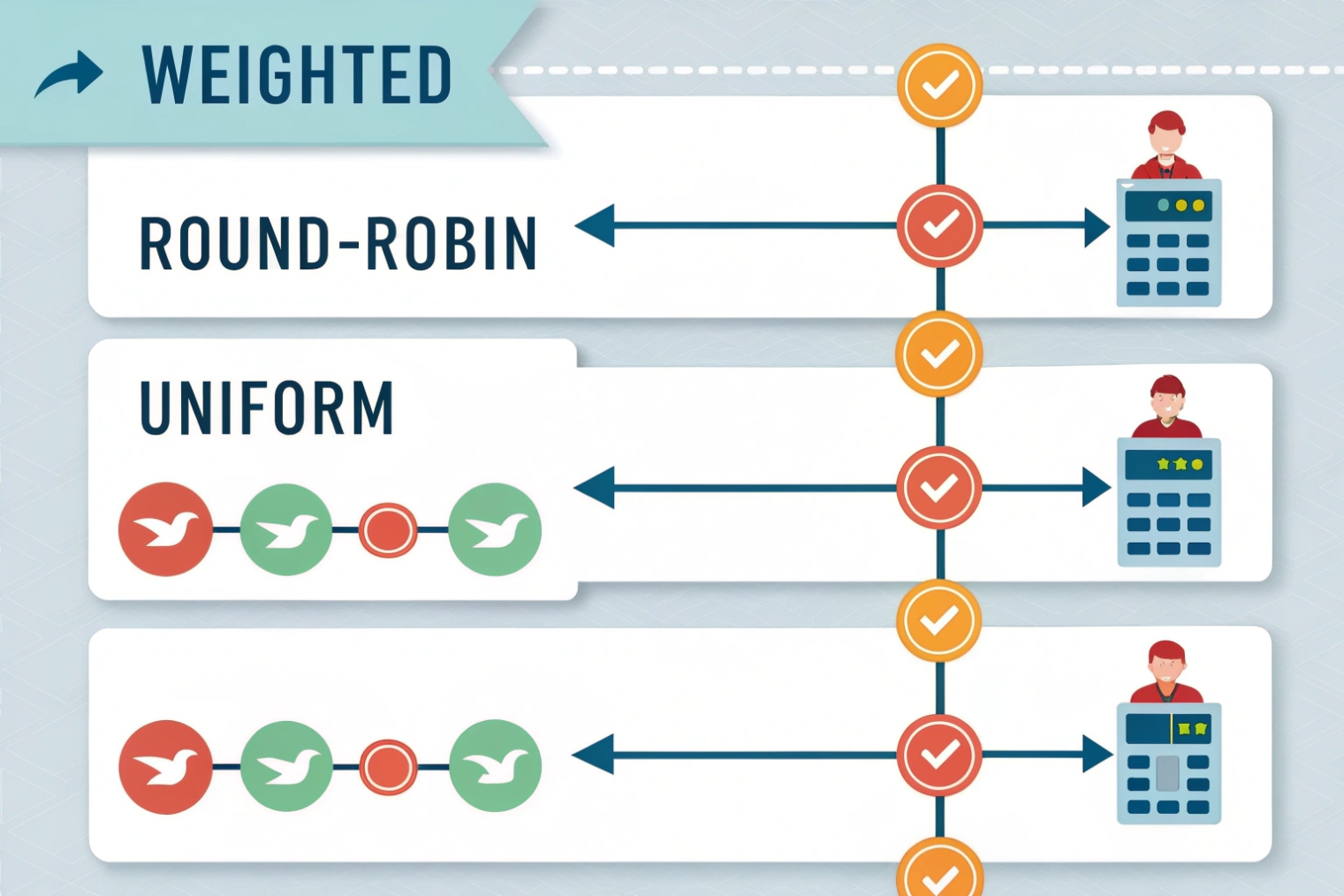
Round-robin: simple rotation
Round-robin moves through a list. It is easy to explain. It can fail in practice when:
- ring timeouts are long
- agents have different wrap-up needs
- some agents are often away but still “ready”
It can also feel unfair because the list order matters during busy periods.
Uniform routing: fairness by idle time
Uniform routing usually means “longest idle.” That spreads calls evenly among available agents. It is great when:
- agents do similar work
- call difficulty is similar
- fairness is the top goal
Uniform routing becomes less useful when the team has mixed skill levels. A trainee can become the longest idle agent and get more calls than they should.
Weighted routing: planned load sharing
Weighted routing sets a target distribution. That helps when:
- senior agents should take a higher share
- trainees should take a smaller share
- one site is primary and another is backup
- one language team should take more calls than another
Weighted routing does not remove the need for clean states. If agents stay “ready” while away, the weight plan will drift. If the PBX does not support short offer intervals, weighted logic can stall behind long ring cycles.
| Method | Primary rule | Best for | Weak spot |
|---|---|---|---|
| Round-robin | Next in list | Small teams with equal agents | List order and timeout stalls |
| Uniform (longest idle) | Fairness among ready agents | Similar skills and call types | Trainees can get too many calls |
| Weighted | Planned share by weight | Mixed skills, capacity, or sites | Needs tuning and state discipline |
A simple way to choose is this: uniform answers “who has waited longest,” weighted answers “who should handle more,” and round-robin answers “who is next.”
How do I set agent weights, skills, and priorities correctly?
Bad weights cause quiet resentment. Good weights feel natural. The goal is to match real capacity, not to reward popularity.
Set weights from real capacity signals like skill level, average handle time, and shift coverage. Apply skills as a gate first, then apply weights inside each qualified pool, and keep priorities limited to clear business rules.
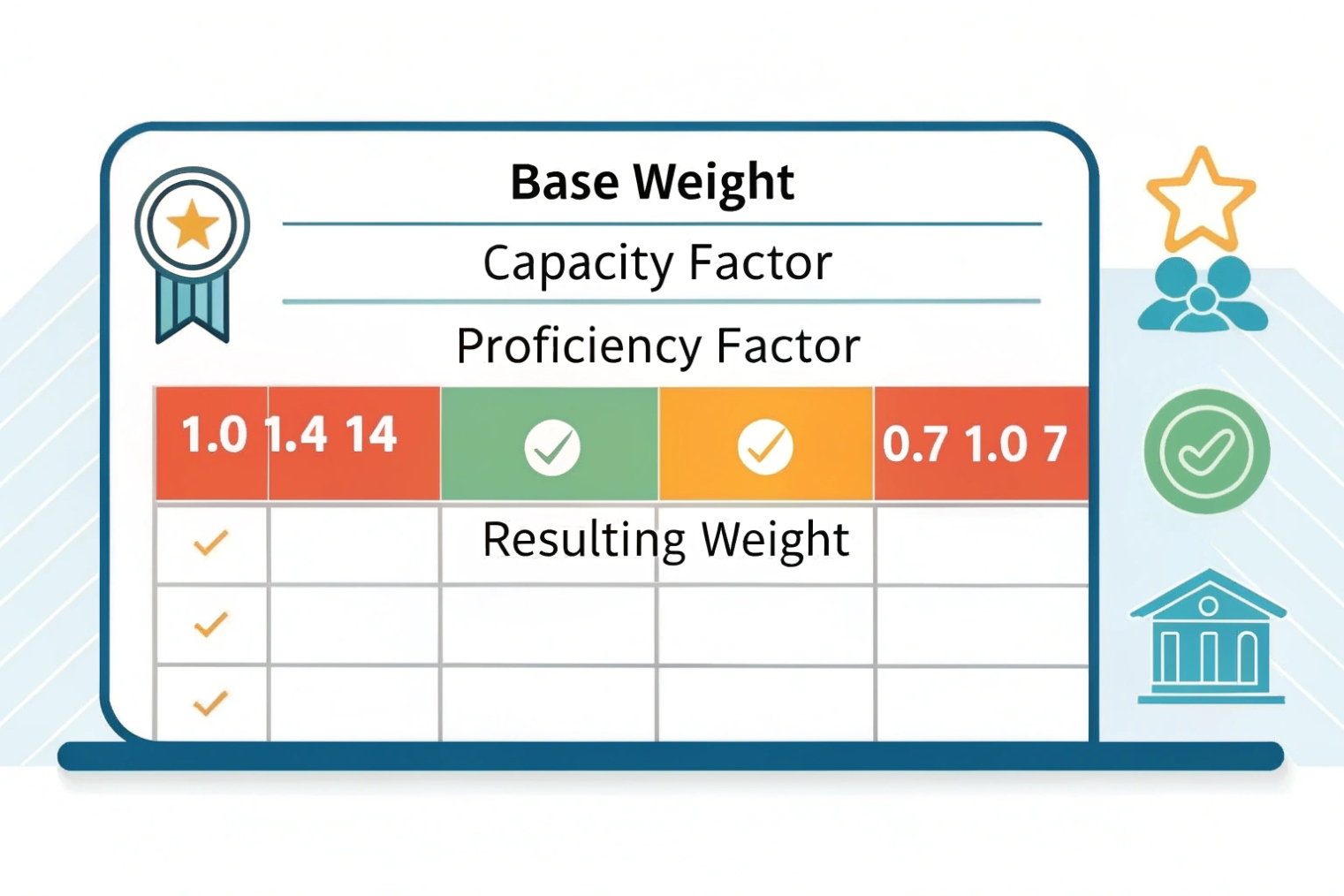
Start with a stable base: who can handle what
Skills should be used as an eligibility gate. If a call needs Spanish support or product tier 3 support, route only to agents who can truly handle it. Weighted routing inside a mixed pool can damage first-call resolution.
A practical model is layered:
- Skill filter: only qualified agents.
- Availability filter: only ready agents.
- Weighted selection: share calls by plan.
- Tie-breaker: longest idle, last answered time, or lowest recent load.
Choose weights with a simple scale
Many teams overthink weights. A simple scale is easier to tune:
- Trainee: 1
- Standard: 2
- Senior: 3
- Specialist: 4
That avoids fake precision. It also avoids fights about 27% vs 28%. The PBX will normalize anyway.
Use priorities for business rules, not ego
Priority can be helpful when:
- VIP callers should reach a senior group
- escalations should bypass standard routing
- urgent DIDs need faster handling
But priority should not be used to “always feed one agent.” That breaks trust and can inflate occupancy for the wrong people.
Include wrap-up, breaks, and capacity limits
Weights should not fight with reality. If an agent needs longer after-call work (ACW) 4, keep them in wrap-up so the PBX does not keep offering calls. If an agent is part-time, their schedule should remove them from eligibility outside shift hours. If the PBX supports max active calls per agent, set it. It prevents overload.
| Agent type | Typical weight | Skill tag | Notes that keep routing stable |
|---|---|---|---|
| New hire | 1 | Basic | Add longer wrap-up during training |
| Standard agent | 2 | Basic + product A | Default group member |
| Senior agent | 3 | Advanced + escalations | Allow attended transfer targets |
| Specialist | 4 | Language or product tier | Gate calls by skill, then weight |
A weight plan should be reviewed with the team leader. If the plan is hidden, people assume it is unfair. If it is transparent and tied to training steps, it feels like a growth path, not punishment.
Will weighted routing improve ASA, occupancy, and fairness for my team?
Weighted routing can improve service, but only when it is aligned with how the team works. If the queue is under-staffed, no routing method will save ASA.
Weighted routing can lower ASA and abandon rate when it reduces missed offers and matches complex calls to higher-capacity agents. It can stabilize occupancy by design, but “fairness” becomes fairness-by-plan, not equal share.
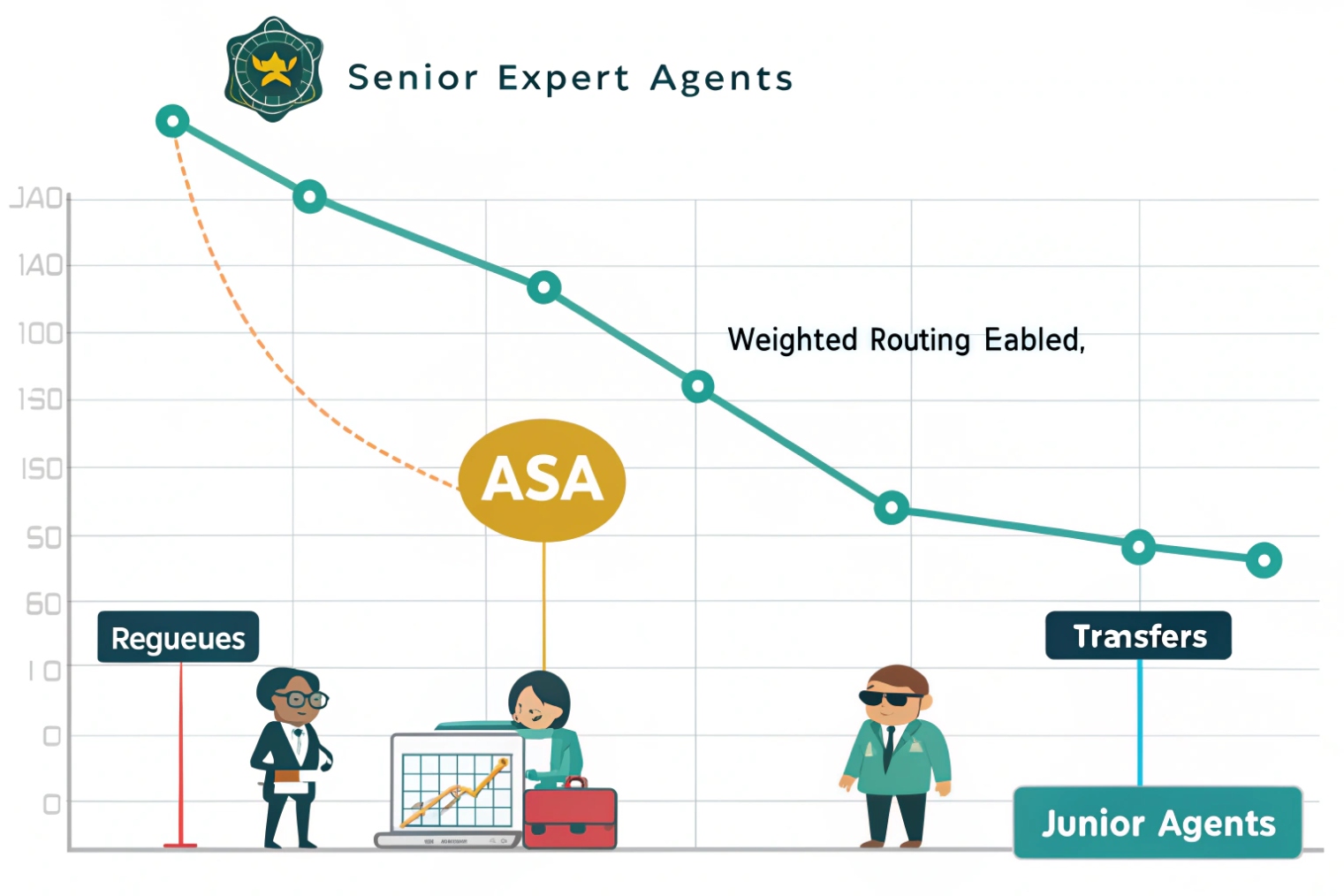
ASA: when weighted routing helps
Average Speed of Answer (ASA) 5 improves when calls land on agents who can answer and solve faster. Weighted routing can do that by:
- giving more offers to agents who answer reliably
- steering complex calls to skilled agents
- reducing re-queues and transfers
ASA can get worse when:
- weights push too many calls to a small senior group
- ring timeouts are long and sequential
- skills filters shrink the eligible pool too much
Short offer intervals and clean overflow rules matter more than the exact weights.
Occupancy: more predictable, but watch burnout
Weighted routing often increases occupancy for higher-weight agents. That is expected. It can be good when seniors want more load and trainees need space. It becomes a problem when seniors become the only safe landing zone for every call type.
A healthy design spreads the right work, not just more work. If the same agents always handle angry callers or complicated issues, burnout rises even if occupancy looks “fine.”
Fairness: redefine it clearly
Weighted routing is not equal distribution. It is proportional distribution. Fairness means:
- trainees get fewer calls until they grow
- specialists get more of the calls they are trained for
- part-time agents are not overloaded
That is fair if the plan matches job roles and pay bands. It feels unfair if it is used to hide staffing gaps.
Tune with real metrics, not feelings
Use weekly checks on:
- offered calls per agent
- answered calls per agent
- occupancy
- average handle time
- transfer rate
- first-call resolution (if tracked)
- contact center abandon rate 6
| KPI | What you want to see | What it means if you do not see it | Routing adjustment |
|---|---|---|---|
| ASA | Stable or improving | Offers stall or pool too small | Shorten timeouts, add overflow |
| Occupancy spread | Narrower spread by role | Weights too extreme | Reduce gaps between weights |
| Transfer rate | Lower for complex calls | Calls landing on wrong skill | Tighten skill gates |
| Abandon rate | Stable or lower | Wait time too long | Add agents or callback |
| Per-agent load | Matches plan | State misuse or bad schedule | Fix states, shift rules |
Weighted routing is a lever. It can improve outcomes, but it needs guardrails. The best guardrails are skills gating, short offer timers, and a clear overflow path.
How do I configure weighted call distribution on my IP PBX?
Configuration should be repeatable. If it is a one-off manual setup, it will drift as soon as staffing changes.
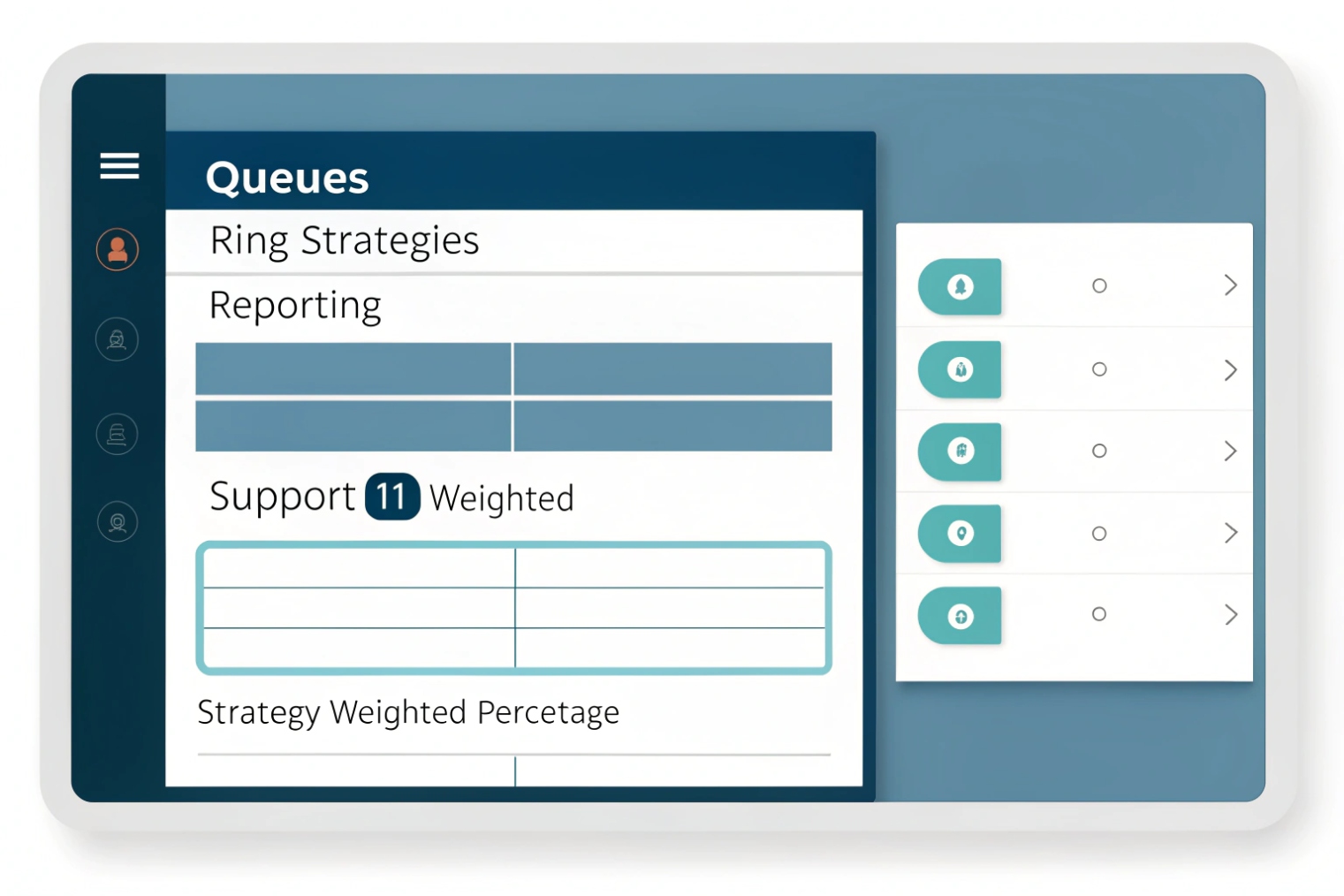
Configure weighted routing by creating a queue or hunt group, selecting a weighted strategy, adding agents with weights, defining eligibility states and timeouts, then adding overflow rules and reports so the plan stays stable.
Step 1: Build the routing container
Weighted distribution usually lives inside:
- an ACD queue
- a hunt group with advanced logic
- a contact center group
Start with a clear entry point like a DID or IVR option.
Step 2: Select the distribution algorithm
Look for labels like:
- weighted
- percentage-based
- proportional
- priority + weight
If the PBX only offers “linear, round-robin, uniform,” weighted routing may require a contact center module or a vendor add-on.
Step 3: Add agents and assign weights
Add agents to the group. Assign weights as integers or percentages. Keep it simple and document why each weight exists. If the PBX normalizes weights, totals do not need to equal 100.
Step 4: Define eligibility and timeouts
Set rules for:
- ready state required
- wrap-up time
- max ring/offer time per attempt
- max attempts before overflow
Use short offer intervals so the queue does not stall.
Step 5: Add skill gates and priorities
If the PBX supports skills:
- apply skills first
- apply weights inside each skill group
If the PBX supports priority: - use it for VIP or critical DIDs
- avoid per-agent favoritism
Step 6: Overflow and failover
Define what happens when nobody answers:
- overflow to a backup queue
- route to voicemail with a strong greeting
- offer callback
- forward to on-call after hours
Step 7: Reporting and tuning loop
Turn on reports that show:
- offers and answers by agent
- occupancy and wrap-up time
- queue wait time and abandon rate
Tune weights monthly or after staffing changes.
| Configuration item | Default starting point | Why it works | What to adjust first |
|---|---|---|---|
| Offer timeout | 10–15 seconds | Keeps routing responsive | If agents miss calls, raise slightly |
| Wrap-up | 10–30 seconds | Prevents instant re-hit | If ASA rises, reduce carefully |
| Weight scale | 1 / 2 / 3 / 4 | Easy to tune | If seniors burn out, lower gaps |
| Skill gating | Must-have skills | Improves FCR | If pool too small, add training |
| Overflow | 30–60 seconds queued | Protects CX | If abandon rises, overflow earlier |
A clean rollout uses templates and role groups, not manual per-user tweaks. That keeps the plan stable when staff join, leave, or change roles.
Conclusion
Weighted call distribution routes calls by planned shares. It helps mixed-skill teams when skills gate eligibility, weights stay simple, and timeouts and overflow rules keep the queue moving.
Footnotes
-
Practical definition of weighted distribution and why percentages converge over time. ↩︎ ↩
-
Explains ACD queues and how inbound calls get distributed to available agents. ↩︎ ↩
-
Background on hunt groups and common “line hunting” call distribution behaviors. ↩︎ ↩
-
Defines ACW and why wrap-up time changes agent eligibility and overall routing stability. ↩︎ ↩
-
Defines ASA and what the metric includes/excludes for inbound queue responsiveness. ↩︎ ↩
-
Shows how abandon rate is calculated and why it tracks closely with queue wait time. ↩︎ ↩