A SIP phone can look “standard” and still fail with your PBX, SBC, or paging gateway. Then emergency dialing and IVR control become unreliable.
Explosion-proof SIP telephones should align with a core RFC set for SIP signaling, RTP media, SDP negotiation, DTMF events, and security (TLS/SRTP). Add NAT traversal and management RFCs only when your network path needs them.
The RFC map that matters for Ex SIP endpoints
Think in call flows, not RFC numbers
RFC lists get long fast. A safer way is to tie each RFC to one call flow that must work on site:
-
Register to a registrar with DNS-SRV and failover
-
Place a call, negotiate codecs, and keep RTP stable
-
Send DTMF to IVRs and door controllers
-
Secure signaling and media without breaking interoperability
-
Survive routing changes, NAT edges, or WAN jitter
-
Provision and monitor at scale with clear logs
A phone can claim many RFCs and still miss one flow detail. So every “must-have” RFC should also have a simple acceptance test.
A practical “must / should / optional” split
Most hazardous plants run voice inside a controlled VLAN with strict QoS and no NAT. In that case, the minimum list is shorter. Remote sites, carrier SIP trunks, and multi-tenant networks add more RFC needs.
| Category | Must-have for most plants | Should-have for resilient plants | Optional, only for special paths |
|---|---|---|---|
| SIP core and routing | 3261, 3263, 3581 | 4028, 5626 | advanced dialog features per PBX |
| Media negotiation | 4566, 3264 | codec RFCs you use | special media profiles and FEC |
| RTP and DTMF | 3550/3551, 4733 | 3389 comfort noise | redundancy/FEC in controlled cases |
| Security | 5246 or 8446, 3711 | 4568 (SDES) if used | 5764 DTLS-SRTP if required |
| NAT traversal | none (LAN plants) | 5389 STUN | 5766 TURN, 8445 ICE for remote endpoints |
| Management | 2131/2132 DHCP, HTTPS | 5424 syslog, SNMPv3 3411–3418 | TR-069/TR-104 when ACS is used |
What to ask vendors so the RFC list becomes real
A vendor RFC list is useful only when it is tied to traces and settings. The most useful proof package includes:
-
SIP REGISTER and INVITE call traces showing headers and timers
-
SDP offers that show codecs, ptime, DTMF events, SRTP lines
-
A settings page or provisioning template that controls DTMF mode and payload type
-
Security proof: TLS version, certificate handling, SRTP mode
-
Failover proof: DNS-SRV, multiple registrars, session timers
A clean RFQ line that prevents debate is: “Provide a standards and interoperability statement with tested PBX/SBC versions, plus a Wireshark capture for registration, call, DTMF, and SRTP.”
If this is done, the RFC list stops being marketing. It becomes a deployment plan.
The next sections break the list into four parts that match how customers write tenders and how test teams validate devices.
Which SIP RFCs are essential—RFC 3261, 3265/6665, 3515, 3581, 4028, 5626, and 3263 for DNS-SRV?
SIP can connect in a lab and still fail on a plant network with failover, keepalives, and busy-hour load. Then the phone looks unstable.
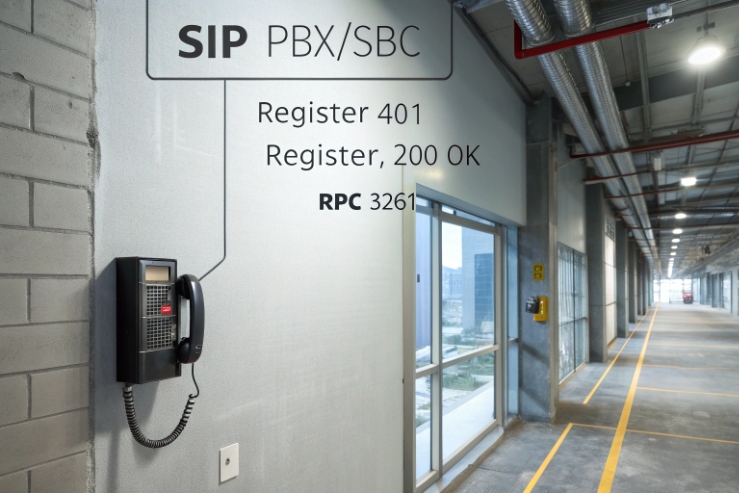
The essential SIP set is RFC 3261 plus DNS-SRV (3263). Add rport (3581), session timers (4028), and SIP outbound (5626) for real-world resilience. Use event notification (3265/6665) and REFER (3515) when your PBX features require them.
RFC-by-RFC: what it enables and when it matters
RFC 3261 is the baseline. It covers core SIP 1 methods, dialog basics, and SIP over UDP/TCP/TLS behavior. A phone that struggles with 3261 details will show random failures like missed re-INVITEs or broken call teardown.
DNS-SRV 2 enables locating SIP servers by service records and supports failover patterns that do not require static IP edits on every phone. In plants with redundant SIP servers, this reduces downtime after server maintenance.
RFC 3581 (rport) improves NAT and symmetric routing handling. Even in “no NAT” sites, rport can help when traffic crosses firewalls or asymmetric routes. It is a low-risk feature with high payoff.
RFC 4028 session timers help detect dead calls and keep long calls stable across stateful firewalls. It also supports re-INVITE refresh logic that many SBCs expect.
RFC 5626 SIP outbound becomes useful when phones sit behind NAT, use multiple paths, or need persistent flows with keepalives. It is common in carrier-grade designs and remote plants.
RFC 3265 and RFC 6665 relate to SIP event notification. Phones use this for message waiting indicators, dialog subscriptions, and some status features. It is not required for basic calling, but it is often required for “rich” PBX feature sets.
RFC 3515 REFER is needed for attended transfer and some call control flows. Many PBXs rely on it for transfers that behave cleanly under busy conditions.
| SIP RFC | What it solves | Most common plant use | Simple acceptance test |
|---|---|---|---|
| 3261 | core SIP | register, call, hold, transfer basics | REGISTER + INVITE + BYE trace |
| 3263 | DNS-SRV failover | redundant registrars | SRV lookup, failover call |
| 3581 | rport | NAT/asymmetry robustness | confirm rport in Via and return path |
| 4028 | session timers | long calls through firewalls | call for 30+ minutes, no silent drop |
| 5626 | outbound flows | remote sites and NAT | stable registration after IP changes |
| 3265/6665 | event notify | MWI, dialog events | subscribe/notify works, no storms |
| 3515 | REFER | transfer | attended transfer with call trace |
A minimum SIP feature list that fits most Ex phone deployments
-
SIP registration with multiple servers or SRV records
-
TLS support for secure signaling if required
-
session timers and keepalive behavior that match your SBC
-
predictable retry timers after link bounce and power restore
When these are stable, SIP “just works” and the phone behaves like a reliable endpoint, not a lab device.
Which RTP/SDP/DTMF/media RFCs matter—RFC 3550/3551, 4566 (SDP), 2833/4733 DTMF, 7587 Opus, and 3711 SRTP?
Media problems are the most visible problems. Users do not care about RFC numbers. They care about one-way audio, clipped paging, and missed DTMF digits.
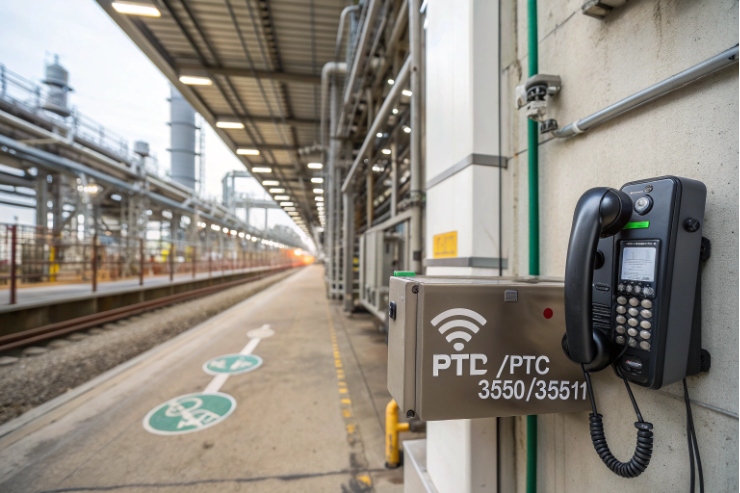
RTP (3550/3551) and SDP (4566) are mandatory for real SIP media. DTMF should use RFC 4733 RTP events as the default, with in-band only for G.711 end-to-end. If Opus is required, confirm RFC 7587 support and a safe fallback to G.722/G.711.
RTP and SDP: where interop details hide
RTP packets 3 carry timestamps, sequence numbers, and payload profiles. Most “audio breaks” on site come from network issues, but some come from endpoint timing errors or mis-sized jitter buffers.
SDP negotiation 4 language defines how the phone offers codecs, ptime, DTMF events, and SRTP crypto lines. If SDP is wrong, the call may connect but media will fail.
RFC 3264 offer/answer is also part of this story, even if it is not in your list. It drives how SDP is exchanged and updated. It is worth checking in vendor statements because it affects re-INVITE behavior and hold/resume flows.
DTMF: choose one method and keep it consistent
RFC 2833 is the older name. RFC 4733 5 is the updated standard for RTP events. Many UIs still show 2833. In practice, most PBXs and SBCs prefer RTP event DTMF because it is codec-independent.
In-band DTMF should be treated as a legacy mode:
-
It works best only with G.711 and no transcoding
-
It often fails with compressed codecs or audio processing
SIP INFO DTMF can be used, but it depends on SBC and policy. RTP events are the safer default for IVRs, door controllers, and paging triggers.
Opus (RFC 7587): use it with a clear policy
Opus can improve intelligibility at lower bitrate. It is a strong choice for remote links. It also needs a fallback plan because paging gateways and some trunks still prefer G.711.
A safe codec order for calls is:
-
Opus first
-
Then G.722
-
Then G.711 (PCMA/PCMU based on region)
A safe codec order for paging and PAGA is often:
-
G.711 first
-
G.722 optional
-
Opus only if proven end-to-end
| Media RFC | What it covers | Why it matters in plants | What to verify |
|---|---|---|---|
| 3550/3551 | RTP + profile | timing, loss behavior | stable RTP under load |
| 4566 | SDP | codec and feature negotiation | correct SDP offers and answers |
| 4733 (2833) | DTMF RTP events | IVR and door control | digits never missed through SBC |
| 7587 | Opus payload | low bitrate clarity | profile controls + fallback codecs |
| 3711 | SRTP | media security | SRTP negotiation and stable audio |
Avoid common media pitfalls in Ex phone deployments
-
Fix QoS first. Do not try to “codec your way out” of congestion.
-
Keep ptime stable. 20 ms is a safe baseline for most calls.
-
Confirm DTMF payload type negotiation if your PBX hard-codes values.
-
Keep paging chains simple. Many paging devices are happiest with G.711.
When these are aligned, voice, paging, and IVR control stay consistent across sites.
Which NAT and security RFCs apply—RFC 5246/8446 TLS, 5764 DTLS-SRTP, 5389 STUN, 5766 TURN, and 8445 ICE?
Security can break interop if it is added late. NAT traversal can also break audio if it is enabled without a real need. Plants need a clean boundary.
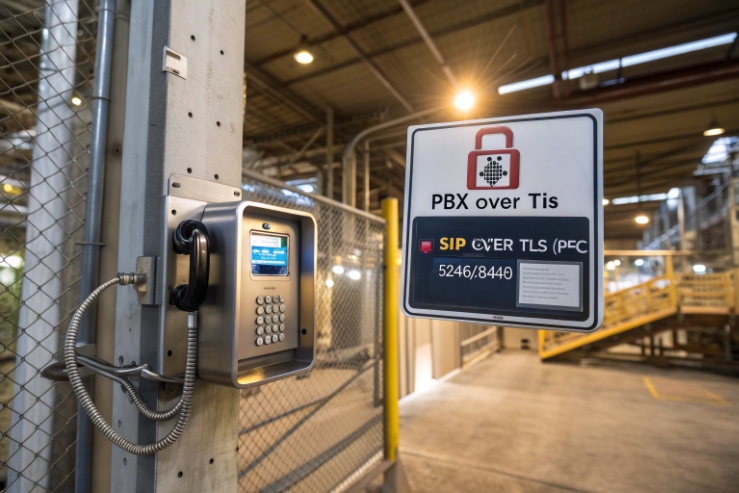
TLS (5246 or 8446) and SRTP (3711) are the main security RFCs for Ex phones. STUN (5389) helps in NAT edges. TURN (5766) and ICE (8445) are needed only when endpoints sit behind unpredictable NAT or remote access paths. DTLS-SRTP (5764) is less common on hard phones, but it can appear in specific ecosystems.
TLS: pick a version and make certificates manageable
TLS 1.2 6 (RFC 5246) is still widely deployed. TLS 1.3 (RFC 8446) is newer and often preferred when the ecosystem supports it. The key is not the number. The key is:
-
certificate provisioning
-
renewal plan
-
cipher policy that matches the PBX/SBC
In industrial networks, certificate lifecycle is the main pain point. A plant should define how certificates are loaded and rotated before enabling TLS everywhere.
SRTP: decide how keys are exchanged
RFC 3711 7 defines SRTP. Key exchange can happen through:
-
SDES in SDP (commonly referenced by RFC 4568 in many systems)
-
DTLS-SRTP (RFC 5764)
Hard phones often support SDES SRTP more commonly than DTLS-SRTP. DTLS-SRTP is common in WebRTC and some modern platforms. If DTLS-SRTP is required, it should be stated and proven in a test trace.
NAT traversal: only add it when the path needs it
Many hazardous plants do not use NAT inside the plant. STUN, TURN, and ICE may not be needed at all. When remote sites or carrier paths exist, NAT traversal becomes important.
-
STUN helps a device discover its public-facing mapping.
-
TURN relays media when direct paths fail.
-
ICE coordinates candidate testing and selects a working path.
In plants, TURN and ICE can add complexity and new firewall needs. So they should be used only when there is a real remote access requirement.
| RFC | What it does | When it is needed | Plant risk if misused |
|---|---|---|---|
| 5246/8446 | TLS 1.2/1.3 | secure SIP signaling | certificate failures stop calls |
| 3711 | SRTP | secure media | interop breaks if keying mismatched |
| 5764 | DTLS-SRTP | SRTP keying via DTLS | more ports and handshake complexity |
| 5389 | STUN | NAT discovery | wrong STUN can cause one-way audio |
| 5766 | TURN | media relay | extra bandwidth and relay dependency |
| 8445 | ICE | path selection | complex troubleshooting in OT networks |
A simple security posture that works in many industrial networks
-
Keep SIP on TLS if the PBX supports it cleanly.
-
Keep media on SRTP if the call paths are controlled.
-
Use strict ACLs so phones only reach needed servers.
-
Avoid ICE/TURN unless the deployment includes remote NAT traversal that cannot be redesigned.
This keeps security strong without turning the voice network into a hard-to-debug maze.
Which provisioning and management RFCs and standards—RFC 2131/2132 DHCP, 5424 syslog, 3411–3418 SNMPv3, HTTP/HTTPS, and TR-069/TR-104?
A plant voice system lives for years. Provisioning and monitoring decide how many site visits happen and how fast faults are found.
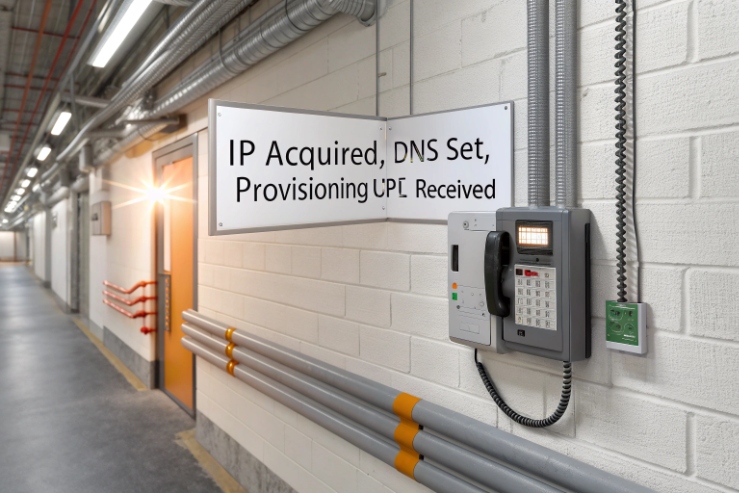
Explosion-proof SIP telephones should support DHCP (2131/2132), HTTPS provisioning, and at least one strong monitoring channel such as syslog (5424) and SNMPv3 (3411–3418). TR-069/TR-104 can manage fleets well, but it depends on your ACS platform and security model.
DHCP: use it for bootstrap and consistency
DHCP is not only IP address assignment. It is also how many plants deliver:
-
NTP servers (common via option 42)
-
provisioning URLs (options vary by vendor)
-
SIP server hints (in some designs)
The most stable pattern is: DHCP bootstraps, then HTTPS provisioning sets the full profile. This reduces drift and keeps replacement fast.
Syslog and SNMPv3: keep visibility without opening risk
Syslog (RFC 5424) is simple and effective for event trails:
-
registration failures
-
reboot events
-
SIP errors
-
emergency key presses (when supported)
SNMPv3 is useful for monitoring because it adds authentication and privacy. In industrial networks, SNMPv3 is preferred over SNMPv2c when policy allows it.
HTTP/HTTPS provisioning: still the workhorse
HTTPS provisioning is widely used because it is easy to scale and easy to control with certificates and access rules. A good provisioning design includes:
-
versioned config templates
-
rollback plan
-
device identity mapping (MAC, serial, or certificate)
-
a “golden profile” per site or per VLAN
TR-069/TR-104: powerful when ACS governance exists
TR-069 and TR-104 are Broadband Forum specifications, not RFCs. They can still be important in large deployments where a central ACS must:
-
enroll devices
-
push config changes
-
schedule firmware upgrades
-
keep backups and inventory
TR-069 can coexist with HTTPS provisioning, SNMP, and event webhooks, but only when ownership is clear. Two systems should not write the same settings.
| Management tool | Best use | What it needs to succeed | Common pitfall |
|---|---|---|---|
| DHCP 2131/2132 | bootstrap | clean scopes per VLAN | mixed scopes cause drift |
| HTTPS provisioning | fleet config | templates and access control | unversioned changes |
| Syslog 5424 | audit and events | central log server | logs lost without time sync |
| SNMPv3 3411–3418 | monitoring | NMS and ACLs | weak community strings (avoid) |
| TR-069/TR-104 | lifecycle mgmt | ACS governance | conflict with provisioning ownership |
A simple scale strategy for hazardous sites
-
Use DHCP for IP, NTP, and provisioning discovery.
-
Use HTTPS provisioning for the main configuration source of truth.
-
Use syslog and SNMPv3 for monitoring and auditing.
-
Add TR-069 only when the customer already runs an ACS platform and wants full lifecycle governance.
This approach keeps operations simple and still gives strong control over a global fleet.
Conclusion
Use a core RFC set for SIP, RTP/SDP, DTMF, and TLS/SRTP. Add NAT and TR-069 only when your network path needs them. For OEM guidance: info@sipintercommanufacturer.com.
Footnotes
-
Comprehensive overview of Session Initiation Protocol used for controlling multimedia communication sessions. ↩ ↩
-
Technical explanation of how DNS-SRV records facilitate service discovery and server failover. ↩ ↩
-
Detailed specifications of the Real-time Transport Protocol for delivering audio and video over IP. ↩ ↩
-
Introduction to Session Description Protocol used for negotiating media parameters in SIP sessions. ↩ ↩
-
Official documentation for the RFC 4733 standard regarding RTP payload formats for DTMF. ↩ ↩
-
Guide to Transport Layer Security protocols ensuring cryptographic security for network communications. ↩ ↩
-
Overview of Secure Real-time Transport Protocol providing encryption and authentication for media streams. ↩ ↩