
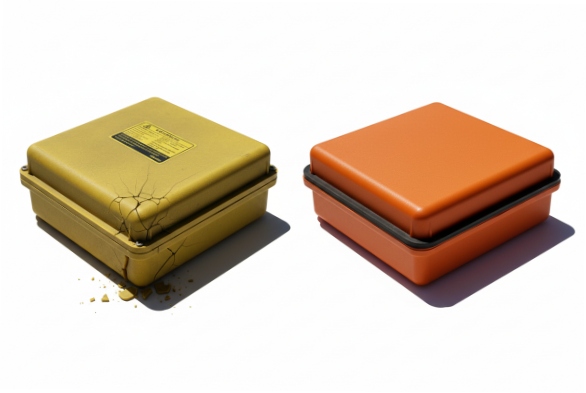
In the blazing sun of the Middle East or the reflective glare of an offshore rig, ultraviolet (UV) radiation 1 is a relentless destroyer. "Sun rot" can turn a tough plastic housing brittle enough to crack with a finger tap in less than two years. For explosion-proof equipment 2, this brittleness is a safety failure, not just a cosmetic issue.
High-quality outdoor explosion-proof telephones utilize UV-stabilized Glass Reinforced Polyester (GRP) loaded with Carbon Black or UV-resistant Stainless Steel (316L). Plastics must be treated with Hindered Amine Light Stabilizers (HALS) and tested to ISO 4892 or ASTM G154 standards to ensure they survive 10+ years of direct sunlight without "crazing" or structural failure.
The Invisible Sledgehammer: UV Radiation
At DJSlink, we export thousands of units to desert regions like Saudi Arabia and high-UV altitude mines in Peru. We’ve learned that UV radiation attacks the very molecular bonds of polymers 3.
-
The Effect: It breaks the polymer chains (scission), causing "chalking" on the surface and deep micro-cracks structure.
-
The Danger: An Ex e (Increased Safety) 4 enclosure relies on its impact strength. If UV radiation reduces that impact strength by 50%, a minor bump could shatter the case, exposing the live circuits to explosive gas.
Standard "indoor" plastics like ABS or standard PVC will disintegrate outdoors. You need materials engineered for the solar spectrum.
Are plastics UV-stabilized and HALS-treated for sunlight?
If you choose a plastic (GRP/Polycarbonate) phone over steel, you must ask about the chemistry.
Yes, outdoor-rated plastics must be compounded with UV stabilizers. The most common method for black GRP is Carbon Black (the most effective UV blocker). For colored plastics (like Safety Yellow or Red), Hindered Amine Light Stabilizers (HALS) and UV absorbers are chemically bonded to the polymer matrix to scavenge free radicals before they destroy the material.
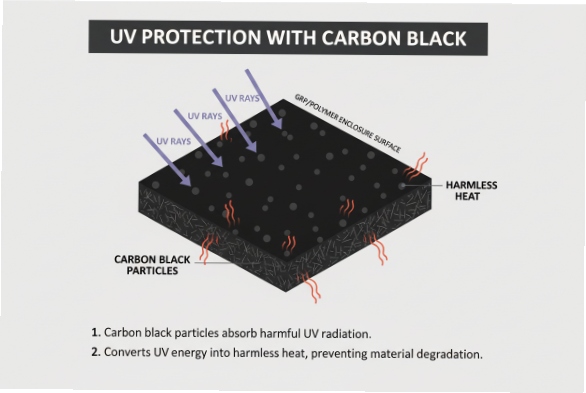
The Chemistry of Longevity
-
Carbon Black (The King): This is why most outdoor cables and tough cases are black. Carbon Black 5 absorbs UV photons and converts them to harmless heat. It is incredibly effective.
-
HALS (The Shield for Color): If you need a Red fire phone or Yellow emergency phone, we can’t use carbon black. We use HALS 6. These molecules "catch" the degradation products and regenerate themselves, providing long-term protection.
-
GRP (Glass Reinforced Polyester): DJSlink’s GRP 7 housings are inherently more resistant than thermoplastics (like ABS/PC) because the glass fibers provide structural integrity even if the surface resin chalks slightly.
Do coatings pass ISO 4892 or ASTM G154 exposure?
A datasheet saying "UV Resistant" is an opinion. A datasheet citing "ISO 4892-2 Method A" is a fact.
Manufacturers validate UV resistance using accelerated weathering chambers. The gold standard is ISO 4892-2 (Xenon Arc) or ASTM G154 (Fluorescent UV), typically running for 1000 to 5000 hours. These tests simulate years of solar radiation, humidity, and heat to prove the material retains at least 70-80% of its original mechanical strength.
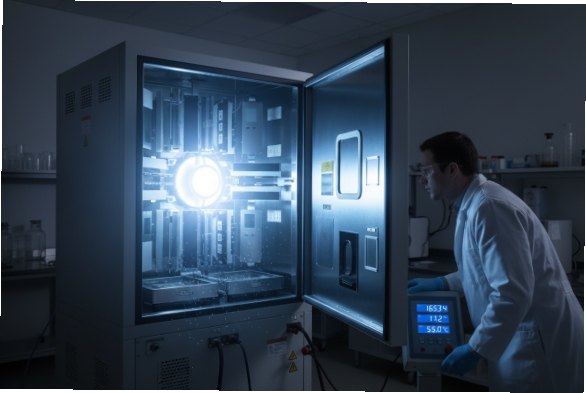
Interpreting the Test Data
When reviewing a DJSlink technical bid, look for the "Environmental Testing" section.
-
1000 Hours: Roughly equivalent to 1-2 years of Florida sunlight. (Minimum standard).
-
5000 Hours: Roughly equivalent to 5-10 years. (High performance).
-
Pass Criteria: It’s not just about looks. The sample is impact-tested after the UV baking. If it cracks, it fails.
Are labels and windows UV-fade resistant?
A safety label that fades to white is a regulatory violation. A display window that turns milky (opaque) renders the phone useless.
Labels should be laser-engraved Stainless Steel to be permanently legible. If printed, they must use UV-cured inks with a thick UV-blocking laminate. Display windows must be UV-stabilized Polycarbonate (specifically formulated to resist yellowing/crazing) or, for ultimate longevity, tempered glass.
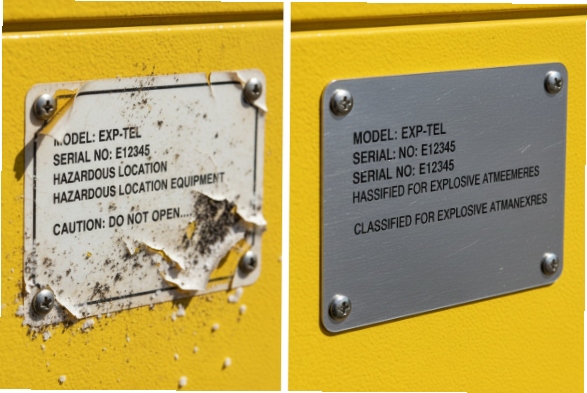
The "Crazing" Problem
Have you ever seen old car headlights turn yellow and cloudy? That is polycarbonate oxidizing.
-
The DJSlink Standard: We use optical-grade polycarbonate with a specific anti-UV coating.
-
The Ultimate Fix: For extreme UV locations, we recommend Tempered Glass windows (if the IK rating allows). Glass is immune to UV degradation. It will be as clear in 20 years as it is today.
-
Keypads: Our buttons are cast with UV-stable silicone or machined from 316L Stainless Steel 9. Printed legends on buttons are the first thing to fade, so we engrave them.
What warranties cover coastal UV degradation?
Warranty terms reveal the manufacturer’s confidence. Most standard warranties exclude "environmental wear and tear."
Standard warranties typically cover "structural integrity" (the case won’t crack) but exclude "cosmetic fading" (yellowing or chalking). For coastal/high-UV projects, you should request an "Extended Polymer Warranty" which specifically guarantees the enclosure will maintain its IP rating and mechanical impact strength for 5-10 years, even if surface gloss is lost.
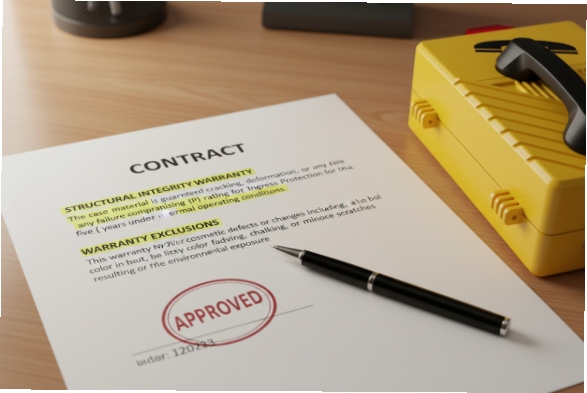
Reading the Fine Print
-
"Chalking" is Normal: On GRP phones, the surface might get a bit powdery (chalking) after 5 years in the desert. This is usually cosmetic. DJSlink warranties that this superficial layer will not compromise the Ex safety or waterproofing.
-
The "Yellowing" Exclusion: Most vendors will not warrant the color of a yellow phone staying "Pantone perfect." If strict color coding is required, consider painted Stainless Steel 10 (which can be repainted) over colored plastic.
Conclusion
For outdoor explosion-proof telephones, UV resistance is not a luxury—it’s a structural necessity. To ensure your equipment survives the sun, specify Carbon Black loaded GRP or 316L Stainless Steel, demand proof of ISO 4892/ASTM G154 testing (min. 1000 hours), and insist on laser-engraved labels. Don’t let the sun deactivate your safety line.
Footnotes
-
Defines UV radiation wavelengths and their degrading impact on industrial materials. ↩
-
Certification standards and safety definitions for explosion-proof equipment in hazardous areas. ↩
-
Chemical structure of polymers and chain scission mechanisms under UV exposure. ↩
-
Details the Increased Safety (Ex e) concept for preventing ignition sources. ↩
-
Mechanism of carbon black particles absorbing UV and converting it to heat. ↩
-
Chemical process of HALS scavenging free radicals within the polymer matrix. ↩
-
Material composition and corrosion resistance analysis of Glass Reinforced Polyester (GRP). ↩
-
ASTM G154 standard procedures for accelerated weathering using fluorescent UV lamps. ↩
-
Chemical composition and corrosion benefits of 316L stainless steel in harsh environments. ↩
-
Guide to stainless steel applications and surface treatments in industrial design. ↩








