
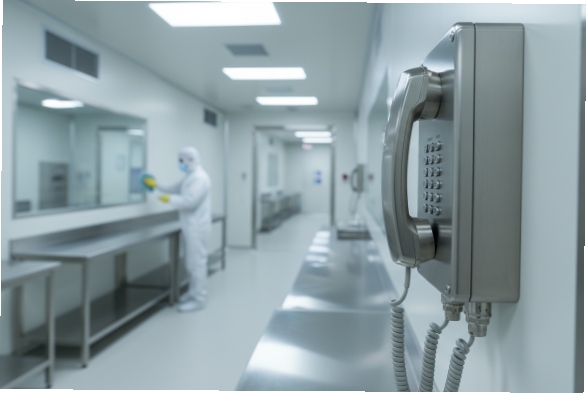
A handset can pass an Ex certificate and still fail the cleanroom on day one because it traps residue, sheds particles, or corrodes after disinfection.
Stainless steel is the most reliable handset material for cleanroom-rated explosion-proof use because it supports GMP cleaning, resists harsh disinfectants and salt air, reduces particle shedding with smooth finishes, and stays mechanically stable for long-life Ex service.
The real reason stainless becomes “mandatory” in cleanroom Ex handset design?
In a clean pharmaceutical or chemical plant, the handset is touched, wiped, sprayed, and inspected far more than most industrial devices. It sits at the intersection of hygiene rules and hazardous-area safety rules. That intersection narrows material choices fast.
A cleanroom-rated handset must do four things at the same time:
1) Stay cleanable without damage
GMP cleaning uses alcohol, oxidizers, and sometimes chlorine chemistry. Soft materials can swell or crack. Coated materials can chip. Once the surface changes, it becomes harder to clean and easier to contaminate.
2) Avoid shedding particles
Plastic can abrade. Coatings can flake. Even painted metal can shed when it is scratched. In clean areas, those particles are defects.
3) Resist corrosion and crevice attack
Corrosion is not only an appearance issue. It creates pits and roughness that trap microbes and residues. It also weakens fasteners and seams. In Ex devices, corrosion can also affect sealing performance over time.
4) Remain stable for Ex integrity
Explosion-proof handset designs rely on sealing, mechanical strength, and consistent assembly. A material that creeps, deforms, or becomes brittle under chemicals is a long-term risk.
Stainless steel meets these requirements better than most alternatives because it is a solid material, not a coating-based promise. It can be finished to a smooth, non-shedding surface. It has strong chemical resistance in common plant cleaning conditions. It also supports robust mechanical design for years of use.
| Requirement | Cleanroom pressure | Ex handset pressure | Why stainless helps |
|---|---|---|---|
| Cleanability | Frequent wipe-down | Must not damage seals | Smooth, non-porous, stable surface |
| Low particle shedding | No flaking or abrasion dust | Stable assembly over time | No paint layer to chip; hard surface |
| Corrosion control | Pits and rust are contamination | Corrosion weakens closures | 316/316L 1 resist many corrosives |
| Durability | Heavy cleaning + daily use | Long-life hazard-area service | High mechanical strength and toughness |
This is why many cleanroom projects treat stainless as “required,” even when other materials could work in non-clean settings. The goal is not luxury. The goal is fewer deviations, fewer replacements, and fewer audit findings.
The next sections explain the four core reasons in a way that can be copied into a specification.
How does stainless steel support GMP hygiene, low bioburden, and frequent cleanroom disinfection?
In GMP spaces, “clean” means repeatable cleaning, not only a clean look. A handset must survive the full cleaning cycle for years.
Stainless steel supports GMP hygiene because it is non-porous, easy to wipe to a consistent state, compatible with common cleanroom disinfectants, and stable under repeated cleaning without forming cracks that trap bioburden.
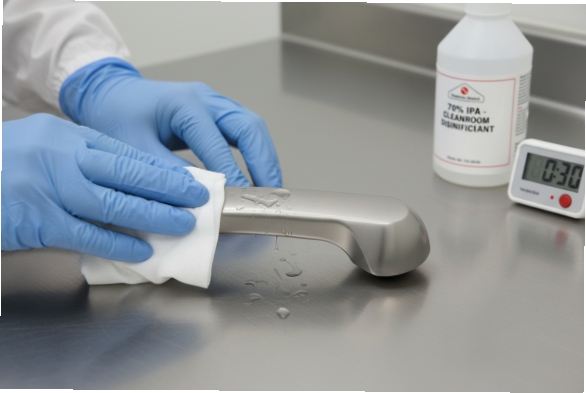
Smooth, non-porous surfaces reduce bioburden risk
Stainless steel can be finished to a smooth surface that does not absorb chemicals or water. That helps cleaning crews remove residues without leaving hidden films. A porous or micro-cracked surface can hold residues and support biofilm growth. Stainless avoids that pattern when surface finish is controlled.
Consistent cleaning results across shifts
GMP cleaning is about consistency. Stainless surfaces show dirt and residue clearly, and they do not “soften” over time like some polymers. When a handset is wiped with IPA 2, it ends up in a predictable state. That matters during audits, because auditors look for controls that are consistent.
Compatible with common disinfection methods
Many facilities use IPA for routine wipes and rotate oxidizers for periodic deeper disinfection. Stainless is widely used in clean environments because it can tolerate these methods better than many plastics and painted surfaces, especially when the steel grade and finish are correct.
Better support for validated cleaning SOPs
A validated SOP needs a stable substrate. Stainless supports written SOPs with defined contact times and defined wipe methods because the surface does not change quickly. That reduces deviations and reduces the chance that a “good SOP” fails because the material aged.
| GMP hygiene goal | How the handset is challenged | Why stainless is the safer substrate |
|---|---|---|
| Low residue after wiping | Repeated contact with IPA | Surface stays stable and easy to wipe |
| Low bioburden | Moisture + residues in crevices | Smooth finish reduces hold-up points |
| Repeatable audit result | Different operators | Surface does not rely on fragile coatings |
| Long-life cleaning validation | Years of cleaning cycles | Material stability supports stable SOPs |
A cleanroom handset is a daily-use cleaning target. Stainless allows that target to exist without becoming a maintenance problem.
Why does stainless steel resist corrosion from IPA, peroxide, chlorine-based cleaners, and salt-laden air better than aluminum or plastic?
In real plants, cleaners are not gentle, and air can carry salt or chemical mist. Corrosion resistance is not a marketing word. It is a life-cycle cost issue.
Stainless steel, especially 316/316L, resists many disinfectants and chloride-rich environments better than aluminum and many plastics because it forms a stable passive layer and avoids coating dependence, while aluminum and plastics can pit, crack, swell, or degrade under oxidizers and chlorides.
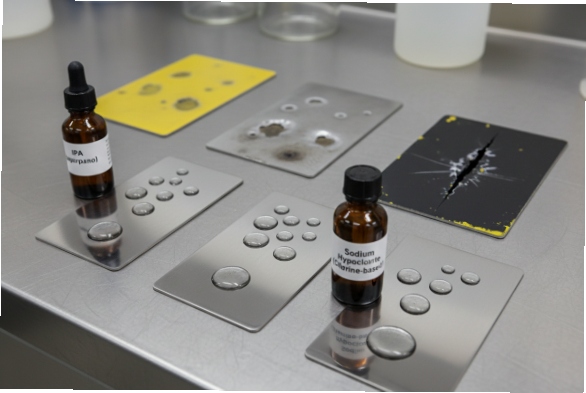
Why aluminum struggles in harsh cleaning cycles
Aluminum can corrode in alkaline cleaners and can pit in chloride environments. Many aluminum housings rely on coatings for protection. If the coating is scratched, corrosion can spread under the film. In cleanrooms, scratches are common because tools, rings, and carts touch equipment.
Why plastics are not automatically “chemically safe”
Some polymers resist IPA well, while others craze or stress crack. Oxidizers like peroxide and chlorine chemistry can degrade some plastics over time, causing surface roughness and micro-cracks. Plastic also tends to pick up static, attracting particles. In clean areas, that adds cleaning burden.
Stainless passive layer is the key advantage
316/316L stainless forms a passive oxide layer that protects the base metal. That protection works even after light scratches, unlike a paint-based system. Chlorides can still challenge stainless in crevices, so design must avoid water traps. Still, stainless remains the most forgiving choice when cleaning practices vary across teams.
Even in pharma plants far from the sea, HVAC and process exhaust can carry contaminants. In coastal sites, salt is constant. Stainless handles salt exposure better than coated metals because small surface damage does not become rapid under-film corrosion.
| Environment stress | Aluminum outcome | Plastic outcome | Stainless outcome (with correct grade and finish) |
|---|---|---|---|
| IPA wipe-down | Usually OK, but coating wear shows | Often OK, but can haze | Stable and easy to wipe |
| Peroxide cleaning | Coating risk, pitting risk | Possible degradation | Usually stable |
| Chlorine cleaners | Pitting risk, galvanic risk | Can crack or degrade | Better resistance, watch crevices |
| Salt air | Under-film corrosion if coating is damaged | UV + salt can age | Strong baseline, avoid crevice traps |
This is why stainless is used for high-touch, high-cleaning equipment. It reduces unknowns.
How do surface finish and seamless structure in stainless steel reduce particle shedding and crevice contamination in clean areas?
Cleanrooms do not only worry about microbes. They also worry about particles. A handset is a moving, handled object, so the risk is high.
A fine surface finish and seamless stainless structure reduce particle shedding by preventing coating flake and abrasion dust, and they reduce crevice contamination by removing gaps where residues and microbes can hide.
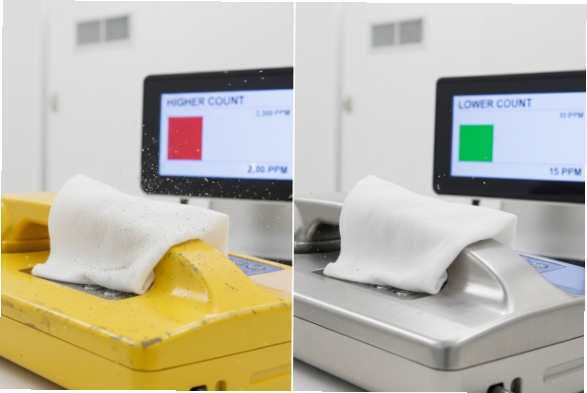
Surface finish: smoother means less hold-up and less shedding
A handset surface with a controlled finish is easier to clean. It also sheds fewer particles because there are fewer high points that abrade. A rough casting surface can act like sandpaper on gloves and wipes, generating particles. Stainless can be polished or brushed to a consistent finish that balances grip and cleanability.
Seamless structure: remove the places where contamination lives
Crevices are where contamination hides. Common crevices include:
-
joint lines between two shells
-
screw recesses that trap liquid
-
gaps around keypad bezels and cord grommets
-
sharp corners at speaker or mic ports
A stainless handset design can reduce these by using welded or tightly fitted construction, and by designing drainage paths. Even when screws are needed, they can be minimized and placed in less exposed areas.
Particle control and cleaning speed improve together
When the handset has fewer seams and a smoother finish, cleaning teams work faster and achieve more consistent results. That reduces the time the handset is handled and reduces the chance of missed spots.
| Design detail | Cleanroom benefit | What to specify |
|---|---|---|
| Smooth stainless finish | Low residue and low abrasion dust | Defined finish target and no rough casting surfaces |
| Minimal seams | Fewer contamination traps | Prefer welded or sealed joints |
| Rounded edges | Easier wipe coverage | No sharp corners or deep recesses |
| Sealed mic/speaker ports | Blocks ingress while keeping clarity | Protective membrane and easy-to-wipe geometry |
| Flush fasteners | Reduces fluid traps | Use where needed, avoid deep holes |
In clean areas, the best design is the one that is hard to contaminate and easy to clean in one pass. Stainless makes that possible.
How can stainless steel handset design meet both Ex safety needs and long-life durability for pharmaceutical and chemical plants?
The final challenge is combining hygiene with hazardous-area integrity. The handset must stay safe even after years of cleaning and heavy use.
A stainless handset can meet Ex safety and long-life durability by using certified sealing concepts, stable mechanical structures, controlled surface temperature behavior, and strict spare-part discipline that keeps the handset identical to the certified design.
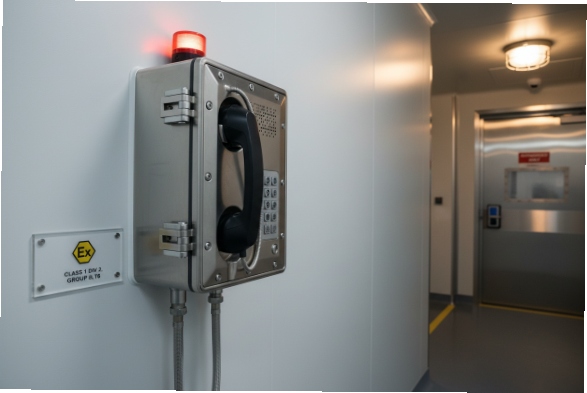
Stainless supports stable Ex-relevant mechanics
Explosion-proof handset systems depend on consistent assembly and reliable seals. Stainless is mechanically strong and does not creep like some plastics. That helps maintain sealing compression and connector stability over time.
Surface temperature control stays predictable
In hazardous areas, surface temperature limits matter. Stainless has predictable thermal behavior. Coating systems can change heat absorption and dissipation, especially with dark colors. Stainless reduces dependence on thick coatings. This makes it easier to control surface temperature margins, especially in sun-exposed areas.
Sealing and chemical resistance keep certification meaningful
A handset that degrades from cleaners can compromise sealing at mic ports, cord entries, and joint lines. Stainless reduces that risk, but the design still needs:
-
sealed and protected mic and speaker ports
-
chemical-resistant gaskets and membranes
-
robust strain relief for cords
-
a cleaning compatibility statement that matches the plant SOP
Lifecycle discipline: the handset must stay “the certified handset”
In Ex projects, the biggest long-life risk is uncontrolled substitution. A “similar” handset can change materials, seals, and temperature behavior. A durable program includes:
-
approved spare handset part numbers tied to certificate revision
-
a rule that only approved cords and grommets can be used
-
inspection records for membrane integrity and corrosion signs
-
change-control review for any design or firmware changes that can affect thermal behavior
| Lifecycle item | What it protects | What to implement on site |
|---|---|---|
| Approved spare handset list | Ex integrity and hygiene consistency | Part numbers, revision control, stock plan |
| Cleaning compatibility matrix | GMP reliability | Approved cleaners and wipe method |
| Periodic inspection | Early detection of seal wear | Check seams, ports, cord entry, fasteners |
| Controlled repairs | Prevents non-compliant modifications | Define what can be replaced in field vs factory |
A stainless cleanroom-rated Ex handset is not only a material choice. It is a complete design and lifecycle approach that keeps hygiene, safety, and uptime aligned.
Conclusion
Stainless steel is used because it cleans predictably, resists harsh chemistry, sheds fewer particles with smooth seamless design, and stays mechanically stable for long-life Ex service.








