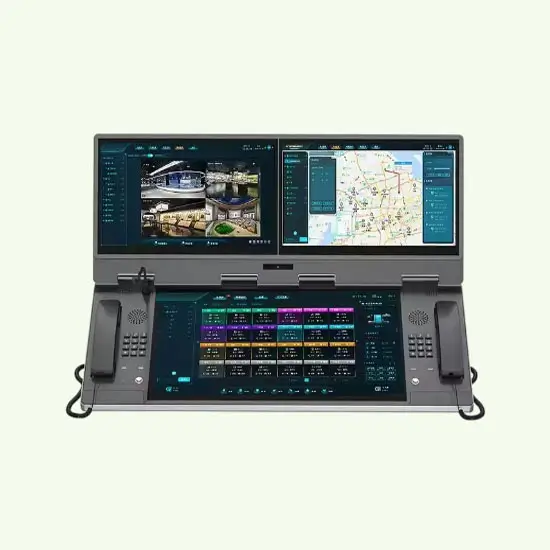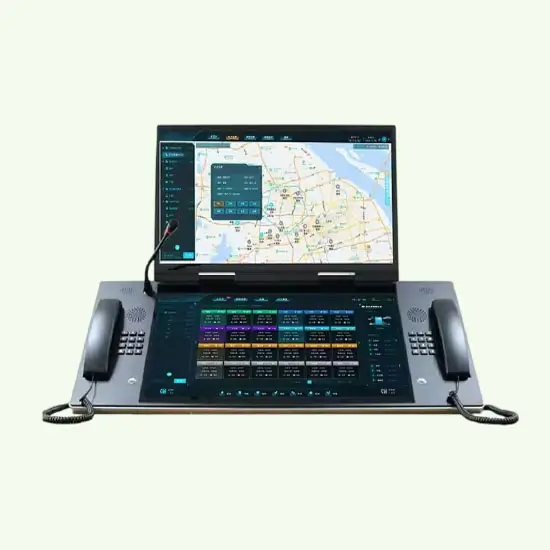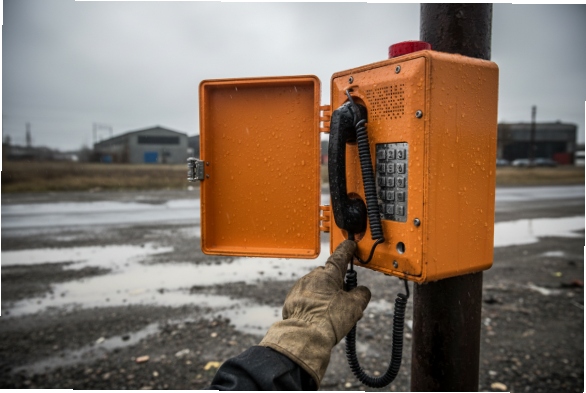
Half duplex communication 1 shows up in intercom and radio specs, but many people only feel it as “please wait and talk”. This mode is simple, but not always ideal.
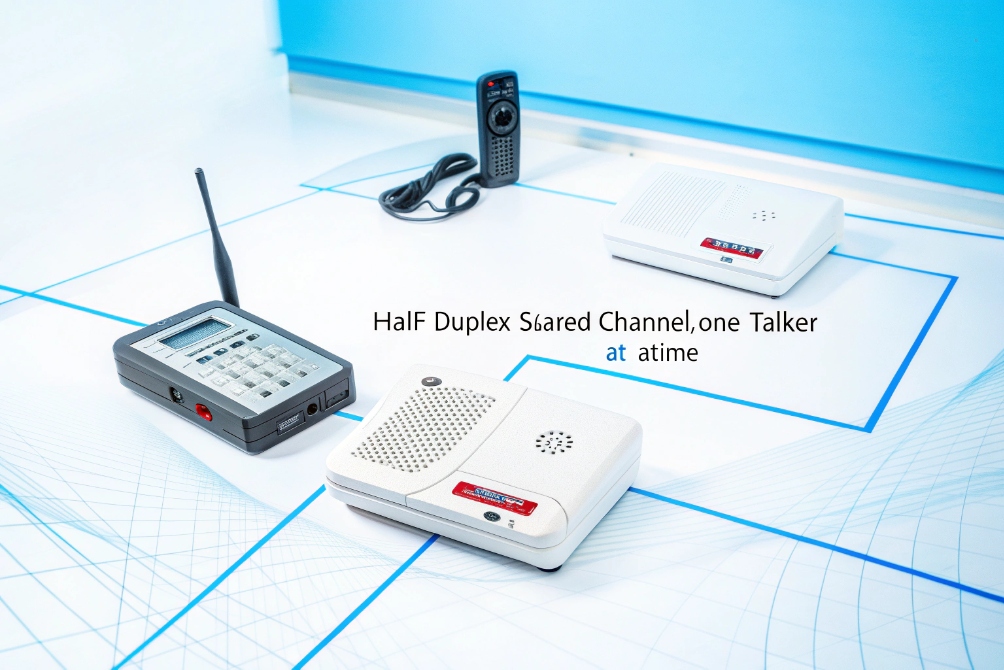
Half duplex is two-way communication where only one side transmits at a time. Devices share one channel, so they must take turns. It is common in push-to-talk intercoms, radios, Wi-Fi, and some low-cost speakerphones that mute mics while speakers play.
In VoIP and SIP intercom projects, half duplex is not just a theory word. It changes how people speak, how echo is handled, and how we design door stations in noisy places. When we pick half duplex, we trade natural talk-over for stability and noise control. The key is to know where that trade is worth it and where it will annoy users.
How does half duplex work in push-to-talk intercoms?
In many buildings, people press a button on the wall station, speak fast, and then wait. This feels like a radio, not a phone call, and often users do not know why.
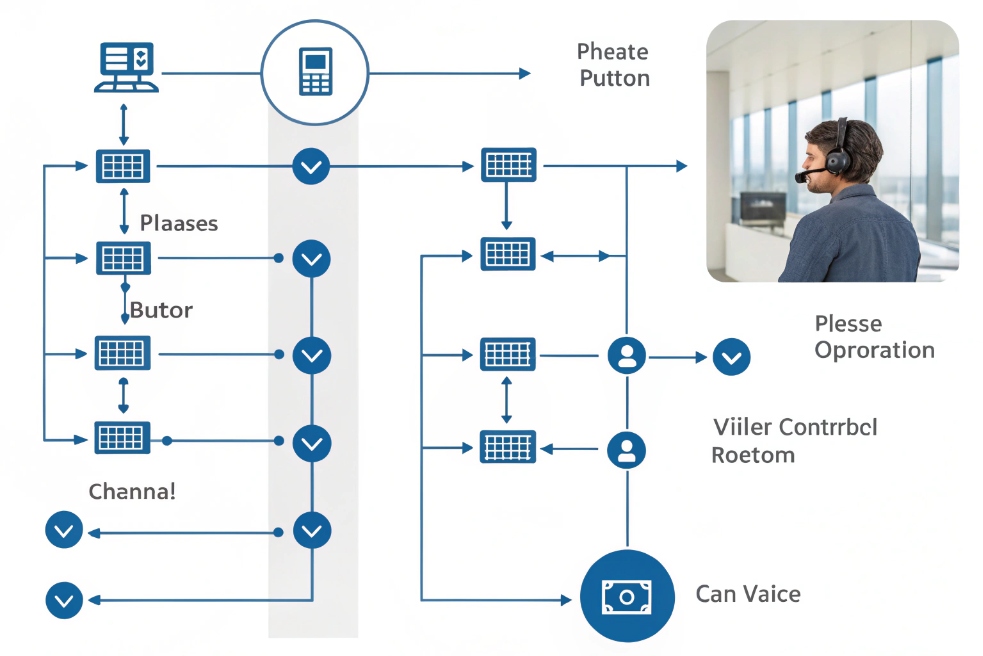
In push-to-talk intercoms, half duplex lets only one side talk at a time. A button or voice gate gives one party the “floor”, while the other side’s microphone is muted until the floor switches.
How half duplex push-to-talk actually behaves
In a SIP intercom or IP phone that runs in half duplex, there are three main ideas:
- Only one audio direction is active at any moment.
- A control action decides who talks: push-to-talk intercoms 2, a key press, or an auto gate using voice activity detection (VAD) 3.
- The system must switch direction cleanly, with minimal clipping of words.
Typical flows look like this:
| Step | Action on intercom side | Action on control room side |
|---|---|---|
| 1 | Visitor presses button, mic opens | Operator hears visitor, own mic is muted |
| 2 | Visitor releases button | Channel goes idle or switches direction |
| 3 | Operator presses “talk” key | Operator mic opens, intercom speaker plays |
| 4 | Operator releases key | Direction can switch back or go idle |
In SIP terms, this still runs as a normal two-way Real-time Transport Protocol (RTP) 4 stream. The half-duplex logic lives inside the endpoints, which decide when to send audio and when to send silence.
Why many intercoms ship in half duplex by default
Many older analog intercoms were half duplex because:
- They reused the same wire pair both ways.
- They had simple amplifiers that could not do strong echo cancellation.
- The acoustic design was poor, so full duplex would howl.
Modern SIP intercoms can do more, but a lot of firmware still offers:
- Simplex paging mode for one-way announcements.
- Half duplex PTT mode for noisy stairs, garages, and gates.
- Full duplex mode for door phones in normal lobbies.
In projects, half duplex push-to-talk still helps when users are used to radio discipline. Guards and security staff often prefer clear “now I talk, now you talk” control for fast instructions. For public doors, though, most visitors expect a phone-like experience. So it is common to keep door stations in full duplex and use half duplex only on special lines, like loading docks or industrial gates.
Does half duplex limit talk-over and echo performance?
People often think half duplex is “better for echo” and will “fix feedback”. It can, but the price is clear: talk-over almost disappears, and the conversation feels stiff.
Half duplex reduces echo by not allowing both sides to talk at once. It improves stability in bad acoustics, but it blocks natural talk-over and can cut off words when users interrupt each other.
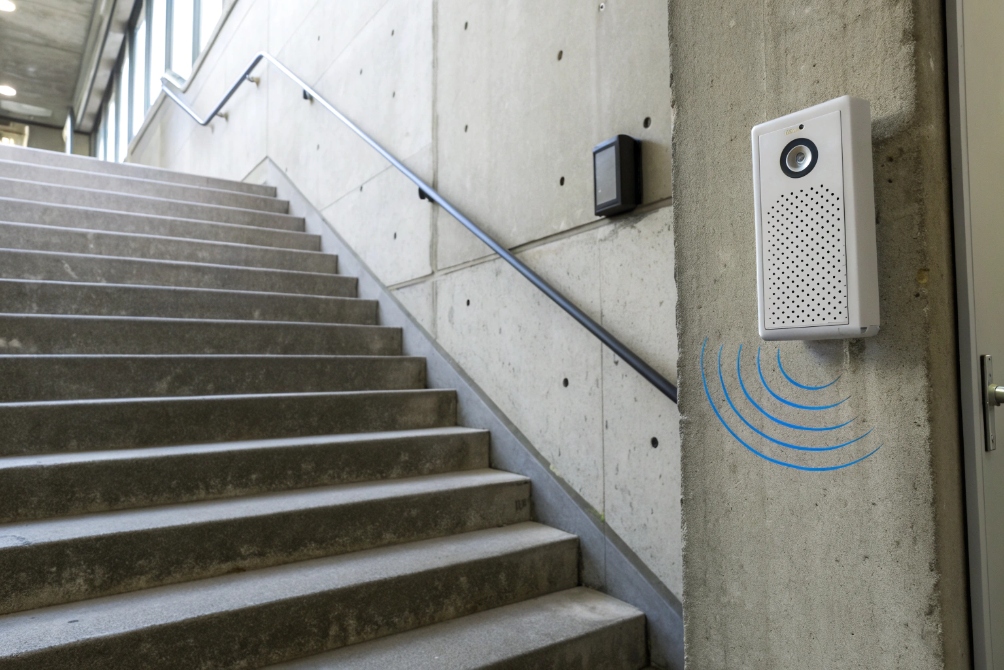
Echo, double-talk, and acoustic half duplex
In full-duplex speakerphones and intercoms, echo cancellation must handle double-talk: both sides speaking at the same time. This is hard in a metal door station in a stairwell or parking lot.
Cheap or basic devices cannot handle this well. So they use acoustic half duplex:
- When the far-end signal is strong, they mute or reduce the local microphone.
- When the near-end user talks, they drop or cut the far-end audio.
- They flip quickly, based on voice level and direction.
This method almost kills acoustic echo, because one path is always weak. But it also kills overlapping speech. If both people start talking, one side “wins” and the other is muted. (This is the trade-off that acoustic echo cancellation (AEC) 5 tries to solve for full duplex systems.)
Here is how that feels:
| Situation | Half duplex / acoustic half duplex | Full duplex with good AEC |
|---|---|---|
| Both talk at once | One side gets muted, words lost | Both sides remain audible |
| Loud far-end audio | Near mic closes, local user must wait | Echo canceller tries to subtract far audio |
| Quick “sorry?” interruptions | Often clipped or blocked | Usually fine |
| Sudden loud background noise | May steal the “floor” and flip direction | AEC and noise reduction try to manage it |
When should I choose half duplex for noisy sites?
On paper, full duplex sounds better for everything. In real noisy sites, this is not always true. Sometimes full duplex turns into a constant fight with noise and feedback.
Half duplex is a good choice in very noisy, reflective, or harsh sites, where echo cancellation struggles and clear one-way messages matter more than natural, overlapping conversation.
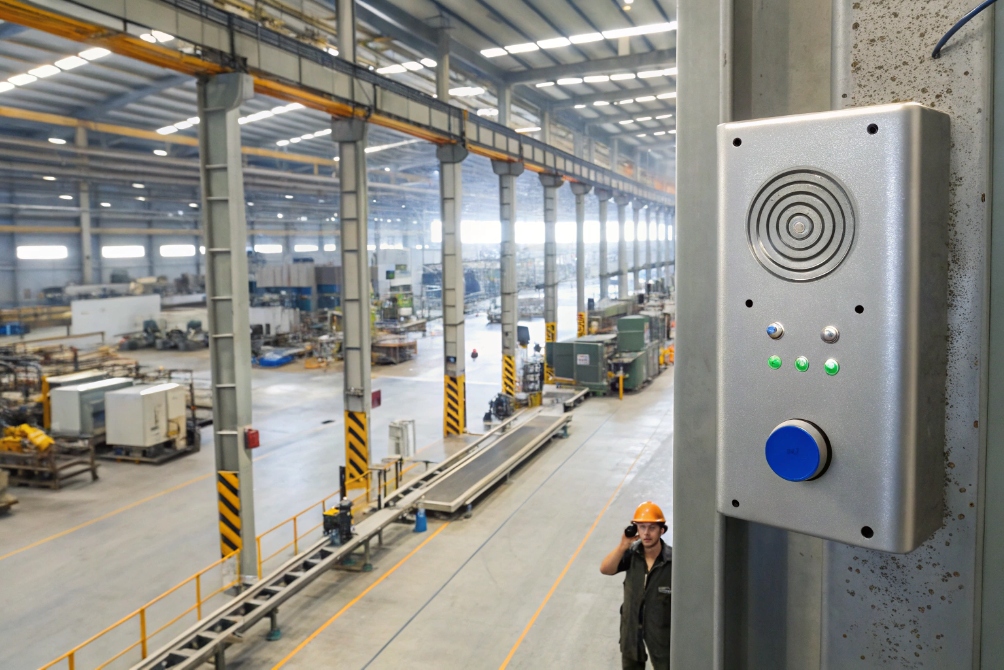
Typical environments that favor half duplex
In projects, some site types show the same pattern again and again:
- Heavy industry: engine rooms, generators, compressor halls.
- Transport: tunnels, platforms with loud PA, depot yards.
- Parking and drive-through lanes with cars and trucks close to the mic.
- Long corridors or stairwells that ring with every word.
In these places:
- Background noise is often higher than the talker’s voice.
- Echo paths are long and complex.
- Volume must be high for the far end to understand.
That is the worst case for acoustic full duplex. The echo canceller must work very hard. It may “lose lock” when a truck passes or when the operator raises volume. Half duplex gives a simple rule: one path at a time, no echo path to solve.
Here is a simple planning view:
| Environment | Noise level / echo risk | Recommended mode | Reason |
|---|---|---|---|
| Office lobby door | Low to medium | Full duplex | Natural talk, visitors expect phone-like call |
| Quiet residential building | Low | Full duplex | Comfort and ease |
| Underground parking | Medium to high | Full or half duplex | Test both; often half duplex more stable |
| Factory floor near machines | High | Half duplex PTT | Clear commands beat smooth overlap |
| Tunnel emergency help point | Very high | Half duplex PTT | Safety and clarity more important than flow |
Practical design tips when you decide on half duplex
When the site pushes you toward half duplex, some small design choices help:
- Use clear visual hints: “Press and hold to talk” near the button.
- Use distinct tones when floor control changes, so users know when to speak.
- Keep messages short and clear, both for visitors and operators.
- Set reasonable time-outs so the channel does not stay locked if someone walks away.
At the same time, still respect the SIP and IP side:
- Keep Ethernet ports in full duplex to avoid a duplex mismatch 6.
- Use QoS for voice so packets are stable even when video or data peaks.
- Choose codecs like G.711 or G.722 if bandwidth allows, so speech stays clear even through half-duplex gating.
In many noisy deployments, a mix works best. Main front-door and reception phones run full duplex. Special zones, like machinery areas or perimeters, use half duplex with push-to-talk. This keeps most of the user experience friendly, while the critical noisy spots stay stable and understandable.
Can half duplex intercoms connect with full duplex devices?
Many people worry they must choose one world: either everything half duplex or everything full duplex. They fear a half-duplex door station will “break” calls to full-duplex phones.
Yes, half duplex intercoms can connect to full duplex devices over SIP. The call itself is full duplex at the protocol level, while each endpoint decides locally whether to run audio as half or full duplex.
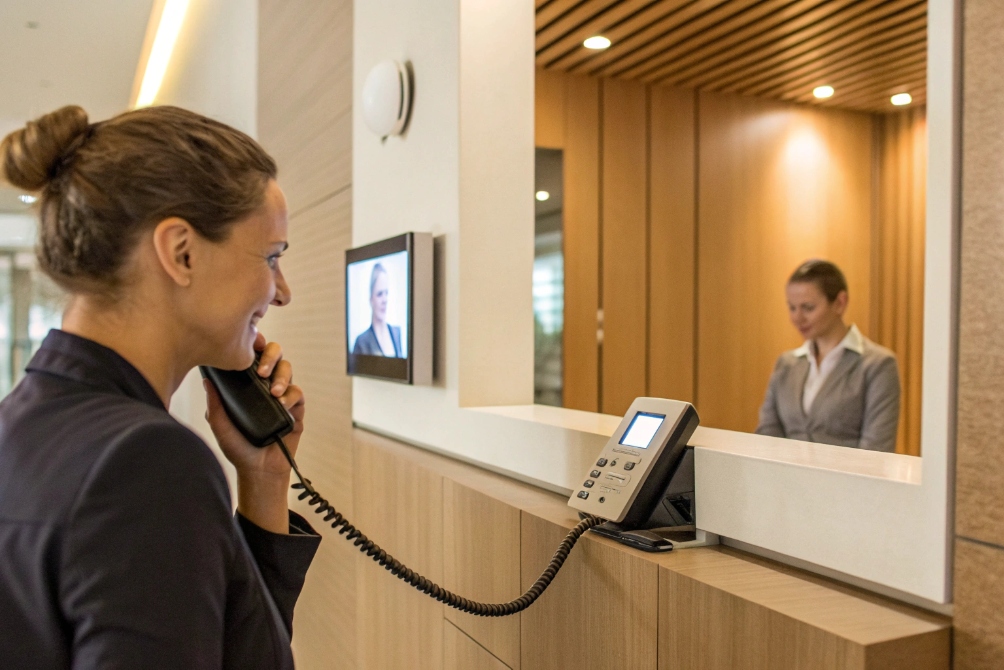
How SIP hides duplex differences
When a SIP phone calls a SIP intercom:
- The SIP INVITE request 7 negotiates codecs and media streams.
- Both sides agree to send and receive RTP audio.
- The PBX or SIP server does not care if one side uses PTT logic.
So on the wire, this is a normal full-duplex VoIP call. Each side sends packets and receives packets at the same time.
The difference is inside the devices:
- The full-duplex phone plays and records audio all the time, using its echo canceller.
- The half-duplex intercom sends real speech only when its local logic says “your turn”, and may mute its mic or speaker at other times.
From the PBX view, nothing special happens. Only users feel the half-duplex behavior.
Common combinations and what to expect
Here is how common mixes behave in practice:
| Intercom mode | Remote device | User experience |
|---|---|---|
| Half duplex PTT | Full-duplex desk phone | Phone sounds normal; intercom side feels like radio |
| Full duplex | Full-duplex IP phone | Natural call in both directions |
| Acoustic half-duplex | Softphone with headset | Softphone side is smooth, intercom flips directions |
| Simplex paging | Full-duplex phone | Phone hears audio only; cannot talk back |
Problems appear only when people expect something else. For example, if the door station is half duplex but the sign and training suggest a normal phone, visitors may start talking before they press and hold the button. Their first words never reach the guard.
When connecting mixed devices:
- Document which extensions are half duplex.
- Train operators to leave short pauses and clear phrases.
- Test with real users, not only with lab loops.
If you later replace a half-duplex unit with a full-duplex SIP intercom on the same extension, the PBX and phones do not need a big rework. You simply change the endpoint behavior, and the call becomes more natural.
Conclusion
Half duplex keeps voice channels stable and simple in noisy or radio-style environments, but for doors and help points, full duplex usually gives a more human, easy conversation.
Footnotes
-
Clear definition of half duplex and how it differs from full duplex and simplex. ↩︎ ↩
-
Explains push-to-talk behavior and why users must “take turns” on a shared channel. ↩︎ ↩
-
Shows how VAD can auto-switch “who talks” in half-duplex voice systems. ↩︎ ↩
-
Reference for RTP media transport that still runs both directions even when endpoints enforce half-duplex audio. ↩︎ ↩
-
Explains why AEC exists and how full duplex tries to keep talk-over natural without feedback. ↩︎ ↩
-
Practical explanation of duplex mismatch and why it causes loss, errors, and VoIP audio problems. ↩︎ ↩
-
Authoritative SIP reference for INVITE-based call setup that negotiates media regardless of half-duplex UI behavior. ↩︎ ↩