
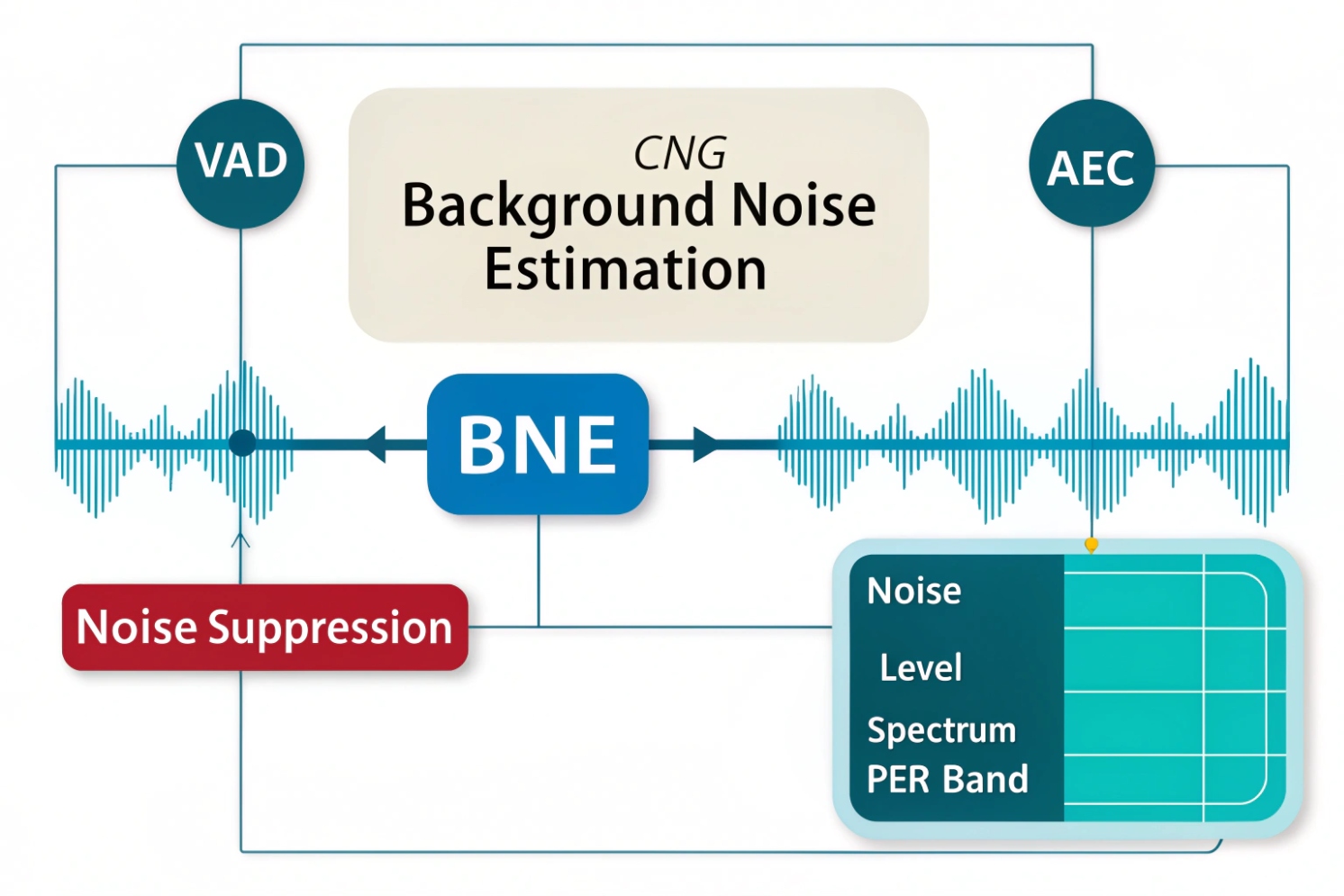
VoIP audio can sound fine in the lab, then fall apart in the field. Noise makes VAD panic, CNG hiss, and AEC drift — and users blame “the network.”
Background Noise Estimation (BNE) is the process of tracking the level and spectrum of non-speech noise so VoIP modules can set adaptive baselines for VAD decisions, comfort-noise shaping, and stable echo cancellation.
Background Noise Estimation: the baseline that keeps VoIP audio stable
BNE is a noise-floor tracker, not a noise remover
BNE’s job is measurement: estimate what “background” looks like when nobody is talking. It usually tracks:
- Noise level (overall loudness)
- Noise spectrum (where the noise lives across frequency bands)
- Sometimes confidence (how sure the estimate is right now)
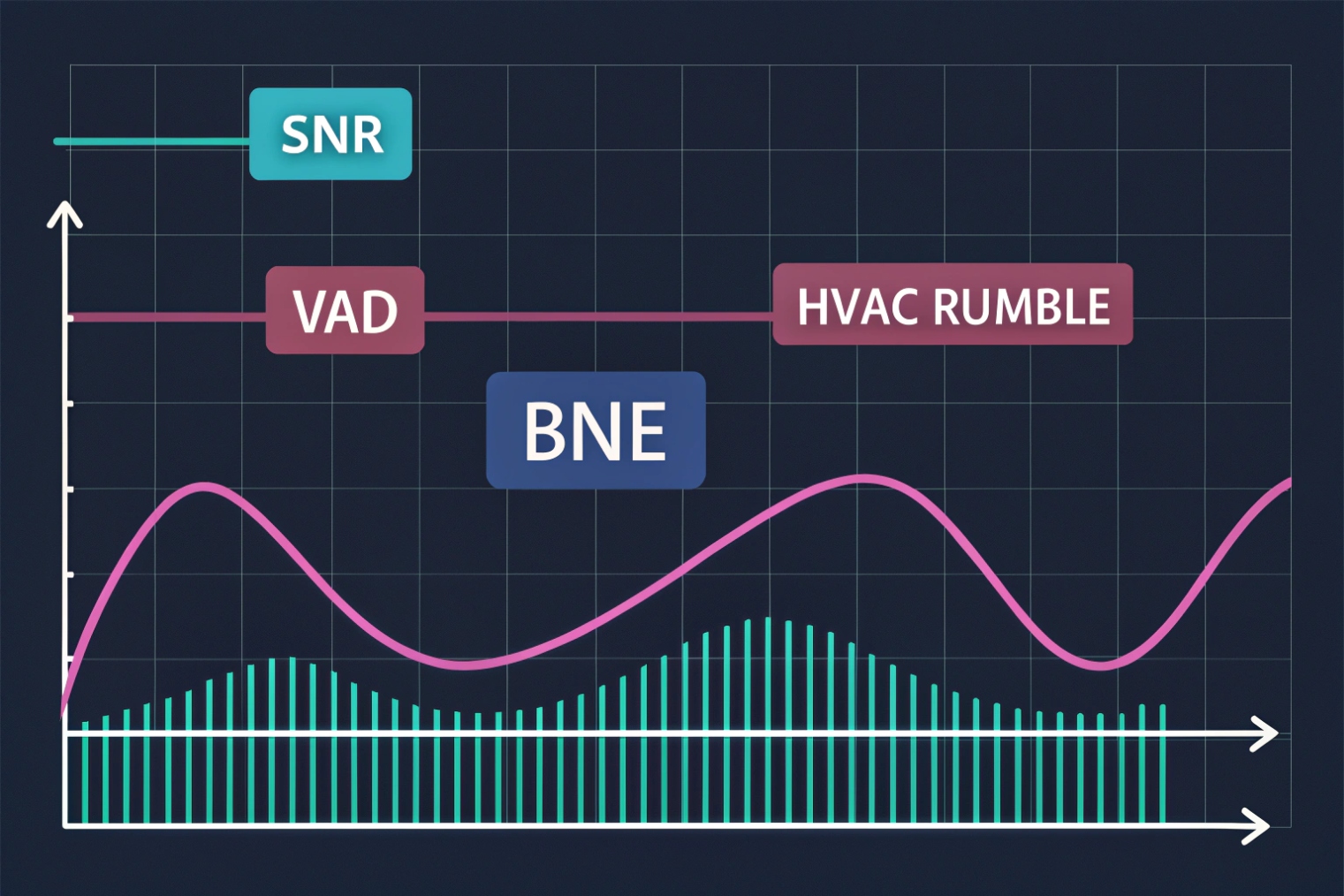
Most real-time VoIP stacks update BNE on short frames (often 10–30 ms) and often work in bands (filterbank/STFT). Band-based tracking is more reliable than one full-band number because HVAC rumble, street traffic, and factory machinery have very different spectral shapes.
How BNE updates without “learning speech as noise”
The hard part is not finding noise — it’s avoiding speech leakage into the estimate.
If BNE updates too aggressively, it can treat soft speech as “noise,” pushing the noise floor upward. Then VAD misses quiet talkers, suppression becomes overly aggressive, and comfort noise gets louder and more hissy than it should.
Practical BNE uses stabilizers like:
- Fast/slow time constants (slow when uncertain, faster on steady noise)
- Speech presence gating (update less when speech is likely)
- Hangover logic (don’t update during brief gaps between syllables)
- Envelope tracking methods such as minimum-statistics noise estimation 1 or MCRA-style recursive averaging 2
Why BNE matters more in intercom and speakerphone endpoints
SIP intercoms live in harsh acoustic spaces: wind, traffic, crowds, reflective enclosures, paging, and big day/night shifts in noise level. Fixed thresholds that work in a quiet office often fail outdoors or in an industrial space.
BNE provides the adaptive baseline so a device can behave well at 2 AM and at rush hour without constant retuning.
| BNE output | What it represents | Who uses it | Typical failure when wrong |
|---|---|---|---|
| Noise level (overall) | Loudness of background | VAD, AGC side-chains, CNG | Clipped speech or “hissy” silence |
| Noise spectrum (per band) | Frequency shape of noise | Noise suppression, CNG shaping | Pumping, musical artifacts, unnatural CN |
| Update confidence | “How sure are we?” | VAD smoothing/hysteresis | State oscillation (open/close flutter) |
BNE is not the feature people ask for — but it’s the feature that prevents “why does it sound different today?” tickets.
How does BNE stabilize VAD, CNG, and AEC performance?
Noisy calls often look like separate problems: VAD cuts speech, CNG hisses, AEC echoes. In reality, they often share one root cause: an unstable noise baseline.
BNE stabilizes VoIP by providing a consistent noise baseline: VAD uses it for adaptive thresholds, CNG uses it to match comfort-noise level and color, and AEC benefits because double-talk and residual suppression decisions become noise-aware.
VAD: BNE turns “threshold guessing” into adaptive decisions
Many VAD designs implicitly compare “speech energy” to a baseline. With a stable BNE baseline, VAD can make decisions based on SNR, which enables:
- Thresholds that rise when noise rises
- Hysteresis that stays meaningful across environments
- Fewer false triggers from steady machinery noise
When BNE is wrong, VAD becomes jumpy: it either opens on noise or misses soft speech — and missed speech is usually the bigger failure in intercom use.
CNG: BNE is the recipe for believable comfort noise
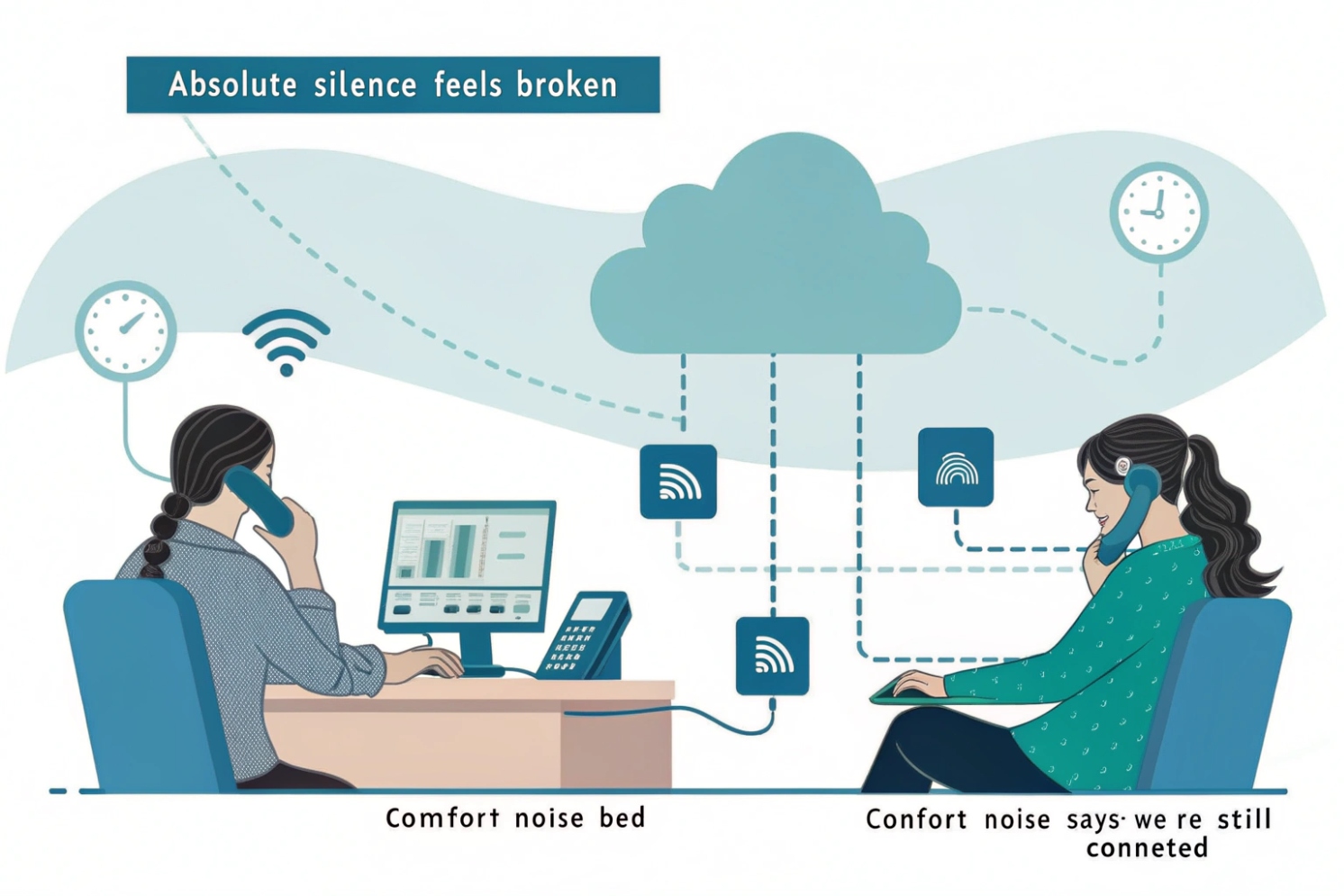
Comfort noise should match the remote background. If BNE says noise is low-frequency rumble, comfort noise should be “colored” similarly — not bright white hiss.
When BNE is unstable, CNG pumps: silence rises and falls in a way humans notice. Overestimation tends to create audible hiss; underestimation creates dead silence that feels like the call dropped.
In RTP systems that signal comfort noise explicitly, this is often tied to the RTP Comfort Noise payload (CN) 3 and the receiver’s synthesis behavior.
AEC: BNE reduces wrong adaptation and bad residual suppression
AEC cancels a modeled echo path, but the system still needs good detection of:
- Double-talk (both sides speaking)
- Residual echo vs. noise vs. near-end speech
Noise-aware baselines help AEC keep consistent behavior as environments change. If BNE drifts upward (especially due to speech leakage), residual suppression can start chewing on near-end speech and make it thin or “phasey.”
| Module | What it needs from BNE | What improves when BNE is stable | What breaks when BNE is unstable |
|---|---|---|---|
| VAD | Noise floor + SNR baseline | Fewer clipped words, fewer false triggers | Choppy gating, missed soft speech |
| CNG | Noise level + spectral color | Natural silence, less hiss | Pumping, hiss bursts, dead silence |
| AEC | Noise-aware thresholds + baseline | Better double-talk stability | Echo leaks, speech distortion, drift |
What’s the difference between BNE, noise suppression, and AGC?
Many device menus group these together, so installers treat them as one “noise feature.” That leads to wrong fixes and endless tuning loops.
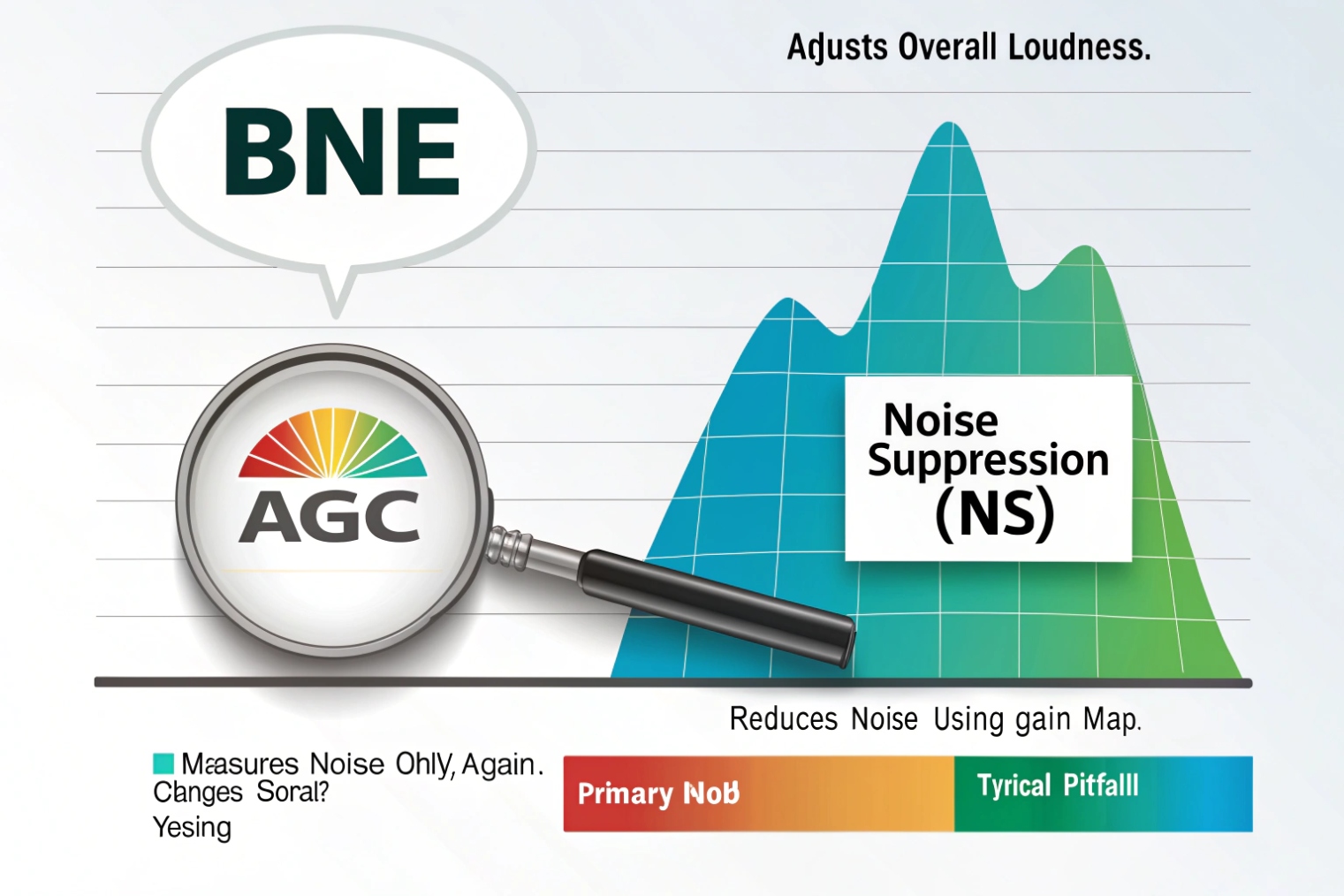
BNE estimates noise, noise suppression reduces noise, and AGC changes gain to stabilize loudness. BNE informs suppression and VAD, while AGC can sabotage noise tracking if estimation isn’t gain-aware.
BNE: measurement and tracking
BNE is the baseline map: “what does background look like right now?” It should be stable, slow enough to avoid learning speech as noise, and detailed enough to reflect the environment.
Noise suppression: reduction (with artifact risk)
Noise suppression typically uses a noise estimate (often from BNE) to remove noise. If the estimate is wrong or too jumpy, suppression can create:
- Musical noise
- Pumping
- Speech distortion
In practical implementations, the knobs and behavior are often exposed through APIs like the WebRTC Noise Suppression interface 4.
AGC: loudness management — and a common source of instability
AGC changes gain on both speech and noise. If BNE runs after AGC without compensation, the “noise floor” appears to change whenever gain changes — even if the environment is stable. That can make VAD feel broken and CNG feel hissy.
Robust designs estimate noise on pre-AGC audio or account for the current gain when updating noise statistics.
| Feature | Primary purpose | Output | Common misinterpretation |
|---|---|---|---|
| BNE | Track noise baseline | Noise level + spectrum | “It should remove noise” |
| Noise suppression | Reduce noise in mic signal | Cleaner mic audio | “More is always better” |
| AGC | Stabilize loudness | Gain changes | “Fixes weak mic” even when it clips |
| VAD | Detect speech vs silence | Speech flag/probability | “Causes cut-offs” when baseline is wrong |
How should I tune BNE for factories, stations, and streets?
Field environments are messy. Noise isn’t steady — it’s bursts, tones, and moving sources. A BNE that works in an office can fail outdoors.
Tune BNE with slower updates in speech-like noise, faster updates for steady machinery, and strong hangover to avoid speech leakage. In harsh sites, prioritize stability and intelligibility over maximum noise reduction.
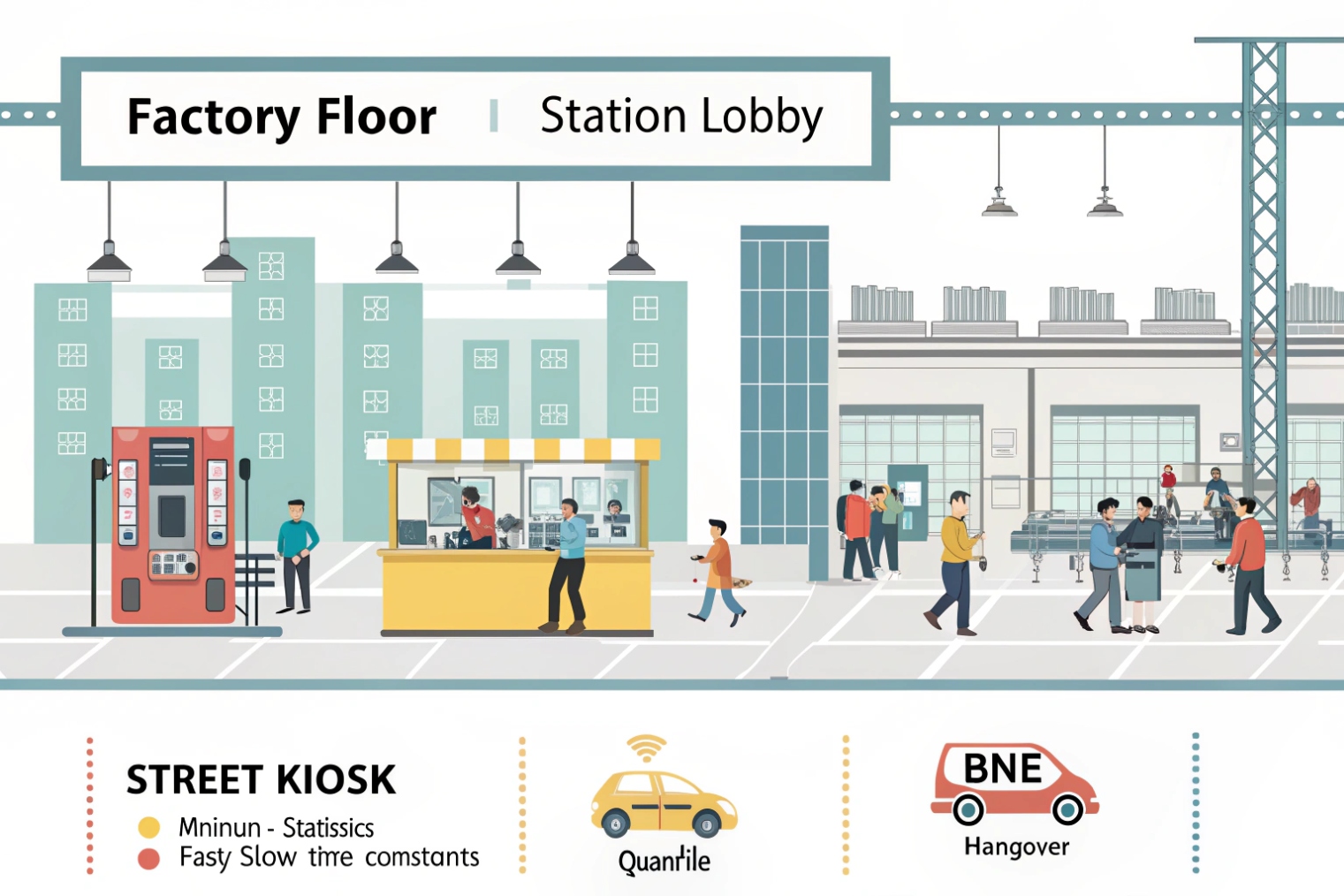
Factories: steady noise + sharp transients
- Allow faster baseline tracking for truly steady high noise
- Add transient protection so impacts don’t raise the baseline too much
- Prefer banded tracking so one machine tone doesn’t dominate
Stations: crowd/announcements that look like speech
- Use slower updates when speech probability is high
- Use longer hangover so gaps between syllables don’t become update windows
- If available, gate BNE updates with a speech probability model
Streets: wind + traffic rumble + fast changes
- Use smoothing to avoid “pumping” when vehicles pass
- Control low-frequency dominance (wind and rumble can overwhelm estimates)
- Don’t ignore hardware: wind protection and mic placement matter
The knobs that usually matter most
Vendor names vary, but the concepts map well:
- Update speed (fast/slow time constants)
- Hangover (hold-off time after speech)
- Clamp limits (min/max noise floor)
- Band smoothing (reduce per-band jitter)
| Environment | Noise type | BNE tuning bias | Common mistake |
|---|---|---|---|
| Factory | High, steady, with bursts | Faster tracking + transient protection | Over-suppressing speech (thin voice) |
| Station | Speech-like babble + PA | Slow tracking + strong hangover | Learning crowd as noise → missing talkers |
| Street | Wind + traffic rumble | Strong smoothing + LF control | Wind raises baseline → hiss/pumping CN |
The goal is not “zero noise.” The goal is stable speech detection and consistent silence behavior.
How do I test BNE with RTCP stats, MOS, and spectrograms?
Without measurement, BNE tuning becomes opinion. With measurement, it becomes a repeatable deployment checklist.
Test BNE by correlating RTCP quality metrics with audible artifacts, tracking MOS trends during noisy scenarios, and using spectrograms to confirm the noise floor estimate updates smoothly without speech leakage or pumping.
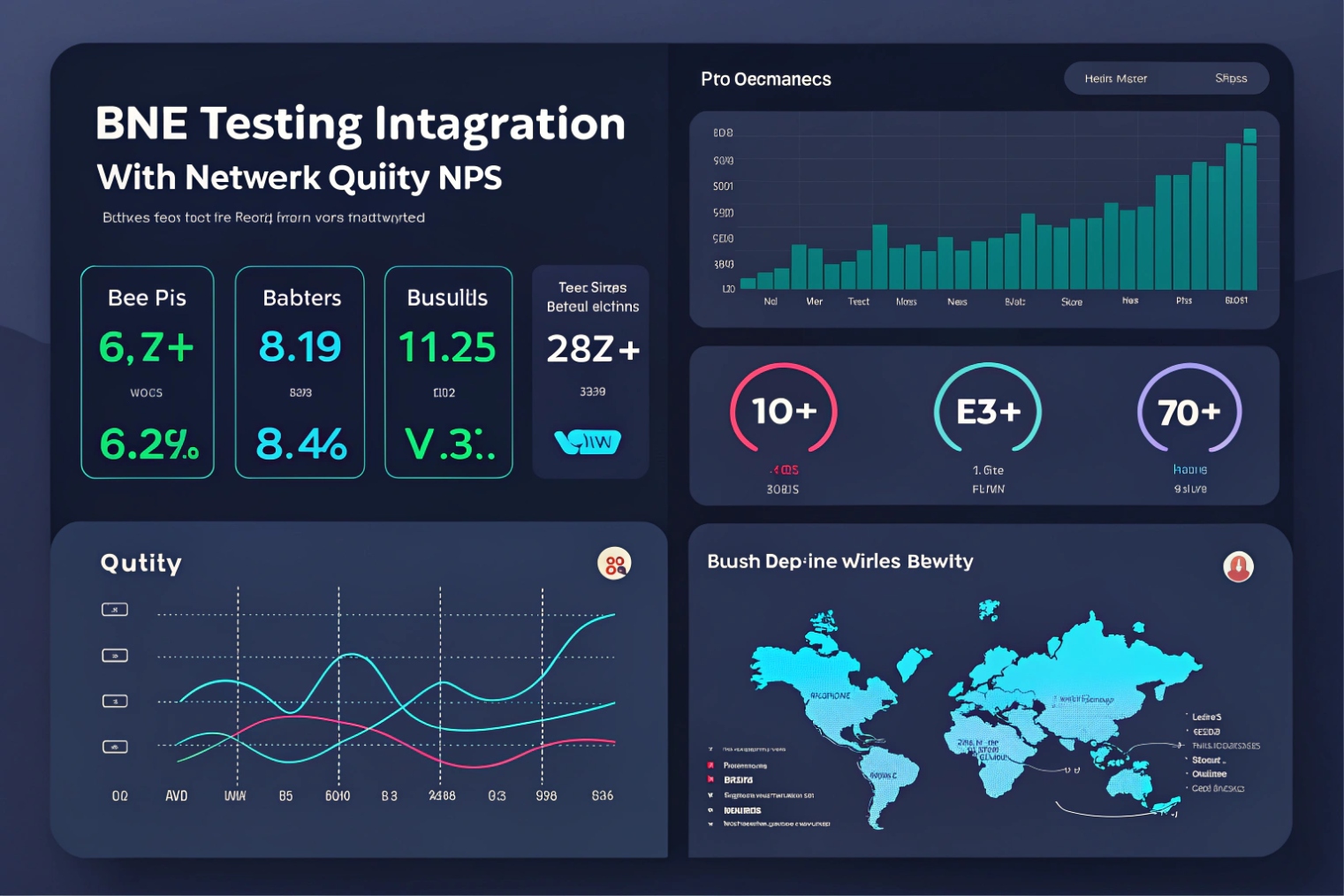
RTCP: prove the network isn’t the scapegoat
RTCP doesn’t measure BNE directly, but it helps isolate issues:
- If loss/jitter/RTT are stable while audio pumps/clips/hisses, the issue is often local DSP baseline behavior.
- If long silence causes one-way audio, suspect DTX + NAT timeouts (keepalives and firewall timers), not BNE alone.
Many analytics pipelines derive baseline media health from RTCP Receiver Reports 5, and deeper deployments may add RTCP Extended Reports (RTCP XR) 6 for richer visibility.
MOS: use it for trends, not a single truth number
For BNE work, MOS is most useful for comparisons:
- Baseline firmware vs new tuning
- Scenarios: quiet, steady fan, crowd babble, traffic/wind bursts
- Compare distributions and worst-case dips (BNE issues often show up during transitions)
If your tooling uses standardized objective models, align terminology with how your platform defines MOS (for example, POLQA (ITU-T P.863) 7) before drawing conclusions from one chart.
Spectrograms: the fastest way to see leakage and pumping
Spectrograms make BNE problems visible:
- Noise floor rising during speech gaps → possible speech leakage into BNE
- Sudden broadband changes during silence → unstable estimate driving CNG pumping
- Shimmering bands → suppression reacting to a noisy estimate
A simple test matrix that scales
| Test | What to log | What it tells you | Pass signal |
|---|---|---|---|
| Quiet room + 30s silence | RTCP + received audio | Is CN subtle and stable? | Silence feels connected, not hissy |
| Crowd/PA playback | Spectrogram + MOS trend | Does BNE avoid learning speech? | Speech stays intact, no pumping |
| Wind/traffic bursts | Spectrogram + notes | Does LF noise destabilize estimate? | Smooth tracking, no jumps |
| Long silence (60–120s) | RTCP + call path | Any DTX/NAT side effects? | No one-way audio after silence |
| Double-talk scenario | Subjective + echo notes | AEC stable with noise? | No echo bloom, no voice chewing |
Conclusion
BNE tracks the noise floor and spectrum so VAD, CNG, and AEC stay stable across real environments. Tune for stability first, then validate with RTCP trends, MOS comparisons, and spectrogram evidence — so “it sounds different today” stops being a recurring ticket.
Footnotes
-
Example paper discussing minimum-statistics noise estimation behavior. https://www.researchgate.net/publication/220057583_Improved_Noise_Minimum_Statistics_Estimation_Algorithm_for_Using_in_a_Speech-Passing_Noise-Rejecting_Headset ↩ ↩
-
Example paper describing MCRA-style online noise estimation techniques. https://www.isca-speech.org/archive_v0/ssw9/pdfs/alam14_ssw9.pdf ↩ ↩
-
RFC 3389 defines comfort-noise payload signaling for RTP. https://www.rfc-editor.org/rfc/rfc3389.html ↩ ↩
-
WebRTC noise suppression code illustrates common real-time NS interfaces. https://chromium.googlesource.com/external/webrtc/+/master/webrtc/modules/audio_processing/ns/noise_suppression_impl.cc ↩ ↩
-
RTCP RR defines loss/jitter metrics used in VoIP monitoring. https://www.rfc-editor.org/rfc/rfc3550.html ↩ ↩
-
RTCP XR adds extended quality reports beyond basic RTCP. https://www.rfc-editor.org/rfc/rfc3611.html ↩ ↩
-
ITU-T P.863 defines POLQA, an objective speech quality metric model. https://www.itu.int/rec/T-REC-P.863 ↩ ↩








